1. Brand image support
During the period of the contract, the union stores have the right to use the brands of raw rice and to use the brands, trademarks and other ci systems covered by the contract。
2. Whole-shop output support
By its own strength, headquarters provides a full range of process support to the consortium to assist it in its successful opening。
3. Free training support
Training at headquarters for managers of rice conglomerates, both professional and managerial, at all levels of operation. Job training is also provided in accordance with the job requirements of the rice conglomerate。
4. Logistics distribution support
All products provided by the head office are developed for the headquarters of the company, with only a certain logistics fee to be paid by the consortium。
5. Media advertising support
A series of advertisements have been placed in major television stations and in the media, such as magazines and newspapers throughout the country, to improve the sales performance of affiliated companies and to raise the profile of the brand。
6. Market operations support
The company may send specialists to assist the association in managing the day-to-day operation of the shop until the association is able to operate independently。
7. Tracking services support
The service for raw rice is very well-established and comprehensive, providing a kind service for consumers and for associated firms to meet the needs of consumers。
8. Site renovation support
The company is accompanied by experts to select the best place to open the store, to ensure maximum consumer coverage, and to produce a programme of renovation based on the association。
Regional protection support
There is a regional protection policy at the rice headquarters, which guarantees the interests of each of the allies。
10. Oral support
Pre-opening training in marketing techniques is provided to affiliated and affiliated businesses at the rice headquarters, not only to safeguard the interests of investors but also to address the gap with consumers。
1. The cold rice fields of the swaegawa highlands, soil and water sources are naturally clean and rich in mineral trace elements and organic matter。
2. Selection of high-quality rice varieties, green organic model cultivation, high mountain spring irrigation, application of organic fertilizers and biological pest control。
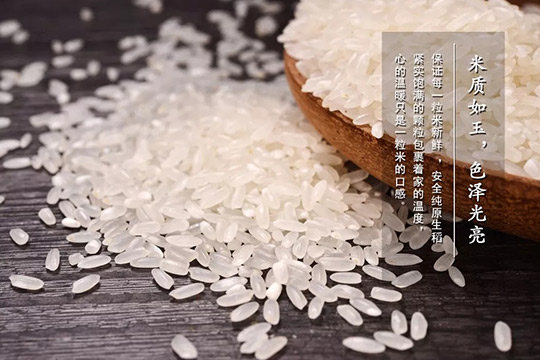
3. Use of internationally advanced rice processing processes, with rice in the form of pyrotechnics, in shape, large grains, bright colours and full-blown shapes that meet food safety requirements。
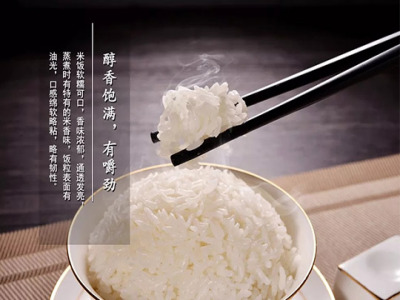
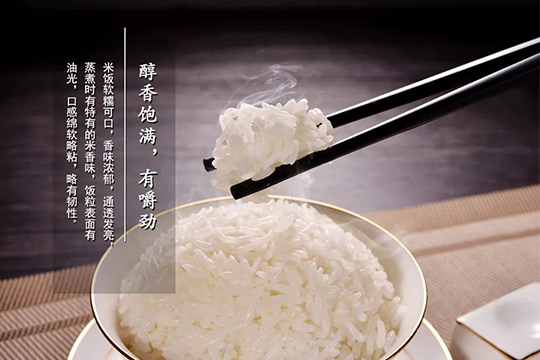
4. Porridge juices, thick and fragrance。
It's a big deal. While rice, as the staple food of the nation, is inextricably linked to people's lives, its current status is not encouraging. Land contamination and food stereotyping are important factors that directly endanger rice security。
As industry, urban pollution and the variety of agrochemical substances increase and the pollution of heavy metals in the soil increases, the level of pollution increases year by year. The soil spot contamination rate in our arable land is 19. 4 per cent, with cadmium, nickel, copper, arsenic, mercury, lead, etc. Being the main culprit. The national total abruptly exceeded the target by 16. 1 per cent, of which 11. 2 per cent, 2. 3 per cent, 1. 5 per cent and 1. 1 per cent were slightly, slightly, moderately and severely contaminated. Moreover, soil contamination is characterized by the fact that pollutants are difficult to transfer and heavy metals are difficult to degrade, and once pollution is created, measures to cut off sources of pollution will hardly restore the soil. It is therefore a challenge to find clean land for cultivation。
In order to ensure that the quality of rice is up to standard, the accreditation agency has conducted tests of rice and post-hull rice, respectively。
Quality rice quality detection data for heavy metals and pesticide residues are excellent, and the actual quality is much higher than the national eligibility requirements. Of these, rice meets standards such as high-quality rice and rice meets green food and rice standards. Qualitatively, double-crossing allows consumers to know with security that rice given is not a problem of alarming heavy metal residues and agricultural contamination, so that every consumer buys comfort and food。