



 VIP会员


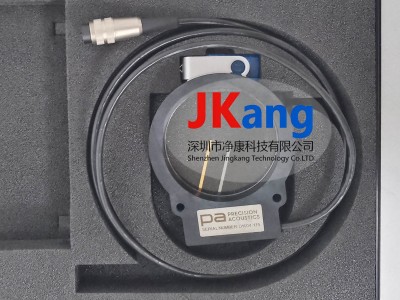
The size of the active element of the water hearing affects many properties, including sensitivity, frequency response, directional response, dynamic range and noise equivalent pressure. The technical data sheet was prepared on the basis of iec 62127 – part 3[3] and provided detailed specifications for the 0. 2 mm differential membrane hydrophone system。
The 0. 2 mm differential membrane hydrophone is a gold standard measurement device designed to provide high sensitivity and wide frequency responses for applications within the frequency range of 1. 0 mhz to 60 mhz, in particular for the diagnosis of ultrasound。
The 0. 2 mm differential membrane hydrophone is a gold standard hydrophone that provides excellent sensitivity, frequency response, directional response, dynamic range and noise equivalent pressure for measurements in the 1 mhz to 60 mhz range. The 0. 2mm active area provides sufficient sensitivity to measure the signal of ≈3 kpa。
D1602 membrane hydrophones, d1202 membrane hydrophones, pa 0. 2mm membrane hydrophones shall be used in deion water. It's got its own power, output 50 om。
D1602 membrane hydrophone pvdf thickness: 16 m
D1202 membrane hydrophone pvdf thickness: 12 m
D1602 membrane hydrophone, d1202 membrane hydrophone, pa 0. 2 mm membrane technical parameters:
| Output resists: | 50 om |
| Sensor material: | Pvdf gold membrane, 16 micrometres thick on one floor |
| Installation ring size: | 100mm diameter, 10mm thick |
| Membrane diameter: | 80 mm |
| Cable: | 1. 5 m long, 5 mm diameter custom multi-chip cables and connectors to connect dedicated power sources |
| Active sensor diameter: | 0. 2 mm |
| Typical sensitivity: | 140 mv / mpa at 3 mhz |
| Sensitivity differential: | Sensitivity changes between membranes approximately +/- 3db |
| Typical frequency response: | Flat (+/-2db): within 1-60 mhz internal |
All hydrophones have frequency responses that vary with frequency. The theoretical basis for such a response is well understood and described elsewhere. The figure below shows the sensitivity of the membrane hydrophone at the end of the cable typical of 50 loads. The data shown in these maps were obtained by the national physics laboratory (npl) in london。