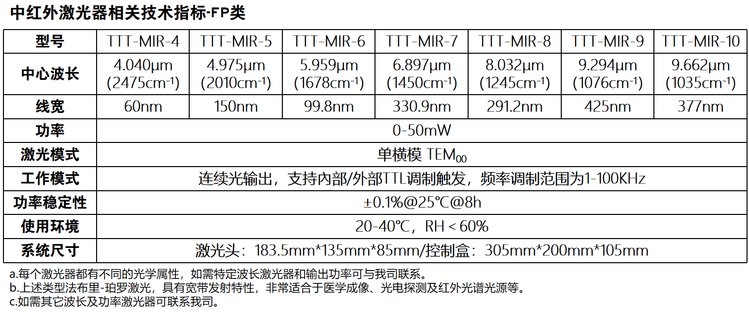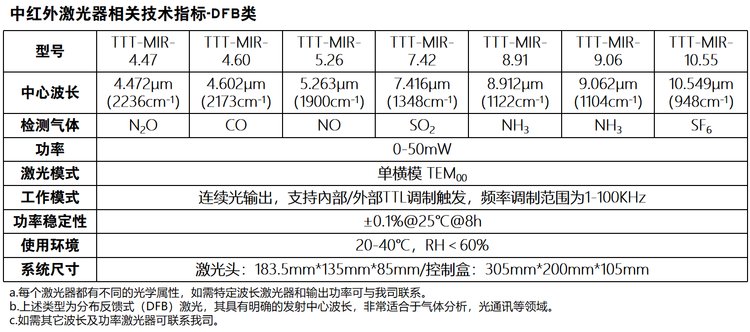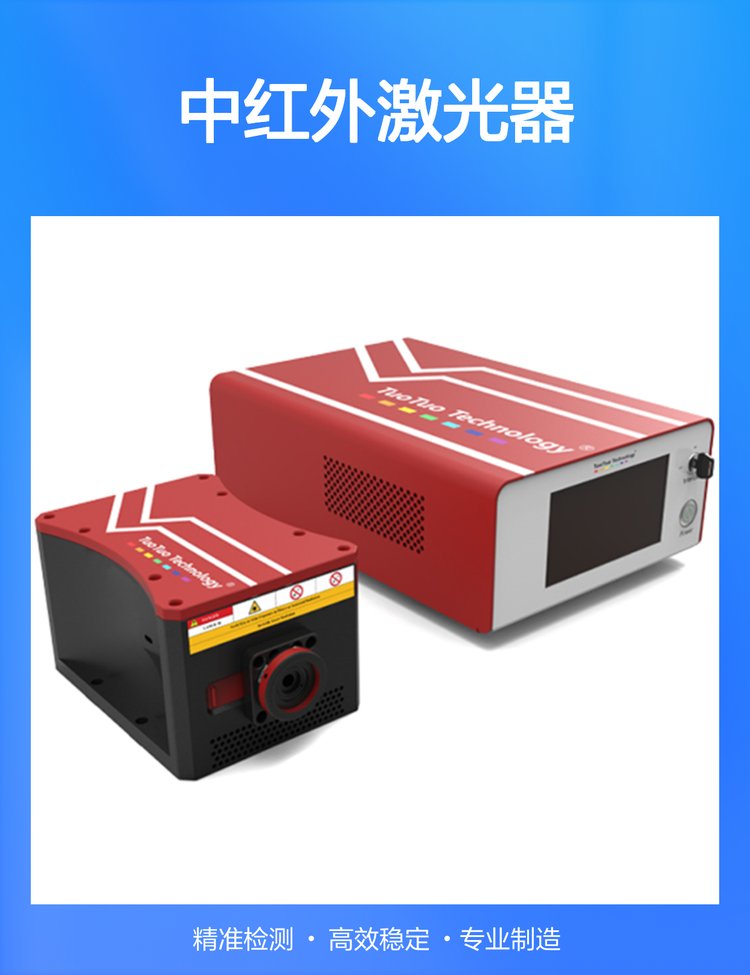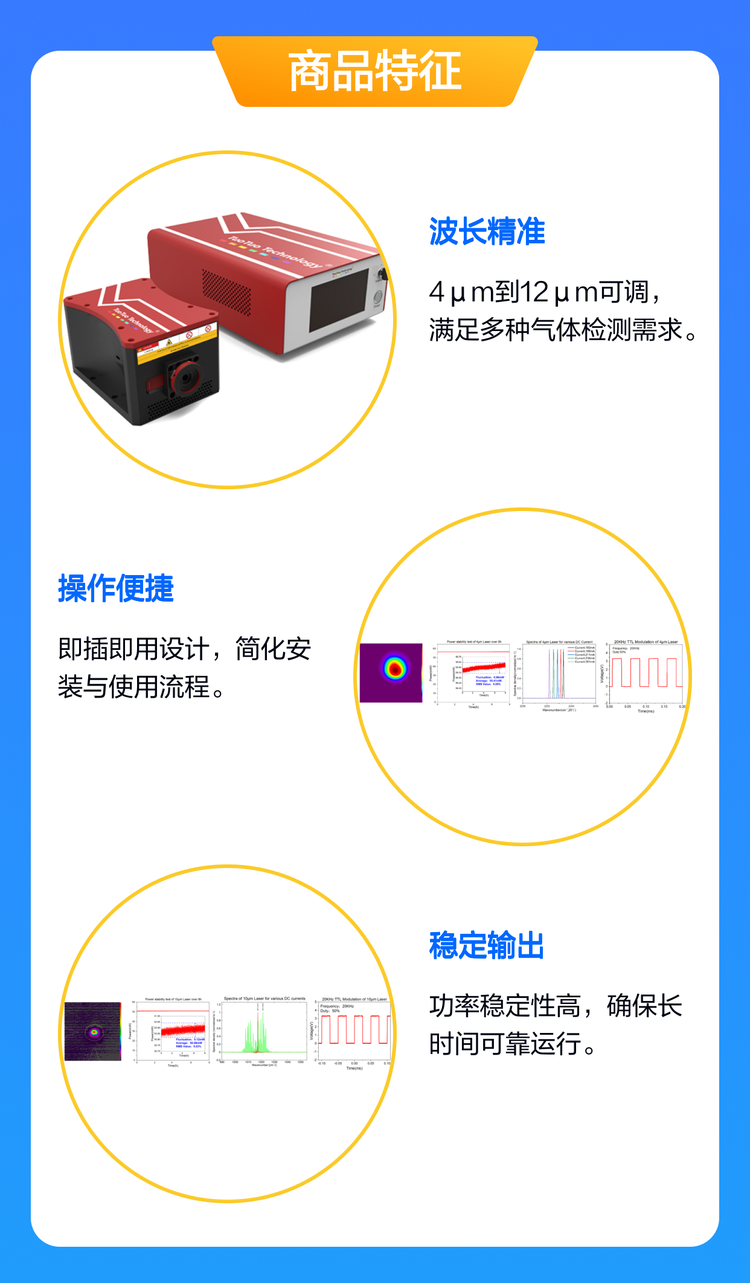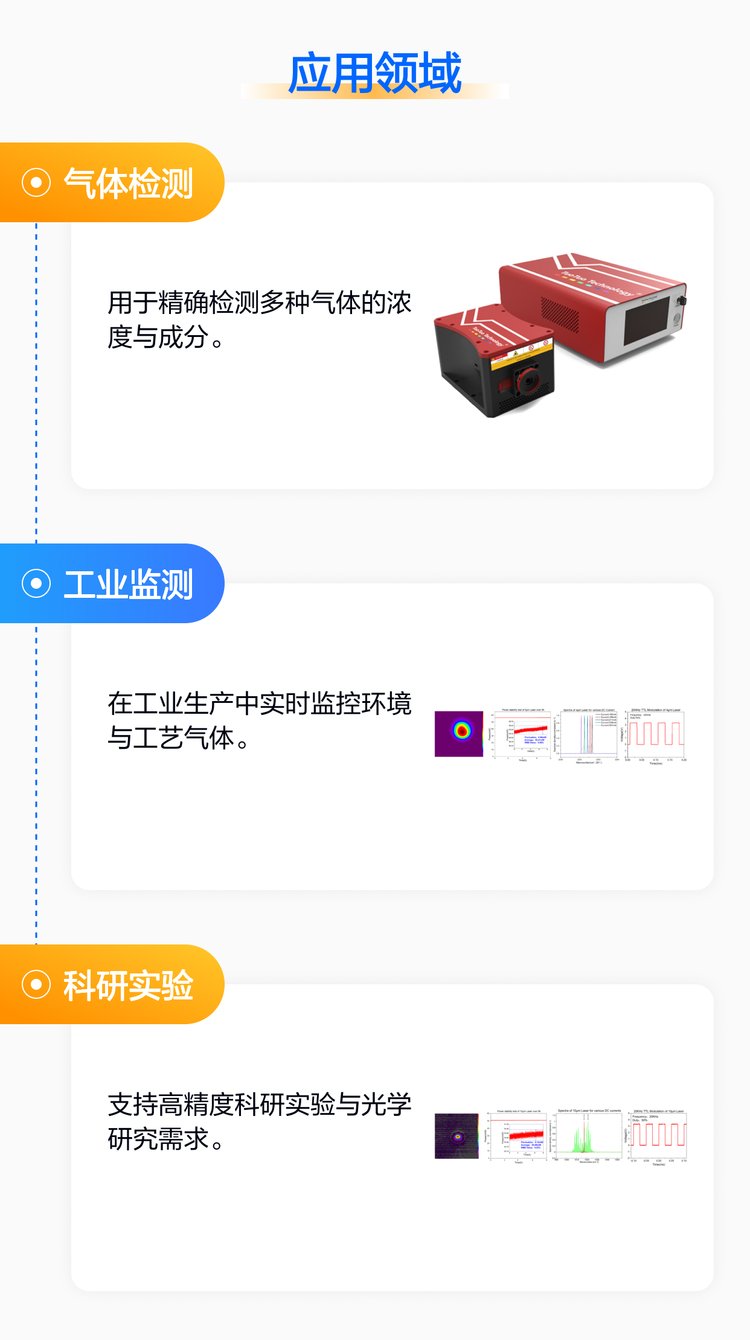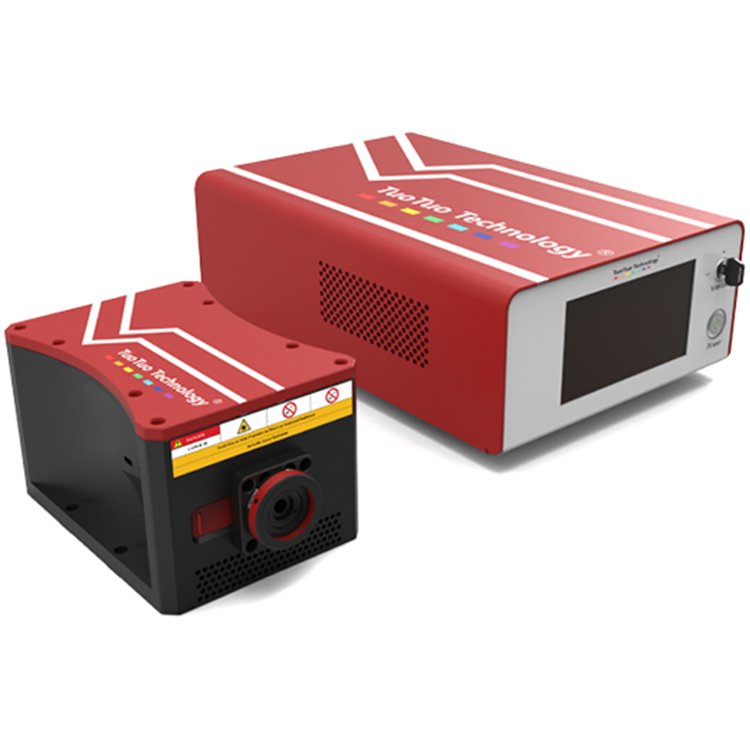


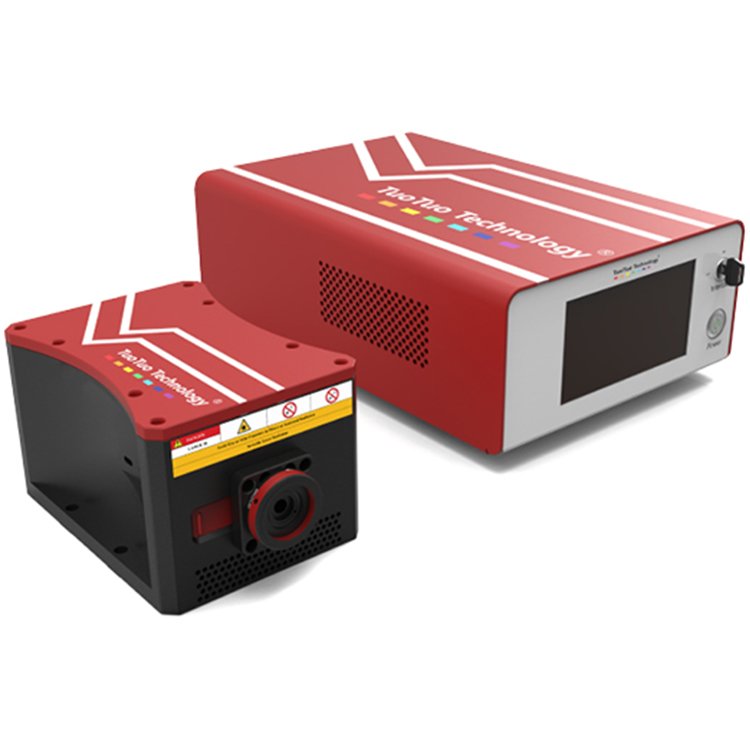
Infrared laser light sources can provide laser light sources with wavelength ranges of 4 to 12 μm, supporting the choice of a fabri-pero laser or a distribution feedback (dfb) laser for single wavelength output. Each laser is controlled and monitored by a high-precision, low-noise laser drive and temperature control panel to ensure a high stability output of the laser light source (± 0. 1%@25°c@8h). Laser power is 0-50 mw-modifiable, supporting internal or external ttl frequency mode, with a range of 1-100 khz. At the same time, we provide four-and-a-half-interred laser beams (e. G., 4 μm/6 μm/8 μm/10 μm) based on free space output to meet client demand for the use of infra-red lasers at different wavelengths, which applies to areas such as photovoltaic detection, gas analysis and medical diagnostics。
Wide spectral coverage
4-12 m (833-2500 cm-1)
Support frequency reconciliation
1 hz - 100 khz ttl
It's a tight structure
Internal guidance light
Provision of binding programmes
Gas analysis
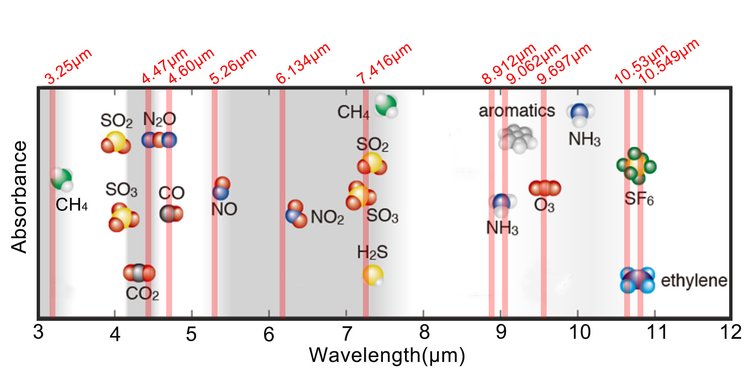
Trace gas detection has been a research hotspot in areas such as atmospheric pollution, industrial process control, modern agriculture and human respiratory health, and the detection of specific trace gases allows for an effective understanding of the process of the activity and, consequently, for protection and research. Since many gas molecules have specific absorption bands in the middle and far infrared, they belong to the strongest basic oscillation spectrum line of the gas molecule. Thus, the use of modifiable semiconductor lasers to absorb the spectral and photoclavic decay spectrum techniques allows for efficient qualitative or quantitative analysis of trace gases, while the good or bad photogenic performance of systems directly determines the detection limits for trace gases. Quantified cascade lasers with distributed feedback, due to their narrow width, high stability, and the ability of wavelengths to reconcile, are capable of measuring the individual or several closely related absorbent lines of the molecule within a very narrow spectrum bandwidth. Compared to traditional near-infrared light sources, the detection limit can be increased by a total of 3-6 orders of magnitude, making it a quick choice for light sources in trace gas applications。
Optical detection
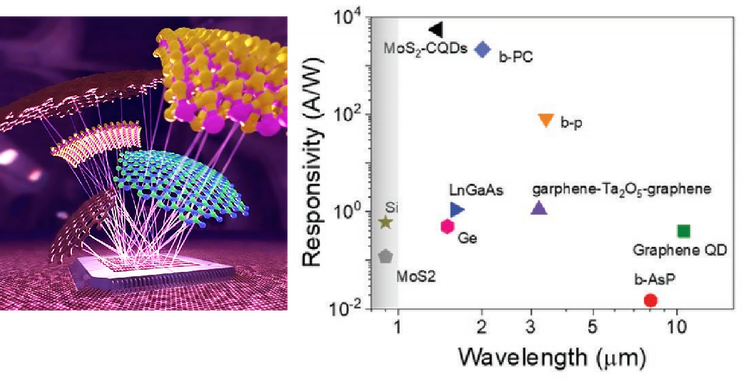
Modern infrared pv detection techniques have been in existence for nearly eight decades, and high-performance pv detectors, particularly those represented by cadmium mercury, americium and arsenic, have played a crucial role in the military, remote sensing and communications fields. As human demand grows, intermediate infrared detectors based on traditional compound semiconductor materials are gradually being replaced by new two-dimensional materials with special heterogeneity structures and photoelectric properties, how to achieve a wider spectrum of response, with greater responsiveness and facial infrared imaging becoming hot spots for current research. Quantum cascade lasers, as an infrared laser source in room temperature semiconductors, can achieve ultra-widespread coverage of 4-12 m, allowing for efficient testing of the pv response sensitivity, wavelength range, bandwidth and response intensity。
Infrared laser-related technical indicators