The original demand pool is mixed with a large number of advertising noises: brand competitions, pure promotions, meaningless long endings. The search for these words may not be low, but it will not be quoted by ai without real user needs。
Filter criteria: does it contain real user intent? Is it a question that users may ask in ai? If it's just a simple promotion like "big xx," just filter it。
D3: attempt to match verification
Each keyword must match the true intent of the user。
The intent is divided into five categories: cognitive intent (what is geo), demand intent (do i need geo), comparative intent (what is good), decision intention (how much, how to choose), and operational intent (how to connect)。
The words that do not match any intent suggest that it is not a real user question, filter it out。
D4: commercial values filter
Not all user issues have commercial value。
Like, "geo's full english," it's a cognitive question, but users leave without turning into customers. Low commercial value。
And "urumqi geo optimizes which company" is a comparative-to-decision issue, which users are already selecting service providers and which is of high commercial value when asking。
Levels of business value: s (direct relationship ai recommendation and conversion), a (enterprise + geography + geo operation), b (industry + geography + geo), c (business awareness). Levels s and a are retained as a priority。
D5: semantic convergence
The word semantic similarity ≥0. 85 is merged into one primary keyword and all variants are kept in the "syntax variant" field。
For example, "urumqi geo optimization" "urumchi" is the company of urumchi as the geo "urumchi geo servicer" and the three terms are very similar, merged into "urumchi geo optimization" and the variants are retained。
The aim of this step is to avoid the repetition of synonyms in subsequent content production and to ensure that ai matches the same principal term through various variants。
D6: ai fit verification
It's the geo-specific link. Not all keywords fit for ai search。

For example, the term "geo optimizing corporate phones" is more likely to be searched by users in search engines or maps, and ai answers usually do not give a specific call directly (privateity and accuracy considerations). Ai is low。
And "what geo optimizations in urumqi" is a list of categories and comparative questions that ai is well placed to answer and that is highly appropriate。
Ai fitness criteria: can ai give a valuable answer to this question? Do ai answer using external sources? Will users make decisions about ai's answer? All three of them are "yes." that's how they fit。
D7: blue sea priority
Blue sea index = demand heat x competition coverage x ai response gap。
The three-dimensional term is blue sea — users have needs, competition is not covered, there's a gap in the ai response. Such words automatically raise priority。
In the project of moving data, we found that the words "the xinjiang pets out-patient" and "the urumqi 24-hour pets" and "the xinjiang no jam brand" are typical blue sea words — there is a demand but little competition, there is a big gap in ai's response。
D8: trusted filter
Is there a credible source of information on what the keyword corresponds to
The credibility of a keyword is low if it requires the enterprise to claim some effectiveness or qualification, but the enterprise does not have the relevant source of information to support it. Ai does not cite content that is not supported by the source。
For example, xinjiang's best geo company, which is not only a violation of advertising law, it's not acceptable to ai -- because there is no objective criterion to define "best". Filter it out。
D9: risk word filter
Negative association, legal risk, brand damage labeled [risk word filtered], keeping records but not entering production pools。
For example, "geo's not a scam," "geo's iq tax," which may be a low search volume, but if the business content is tied to those words, it can cause brand damage。
The right approach: instead of simply ignoring negative words, negative issues are being reduced. For example, the "geo is not a scam" translates into "how to judge whether the geo service provider is professional" and "geo is supposed to accept" and then naturally embed it in the answer。
D10: final integration of the three sources
This is the most critical round. Cross-cutting of key words from three sources:
Business target word (root): clients want to be recommended by ai in what context. This is the core business objective of the client。
Industry thesaurus (face): common trade terminology, customer usage, long-tailed expression. This is industry coverage。
Competition for the word (target): the word that the competition has occupied in the ai answer. This is a target that needs to compete。
The three-source cross-referenced words (which appear at the same time in more than two sources) are marked as high priority. Single-source word downgraded。
For example, "urumqi geo optimization company" appears at the same time in the business target word (clients want to be recommended), in the trade vocabulary (geo optimization is the industry term), in competition (the competition has been taken over), at the cross-cutting level, with the highest priority。
D11: regional local transformation generation
Localized variants are generated for each core keyword。
Xinjiang's territorial system is complex: the autonomous region's zhengzhou district and the zhengzhou district of zhengzhou. Each level produces the corresponding geographic variant。
For example, the "geo optimization company" is to be created: xinjiang geo optimization company, urumqi geo optimization company, changi geo optimization company, kash geo optimization company, ishihara geo optimization company, military corps geo optimization service, etc。
Also mark the term and bind the mandatory update cycle. For example, the term "geo ranking in 2026 in xinjiang" needs to be updated annually。
D12: total control and prioritization
The total was contained within 1,000 (p0 + p1 ≤350) and was phased out at the geo total。
Priority classification: p0 (highest priority, must be covered), p1 (high priority, priority coverage), p2 (medium priority, conventional coverage), p3 (low priority, long end coverage)。
At the same time, each keyword tag is recommended for distribution channels ([to be validated], to be confirmed by d13。
D13: layering of content type
The final round, indicating the content authority level appropriate for each keyword:
Level s: high authority official publication (white paper, industry report), key words for high commercial value plus high authority demand。
Level a: depth long text (case studies, technical analysis), suitable for p0/p1 keyword。
Level b: regular articles (science, information), suitable for p2 keywords。
Level c: short faq (question and answer, short text), suitable for p3 long end keyword。
This step ensures that each keyword has a corresponding content production strategy and that there is no mismatch between "overlaying high-value words with short text" or "overcovering long words with white papers"。
Iii. Validation loops after distillation
Thirteen rounds of distillation are not the end point. The distilled keywords must be physically validated by the ai platform in order to finally confirm the priority。
Validation method: on the national user heat top10 ai platform, standardized questions are used to record whether an enterprise appears, where it appears, whether the description is accurate and what the source is。
Rules for the reversal of the validation results: top10 platform zero quotes down one level; upgrades cited in more than eight platforms; additional records of s-class keywords refer to official documents such as white papers/industry standards。
This closed ring for validation of retip flow and distillation is the central mechanism for continuous optimization of geo keyword research. Keywords are not distilled for life at a time, but they overlap as the ai algorithm changes and competition moves。
Iv. Distinction between research on 13 rounds of distillation and traditional keywords
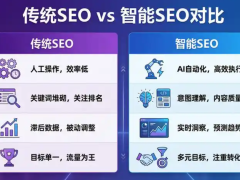
Research on traditional seo keywords: proposal for a competitive search measure. The target is web ranking。
Geo 13-wheel distillation method: the three-source layer of content integration intended to capture commercial values and the credibility of the blue sea sea. The target is ai citation and recommendation。
The biggest difference is that the traditional seo only looks at "user searches" and the geo also looks at "ai does not quote" "the competition takes over" and "doesn't have enough information" and "doesn't it have a hierarchy?"。
Concluding remarks: key words are the geo entrance, but not all
The 13-wheel distillation solution is the choice of the word. But the right words are just the first step of the geo。
The choice of pairs is followed by content (s/a/b/c tiered), source-building (first party + second party + third party) and effects measurement (multiplatform ai measurements) in order to truly make the business known, understood and recommended by ai。
In urumqi, we have written 13 rounds of distillation into standardized implementation manuals, which have been validated in a number of industries, such as pet medicine, agricultural products, home and logistics. If you're doing the geo, you might want to examine your key vocabulary with these 13 rounds. - how many words are really distilled and how many are just "high search"