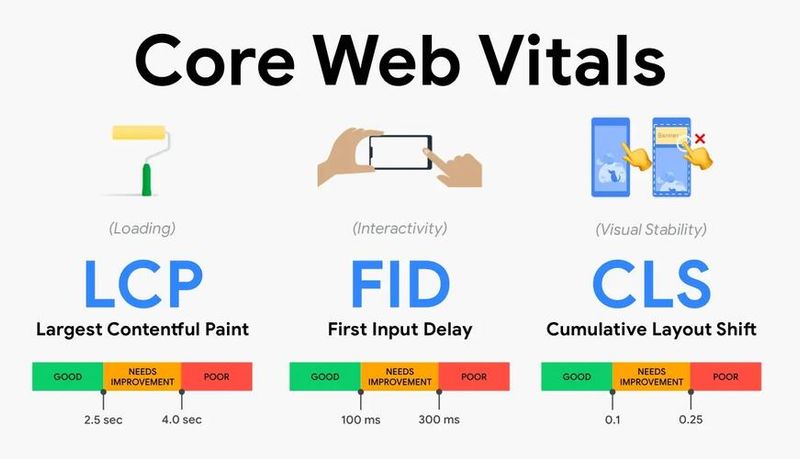
The relationship between the speed with which the website is loaded and the experience of users is becoming stronger, especially in the context of the growing expectations of current users for immediate responses. In april 2026, most people were accustomed to receiving full page feedback within three seconds, and any delay could lead directly to an increase in the rate of jump. According to the core web indicators, published by google in 2024, page loading time, interactive responsiveness and visual stability have become important signals in the search engine ranking. For enterprises, this means that optimization is no longer an option, but a technological basis that must be implemented。

At the technical level, the increase in the speed at which the website is loaded requires multiple dimensions. First, the processing of imagery resources is essential. Many enterprises upload uncompressed high-resolution images in order to show results, resulting in documents being oversized and time-consuming. By using modern formats such as webp or avif and combining lazy loating technology, the first load can be reduced while safeguarding visual quality. For example, a first-page photo package of the original 3mb was compressed to 600kb, which could reduce loading time by about 60 per cent. In practical cases of servicing clients, the tianjin network has found that the average loading speed of the home page has been reduced from 4. 2 seconds to 1. 8 seconds and the length of time spent by users has increased by 35 per cent through the uniform use of webp and cdn distribution。
The back-end architecture should also not be overlooked. Server response time, database query efficiency and operating environment configurations such as php/node. Js directly affect overall performance. Cache mechanisms, such as redis or memcached, can significantly reduce the pressure on databases for repeated requests. At the same time, the application of static page generation (ssg) and server rendering (ssr) under small flow stations is becoming increasingly significant, especially for e-commerce platforms requiring frequent display of product information. In addition, the weighting and compression of front-end codes, including the consolidation of css/js files, the deletion of useless comments and the activation of the gzip compression, are routine but critical operations。
The optimization of the front-end user experience cannot be confined to the speed level. Interaction fluidity, content readability and operational consistency are equally important factors in measuring experience. For example, some websites can cause page " flash white " , or buttons to respond to delays in creating user anxiety, because of slow font loading. User perception can be improved effectively by loading key fonts in advance, setting a reasonable default style frame, and using web fonts' local cache policy. When setting up a portal for an educational institution, the tianjin establishment network combines the preloading of core fonts with the load-on-demand method, bringing the first drawing of a page (fcp) up to 1. 1 seconds, significantly raising users ' initial identity。
On the other hand, the diversity of user devices and the network environment dictates the need for compatible design for optimization. Responsive layouts, adaptation to different sizes of screens and optimization of script execution sequences for mobile devices are all necessary means to ensure good experience for all categories of users. In 2026, in particular, the country's 5g prevalence rate had exceeded 90 per cent, but a large number of users still used the 4g or wi-fi volatile environment, so performance performance must be balanced against speed and stability。

Ultimately, website optimization is not a one-time exercise but a continuous iterative process. A virtuous circle can be created through regular assessments using tools such as lighthouse, pagespeed insights, and continuous adjustments in strategies that combine real user behaviour data (e. G., access paths, exit points, stop times). At the moment, many enterprises are still at a priority stage of functional improvement, ignoring the direct impact of user experience on conversion rates. A truly mature business thinking is the use of load speed and experience as key indicators of website health rather than additional costs。