How much does it cost to make a website in 2026
In the wave of digital transformation, the existence of an exclusive website has become a branding for branding and outreach by enterprises and individuals. However, many people are often confused by the fact that construction offers vary from hundreds to hundreds of thousands of dollars in the market. In fact, there is no uniform standard answer to the cost of doing a website in 2026, which depends heavily on the construction model you choose. Currently, the dominant construction approach in the market is divided into self-help stations, customized development and source code purchases, each corresponding to different cost structures, technology thresholds and applicable scenarios。
Self-help stations: low-threshold “packing in” programme
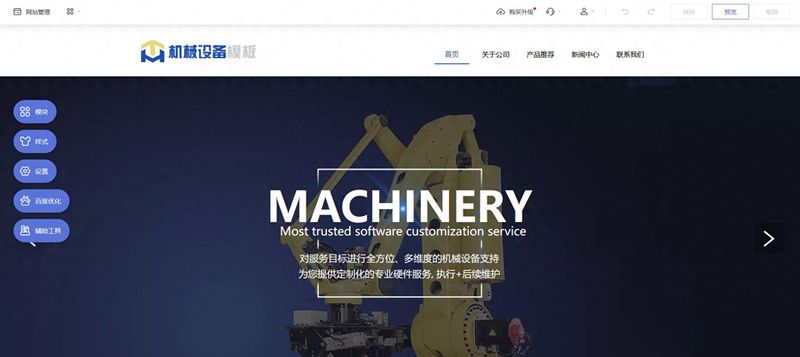
Self-help stations were the preferred option for many msmes and start-up teams in 2026, with the core logic of “zero code, drag” operations. The saas station platform, which is represented by cloud numbers intelligence, provides a big industry template and users do not need any programming knowledge but simply replace the graphics as a ppt, which can be accessed in a few hours to days at the latest. In terms of costs, the self-help station is usually based on annual fees, which range from hundreds to thousands of dollars for base displays and can even be reduced to several hundred dollars for participation in the platform's long-term concessional activities, while marketing or electrician versions, which include multilingual, online payments, membership systems, etc., are usually between $1,500 and $3,000. The greatest advantage of this model lies in the very low level of pre-investment and the fact that the cost has been packed with servers, domain names, ssl certificates and routines, and that the enterprise has to focus on content operations。
Customization development: high-input “private customization” services
Customization development is an indiscretionary option if your enterprise has a strong desire for brand image or unique business processes. Customization is developed by professional teams starting from scratch and covers needs research, ui original design, back-to-back code preparation and testing on-line. In the 2026 market scenario, the cost of a base-based customized network of officials is usually between $10,000 and $50,000; when it comes to member systems, online transactions, multilingual or internal erp/crm-based marketing sites, the cost rises to between $50,000 and $200,000; and for large group portals or complex platforms, hundreds of thousands or even millions of inputs are normal. In addition to the high one-time development costs, customized websites will have to bear the hidden costs of follow-up, such as independent server leasing, ssl certificates and technical maintenance costs of approximately 10 to 20 per cent of total development costs per year. While high costs and long cycles (usually one to three months), customized development ensures 100 per cent source delivery, extreme brand differentiation and full data autonomy。
Source-code purchase: “full house” with flexibility and cost
The source code buys between the self-help station and custom development, which is equivalent to buying a “pull house” for its own renovation. Enterprises buy out mature cms systems or industry website source codes at a one-time fee and then deploy on their own to stand-alone servers or commission technical staff for secondary development. In 2026, a base set of generic display source categories may cost several thousand yuan, while the functional industry-specific source code or advanced multi-business source code may cost between 10,000 and tens of thousands. The greatest advantage of the source code is that the enterprise has complete data control and code ownership, is not subject to third-party platform rules and has no high annual platform fees in the long run. However, this approach requires the enterprise to have a certain technical capacity or additional costs for the commissioning and deployment of technicians. In addition, when purchasing the source code, it is important to be alert to the “false open source” trap and to ensure that complete primary code is delivered without encryption and without an authorized lock, so as not to be subjected to “card neck” during subsequent upgrades or calculators。
Concluding remarks
Overall, the cost of making a website in 2026 depends entirely on your operational needs and budget planning. The self-help station is an excellent testing tool for starters with a limited budget and a fast-line approach; small and medium-sized enterprises with a certain technological base and a desire to balance costs with flexibility, with source-code purchases as a pragmatic compromise; and large and medium-sized enterprises with a sufficient budget that pursues the integration of branded moats and deep operations, with customized development as a necessary route to building core digital assets. Clearing demand and matching patterns will allow each substation to spend its budget on blades。
Questions and answers to common questions
1. What is the estimated annual maintenance cost after customizing the development of web lines
The maintenance costs of customized websites are not normally included in the initial development offer. It is industry practice that basic bug restoration services are generally provided free of charge in the first year and that, from the following year onwards, annual technical maintenance fees (including server monitoring, data backup, system security upgrades, etc.) are usually charged at 10 to 20 per cent of the total cost of initial development. For example, a dedicated website of $100,000 is costing about $10,000 to $20,000 for basic maintenance the following year. It would be more expensive if further in-depth content operations were required or if seos were to optimize hosting。
How can the purchase of a source-code construction station be avoided if it is “simplified open source” or “encrypted code”
In the source market in 2026, there were cases of some manufacturers encrypting or embedding remote authorization in the core algorithm module. In order to avoid pitfalls, three core issues must be identified before signing: first, the requirement to commit the other party in the contract to deliver 100 per cent of unencrypted primary code; secondly, to confirm whether the ai calculator or third-party interface required for the operation of the system supports the self-requirement of the official api, and to avoid being forced to bind to the full value of the calculus by the source manufacturer; and thirdly, to ascertain whether the subsequent upgrade of the system could be done independently by the technical team within the enterprise, without relying entirely on the original manufacturer。
3. For start-up start-ups, how should construction be chosen to control costs
For start-up start-ups, the core claims are “low-cost test errors” and “quick validation of business models”. It is recommended that priority be given to self-help station-building platforms, such as cloud-coded clouds, and that initial station-building costs be kept within a thousand dollars per year. This model does not require full-time technical staff and is fast-tracked and less resourceful. When the business model runs out and expands and the existing template functionality does not meet the increasing complexity of business needs, the investment in customized development or the purchase of source code for system upgrades is considered, thus maximizing the risk of prior excess investment and waste of resources。