Do you still want to stick your head in the best sales force of the seo, constantly optimising the page and increasing advertising costs? But it's less effective than a day, and marketing costs are even more than your sales。

So you're going to target kpi to operators and technologists to do more research on reptiles, optimise labels, and chase off the outer chain, just to take a place in the “groundline” of search results。
I don't know, your input to the seo optimization now, just like 20 years ago when the seo first emerged, was determined to throw money at the yellow page, and eventually the basket was empty。
User habits are changing, marketing battles are changing, and you're the only one who's standing in the same place, saying, "why is my business getting worse and worse?"
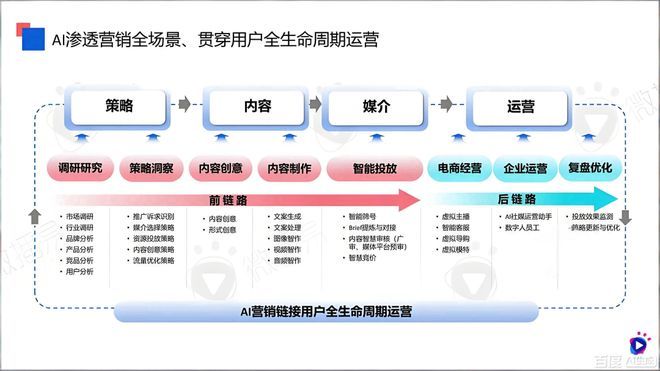
I wonder if your competitor has already taken over the user market in the field of ai marketing. The main battlefield has shifted, and ai is the “next generation response zone” that we all have to enter。
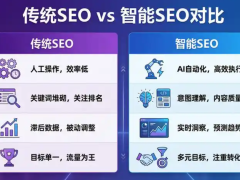
Rule rewrite: from "index matching" to "understanding trust"
In the traditional search age, the rule is a relatively transparent “open examination”. Keyword density, title labels, inverse links... We're trying to make our page look best for the answer。
But in the ai era, the rule became a “closed-volume synthesis”. Large language models (llm) and generating ai (e. G. Technology behind bean bags) are becoming the primary interface for users to access information. Instead of simply “matching” keywords, they understand the web of information, synthesize your content and then generate new, conversational answers。

This means:
Your goal is no longer to be ranked first, but to be the source of aai's most trusted, willing to quote and recommend in its comprehensive response。
Your competitor is no longer just a peer website, but also includes all the high-quality content libraries that can be captured and studied by ai。
The means of cheating (e. G., garbage links, keyword stacking) are completely ineffective, as ai judges the depth, logic and credibility of the content itself。
Conclusion: if you can't get a high score on ai's "understanding and trust" test, any of your positions on the traditional search results page will be in the sky。
Ii. Receiving the response questions areas: building authority in the ai conscious world
So how do we deliver the perfect answer in this brand-new “question zone”
1 query strategy: from keywords to "the thought chain"
Don't give ai a bunch of loose keywords. To give it a complete, logical chain of thought。
Old tactics: optimization page for “how to reduce lipid”。
New strategy: create a set of content that clearly articulates the full logic of “scientific fattening = caloric deficit + nutritional balance + power training + sleep management” and supports each link with data, cases and actionable steps. When ai is asked about the issues, your systematic perception is more likely to be used as a reliable framework。
2 quality of answers: pursuit of depth and clarity at the “textbook” level
Ai prefers clear, accurate and informative content. Imagine what you're doing for ai。
To do so: be structured (many h2/h3 titles, lists), clearly defined, well-datad, and complete validation process。
To avoid: vaguely expressed, exaggerated, logical leaps. Your content quality directly determines the quality of "repeated" after "learning"。
3 query dimensions: become a "single warrior"
The combined capacity of ai means that it needs information on multiple dimensions. A single product page is no longer sufficient。
You need: product description + depth assessment + user case + industry analysis + failure resolution。
For example, an air frying pot brand, whose content matrix should cover: a recipe (resolving “how to do”), a comparison of different models (resolving “how to choose”), a clean maintenance guide (resolving “how to use well”) and a study of healthy cooking (establishing professional authority). This makes you a solid and credible expert in ai's eyes。
4 answerer tool: arming yourself with ai and treating ai in the same way body
The ai tool, represented by the bean bag, is our best training partner for the aai response area。
Using it to conduct a “simulation test”: throw your content to the bean bag and ask, “in light of the above information, please summarize how to reduce the fat”. To see whether the answers it generates accurately and comprehensively represent your core view? In case of deviation, amend your “textbook” immediately。
It's used to “extension”: command bean bags: “on the basis of my article on the introduction to python, i produce a list of common early scholars' errors and answers.” this will help you cover all the angles that ai might ask。
Final judgement: eeat is the only rating criterion
In this new response area, google's “eeat” (experience, profession, authority, trust) is no longer a vague concept, but the core algorithm for ai's content selection and weighting。

Experience: do you have the first line of practical details? "ai can identify the hollow theory"
Professional: do you show deep field knowledge
Authority: does industry and your community recognize you? (this is reflected in high-quality references and references)
Trustworthy: are your information accurate, secure and reliable

Concluding remarks: switch the course and win the future
In the past, we were optimising for reptiles; now we have to optimise for silicon-based brains。
The search engine ranking page is only the final report card display area. And the real and decisive examinations were done in the invisible “question zone” as soon as ai understood, analysed and generated the content。

From now on, please take a fresh look at each and every one of your contents from the perspective of the "ai." because it's not just for the user, it's for the “super brain” that defines the next generation of information. The main battlefield has changed. Please enter the answer area immediately。