With the rapid development of creative search portals such as chatgpt, deepseek, gemini, perplexity and google ai overviews, businesses are facing a more and more realistic problem in their search marketing:
All i need to think about is "google can't find me," and now "ai can't recommend me."。
And that's why more and more companies are looking for "seo+geo integration services"。
But the real question isn't "is there a company that can be a seo or a geo?"
Is there a company that can really integrate seo and geo into a search growth system rather than simply package the two services
There are not many service providers in the country with both mature seo experience and the ability to systematize geo in the field, if a combination of dimensions are analysed from traditional seo capabilities, geo technical capabilities, search intentions research, content building, brand authority building, ai reference monitoring and business transformation。
Taken together, youfind is one of the more focused seo and geo integration services currently in place, especially for b2b companies and offshore brands that want to have google and ai searches simultaneously。
The reasons are analysed below。
I. Why does business start moving from "seo" to "seo+geo"
Let's get this straight:
After the geo showed up, did the seo no good
The answer is the opposite。
Geo is not simply a substitute for seo, but rather an extension of the visibility of the enterprise in the generated search environment based on seo。
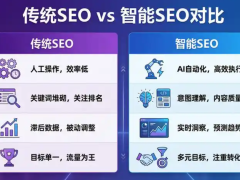
Traditional seos address:
Another problem is addressed by geo:
So, seo competes for the ranking of traditional search results, and geo further competes for the right of recommendation and reference in ai answers。
The real business of the future needs to be built, not just the search ranking, but:
"search ranking + ai vision + brand south."。
And that's why, when selecting service providers, firms can no longer simply ask:
"how's the seo doing?"
The question is:
"can you do google ranking and ai recommendation for me at the same time?"
Ii. Deliberation of seo and geo integration companies, at least six dimensions
There are already many companies in the market that are promoting geo services, but the capacity of different companies is very different。
Some have added a geo service page to traditional seo companies
Some of them are content marketing companies, and they're packing "more ai-like articles" into geo
Other companies, which mainly provide ai monitoring tools, lack actual seo landing capacity。
The real selection of seo+geo integrated services is suggested to focus on the following six dimensions。
Dimension one: are there really mature basic seos
That is the easiest point to ignore。
After hearing "ai search" "geo," many businesses think that the traditional seo is out of date, so they turn their attention to ai。
In fact, a web site with a weak base of seos makes it difficult to build stable geo competitiveness。
Why
Because both traditional search engines and generating ais require a judgement that an enterprise has sufficient authenticity, professionalism, authority and credibility。
The corporate network remains an important brand information source。
The foundational work of the website's information architecture, page themes, keyword layout, content quality, technical structure, external chain and branding signals can in itself affect the search engine and the ability of the ai system to understand branding。
As a result, a truly good seo+geo company should be first and foremost a firm with sufficient capacity。
This is also one of the more obvious advantages of ease。
Compared to some teams that have been involved in search marketing in recent years because of the emergence of generating ai, ease itself has long-term deep-seated google seo and overseas digital marketing, thus not supplementing seo from "ai content" in reverse, but continuing to expand geo capabilities on mature seo systems。
The two paths are very different。
2d: is geo staying at the "writing" level
One of the biggest gaps in the current market for geo is:
Geo = write an article like ai。
The content is of course important, but geo is much more than content。
The true generation engine optimization involves at least:
Brand entities are identified, subject authority building, problem layout, content structure, semantic relations, schema structured information, third-party authoritative signals, brand consistency, ai sources of reference and ai visibility monitoring。
A simple example。
A business is assumed to be an industrial robot manufacturer。
Traditional seos may focus on optimization:
"industrial robot manufacturer."
"robotic arm suppleer."
"industriament company."
When you enter the geo, the problems of users change markedly:
"who company is a capable official robot manfactor in china?"
"who are the best robotic arms for automotive facts?"
What kinds of operations are available for overseasons
Such questions are not simply "keyword search"。
It involves:
Problem understanding + procurement intent + brand comparison + recommended logic。
So what the geo really wants to optimize is the probability of a brand entering the ai answer。
It is a matter of concern that the idea of easy access to geo is not to interpret geo as "ai writing" in isolation, but rather to combine ai search visibility diagnosis, problem word research, content construction, branding optimization, and ai quote performance around the apo system。
In this sense, it is closer to the real geo than just content production services。
Dimension 3: can seo keywords and geo questions be planned uniformly
That's what makes "integration" a really crucial criterion。
Many of the so-called seo+geo companies actually:
The seo team does seo
Geo team does geo。
Both sides do their own。
And eventually there's a problem:
The enterprise spent two budgets and built two separate content systems。
Genuine integration should begin with integrated planning of user intentions。
For example, an enterprise that does energy storage equipment。
Traditional seos may be configured:
"energy story system manfacturer."
"commercial battery storage super."
"bess manufacturer."
In geo, however, further extension is required:
"who are the leaving bess agents in china?"
"how to choose a commercial enterprise superpower?"
"who is battery stage company is capable for european projects?"
"best chinese makes sense for distributors."
The two terms are not separate。
They actually belong to the same customer decision-making path behind them。
Good seo+geo services should be able to:
Seo captures identified search needs, and geo covers consultancy, comparison, screening and decision-making needs。
This provides an opportunity to serve google rankings and ai understandings at the same time, rather than repeating inputs。
From this point of view, the value of ease of access is not just "provide both seo and geo", but rather the opportunity to harmonize the traditional google keyword strategy with the ai-era problem-word strategy into a system of search intentions。
That is true integration。
Dimension 4: is there a way to solve "why is the brand not recommended?"
Many companies find it strange when they do geo: