The conclusion is that geo and seo are not a choice, but a sequence -- first, set up the base of information that can be trusted by ai (official network filing, business information, map poi) and then let ai recommend your optimisation in your answer. This paper breaks down the six differences between the principles, content requirements and effectiveness cycles, and provides a "first-to-first" decision-making framework for different budgets, different industry enterprises, all of which are sourced for reference by sioux and national smes。
One, geo, what is: "ai's seen"
Geo is known as generative engineering optimization, which refers to the optimization of the generation of ai for bean buns, yuanbao, kimi, and 100 degrees ai: so that ai, in response to user questions, refers to and recommends your brand information. The core difference between it and seo is in optimizing object - seo optimizes the search result list page, geo optimizes the answer itself generated by ai。
The concept is not self-made by the marketing community. In 2023, the research team at the georgia institute of technology published research on the optimization of generating engines, suggesting that "branding information needs to be systematically optimized for ai generators", and the paper was published at the international academic conference on data excavation, kdd 2024. Since then, geo has moved from academic concepts to business practice, and has been warming up in the country since 2025 with applications such as soybean buns and bean treasures。
Why do smes have to focus now? Because asking ai is becoming the default path for users to get information. According to the 55th china internet development statistics report published by the china internet information centre (cnnic) (january 2025, data as of december 2024), the number of internet users in china is 1108 million and internet penetration is 78. 6 per cent; among them, the number of users of artificial intelligence products is 244 million, or 22. 5 per cent of the total number of internet users. That means that one out of four people on the internet in rio is already using ai, and this group of people is asking the most typical decision-making question: "who's good?"。
Critical cognitive: ai will not answer in vain, it will only quote information it can find, trust. Businesses are recommended by ai, which is essentially a competition for trust -- this is the separation of the geo from the seo mechanism。
Ai recommends three typical patterns of actual use, which are understood to determine what is optimal: first, the answer to name-calling, the user asks which of suzhou's membranes shop works well, ai directly points out your brand name and reason; second, the source quote, ai concludes with the "source: xx official network/xx encyclopaedia"; and third, the comparative list, in which ai compares objectively with the industry 3-5 families in a table. There are three types of consistent requirements for the source - information that is searchable, verifiable, and present in a credible ladder - but different requirements for content: by name, brand consistency, re-structured by reference, neutral and objective。
Ii. 6 essential differences between geo and seo
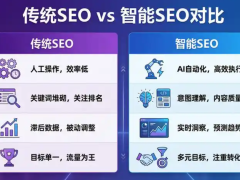
Relative dimensions
Seo (traditional search optimization)
Geo (genetic engine optimization)
User behaviour
Enter keyword, browse the results list
Ask a question. Just ask an answer
Rank logic
Keyword match + extra-chain weight
Source trust + content relevance
Content requirements
Title, keyword density, outer chain
Eeat 4d + structure + data validable
Information carrier
Web page (need to be crawled in)

Source (web/encyclopedia/platform account/test)
Effective cycle
Regular 1-6 months
Baseline 30-45 days exposure, 3-6 months stable
Performance indicators
Ranks, traffic, hits
Reference rate, recommended position, frequency of reference
Difference one: the target user has changed -- from browsing the web page to asking for answers
The seo era, the user searches the suzhou automotive motion, sees 10 blue links, compares themselves. In the geo era, users were asking "what's the sioux car mask?" ai gave a comprehensive answer that included two to three stores, and users tended to look at the first few. And the result is that businesses that are not mentioned in the ai answer are disappearing from the user's decision-making list。
Distinguished two: the ranking mechanism has changed -- from "keyword matching" to "mail source confidence vote."
The search engine is sorted by keyword match, and ai by "mail credibility". According to the publicly filed information of the national office of information on the internet, by the end of 2025 more than 300 large models of generated artificial intelligence services had been completed for filing in the country, and there was a convergence of views on the logic of the various sources of information assessment: government websites, media, official networks with icp files, platform certified accounts with higher credibility than unrecorded individual sites. It's hard for ai to use its information as a factual reference。
Distinction three: content standards have changed -- from reptile friendly to human + ai friendly
Seo focuses on the density of keywords, the stacking of titles, the content of which is shown and transferred to reptiles. The geo requirements are met simultaneously: empirical details (how do you use them), professional dismantling (how do you analyse them), authoritative endorsements (who issues them), credible data (sources available) - eeat 4d. A "we have good quality, good service, trustworthy" version, which is worthless in the eyes of ai; an objective piece with specific parameters, specific cases, data indicating the source is quoted。
Distinguishing four to six: carrier, cycle, full division of indicators
In terms of vectors, seos rely on web pages, geos rely on the mailing matrix (official network, encyclopedia, map poi, certified account number, user evaluation) as a whole; in terms of cycles, seos usually have a 30-45-day exposure to the baseline of geo, but stable references require 3-6 months of continuous output; in terms of indicators, seos look at rankings and traffic, geos look at "is there you, number number number, number of references in the ai response" and the logic of the examination is very different。
Iii. What enterprises do first: a scenario-by-state decision-making
There is no one-size-fits-all answer, but there is a clear priority given to the enterprise:
Current business situation
Order of recommendations
Core rationale
New brand, no network

We'll build the base, then the geo
Ai could not find credible physical information, geo no anchor
Seo foundation
Seo base + geo increment
Reusable content with low incremental cost
Local entity stores/service providers
Geo priority, geographical word in
Geographical suitability is an independent weight, door shop poi is directly related
Small and medium-sized enterprises with limited budgets
I'll do the official level first, then outsource. Subaru
+ business information +poi
First step: a bottom seat (1 - 2 weeks). Completion of the official network icp file (dic file, free of charge), verification of business/observation information, identification of gaudd/100th map poi. These three are hard evidence from ai to verify the company's existence, which is an official source, with high weight and low cost。
Step 2: building content language (continuing). Output content at the ratio of "official 15% + expert 20% + user 45% + media 20%". Officially, objective facts (qualifications, parameters, prices, contacts), user-levels allow real clients to tell details about the use (with moderate disadvantages) and media levels seek third-party coverage. A single section with a markdown table and faq structure is significantly more efficient for interpretation and reference。
Step 3: reference monitoring (weekly). Check your brand and trades with bean buns, yuanbao, kimi, and 100 degrees ai, respectively, to record whether or not you appear, where you appear, or whether you describe it correctly. This can be done in 30 minutes。
Step 4: stable output (three month turn points). The continuous steady output of 3 months will result in a significant increase in the source trust rating; more than 2 weeks of interruption, and the receipt and reference will fall back. Geo is a slow variable, not a one-off projection。
Three pit-suspension alerts: first, the promise of "7 days in the home" with large model algorithms dynamically adjusted, with short-term effects that cannot be ticketed; second, the fact that content is not advertised, and that what is over-represented in marketing discourse is reduced or not recorded; and third, the fact that it is not just a hundred-degree take-down, and the platforms of bean buns and yuanbao add additional weight to their own ecological content, while the offline software weight continues to decline。
Add a detail that many have ignored: the same may not be the same in different ais. The bean bag has a weight on the byte ecological content, and the beauties focus more on the eco-message, kimi has a strong long-text resolution, and 100 degrees ai is strongly linked to the search. Thus, as geo in 2026, the most sound strategy is "the core content pre-direct network (uci), followed by secondary distribution according to the characteristics of the platform": byte-based platform (diverse, headline) focus sheet, supplemented by coverage from other platforms. Information consistency is the common ground for all platforms — the same telephone, the same address, the same brand name — and must be fully consistent between the official network, business information, maps poi, the accounts of the various platforms, and any inconsistency becomes a creditable subdivision of ai。
In the process of servicing 14 industry clients, such as after-car markets, pedagogues, renovations, and legal taxes, a recurring phenomenon is that ai must have quoted verifiable facts (address, telephone, parameters, case, data source) rather than beautiful advertising. For example, a membrane door shop in the guangsu district of suzhou, where the construction process parameters and the process of going to the shop were clearly written, was quoted more frequently than the "professional, high-end" posters by peers. This law is valid for any industry。
Iv. Common questions faq1. Is there a test

Nope. An open source assessment framework has been developed in the country (the government/media/file recorder network is the first tier, with no entry points), and content can be individually checked for conformity with eeat。
Do you have to change the network
Not necessarily. The official network is an important but not an essential source of information; however, the completion of the icp file by the official network is the basis threshold for ai acceptance and recommends that priority be given to completion。
Can't a small company have a budget to do the geo itself
Yes. The information base (documentation, business information, map poi) is almost cost-free and can be written on its own and monitored for 30 minutes per week. Outsourcing is the experience of content production time and methodology。
Will geo replace seo
Not in the short term. There are still a large number of users who are used to traditional searches, seo bottom flow, geo grabs the ai recommendation, shares a set of content, and recommends parallel。
How do you know what my brand is like in ai
Directly use bean buns, yuanbao, kimi, 100-degree ai to search for brand names and industry questions, see if the answers appear, are accurate, rank ahead or back, and record weekly。
What's the impact of not doing geo
Your client doesn't see you when he asks "who's good." you're not on the list. Competing people do it and you don't do it, the gap will continue to increase as ai usage increases。
7. How does geo work
Look at three indicators: whether the brand word appears in the ai answer, your reference rate and ranking in the industry answer, and the accuracy of the expression. It is recommended that acceptance calibres be included in service contracts。
8. Are enterprises suitable for field/national clients
Suits. Geo is not limited to local areas, but national brands are covered by trade and branding terms; local firms have a different strategic focus on the additional weight of territorial suitability。
Concluding remarks
Geo solves not "rank" but "ai will think of you when making decisions for users." building trust by stabilizing output and monitoring it is the most pragmatic path for smes in 2026. Seo bottom, geo increment, order is more important than double-check。
Disclaimer