


Sichuan's economic data just came out in the first half of 2026, and GDP ran by 4. 8 per cent, and it looks good, but if you go down to the real estate and consumption lines, you find that money is not flowing to where it should be, and supply and demand are scrambling。
The economy is not stable
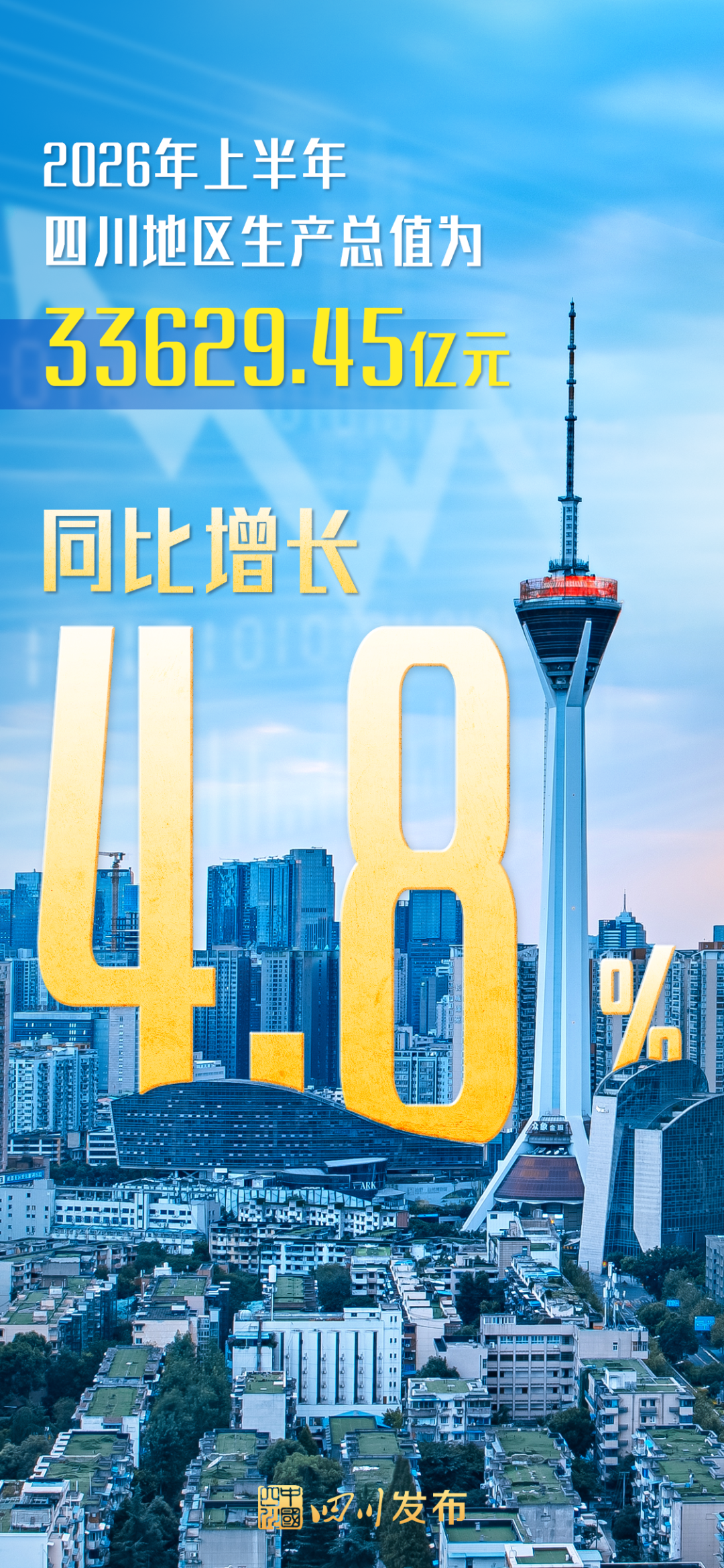
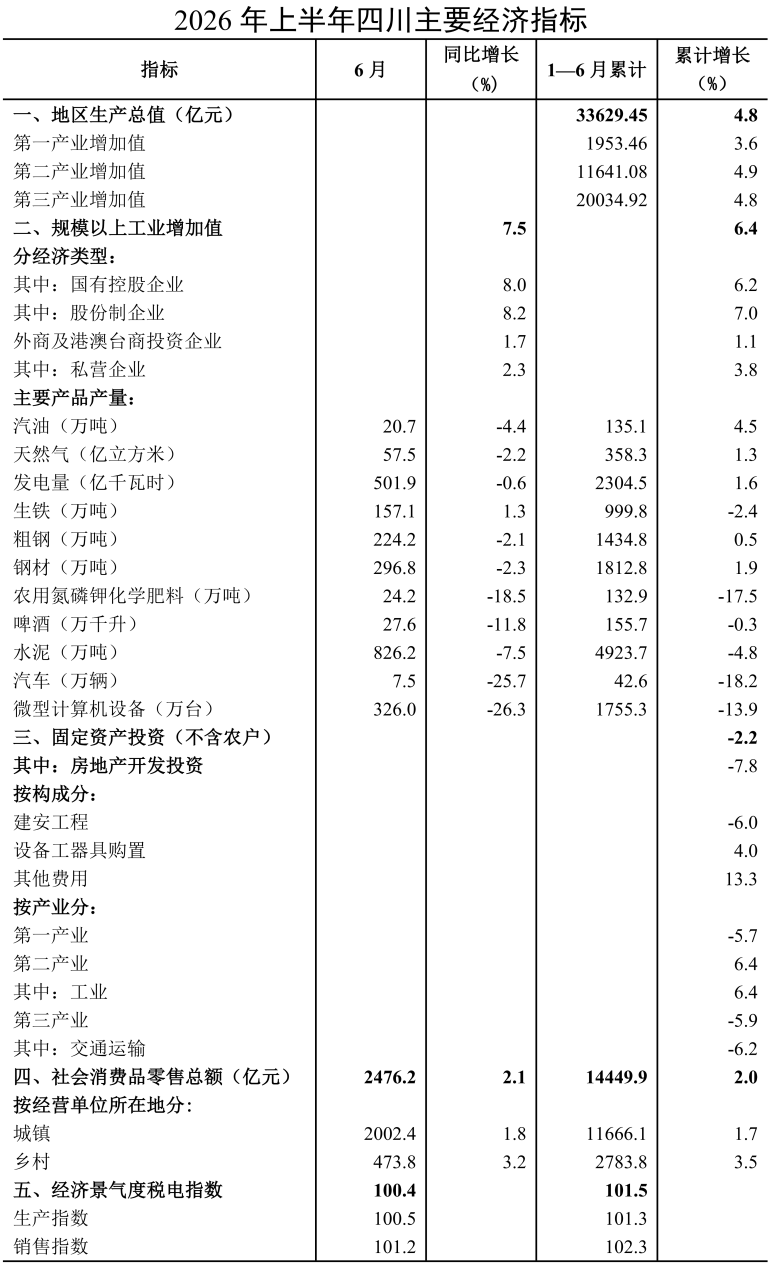
The accounting results of the sichuan provincial bureau of statistics show that GDP in the first half of the year was 3,362,945 million yuan, an increase of 4. 8 per cent in constant prices. In terms of production, the number of births rose by 3. 6 per cent, while the number of births rose by 4. 9 per cent, while the number of births increased by 4. 8 per cent. The highest rate of increase was in secondary production, the industry was still carrying beams, and the largest but flat rate of increase was not delayed。
4. 8 per cent is at the national median level and there are no obvious gaps in structure. However, production rose by only 3. 6 per cent, 1. 2 percentage points below the size of the plate, and agriculture slowed down. In general, sichuan's economy runs ahead of the pressure, without any slowdown or acceleration, in a stable and worrying state, as you can see on the back of the plate。
How was the harvest this year
Food production in the summer was 4,839,000 tons, an increase of 76,000 tons over the previous year, an increase of 1. 6 per cent, which was a return harvest. Cash crops were also stable, with a 3. 4 per cent increase in vegetables, a 4. 5 per cent increase in tea and a 5. 4 per cent increase in fruit. The number of pigs produced rose by 1. 2 per cent to 31,173,000. However, 4. 42 million sheep were out, falling by 19. 8 per cent, and cattle by 2. 1 per cent。
The number of poultry entries was 290 million, which was barely moving and increased by 0. 2 per cent. The production of eggs rose by 3. 3 per cent to 965,000 tons. Water products, 994,000 tons, increased by 5. 1 per cent. The headlines of planting and farming are still rising, but the collapse of sheep is indicative of the shrinking demand for terminals, the loss of stocks at the farm end, the cold and the heat within the whole range of livestock plates, and the re-orientation of life。
What's the biggest thing in the factory
In the first half of the year, industrial value added increased by 6. 4 per cent, with 33 of the 41 major industries increasing. The worst was lithium ion batteries, which increased by 62. 7 per cent over the same period, smart television by 52. 2 per cent, integrated circuits by 18. 6 per cent and industrial robots by 15. 7 per cent. The computer telecommunications and electronics manufacturing industry as a whole increased by 10 per cent, electrical machinery by 9 per cent, and new energy and electronics tracks ran fast。
High-technology manufacturing increased by 11. 4 per cent overall, aerospace and equipment by 21. 1 per cent and electronics and communications by 15. 8 per cent. At the profit end, industrial enterprises earned $13. 556 billion between january and may, an increase of 6. 9 per cent. It should be noted, however, that private enterprises increased by only 3. 8 per cent and foreign enterprises by only 1. 1 per cent, mainly by state-owned and equity enterprises, and that small and medium-sized factories did not feel the dividends。
What's the response to services and consumption
The services sector as a whole increased by 4. 8 per cent, but with significant internalization. Leasing and business services surged by 14. 1 per cent, information transmission and software services by 9. 8 per cent, finance by 8 per cent and accommodation and catering by 6. 7 per cent. Wholesale and retail sales increased by only 3 per cent and transport storage by 3. 2 per cent. This indicates that the demand for business and professional services is being limited, but that the daily consumption of the population is clearly conservative。
The total value of the society was 14,44. 9 billion yuan, an increase of only 2 per cent. Cultural office supplies increased by 16. 2 per cent, food and oil by 13. 2 per cent and tobacco and alcohol by 13 per cent. However, petroleum products fell by 7 per cent. The increase was due to daily necessities and office supplies, which meant that there was still no flowers, large consumption and upgrades were not real, and the wallet was tight。
What happened to the house
Capital assets investmentsExcluding farmers, this represents a 2. 2 per cent decrease over the same period. Investment in primary production fell by 5. 7 per cent, investment in tertiary production by 5. 9 per cent, and only secondary production by 6. 4 per cent. The money is obviously crowded to the manufacturing end. Real estate was even more difficult, with a 7. 8 per cent decline in development investment, a 13. 3 per cent decrease in construction space, a 13. 7 per cent decline in sales of new commodity houses and a downward trend, with no steady signal。
The contraction of the property chain has been a direct drag on investment in three products, all of which have been affected downstream of construction, renovation and household electricity. However, the industrial end is filling, with 6. 4 per cent growth indicating that manufacturing is expanding. The overall investment structure is changing from a property-driven to an industry-driven one, the pain of the transition period is not over, the short-term growth of the province is being suppressed, and the wait-and-see mood of the buyers is still alive。
What do you need for the rest of the year
The tax and electricity index 101. 5, production 101. 3 and sales 102. 3, all in the atmosphere. However, the bureau of statistics itself has stated that external complexity is volatile, that supply and demand are at odds with strength and weakness, and that the recovery base is weak. The next phase will be the completion of the bi-city economic circle, the implementation of the strategy of quadratic convergence, urban-rural integration and five-zone co-existence, with a view to strengthening employment, business stability, market stability and expectations, and the realization of policy dividends。
To be honest, while it was no longer easy to keep up the 4. 8 per cent increase, 2 per cent of the society had fallen by zero and 13. 7 per cent in real estate sales, and the confidence of the population had not yet returned. New quality productivity, with beautiful data coming out of the lithium and space tracks, can last the second half of the year, depending on the speed of policy landings and the physical perception of the enterprise, and not just the book numbers。
How do you think sichuan pulled up consumption in the second half of the year? The comment section tells you what you think is useful, so just ask your friends who are interested in the economy。


