


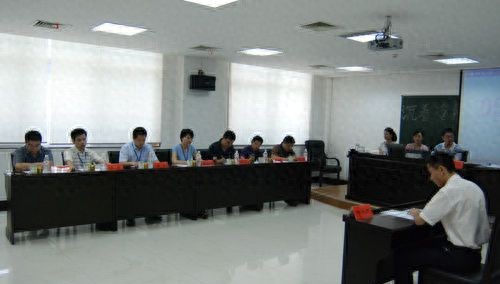
What are you afraid of
It's not that you're afraid to talk, it's not that you're afraid of being rude -- it's that the examiner throws out a hot spot, and you have a blank in your head, and you can't hold a single word。
"what do you think of pre-fabricated food entering school?" "ai replaces manual jobs, what do you think?" "what does the village ba fire reflect?" there are no standard answers to these questions, but the depth of your thinking as a quasi-civil servant and the logic of solving problems。
In factSocial hot spotsIt's a “small theory” that cuts three steps into the head, and any topic can come out。
Step 1: open and clear positions, do not bend (15 seconds)
The first step you'll have to take is to make a direct statement. Don't repeat the words. The examiner's annoying。
In the case of good things (e. G. The promotion of intelligent agriculture), you can say: “this reflects the fact that technological progress is actually benefiting people, and it is a welcome and promising exploration”
“this reveals that we still have obvious weaknesses in regulatory mechanisms and in the protection of older persons, which must be given high priority.”
Controversy (e. G. Ai face change technology), which states: “technology is a double-edged sword, and we need to find a balance between encouraging innovation and protecting against risk”
Remember, the first sentence is to let the examiner know that you have a position and an attitude。
Step 2: multi-dimensional causes, using the "subject analysis" (60 seconds)
Once the point is clear, get to the analysis. This part is the key to pulling points。
I'll give you an all-powerful tool -- the master analysis. Who's involved in the subject, you pull out and analyze it:
• citizen/consumer: convenience? Or are you fucked? What are their needs
• enterprise/platform: is it ulterior or is it the bottom line
:: government/regulated sector: gaps in policy? Or is it not implemented
• social/media: is public opinion guidance helpful or disruptive
Take the examples of “high-priced slaughterers in the scenery”: unequal consumer information, short-term profit-seeking businesses, lack of sector regulation, inadequate tourism credit systems — four angles at once, and the idea opens in an instant。
If you do not want to use the dominant approach, you can also find reasons to direct these four dimensions from intellectual recognition, institution-building, supervision and advocacy。
Step three: don't say nothing about the response
The analysis is complete and solutions have to be found. This step is one of the two words that the examiner values most: practical。
Not just “strengthen management” — rather, “promoting a clear-coded pricing system to support consumer “scrambling” claims”。
Let's not just say "improvement of the law" -- let's say, "introduce the trade blacklist, one-time slaughter, lifetime ban."。
Let's not just say “enhanced publicity” – say, “pull consumption through short video platforms and send fraud prevention to the people”。
At the end of the sentence, there is a small improvement: “it is believed that, by working together, we will be able to find an effective solution to question xx and that justice will be truly felt by the people. Clean end, no mud and water。
For a little reminder:
The framework is the skeleton, and the flesh and blood must accumulate on a daily basis. It takes 15 minutes a day to paint a review of the mainstream media, and to see the hotspots, to decipher them in the framework of the “statement-analysis-response” package. It's a lot of practice, and it's natural for the exam。
Do you think the hardest thing about social hotspots is to find a reason or a response? What's the hot spot lately that makes you think, "if you get it, it's over." let's talk about the comment section, let's get you down. If it's any use, i'll send it to my friend who's ready for an interview


