


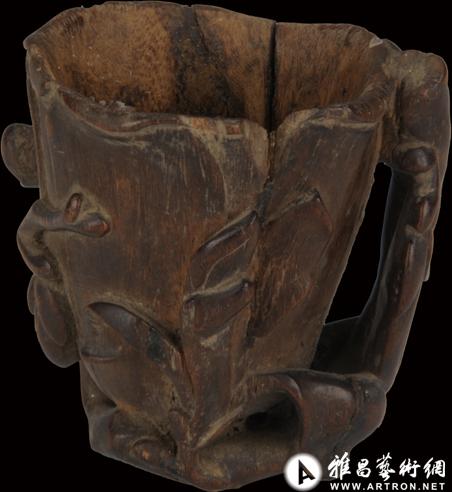
The following are the main reasons for the unique artistic charisma that characterizes the carvings of the canton:
It's a natural condition
It is located at the southernmost end of anhui province. The capital of kuizhou is run by the counties of zhuang, huning, zhuang, zhenghui, qimen and zhengheng, which are rich in forest resources. The most common are hard or soft trees such as pine, succubus, succubus, succubus, tarp and silver almond trees. A wealth of material resources has been made available to the tradesmen and craftsmen of kyushu. They choose to use wood of fine quality, texture, soft material, easy to carving, either directly, or engraving of selected material, then combined with components. Created a diverse and well-carved sculptor。
♪ and the wind is strong ♪
On the occasion of the dawn, the economy of the canton is prosperous and rich. There are many people who are “in order to enter and die in writing” and who are well represented. It is the birthplace of cheng zhu science, the painting of chess, the engraving of gold, and also the insignia, the insignia, the insignia, the painting of the insignia, the insignia, the engraving of the insignia, the insignia, the view of the insignia, the ancient architecture, the masonry, the ink of the ink, the ink of the ink, the paper of the heart. The advanced culture has contributed to the development of carving art, which has greatly improved the standard of artistic creation of artisans. Some insignia craftsmen are themselves highly knowledgeable students or painters who often learn from each other and create from each other, as painters, calligraphers, etiquette and ingenuity. This has contributed significantly to the upgrading of the art level of carving in kwok county. It is in this cultural context that there are a large number of well-known homes and furniture of high artistic value in the region。
The badgers show off the rich push
In ancient times, the area of the badi region was small in number and number of people, and it would be difficult to earn a living by relying on traditional farming. It is precisely because of the lack of sufficient resources for survival that the insignias have been seeking to develop since the song generation, and that the insignias “have no cure and no cure”. The hardworking insignia has come out of the “border limit” from generation to generation and has been enriched by the trafficking of salt, tea, mountain goods and quanbao. The world-renowned logo dealer, who grew up in tong song, flew to china's mall after the introduction of a new salt law (1465-1485). It is the golden age. "philip, guang, guang, guang, qin, jin, shu, yi, lu, zhe, chu, yan, han, etc. Have all their activities." along the river area, there is a saying that there is no town without a badge. Many of them are well-organized, well-funded and, in many places, almost controlled by the logo. For example, 60 of the 80 major merchants in yangzhou, and 28 of the 35 famous salt dealers in zhejiang. According to the state register: “the company of the young8s is made up of four people.” during the year of kanlong, the company had more than 10 million assets, and four of the eight ministers who met in gangnam, were the giants of kyuzhou. From mid-minga to chongaqing, tao guang, and bian fong, the business community was the largest in the country for more than 300 or 400 years, with a large number of projects and substantial financial resources. In addition to expanding capital to become rich and pursuing endlessly high profits, they also use these huge taxes to donate money to the feudal dynasty; donate money for education in order to nurture and expand their feudal power; also cut their lands, build halls, build their halls, build their graves, and create a cleavage in order to entrench the patriarchal rule of law; and spend much of their profits on a life of luxuries. In their own country, they “rejoy themselves with luxuriousness, slurry and meat, and feed more than kings”. They competed for wealth, flourished in the reconstruction of their ancestral homes, “houses full of home” and “winners of gardens”. "when the merchants become rich, they go home to repair the temples, build the gardens, build the great buildings" and "the great fathers of honor, honour and honour, show their good faith and show off their wealth and write their own monuments." despite the fact that it is the business of the badrians, the traditional confucian mentality still holds the firm belief that “first-class good is only to read”. As a result, their strategy of “business, culture, culture and culture” has led to a virtuous cycle of business and learning. The big salter, boshanzhi, claims to have a wish for life: first, to build a table for the second generation; second, to be a strategist; and third, to be able to study for the next generation. In this context, in order to exaggerate the court and educate the children, the insigniars, while building the kiosks and plazas, have made great efforts to promote education and to raise funds for schools, with a view to creating a good culture for future generations with their enormous capital. So their courtyards, in addition to being stylish, consistent and cozy, are more trophies of fine decorations. The beams, windows, doors, sparrows and stairs in the halls are used in wooden sculptures, seeking to be fine and depicting gold and silver, and seem very radiant. It has been reported that the construction of the “court of endeavour” in kuizhou cost a total of 600,000 taels of silver and that all the carvings were carved by 20 craftsmen for four full years, with more than 100 taels of gold plating on them alone. The economic strength of the logo provides an endless space for craftsmen to play, and the deep-rooted confucianism has had a tremendous impact on their minds, which has objectively contributed to the rapid development of the carvings of the badrian。
The carvings of kwok reflect, from different angles, the social life of the ancient state and the aspirations of different classes. The craftsmen, for the most part, use finely carved techniques to express the work of the ancients and give them a sense of truth. It has deep-rooted charades of culture, unique carving techniques and a rich rural fragrance, which combine to characterize the country's carving boundaries. It is a collection of carvings, history, culture, folklore, art in one body, with great charm, and is attracting more and more people to study and find out in the canton。
(the author of this paper is the director of the preservation department of the county museum)


