


“the name of kim is true, and it is clearly a spring.” the high examination, the most ink-colored in the youthful drawings, carries the ambition and future of thousands of students. In june of this year, more than 70,000 candidates from hainan used their pens as swords, marching to this important test of their lives, sweating their dreams and writing vanity with wisdom。
What new changes will be made this year in the examination for the various subjects? How should scientific re-engineering and bottlenecks be broken during the sprint phase? What are the key details of the examination site to deal with? In order to prepare for the examination, and from time to time, nino-nam clients, the south china sea network and the south china metropolitan press will introduce the “war preparation 2025” guide section, which will be followed by a series of invitations to academic and research experts, to senior high-level and experienced teachers to provide targeted guidance on preparing candidates for the examination, based on the characteristics of the various disciplines。
South sea network, new hainan client reporter, doo-ho
"hold five colors, take the title." in june, more than 70,000 applicants from hainan will be admitted to the baccalaureate. In previous reporting, the names of eight subjects, namely, language, mathematics, english, physics, chemistry, biology, history and geography, provide targeted guidance on preparing candidates for the examination, taking into account the characteristics of each subject。
Your browser does not support this video format
How does the final 20 days allow candidates to study for political subjects? The final edition of the column entitled “students in preparation for the preparation of the study of political subjects”, entitled “students in preparation for the preparation of the study”, invited munfan ling, head of the political team at the shumai high school of the huadong teacher training university, to take advantage of the extensive teaching experience in order to prepare candidates。
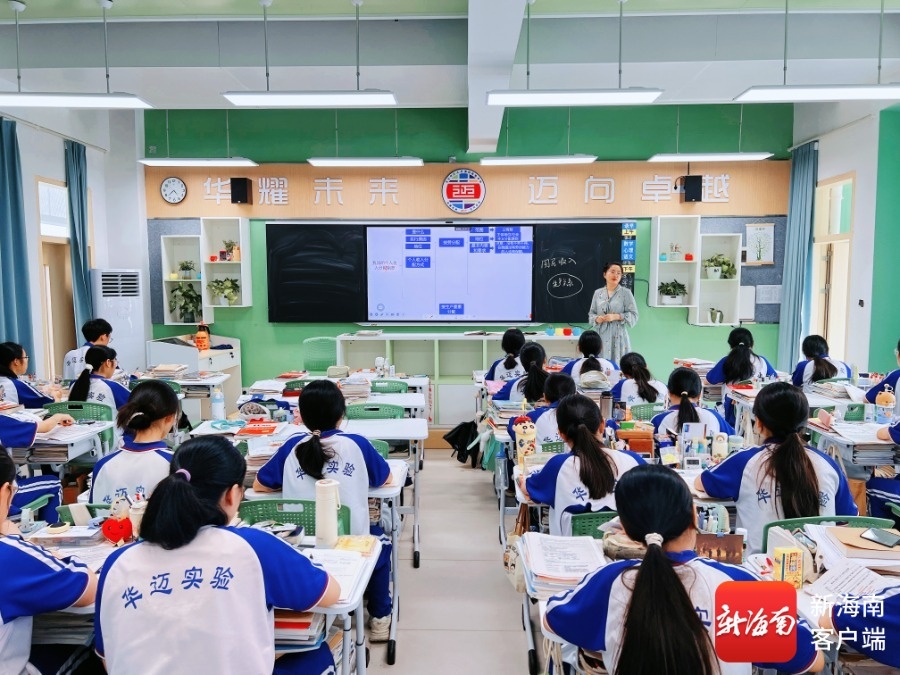
Mr. Munvaline is in class. Journalist motivated
Core term 1: theme and value
Overall structural stability, largely consistent with last year
“this year, the structure of the high examination papers for political subjects has been stable as a whole, and the distribution of topics and points is largely the same as last year.” according to munfan ling, the contents of this year's cvr remain essentially the same as in previous years, and are based on seven textbooks。
Of these, four are mandatory: china special socialism, economic and socialism, political and rule of law and philosophy and culture; three are selected: contemporary international politics and economy, law and life, and logic and thought。
PoliticalFull score of 100, with the distribution of the theme and fraction as follows:
I. The choice is 22 questions, 2 points per sub-issue。
2. Non-optional topics, covering topics such as resolution, material analysis and open-ended questions, total 56 points。
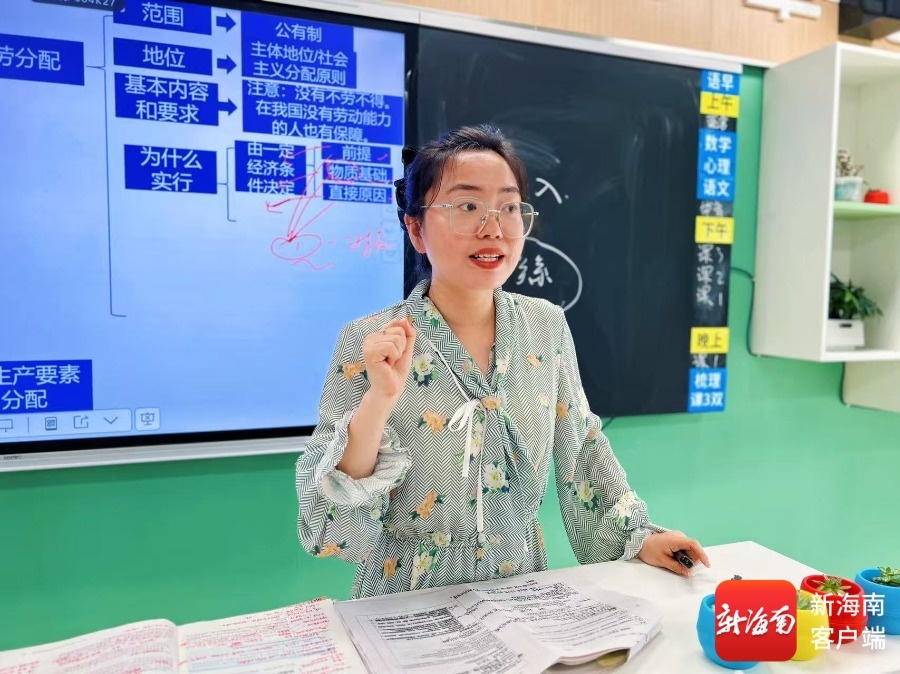
Mr. Munvaline is in class. Journalist motivated
Core word 2: focus of the examination
Focus on five areas of student competence
According to devlin, the political studies in the higher examination focus on the integration of students under the “one-core-four” evaluation system。
One is the ability to apply knowledge. The examination focuses on the accurate understanding and flexible application of the students ' knowledge of the various modules, requiring candidates to be able to combine theoretical knowledge with real-life issues, avoid being hard-headed and reflect the ability to migrate knowledge。
Second is the ability to extract and interpret materials. The questions usually provide materials such as text, charts, data, which require students to quickly extract critical information and grasp core perspectives. Examination of information screening capabilities to avoid redundancies in information, and precise targeting of problems。
Third is material analysis capacity. The subject usually requires candidates to conduct an in-depth analysis of the logic, causality, etc. Behind the material on the basis of extracting information. This requires candidates to learn to interpret the phenomenon from multiple angles using dialectic thinking。
Fourth is the ability to integrate knowledge and address practical problems. Political emphasis on integration often requires analysis of complex issues that integrate knowledge across modules (e. G., economy + politics, philosophy + culture). The open-ended subjects focus in particular on innovative thinking and on examining whether students can make reasonable suggestions or solutions。
Fifth is the ability to respond to the language and norms of the discipline. In organizing answers, candidates need to focus on the normative aspects of terminology that are consistent with political disciplines and avoid verbal expressions。
Core term 3: review strategy
Avoiding mechanical memory. Scientific planning
In less than 30 days, how should candidates be able to seize the last time to study politics efficiently and prepare for the examination
“i hope that the students will adjust their mindsets and strengthen their confidence.” munfan ling argued that the last 30 days were a critical period for scoring political subjects, and solid memory and systematic review could significantly improve achievements。
Second, the review should be optimized. The term “politicalism of thought” encompasses external “political” and intrinsic “ideology”. Candidates should fill their gaps on the basis of errors, do more of them, and keep their sense of the examination and their thinking。
• policy on endorsement: avoid mechanical memory and focus on building knowledge frameworks. Candidates need to return to their books and integrate their knowledge. It can be combined with a catalogue or a mind map to form a logical system that guarantees the precision of core concepts and principles。
Question strategy: focus on hot spots and preset. The choice of advanced political situations is often driven by hot spots, leading candidates to a multi-dimensional and multi-dimensional analysis of issues. Candidates can interpret, analyse and express their abilities by means of situational training materials; focus on the normative aspects of written responses; and consider each simulation examination as a high examination, with strict time limits, to regulate writing and to enhance probabilities。
(b) balancing learning and encapsulations: avoiding blind puzzles, adhering to the principle of “retrospection before doing”, familiarizing themselves with the subject patterns and maintaining a sense of hand in the subject training; targeting gaps and omissions, collating the faults that you have made, combing the subject lines, consolidating key knowledge points, focusing in particular on summing up the subject lines and avoiding repetition。
Scientific programming: analysis of individual performance, identification of relatively weak knowledge points, development of targeted learning programmes and rational allocation of study time, based on the distribution of high scores (e. G., high economic and political modules); more in-depth understanding of these knowledge points through thematic training to ensure focus and comprehensive coverage。
Core term 4: answering techniques
Control of time, standard responses, hotspot connections
In answering questions, what are the concerns or techniques that can help candidates to “plus”? Monvaning says there are three points that require attention:
Time allocation: the selection of topics should preferably be contained within 20-25 minutes, with sufficient time reserved for non-optional topics. Among them, the selection topics are carefully considered and interference options are excluded; non-optional topics, such as the identification of topics, the discussion topics, etc., require logical clarity, a hierarchy of responses, and language norms。
2. Hotspot linkages: candidates need to focus on major annual political hotspots and improve their capacity for material analysis and theoretical integration. The responses are subject-mattered and clearly examined in terms of the scope of knowledge, the identification of precise keywords and a comprehensive analysis of views。
3. Normative responses: when responding, examiners need to be careful about the correct expression of terms and avoid verbalization; to read carefully and comprehensively, to break subparagraphs, to make them clear and to be logical in order to avoid inconsistencies or repetitions; and to finish the handwriting and to make it neat。
In addition, munfan ling reminds that when answering questions, candidates should pay attention to extracting useful information from materials, combining it with textbook knowledge and avoiding any isolation from materials or simply listing points of knowledge, and to theoretically linking to reality and using textbooks to analyse problems or phenomena in materials。
“it is to be hoped that, by means of subjects, frameworks, materials, language regulation, etc., students will be able to achieve the desired results at the highest level in the examination.”


