


Hello, everyoneOppoI don't knowOneI'm the leader of a long-painted digital network that's been sharing ground air and machine goods and helping ordinary people to save electricity。
I'm talking to you today about a usage that almost everyone meets, but most people are mistaken。
When you're out, there's no net on the tablet, there's no laptop, there's no traffic on the backup. It's connected, it's easy to operate, it's for everyone。
But i'll tell you the truth: oppos and one-plus users really don't have to do this every time。
Many people don't know that our oppo, plus our own communications-sharing function, which looks like a normal hotspot, is shared mobile traffic, but it's not a level at all。
I've done many realistic measurements, as well as shared traffic online, with an average hotspot that consumes 18 per cent more electricity per hour than communications, a body temperature of 4°c, and a double failure。
Unfortunately, 90 per cent of users do not know of this function at all, either using the usual hot spots that cost electricity, wasting electricity and losing mobile phones, or either the two functions are poorly separated and used indiscriminately, with more electricity and more hot。
Today i'm going to tell you the whole story without any professional terminology:
What's the difference between communications sharing and normal hot spots? What's the difference in electricity consumption? What's the delay? What's the difference? One step at a time, teach you how to turn it on, how to set it up, when to use the best。
It's all about real-life measurements, real-life steps, and white can read it. It's suggested to collect it and never use it in vain。
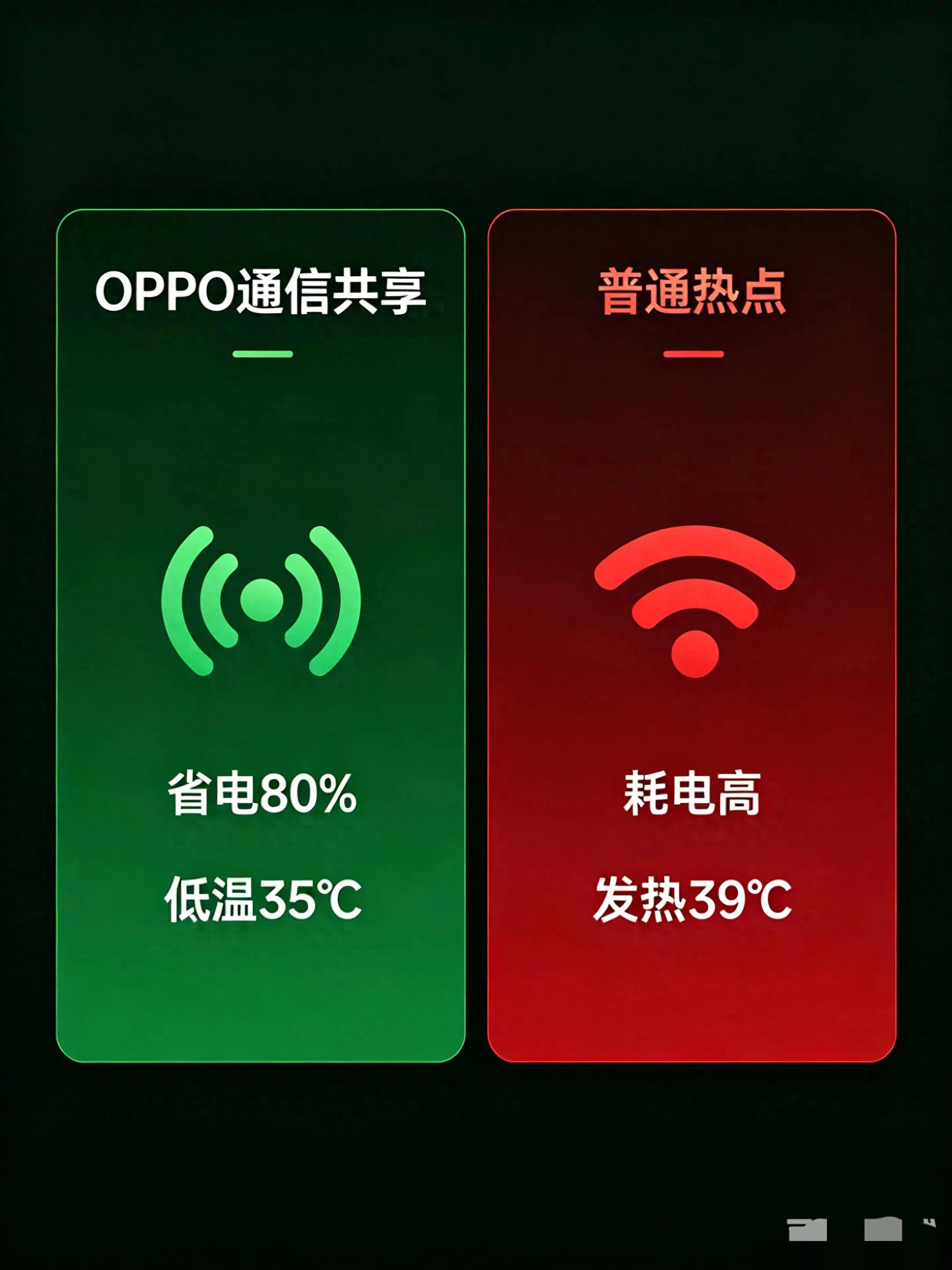
First of all, tell the truth: why is everyone so hot and wrong
Let's start with our ordinary people's daily scene。
The first reaction to out-of-house, car chases, live air, tablets on the internet, laptops, as long as there is no traffic in the equipment, is to open the cell phone hot spots and connect them。
There are three inherent perceptions:
First, it is felt that hot spots and traffic sharing are one thing and no difference
(b) second, it does not matter if electricity is spent as long as there is access to the internet
Third, there is no knowledge that oppo has its own communications sharing function。
But the reality is completely different。
Ordinary personal hotspots, which are fully independent of the wifi signal, 24-hour high frequency network, continuous signal, high hardware load, high capacity and visible heat。
Oppo's own communications sharing is a light quantitative sharing model that optimizes the bottom of the system, without the need for independent high-power wifi, with low backstage loads, low capacity, lower delay and less heat。
Many people go out without electricity for a day, either the battery fails, or they turn on the usual hotspot without knowing how to run out。
For three days in a row, i did standard measurements of the same environment, the same brightness, the same signal, and the data are very visual, and you can see the extent of the gap。
Ii. Real comparison: common vs hotspots for communication sharing. Yeah
Test machine type: oppo reno12 plus ace5
Test environment: outdoor normal 5g signal, screen brightness of 50%, audio default, shared only, no additional ap。
The duration of the test: a continuous one-hour weblog, an online video。
1. Electricity consumption measurements
• general personal hotspots: 26 per cent of an hour's electricity consumption
• oppo communications sharing: 1 hour electricity consumption 8%
The difference is 18%, and the amount of power saved is almost 69%。
2. Aerodynamics
• normal hot spots: maximum airframe temperature of 39. 6°c in an hour, clearly hot hands
• communications sharing: maximum airframe temperature of 35. 5°c in one hour and only slight temperature hot
3. Network delay and stability
• ordinary hot spots: high volatility, occasional carton, occasional buffer of videos
• communications sharing: lower and more stable delays, video-painting, meeting screens almost zero cartons
4. Backstage stand-off testing
Inactivity is shared, network is not used and is available for eight hours:
• general hotspots: 11 per cent on-site power outages
• communications sharing: 3 per cent off-line
After reading this set of measurements, you get it:
The same is true of shared traffic through the internet, where ordinary hot spots consume electricity, heat and instability; communications share electricity, cooler temperatures and more stable grid speed。
I am not exaggerating. The bottom structure of the system itself is different, not the same level at all。
Iii. General and easy to explain: what is the difference between the two principles
I'll translate it to you in big white. I don't know what to say。
Normal personal hotspots
The equivalent of your mobile phone being transformed into an independent router, with the full power of the wifi signal and the transmission of data to the outside, the continuous network, the continuous decoding。
The full-way hardware is operating at high loads, with natural high power consumption and heat, which also accelerates battery ageing over long periods of time。
Oppo communications sharing
It is an oppo, a one-plus system low-quantification channel that does not have to open a single large-power wifi launch, but creates a hidden flow channel between the equipment。
The backstage is extremely low, does not use high-frequency signal, and the system also has an intellectual hibernation traffic, which automatically reduces working time when it is not needed, thus saving electricity and not burning。
A brief summary:
Temporary emergency response is occasionally used, and normal hot spots are barely available; long-term traffic sharing, long-term office pursuits, must be shared with communications。
Iv. One step at a time, teach you how to open oppo communications, and white can do it
Appliance type: full oppo, one plus, with a full version of coloros, hyperos, supported by a new old machine。
Operational steps
1. Open cell phone desktop [setout]
2. Find points [to connect and share]
3. To see the [communication sharing] option, click directly
4. Opening the communications shared general switch
5. Optional to allow automatic connection to tablets, computers, other mobile phones
6. No password required, account number and automatic connection under network
Use small details
• less complicated wifi passwords, free automatic connection, and less expensive than hot spots
• automatically separated from a certain distance and without being gagged
• the system is automatically dormant when idle and does not use electricity in the backstage。
Two practical options
Option i: daily long-term sharing
The tablets and notebooks are frequently shared, communication is shared directly, electricity is not hot and is not used to return switches。
Programme ii: temporary emergency utilization
It is used once in a while, and when used, it is shut down directly, which is less timid and less electrical than the opening of normal hot spots。
V. What scenarios are shared by communication? What kind of scene
Many people don't know when to use it, and i'll tell you what to do。
Prioritize shared communications
Permanent cell-flow office follow-up of tablets and notebooks
2. Travel, commuting and long-term sharing of networks
3. Long-term sharing of traffic for family backup
4. Fear of cell phone fever, desire to protect batteries, and attempt to save electricity。
You can use regular hot spots sometimes
1. Temporary connection of non-oppo, non-accumulation of unknown equipment
2. Temporary access to someone's mobile phone, requiring a separate password-protected net
3. Old equipment does not support communication sharing and can only be connected with hot spots。
As long as it is the equipment of one's own family and its own tablet computer, it is a priority to share communications and not to waste any more heat and electricity。
Six, common error zone. A lot of people always make mistakes
I thought there was no difference between the two functions
There is a very large gap between actual electricity consumption, heat fever and off-line electricity, with long-term disruptions to damaged batteries。
2. The complexity of communications sharing operations
It's easier than opening hot spots, free automatic connections, no passwords, no sweeps。
3. Routine hot spots standing by all night
There is no need to reduce the life of the battery in intangibles by approximately 8 per cent more than one night。
4. Fear of communication sharing being compromised network
Account numbers, local area networks (lans) can only be connected, outsiders are not connected at all and are safer than hot spots。
Vii. Comprehensive summary
To be honest, most oppos, plus users, have been used to making cell phones hot all their lives, never knowing that there is communication sharing that good use。
It is clear from the results:
The same is true of shared traffic, which saves 18 per cent of electricity in an hour compared to normal hotspots, 4°c below temperatures, less electricity off-line and more stable networks。
The daily flow of your own tablets, computers, backups, the sharing of communications directly, the saving of electricity without heat, and the preservation of battery life; only temporary netting of strange equipment, followed by normal hot spots。
Don't be stupid enough to use hot, white and white, to learn this little setup, and it'll be a lot more sustainable in day to day。
Interactive questions
When you're out on the internet, do you always have regular cell phones? Have you used oppo communications to share this function? After that, do you feel less electricity? Welcome to the comment section about your real use


