I. Bluetooth speakers
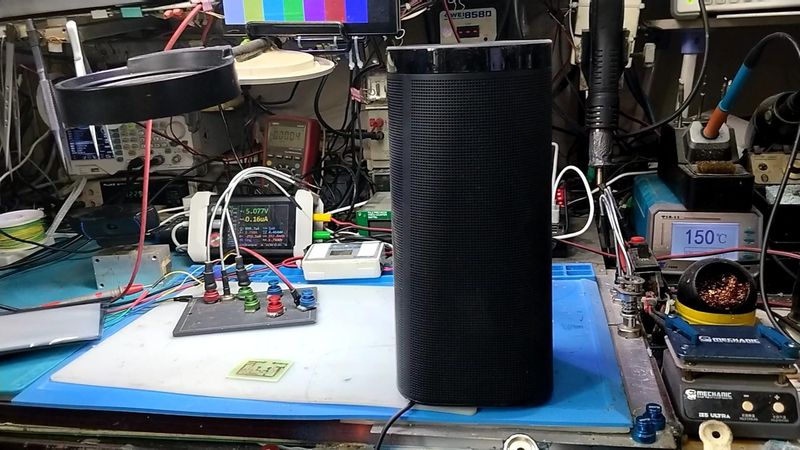
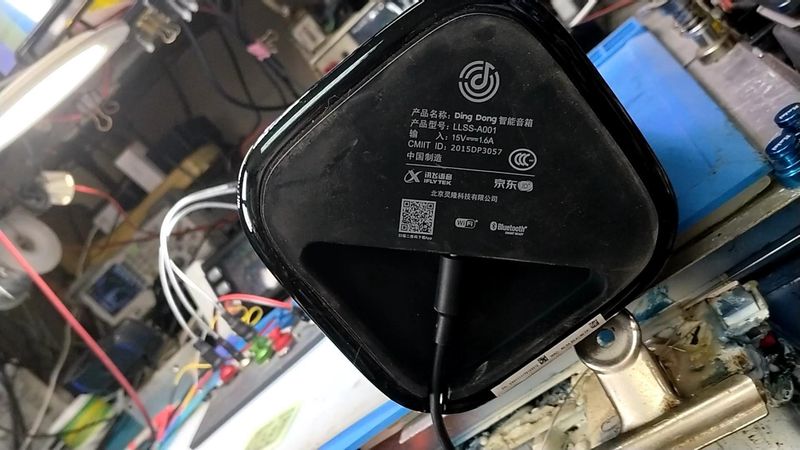
It's been gone for a long time. Maybe it's broken now. Today, in order to get it out of the way, we are ready to tear it down and see the structure of its internal design. We can see its working voltage on the back of the sign. Unfortunately, we have not seen its proper bolting, which may take some thought to figure out how to open it. Of course, if we really can't find a way to open it, then we'll end up using violence to break its shell and look at its internal structure. This situation, which had previously been encountered in the dismantling of electronic products, did not lead to the discovery of a broken screw whose shell was in fact thermal pressure of the plastic shell by ultrasound, without any repair or opportunity。
Ii. Opening sound
First, we see a soft rubber pad at the bottom of the soundbox, which can be lifted from the bottom, and it's clear, and there's a fixed screw hole down there, and it's a few of the fixed screws with a modified cone that will snap out and open the last screw, and then you can open the backcap, see the backcap, and it's a small switchboard, and, um, at this point, the metal drum outside can be relaxed, and then you can open this screw on the top and on the inside, and you can open the last screw, so you can open the top and the middle。
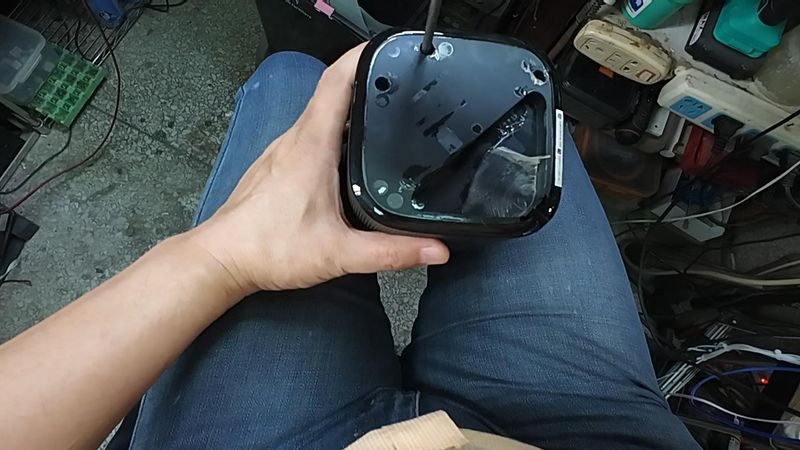
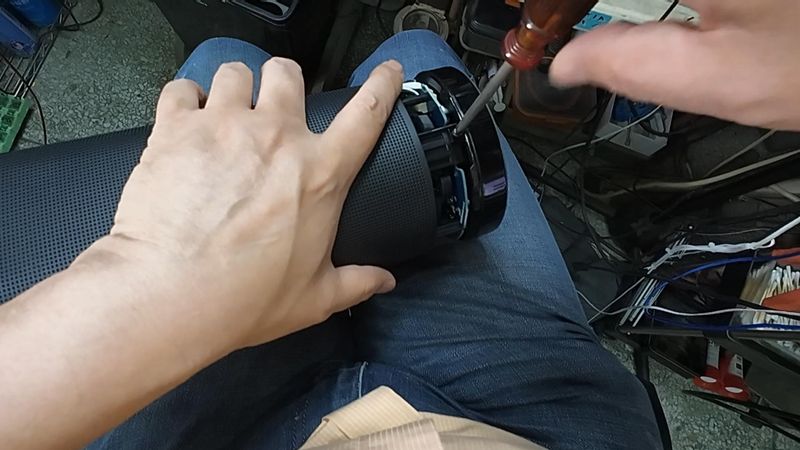
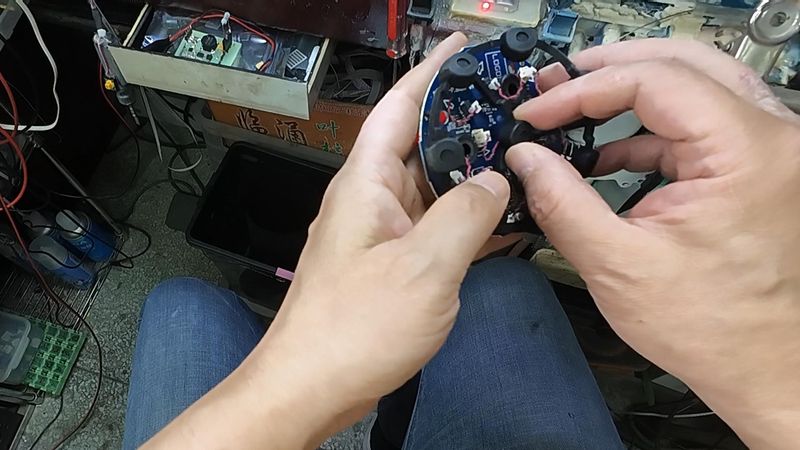
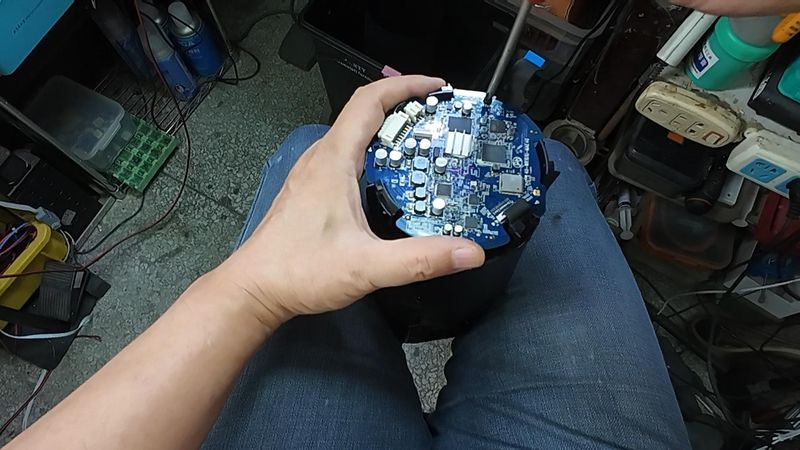
First, we can see an antenna on the top of its cap that connects to the circuit board, which should be the antenna for blue teeth, and then we'll open this master plate under the lid, which contains a lot of integrated chips and a wireless blue teeth chip. At this point, the shell can be removed from the top and the entire soundbox, which contains four small soundboxes and a lower one in the middle. And then we went on to tear the circuit board up there, and we opened the circuit board up there, and it was amazing that there was a circuit board down there, and it was connected to the soundbox down there by a thick wire, and the middle panel suddenly found that it contained seven distributed microphones, and it was a microphone array, and we opened the circuit board back to the microphone array, and we could see it as an independent circuit board, which was connected to the main panel by a bar. Then we take off the circuit board above, and the line below is connected to a switchboard at the bottom of the board, and we remove the switchboard. This switchboard connects the top line to the lower speaker via several small ports. And finally, we can see that the whole soundbox is made of plastic, and there are four high soundboxes, and there is a lower soundbox, and it has a larger volume of acoustics, so we have to remove the whole soundbox。
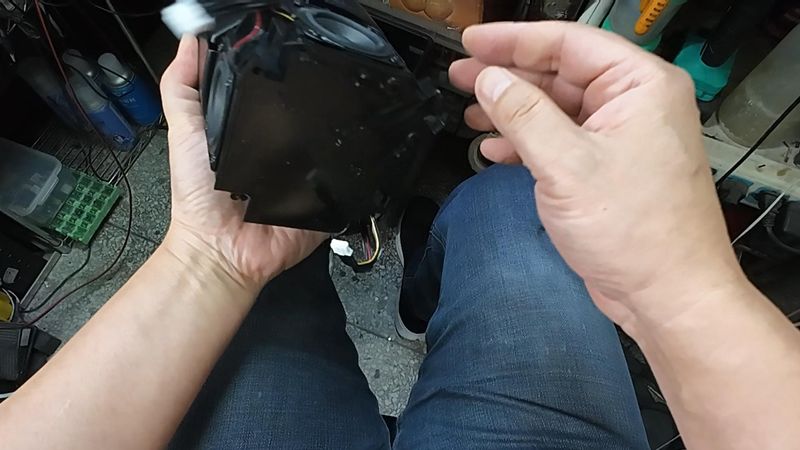
And then we split the plastic case with a slant plier, and when we open it, we can see clearly that the cylinder above is a bass horn, down with four high horns, and there's nothing special about the mid-micro array circuit, and then we open the top cap, and there seems to be some special circuit structure. Opens the screws in it, separates the upper-cover plastic case, opens it, sees a circuit board in it, separates the circuit board from the upper-cap, and can see that it has a special pcb line, which should be used to sense the direction of the upper-cap finger slide, and to control the volume of the speaker. So, let's unplug the soundbox and analyze the circuits in its middle。