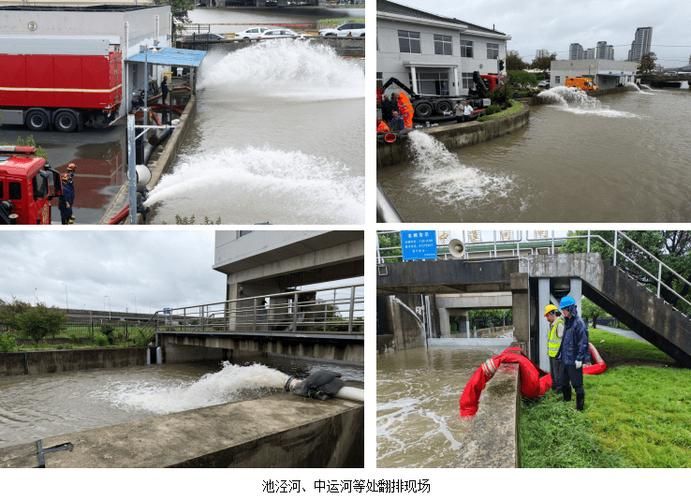
It's raining. Insurance companies can't pay? The answer is in one sentence: following the 2020 vehicle risk reform, water-related liability was automatically incorporated into the main vehicle risk insurance, and all damage to vehicles due to normal storm surges was compensated, with only four types of irregularities leading to a denial of compensation。
After the car insurance reform, there's no need to buy another water
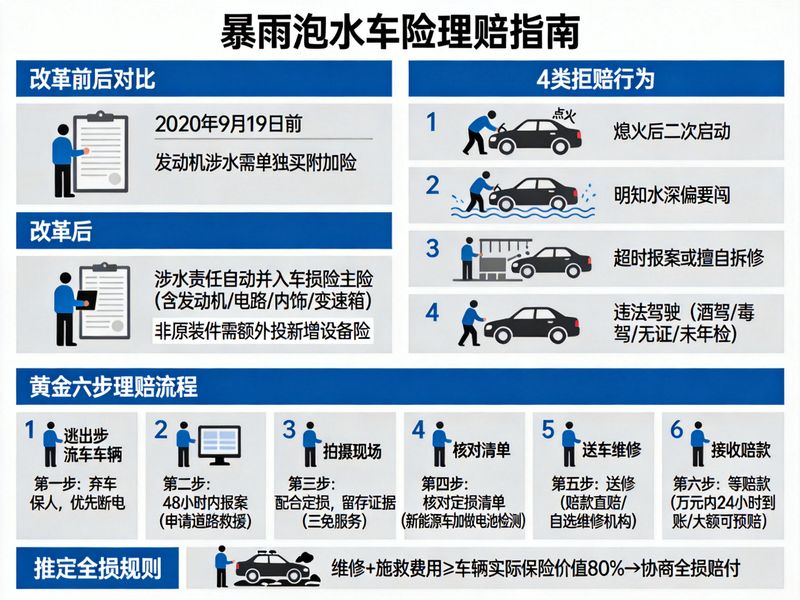
September 19, 2020 is a watershed. Prior to that, the engine had to buy additional insurance on its own. As a result of the reform, the loss of motors, circuits, interiors and speedboxes due to heavy rains, floods, etc., is covered by the compensation. Except for non-original loads such as coats and pedals, unless you are insured for additional equipment。
The core changes can be summarized as a larger scope of safeguards and lower threshold for claims。
Category 4 behaviour, one non-compensation for insurance, correct settlement process, bearing in mind “gold six steps”
People can get wet, processes can't mess up. In that order:
First step, abandon the bodyguard, first of all power outage. When the water rises, it's up to the heights. Prior to evacuation, the fuel truck immediately shut down the power supply and the new energy vehicle performed high voltage down operations to avoid short circuit expansion losses。
Step two, report within 48 hours. (b) call the official hotline of the insurance company, explain the location of the vehicle, the depth of the flooding and the state of fire, and apply simultaneously for free road rescue. Do not move vehicles or dismantle them。
Step three, cooperate with impairments, retain evidence. Videos or photographs of the scene, water level and licence plate locations are taken. During the disaster, “three-exempt services” were generally implemented by industry — free of on-site survey, free of weather certificates, free of charge, free of charge for road rescue, and in small cases, long-range on-line exposure, and 10 minutes to complete the process。
Step four, check the loss list. It is established that all damaged components (engine, speedbox, electrical) were within the scope of the claim. New energy vehicles require additional battery bag sealing tests at the expense of insurance companies。
Step five, the repairs, no advance. You can work with the insurance company to maintain the 4s shop or the regular maintenance plant to support the direct compensation model without advance. Maintenance facilities may also be chosen on their own, provided that a flat amount is confirmed in advance with the insurance company。
Step six, wait for compensation. In small cases of up to $1,000,000, within 24 hours; in total loss or in large cases, you can apply for advance compensation to ease your financial pressure。
You might want to ask, what if the car works or not? The industry standard is that the total cost of repair + rescue is 80 per cent of the actual insurance value of the vehicle, so that the insurance company can deal with the “presumed total loss” and the insurance company will pay the premium directly and the residual value will be recovered by them. The full-loss rule applies also to new energy vehicles that have severe battery-packed water and whose replacement costs are close to 70-80 per cent of the value of the vehicle as a whole。
In summary, the heavy rains and the wreckage of the car, the second time of fire, the amount of water, the amount of time spent, the amount of time spent, the amount of time spent driving in violation of the law, the insurance will not refuse to pay, and the payment will be made on the day when the payment is made。