I. Functions: no drugs
(1) causes of malfunction and maintenance strategy
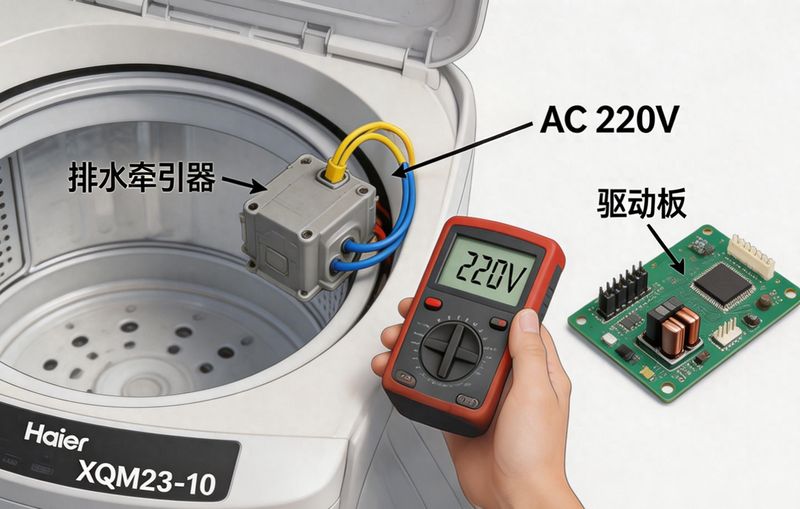
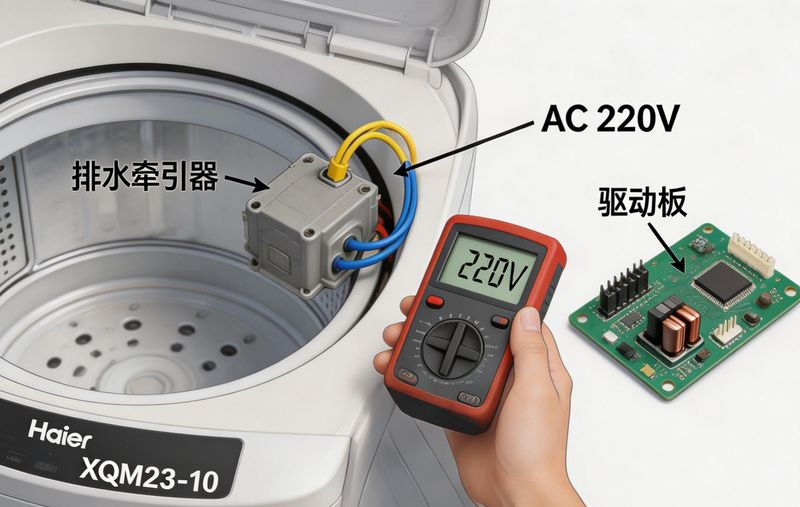
The vast majority of the failure is due to the failure of drainage tractors (hydroelectric magnets/drain motors) and the burning of the inner loops of the tractors, the mechanical cut-off or the cracking of the zipper, which makes the drainage valve unopenable。
The failure can normally be eliminated by replacing the same-specified drainage tractor component。
(2) steps for overhaul and key detection points
Pressure detection: at the start of the drainage process, the electrical voltage between the steering lines of the tractor (the yellow line and the blue line) was measured using a one-size-fits-all gauge exchange. An ac 220v (permissible for 10% volatilisation) should be measured under normal conditions, and in the absence of voltage or voltage anomalies, forward-grade retroactive。
(b) driver boards: in the event of a failure of towed power supply, the focus should be on whether the two-way controlled silicon (triac) and its drive circuits on the computer power drive are open or punctured, and on whether the circuit boards have been welded or burned. When the power drive plate is damaged, the working voltage is not available, even if the tractor itself is intact, and the driver or entire computer plate is replaced。
Additional inspection: before replacing the tractor, it is recommended that the tractor be pulled manually to confirm the flow valve core activity and to avoid further damage to the new tractor due to the death of the valve mechanical card。
Ii. Fragmentation phenomenon: brake timeout (dehydration start slowly or at no rated rate)
(1) causes of malfunction and maintenance strategy
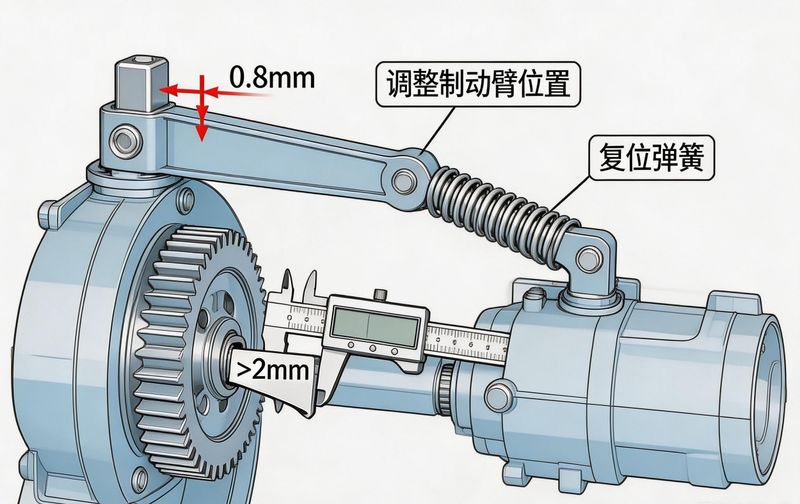
The failure was mainly due to the prolonged failure of the drum to accelerate or the apparent delay in the brake process following the commencement of the dehydration process, mostly due to the small gap between the block on the brake arm and the brake arm of the brake. When the gap is less than 0. 8 mm, the brake arm cannot completely release the brake belt, resulting in a constant friction of the dehydration axis, thereby extending the start time. At this point, it is necessary to reposition the brake arm so that the gap can be restored to the standard range (usually 0. 8 to 1. 5 mm) and normality can be achieved。
(2) steps for overhaul and key detection points
Pumps between thorn claws and thorn wheels: under dehydration, thorns are observed and measured whether or not the claws can be completely removed from the side of the gear and require a distance greater than 2 mm, otherwise the wheel cannot be rotated freely and the one-way bearing of the brake cannot function normally。
Retract springs: if the gap is normal but the brakes are still slow, check if the retort springs inside the brakes are less resilient due to fatigue. The softening of the spring will result in a late return of the brake arm and a constant tightening of the brake belt. At this point, the entire brake component or the dedicated re-entry spring will need to be replaced。
Lubrication and cleaning: after adjusting or replacing parts, it is recommended that a small amount of high-temperature lubricant be added to the brake arm rotation axis and that the grinding on the braking belt surface be removed to ensure mobility sensitivity。
Iii. Fragmentation: one-way rotation when washing (waves rotate only in one direction, no reverse switch)
(1) causes of malfunction and maintenance strategy
The washing machine is in the standard washing procedure and the wheel should be in a regular state of turn, stop and reverse. In the case of a constant one-way rotation (only a clockwise or only a reverse clockwise), it is usually due to the motor activation of the capacitor — a break in the capacitor, a significant loss of capacity or a short internal blow-through — which results in the electrical power not being able to obtain a normal transfer start-up rectangular, and thus relying only on a one-direction run-round drive. The reverse function is generally restored when the capacitors are replaced with specifications (consistent with resistance and capacity)。
(2) steps for overhaul and key detection points
Capacitors detection: when the power source is disconnected, the capacitors are removed from the circuit, their actual capacity is measured using a number of spare sheeting cells, and a deviation of more than ±5% should be replaced when compared to the nominal value (usually stamped on the shell); in the absence of the capacitors, the charge may be measured by a resistance slot, and damage is directly determined if the pointer is not moving (disconnected) or the barrier is zero (short circuit)。
Heat-protector action screening: if the capacitors are normal, the heat-protectors (overloaders) inside or outside the electric motor must be checked if they are open due to overheating. When the heat protector moves, the electric power can only run in one direction or be completely shut down. This shall be done by checking the temperature of the electron casing and checking whether the washing load is overweight (e. G., over-dressing or entanglement) and, after overloading, waiting for automatic or manual re-entry of the protector。
Computer plate controlled silicon confirms that, in a few cases, a two-way controlled silicon on the computer board is punctured to the point where the power is always added to the same circuit, which also leads to a one-way turn. The reverse control voltage may be measured at the end of the electron to make a final distinction。
Safety tips: all detection and maintenance operations must be preceded by the removal of power plugs and discharge of filter caps (if they involve a switch) to prevent electrical contact. When replacing spare parts, use the original hale plant or spare parts of the same specifications to ensure the integrity and useful life of the unit. If there is a lack of experience with circuits or mechanical dismantling, it is recommended to contact professional after-sales personnel。