I. Dust protection measures for wind-pipe indoor machines
Windpipe interior units are usually installed prior to interior fit-out。
Upon completion of the installation, protective measures will need to be taken immediately to protect the body from the dust and debris of the construction, using the original packaging or dust sheet to cover the body。
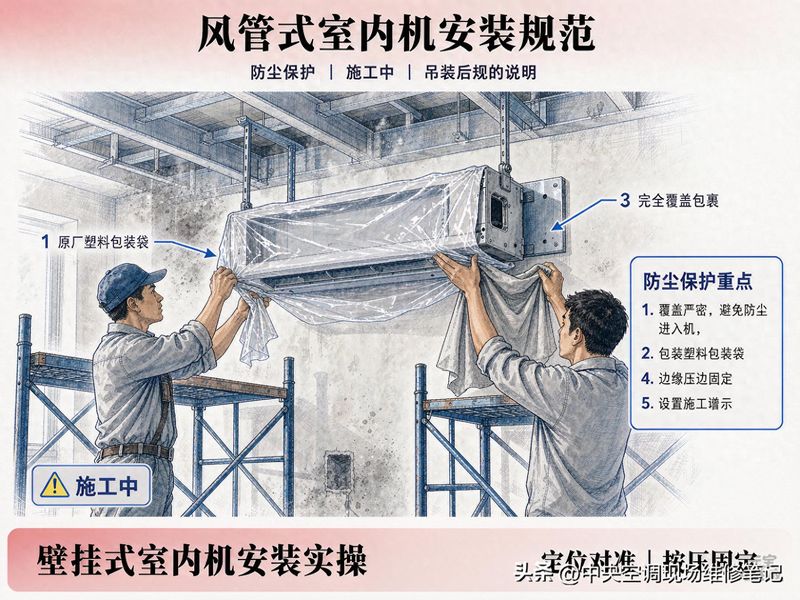
Windpipe protection (special category)
Ii. Installation specifications for embedded indoor machines
1. Placement selection
Embedded indoor machines are common indoor types in multi-connected central air-conditioning systems, which are usually fixed by hanging from a crane below the ceiling。
2. Installation of connection processes
The placement shall be preceded by the selection of a position and the wiring, followed by the installation of a crane and a hanger。
Once installation is complete, dust protection is also required to ensure complete installation。
Iii. Guidelines for the installation of walled indoor machines
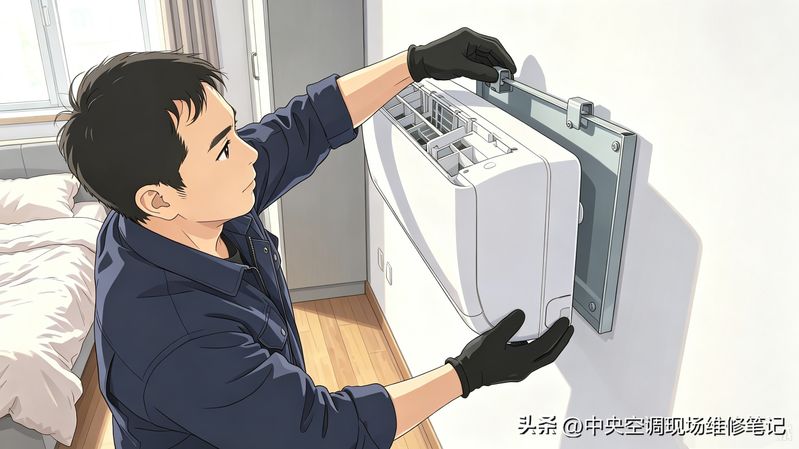
Installation of walled indoor machines (operating class)
1. Location of installation
The wall-mounted interior unit is a common end-of-the-pipe device for the multi-connected central air-conditioning system and is mounted on the wall by means of a dedicated wall。
2. Connecting steps
In accordance with the specifications, the interior is first selected for installation, the walling line is marked according to the size of the installation, which is then fixed to the wall and then connected to the pipeline。
Upon completion of the pipe connection, the interior unit will be lifted to the hanger so that the fixed hole of the body will be directed to the board, and a moderate pressure pressure will permit the installation to be completed。
3. Installation methods for winder tubes
The wind tube is typical of the interior end-of-door equipment in the air conditioning systems of the cold water cycle and the water cooling central air-conditioning system。
Depending on the type of aircraft, the wind hoses can be divided into different types of installation, such as a night-dresser, a night-dresser, a stand-up dress, a stand-up suit, a top-sucking double-wind, a top-sucking four-winder and a wall-mounting pattern. In this section, for example, the usual night-to-door dark-winding tube handles are installed mainly through the measurement of positioning, the installation of cranes, the loading of the body, and the connection to the water pipes。
1. Measuring positioning
The measurement of positioning, i. E., the drawing of a straight line at the selected installation position, prior to installation, based on the actual size of the winding tube, provides a positioning benchmark for the installation of the subsequent crane。
2. Installation hanger
The wind pipe is fitted with a stand-alone crane. At the time of installation, the eye was drilled in the position, the swelling bolts were installed and the crane fixed。
3. Hanging wind projectors
Lifting of the wind projectile tube to stand-by position so that the four fitting holes of the airframe are directed to four full-snailed cranes, each piercing the cranes into the fittings and holding the airframes reliably on the four cranes with fixed nuts and gaskets。
The height of the crane (i. E. The length of the pole) can be adapted flexibly to the space installed and the design requirements, and the wind tube can be installed directly to the ceiling。
Iv. The link between the wind pipe and the water pipeline
When the box is in place, the entry and exit of the wind pipe, and the cooling of the water, respectively, are linked to the corresponding entry and exit and condensing pipes。
In accordance with the established connection, the windpipes are then firmly connected to the waterways and associated pipes, so that the connection is accurate and reliable。
Insulation of the water pipe connections is required in order to prevent the emergence of connections, and electrical circuit connections are required after installation. Water should be rinsed prior to discharge。
V. Installation and connection of wind-cooled indoor machines
Wind-cooled indoor machines are key indoor equipment in the central air-conditioning system of the wind-cooled water cycle, which contains evaporation units and fans。
The evaporation unit is connected to the cooling line of the outdoors, with two interfaces to connect the indoor vent and the vent。
The installation mainly covered the installation of the airframe and the windway link。
Vi. Installation of wind-cooled indoor machines
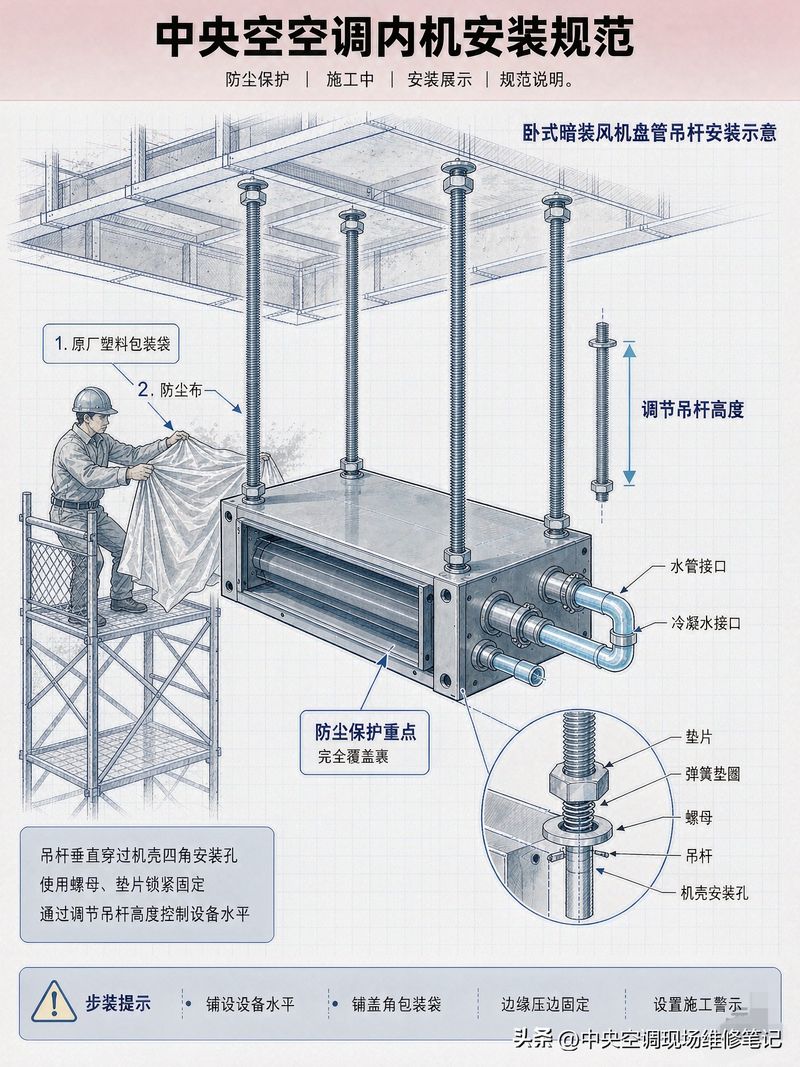
Pipe-laying pans (structure class)
Wind-cooled indoor machines are usually mounted. Once the location of the installation has been determined, the post is pierced at the appropriate location and the full screwdriver is fixed, the hanger is then installed on the crane, and the wind-cold indoor machine is finally attached to the hanger, with a similar operation to the installation of the wind pipe。
Vii. Wind-cooled indoor aircraft and wind-channel connections
The connection process is divided into two processes, one for the vent and the other for the wind. Filters are installed in the same manner as windpipes, and are hung。