On every summer, air conditioners are household electricity that many families cannot access. High-temperature weather opens the air conditioners and the cold winds come to the surface and can disperse the heat of summer. Some households, however, encounter a terrible problem: air conditioning cooling appears normal, while indoor machines have dripping, and drops fall on the ground and furniture. When the situation was serious, the water flowed along the wall, causing problems such as the plastering of the wall and the disfigurement of the closet。
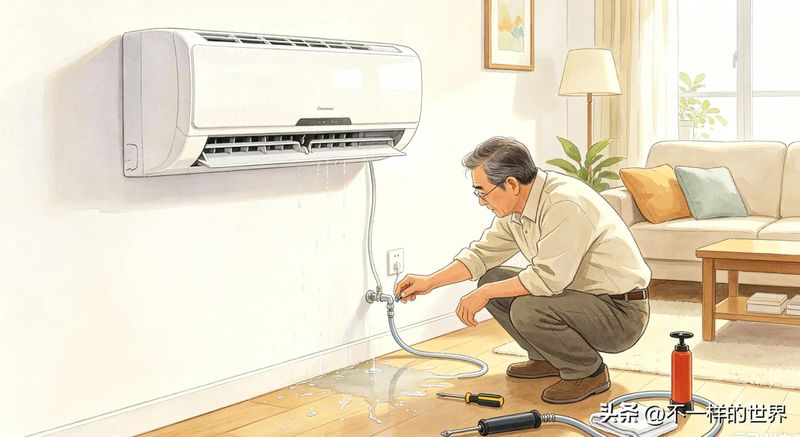
A number of senior and middle-aged friends encountered air conditioners leaking, and the first feeling was that their electricity had been damaged and that they would call the maintenance telephone and ask the master to perform repairs. Following a door-to-door overhaul, maintenance costs ranging from tens to hundreds of dollars were incurred, resulting in unnecessary expenses for some users. Taking into account the empirical experience accumulated by the maintenance industry, about 90 per cent of air conditioners suffer from drip failure, not from damage to core elements such as air conditioners compressors, circuit boards, and mostly from minor problems with drainage systems. Part of the failure is such that a simple method is available to an average household for home-based screening and processing, which does not necessarily entail high maintenance costs。
When air-conditioning is operated, condensed water is continuously generated within the equipment. You can all think of ice-colding springs, which condensate outside the bottle. The low temperature of the internal evaporation unit of the air conditioner and the exposure of the hot and humid air inside the room to cold metal fins produce condensed beads. The beads are flowing under the pipes of the machine and follow the plastic drains outside the house. When the whole process is running smoothly, most can only see out-of-room drainage pipes draining out of the water, with no water drops in the interior。
The core logic of leaking water is not complicated: when condensed water is generated, it cannot be drained outside the house along a pipe. Water accumulates within the catchments, with water levels exceeding the edges of the catchments, spilling out of the interior cracks, dripping and leaking. There is also a small number of cases of poor road temperature management and secondary condensation of water outside the pipeline, resulting in water infiltration problems. Most of the leaks have their roots concentrated on drainage。
I. Maximum failure: congestion of drainage pipes, accounting for the majority of leaks
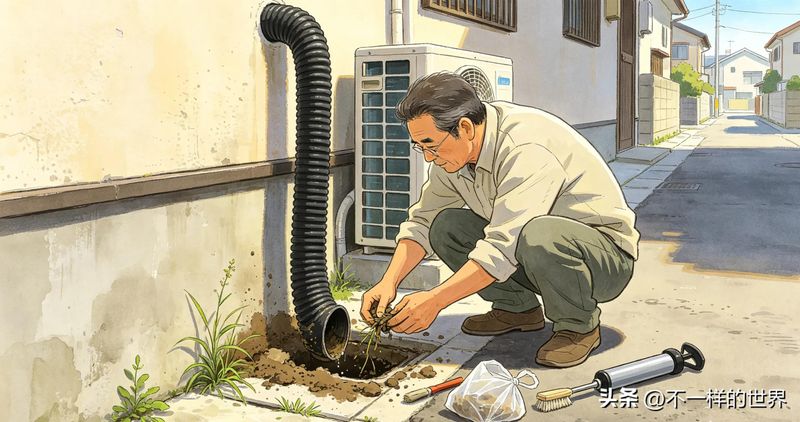
Drain congestion is a more common incentive for air-conditioning leaks and can be ignored by ordinary households. Some of the household air conditioners are used for two to three years, cleaning the filters on a daily basis, and it is not known that there are various types of dirty sewage within the drainage pipes。
Typical manifestations of malfunctions: when the ac mechanism is cold, the indoors start dripping, go outside and see the exit of the drains, and either the amount of water flowing out is small or intermittent. When the air conditioner is shut down, the drip will gradually decrease. This phenomenon is indicative of the disruption of water discharges within the catchment and subsequent spills of water accumulation。
There are more types of miscellaneous items that are blocked inside the pipeline. Floating dust, cotton tampons and pet hairs in indoor air follow the flow of condensed water into the water pipes. The internal environment of the pipe is humid, with long periods of time allowing the mud to accumulate and the walls to breed mosses and slime membranes. It is also possible for mosquitoes to enter the drain pipe and nest, where bodies of the insects and fragments are mixed in sludge, and to reduce the internal space of the pipe slowly, causing a direct pipe congestion in serious cases。
In addition to the muzzles, there are problems from the installation of air conditioners. Some of the new air conditioners, the drainage pipes were crushed, the pipes were broken and the flow of the water was hampered; during the laying of the pipes, the drainage pipes were lifted to local locations, resulting in a flow of water that could not be discharged by normal gravity; and the outdoor drains were blocked by mud, weeds and plastic bags, which also resulted in poor drainage and pouring back into the interior。
Home-based self-help drainage operation steps
(b) a safety alert: before doing so, it is important to remove the ac power plugs and avoid exposure。
The first approach is to blow through the outdoor vents or to pump water. Go outside and find the exit of the ac drain hose. The surface of the tube, if there is mud or weed, is cleaned up. An internal air pump can be used to target the internal vent, and a pneumatic pressure can be used to flush the internal sludge of the pipe back to the interior to connect the water; syringes, small gas pump tools can also be used to pump in reverse and to bring out the internal sludge of the piping. Upon completion of the defunctation, return to the interior and slowly pour in a small glass of clean water into the inner dish, which is the result of obscurity if the outlet is able to flow。
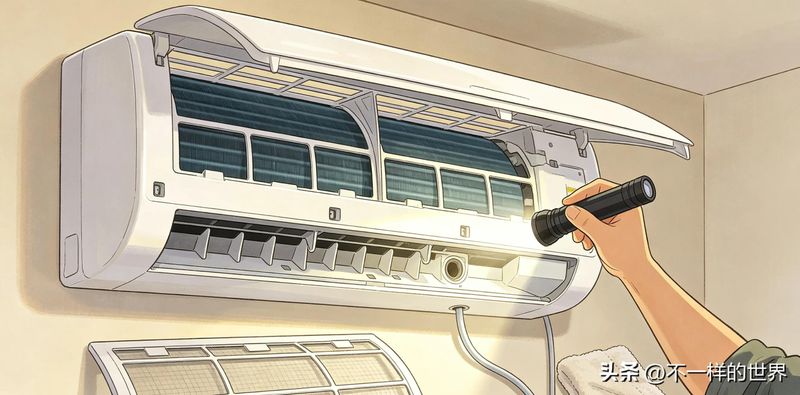
The second approach: indoor end-of-pipe connectivity. The interior metal evaporationer can be seen by lifting the interior panel of the air conditioner and removing the filtration net. The dent below is a sink and a small drainage hole in the corner is the entrance to the drain pipe. In part, the hole is blocked by a sting. Aim for the drainhole with a soft and soft soft tubing, and blow through the plug position with a pump. Do not use hard barbed wire to puncture, which can break plastics to connect the water and cause irreversible damage。
Once defunct, simple maintenance habits can be developed. Prior to the introduction of air conditioners in the summer of each year, a small amount of clean water is poured into the sink to test the smooth discharge and reduce the probability of subsequent leakage。
Ii. Residual problems with the installation of drainage pipes, decomposition of pipes, and unreasonable slopes causing leakage
Some of the households completed the pipeline and again leaked between one or two months. In such cases, emphasis is placed on the status of the drainage pipeline. Drains rely on gravity to complete drainage, and the whole pipe needs to tilt slightly downwards in the direction of the outdoors and, to the extent possible, not to bend upwards or rise。
Common installation problems: during the construction of an indoor chandelier, the drain pipe was lifted up, an upper slope appeared, the accumulation of water accumulated in the cascading section and could not be drained; the pipes were crushed by cabinets and walls, and the plumbing space was narrowed; the interface between the drainage and air-conditioning pipes was loosed and the flow leaked directly into the ceiling or the wall gap。
Reference to failure: sometimes water leaks and sometimes works normally. Air moisture is high, air conditioning is running for long periods of time, and leaks are more pronounced when condensed water is more productive; short start times, low condensation volumes, and no dripping occurs for the time being。
Self-censorship method: discharge pipe visible to the naked eye, observation of dead bends, arch up. The internal line of the ceiling was not visible to the naked eye and focused on the location of the exposed interface. If the level of the ramp does not meet the drainage requirements, it is difficult for ordinary households to change themselves, and it is recommended to contact professional teachers to adjust the course and not to break the ceiling。
Iii. Filtration nets, evaporation ash, indirect leakage
Many families do not wash air-conditioning filters for long periods of time, and the web is thick with dust and hair. After the filter was blocked, the air conditioner had a reduced wind flow and the evapoper was easy to freeze. When the ice melts after the switch, in a short period of time it produces a large amount of condensed water, which falls short of the pipe, the water spills out and drops down。
The phenomenon is manifest: air conditioners are on-line, inner wings are covered with ice, and the cylindrical ice phase is off. The drops are visible, while air-conditioning winds become smaller and the cooling effect decreases。
Method: disconnect the power supply, lift the panel, remove the filter, wash the water, dry it and then reload the machine. If the evaporation unit's wings accumulate oily dust, conditions permit the use of air-conditioning-specific washing agents to clean the evaporation unit. When the ice is severe, the mechanism is shut down until the ice melts completely and the air conditioner is re-opened。
It is a reminder that filters can be cleaned from half a month to one month, as a simple low-cost way of maintaining household electricity。
Iv. Conservative layer damaged, pipe drops easily miscalculated into machine leaks
There is also a category of leaks that do not keep the condensed water out, but the surface of the pipe condensate. Air conditioners are damaged and decompressed in the hot cotton that connects copper pipes and drainage pipes. Low-temperature copper pipes are exposed to indoor wet and hot air, with a large surface condensed with beads that drop down along the line and some households mistakenly assume that the air conditioner is leaking。
Simple method of resolution: to observe the origin of the beads and see whether the currents are leaking from the inside of the machine or from the outer walls of the pipe. The outer surface of the tube is full of beads, which are mostly a problem in the thermometer。
A small area of temperature-preservation cotton has been released, allowing for the purchase of soft-comfort tape and repackaging. Large-scale insulation damage is recommended to be addressed by contact with maintenance personnel。
V. Recommending to conclusion to fields and not recommended corrections
Partially, ordinary households lack the specialized tools to forcibly dismantle machines and avoid further failures。
1. Aging and cracking of plastics. Air conditioners have long life spans, plastics have cracks in the plate materials and water flows have leaked out of the cracks. The removal of replacement parts is more difficult and requires a door-to-door operation。
2. Machine-type failure with an internal discharge pump. Some of the windpipes, staggered air conditioners are equipped with drainage pumps, the pumps are damaged, the float switch is abnormal and the water cannot be drained and requires specialized repairs。
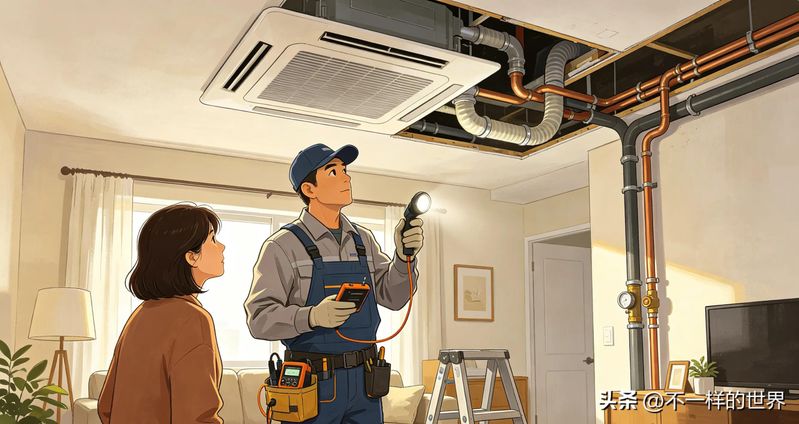
3. Cascade air conditioning. The pipes are completely sealed inside the ceiling, leaks into the ceiling trap, and households are not recommended to break the ceilings themselves and contact maintenance staff for disposal。
4. Repeated leaks of drainage pipes, which may have broken internal pipes on the ceiling, with significant slopes, require specialized screening。
Maintenance of pits to reduce unnecessary expenses
Individual maintenance staff came to the house without careful examination of the malfunctions, informed the head of household directly of the damage to the evaporation unit and recommended several hundred dollars for replacement of the spare parts. In the event of an air conditioner drip failure, priority could be given to checking the sewers. There were a number of leaks and there was no need to replace large accessories。
Before going to the house for repair, the household can conduct a basic self-check: cleaning the filter, checking out the outage of the outdoor drainage pipes, eliminating simple malfunctions in advance, having a bottom in mind and reducing the likelihood of over-maintenance。
Day-to-day precautionary tips: simple tests of drainage status before air conditioners are activated every summer; no impurities stacked around outdoor drainage vents; regular cleaning of filters to reduce dust entry into pipes and pipes, and some leaks can be avoided in advance。
The air conditioner dripping appeared to be distressing, and most cases were not large-scale equipment damage. Priority is given to the clearance of drainage congestion, under conditions that allow for home accommodation and the possibility of re-routing for maintenance staff. Distinguishing what can be done on its own and what requires professional staff to save unnecessary expenses。
Disclaimer
This paper, which is only shared with the home-based chaco experience of household air-conditioning leaks, serves as a daily reference study for ordinary users and does not serve as a basis for professional maintenance operating standards and dismantling work. There are differences between different brands, internal structures of different types of air conditioners, and the layout of the pipes, and the method of queuing in the text only applies to simple self-checking of regular wall-mounted domestic air conditioning. All specialized operations such as electrical demanufacturing machines, respirators, fittings and maintenance of built-in drainage pumps have security risks and are recommended to certified professional maintenance staff. Readers do not bear any responsibility for damage to equipment, increased leakage, and physical safety issues arising from the operation of this document. The probability of failure and the solutions presented here are a summary of industry-specific experience and do not represent the generality of all equipment and do not constitute any absolute conclusion。
The above is a compilation of experience with household electricity maintenance in parts of the country, with different maintenance standards and machine-type structures, based on official post-sale tests and the latest regulations。