


What is information? Information is a term, or a word. English is information. Terminology are used to describe in general terms the common features of some things。
In everyday life, we talk, write letters, make videos, publish news, generate numbers, graphs, signals, etc. In these processes, we use different materials, such as air, paper, computers, electronic components, electromagnetic waves, etc., but they have similarities, and it seems that a common thing is transmitted on these materials. We need a term to describe this common thing, or more precisely this common characteristic. At first, claude shannon called this common feature intelligence. In 1939, shannon wrote to one of his colleagues in mit, saying, “from time to time, i am leading the analysis of some of the basic features of the general system that transmits intelligence. "inteligence is a flexible and ancient term. In the 16th century, sir thomas elliot wrote: “now, inteligence is an elegant word used to express an agreement or a consensus reached through a letter or a message”
After some time, shannon abandoned the term intelligence because it was not possible to quantify it and apply it to the mathematical equation。
In order to be able to describe in mathematical equations the common features of processes such as speech, writing, video transmission, it is necessary to modify, simplify or purge the common features, or to shrink the scope of the common features. It's like letting the overloaded wagon move forward and unloading some cargo. How can the scope of common features be reduced? Those characteristics that cannot be quantified, i. E. Those that relate to semantics. According to shannon, “these (in communication systems) messages usually have their own semantic (meaning); that is, they are associated with a particular physical or conceptual entity according to the characteristics of a communication system. The semantics of the communication are irrelevant to the project.”
In the course of the development of science, it is common to modify, simplify or purge the terminology used in everyday life, to give up something that cannot be quantified in terms, and simply to retain something that can be quantified so that it can be applied in mathematical equations. Newton, for example, has given new quantifiable meaning to some old but vague words (power, quality, exercise, even time). In the past, sports can be very widespread: plant maturity, stone landings, child growth, etc. But it is too rich. Newton abandoned the vast majority of the “sports” scenes and preserved only those that could use the newton laws of motion, i. E. The mechanical movement of the mass points, thus laying the foundation for classical mechanics. In the nineteenth century, the term energy (energy) went through a similar process: energy, which was originally a sign of vitality or strength, was mathematically expressed by physicists, thus giving them a fundamental place in physics。
At claude shannon's bell laboratory, some engineers began to use the term information to express some technical concepts. The word was later adopted by shannon to describe common features that can be quantified in the speech, writing, video transmission, etc., such as those related to quantity and measurement。
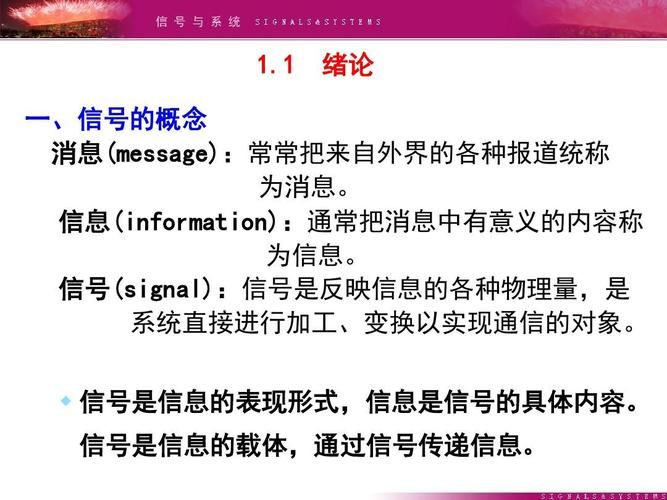
In fact, according to shannon's information theory, two messages — one containing rich semantics — while the other is pure nonsense — could be completely equivalent. There is no doubt that that is why shannon's words “the semantic aspect of communication is completely irrelevant to the engineering aspect of communications”. However, the reverse is not true and the engineering aspect of communications cannot be said to be irrelevant to the semantic aspect。
There is no doubt that the term “information” in communication theory means more what you can say than what you say. In other words, information is a measure of how much freedom you choose when you choose a message. If one faces a very basic situation in which one of the two options must be chosen, then it can be concluded that the information linked to the scene is a unit information. It is therefore a misunderstanding (albeit convenient to say so) to say that this message or that it conveys a unit message. The concept of information information does not apply to a single message (and the semantic concept can) but rather to a whole situation in which unit information indicates some freedom of choice when the next person to the scene selects a message — it is convenient to regard this as a standard or unit。
In such a choice, the two messages (message) that one uses to choose can be arbitrary. One message may be the text of the speech, while the other may be a word “yes”. The transmitter can encode two messages in this way: “0” is the signal for the first message, while “1” is the signal for the second message, or a closed circuit (with electricity) is the signal for the first message, while an open circuit (without electricity) is the signal for the second message. In this way, two positions of a simple relay, closed and open, can correspond to two messages (message)。

If more clearly stated, in the simplest case the amount of information is measured by the logarithm of the options available. Since the logarithm of 2 is more convenient than the logarithm of 10, when there are only two options, the information is proportional to the logarithm of 2 at the bottom. However, this situation is a unit; therefore, such a dichotomy is defined as the amount of information in a unit, as described above. The amount of information in units is known as a “bit bit”, originally proposed by john w. Tukey and indented by “binary digit”. When numbers are expressed in binary, there are only two numbers, 0 and 1; when using a decimal digital system based on 10, there are 10 numbers, 0 to 9. As noted above, 0 and 1 can be used to symbolically denote any of the two options; it is therefore natural that “binary digit” or “bit” are associated with a binary situation with a unit amount of information. If there are 16 candidates for free choice, then since 16 = 2 ^ 4, log2(16) = 4, this can be said to be expressed in 4bit information。
So, is the information an entity? No, information is a common feature of some entities. What are the common features of books, tables, refrigerators, closets, doors and windows, beds, boxes, safes, mirrors and mobile phones? They're rectangular. Is rectangular an entity? Nope. There is no rectangle in this world. The rectangular is a shape that is a characteristic of an entity and not a separate entity. Similarly, there is no information in the world and only entities that can be measured by information (in bits). Those who subscribe to the plato theory of “ideology” may object to that view, and those who endorse aristotle, who opposes the theory of “ideology”, may agree。
Now, once again, we can answer the question at hand: what is information? Information is an attribute of things. Things have many attributes. Mass, colour, speed, shape, information. Everything has more or less information. The message is the amount of surprise or novelty that this thing brings to us. If this thing brings us a lot of unexpected things, it carries a lot of information; if this thing brings in things that we know well, even if there are more words or characters, it's nothing。









