


How can you tell if the bracelet is real or not? A starter's zero base bracelet recognition complete course
The natural bracelet contrasts with the fake bracelet. Figure
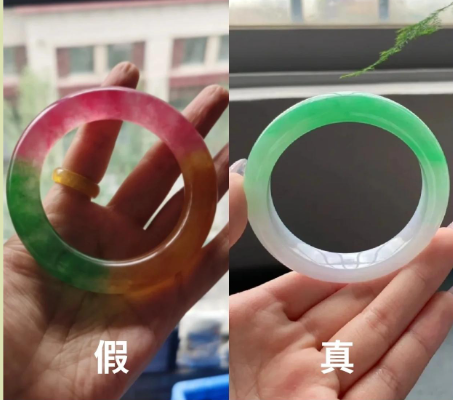
I. Basic recognition for the identification of the bracelets: first, the identification of the jade, and the treatment of the jade
Many newcomers were tricked into buying bracelets, the core of which was the lack of clarity as to the distinction between natural bracelets a, manual processing of bracelets and counterfeit bracelets. To learn to distinguish the bracelet, the first step must be to create the right perception and avoid being misled by commercial rhetoric。
There are three main types of bracelets on the market: the first consists of natural real bracelets, consisting of natural emeralds, natural and pyrotechnics, non-coloured, non-activated glues, non-temperature acid washing, natural grinding, structural stability, routing, collection and wear; and the second consists of manual optimization of the bracelets, which are commonly referred to as b, c, b+c, which cover the defects through acid washing, glue and dyeing, and which are beautiful but open with no pyrotechnicity and transmutability; and the third consists of counterfeit emerald bracelets, which are made of glass, resin, jade and jade, which are pure crafts and have no value。
The identification of the bracelets by ordinary people does not require high-level experience. It can quickly distinguish between good and bad, provided it is mastered by a sense of hand, light, texture, colour, structure, certificate six dimensions. The paper is gradual in that the zero base is able to understand the quality of the jade bracelets in a comprehensive way, from the use of free self-measures, eye recognition, light identification, professional identification, pit avoidance techniques。
Ii. Sensitization by hand: weight, temperature, rapid first screening
Hand-to-hand the jade bracelet weight, touch test exercise map
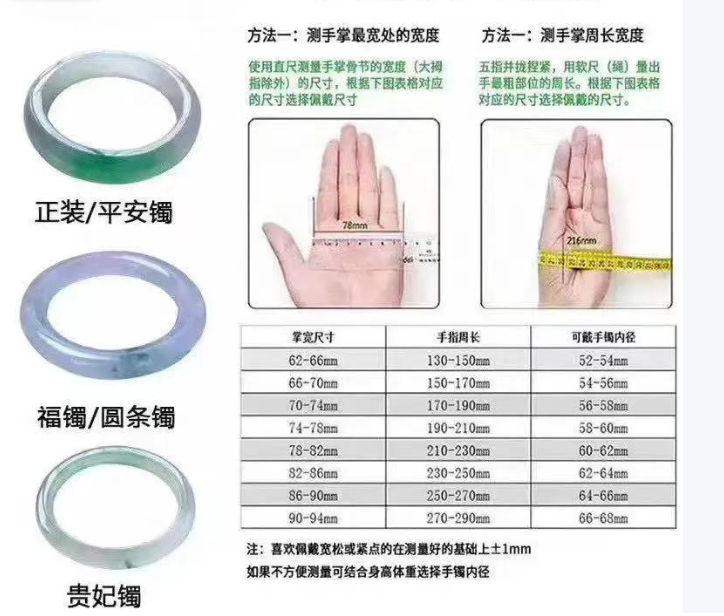
The simplest and zero-cost method of identifying the bracelet is hand-to-hand testing, and the physical properties of the real and fake bracelet are very different and difficult to fake。
Number one, take the weight. Natural jade stones are of high density and quality, and the same size are bracelets of the same size, with a deep hand, a sense of falling hands and a clear crushing of the hand; glass and resin are low in density, light in the hand and no feeling of pressure. Even with thin bracelets, natural stones have a clear sense of falling, which is a core feature that cannot be imitated。
Second, touch the temperature. Natural jade bracelets are hot and stable, are constantly cold and cold, and hold on to their hands slowly warm and have a lasting cold; glass and plastic imitations are short-lived, warm in the hands for seconds, and quickly remain at the same temperature. The dyed platinum bracelet is heat-deficit, irritating, irritating, and without natural platinum。
Third, touch the nuance. Natural bracelets are finely polished, warm and smooth; fake bracelets are rigid and dry, glass bracelets are too smooth and smooth, resin bracelets are slimy, and there is no natural jade oily touch。
The first hand screen allows for the direct elimination of 80 per cent of the low-end fake bracelets and is suitable for quick screening by the newcomers。
Iii. Different perspectives: shoot, color, transition
Shinyu's natural texture compared to the fake
The observation of the face of the bracelet in natural light is a central step in the identification of the real and the bad. Natural stones carry their own traces of natural growth and artificial forgery cannot be perfected。
First, look at the glamour. The natural emeralds are glacial, bright and warm, and the natural and pavilion is fat, soft and internal, and glamouring through nature and layers; and the fake bracelets are either poignant, radiant, glass-reflecting, or dim, grey and indelible. The accelerator is glittered, geled and has a fog-covered plastic sense on its surface。
Second, look at the color distribution. The colours of the natural jade bracelets vary in depth, transition to nature, sense of hierarchy, flowering, and the colouring of the roots follow the spirit; the colours of the coloured jade bracelets are flat, floating on the surface, without changes in the depths, and the colours of the cracks accumulate abnormally, with dark hairs, forming the colour belts, which are the most typical cracks。
Third, look at natural texture. The natural bracelets contain natural cotton, graphite, natural granular structures, which are natural and unique in texture; glass fake jade without any natural graphite, clean and clean; artificially synthesized jade road patterns, repetitive patterns and no sense of nature。
Reminder: natural cotton is a natural feature of the jade, not a flaw, but a non-structured, low-priced bracelet, presumably a fake。
Iv. Identification of strong pv lights: best structural identification in the inner line
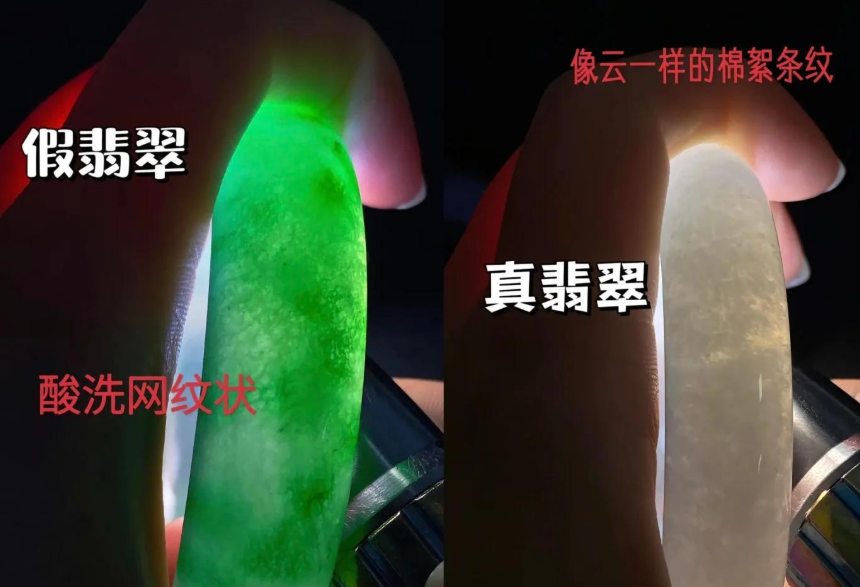
The flashlight looks at the inside details of the bracelet. Figure
The most common method of identification for professional jade merchants is strong light lighting, which can penetrate the surface, clear the inner structure of the jade bracelet and make a precise distinction between natural jade, jade and glass jade。
First of all, it's natural. The light can be seen in natural fibre-weave structures, microtamps, natural grafts, solitude, solitude and stratification that light is soft and uneven. Emeralds are interwoven with fibres, with fine oily structures in the field and with different internal structures in each bracelet。
Second, the acid-washing tape b effects. The internal structure is loosely disarray, the natural texture is corrupted away, the light is visible, the mesh of acid, the gel fog, and the whole body is flat but free of stone structures, and the light is not glitter。
Third, the dye c light effect. The colour follows the cracks, the cracks accumulate, the belts are rigid, the layers are visible, the visible colours are suspended on the surface, and there is no emulsion of the peso。
Fourth, the glass-fake light effect. The interior is clear, without any natural structure, and the probability is that round bubbles, stir strips, and the overall mass is flat, which is a fatal break of glass。
Lighting is a skill that is necessary for entry, simple and precise。
V. Sound different difference: those those plays between the symbols and the images
The bangles hit the sound to identify the scene. Figure
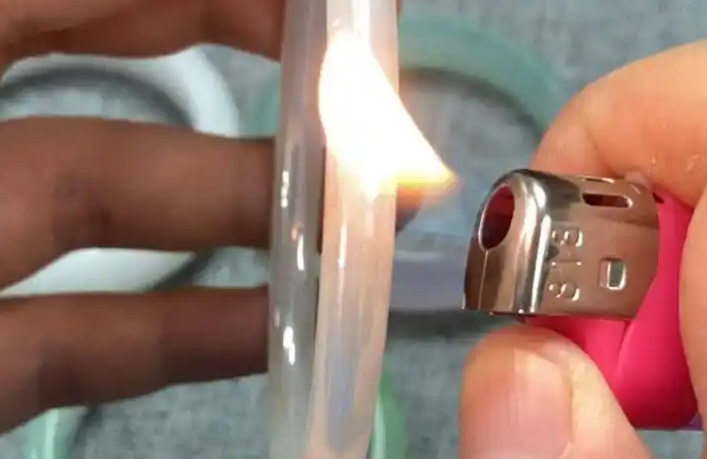
The jade stone is of high density and solid structure, the sound of the banging is clear, the imitation structure is loose, the sound is silhouetted, and can be quickly assisted by sound。
Holds the bracelets up in the air, and slams them with their fingers: the sound of the natural jade is so long, the echo is so bright, the sound of the residual is so long and so high in quality; the sound of the glass, the resin is so boring, short, empty, there is no resonance; the sound of the acoustic processing bracelets is so dull that it is far less thin than that of the natural jade。
Note: click softly to avoid the break of the bracelet as a result of heavy bumps, a method that is more accurate in combination with a sense of hand and a combination of light。
Hard marking tests: physical characteristics distinguish between real and fake (prudential)
A comparison of the strength test of the bracelet
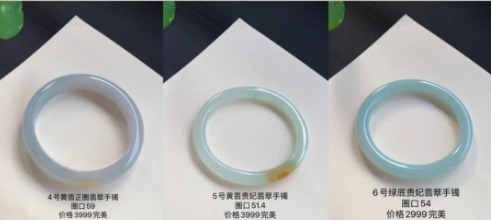
Natural jade stones are extremely hard, and emeralds, and tans, far above glass, plastics, can be easily distinguished from hardness。
The natural jade bracelet is 6-7 degrees hard and the glass is only about 5 degrees hard, and it leaves no trace of glass, without damage to itself; glass imitations wear and scratches directly; and resin plastics leave a crush。
Carnation: newers do not recommend scratching precious bracelets at will to avoid wear and tear due to operational errors. They are only suitable for self-measurement of low-cost samples, giving priority to non-harm identification。
Vii. The core distinction between natural and b/c goods
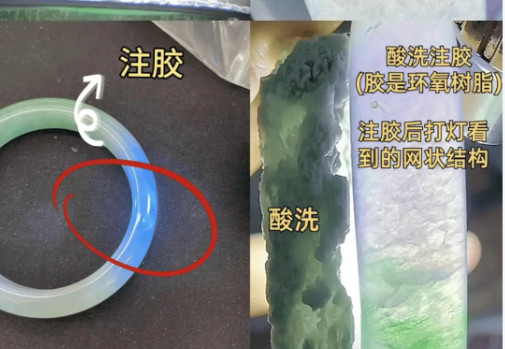
Natural jade versus acid emerald emerald internal structures figure
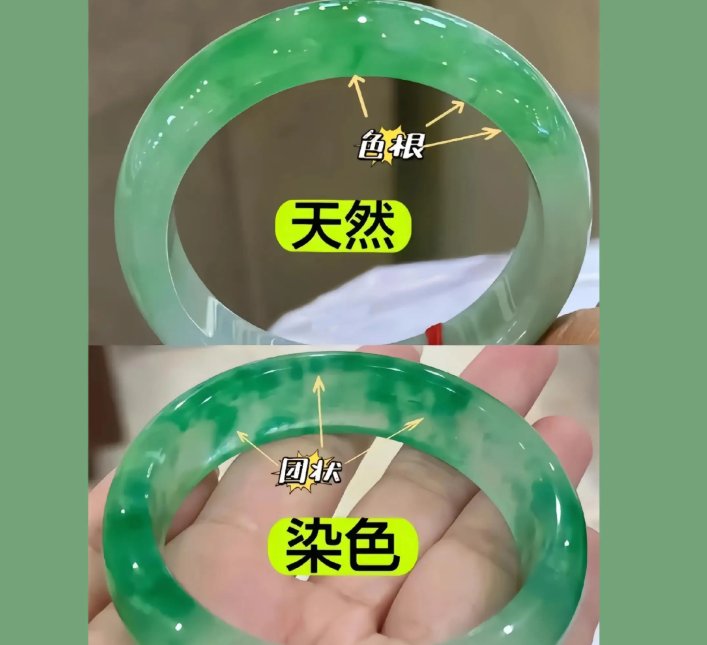
Many merchants sell the bracelets of acid washing, dyeing and emeralding as natural jade. They look beautiful and unblemished, and they learn to distinguish between new hands。
Natural a-carrying bracelets: structural integrity, texture naturality, colour agitation, the more warmer they are, the more they are worn over the long term, the less colourful and the less skin they become。
B acid washing glue: strong acid corrosive internal impurities, refilled with transparent glue, with perfect surfaces, but damaged internal structures, yellow, cracking, degeling, loss of light in 1-3 years。
C-carrying oranges: artificial dyes are coloured, colours are glittered, colours are worn long enough to lose color, hair ash, and dye residues stimulate skin。
B+c goods: both acid-washing and dyeing, with perfect paint and extremely low prices, are the most common set of street bracelets in the market, with no wear and collection value。
Distinguishing the core: perfect, color-like, low-priced bracelets are almost all manual。
Viii. Identification of professional certificates: the most authoritative, 100% accurate method of identification
Standard style for formal jade certification certificates figure
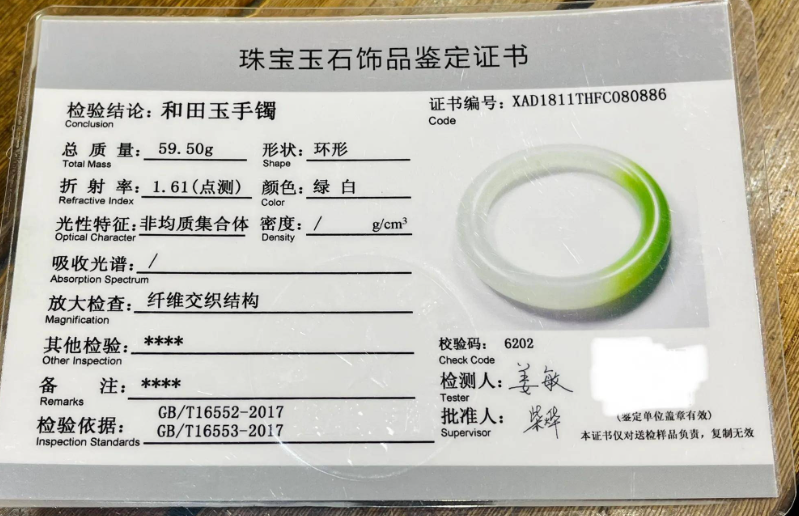
There is an error of judgement in the eyes of ordinary people, and the certification certificate is the most authoritative means of identifying the trueness of the bracelet and the formal state inspection certificate cannot be forged。
Formal natural jade certificate labels: emerald (a), natural emerald, unfilled and dyeless
The dandama certificate states: and tamayu, with a detection structure of natural minerals。
Characteristics of false goods certificates: labeled “emeradicate processing, optimisation of emeralds, synthetic jade stones, glass, resin”; site of false certificates is not searchable, 2-dimensional code is not clear, no detection number, no cma/cnas authentication mark。
Professional skills: identification of cmas, cnass and ilacs and entry of a numbering query on the national jewellery testing platform。
Ix. Guide to the acquisition of roads and pits in common market bracelets
Low-priced fake bracelet-set exposure map
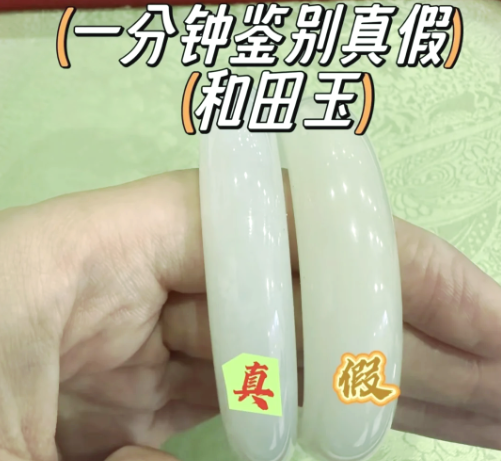
The nine most easy traps for starters to buy bracelets are the following:
1. Perfect priceless bracelets: natural jade stones must have fine cotton threads and perfect tradable bracelets must be used to process goods or glass
2. Extremely balanced colours: the natural colours of the jade are not evenly balanced and the colours are mostly artificial
3. Lightweight, hand-floating: 100% resin, glass imitation
Lighting has no structure: glass synthesis fakes are unquestionable
Businesses viva voce, uncertificate: probably optimized processing of jade
6. High-priced ice, kings green, sheep and butter: high-end stones are of very high value and all counterfeit goods are at low prices
7. The screen screens for the live air are faked and the physical color is very different
8. Sale of jade and field jade with jade and afghan jade
9. Old jade bracelets are made to fake and impersonate。
Remember, the natural jade stone is a penny and a penny, and it's not missing. The perfect bracelet is all a set。
X. Comprehensive summary: zero basis for distinguishing the full logic of the bracelet
It's a natural real jade bracelet. Figure
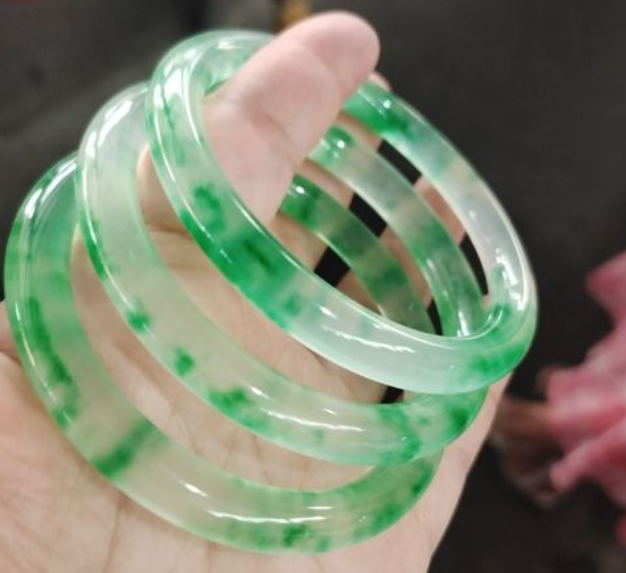
Distinguishing the bracelet is a good and bad thing and does not require a professional background, as long as it follows a gradual process of first-hand screening, then luminous texture, strong light-lighting of internal structures, audio-assisted validation, confirmation of final certification authority, so that all false goods can be avoided and processed。
Natural jade bracelets carry their own sense of the quality of the chiller hand, the texture of natural inspiration, the warm, fine-sweet, unique internal natural structure, while glass, resin, dye, apostasy bracelets are always exposed on weight, colour, structure, light。
The newcomers choose to buy the bracelets, not to be perfect, not to be cheap, not to believe in the verbal commitment of the merchants, to give preference to the natural bracelets with the formal state inspection certificate, the texture of nature, and the warmth. With the full range of identification methods above, ordinary people are able to walk away from being deceived and easily choose natural bracelets that are authentic, of good quality and suitable for long-term wear。










