How do i get my license revoked? 2026 updated details of processes, materials, costs, pit avoidance package
What is the cancellation of business licences? Why does it have to be officially written off
Market entity cancels the official definition diagram

Many self-employed and micro-entrepreneurs have ceased to operate in such a way that they have no business, no business, no taxes and no business licences. In fact, under the regulation on the registration of market subjects, it is clearly stated that market subjects are terminated and must register cancellations on their own initiative, without automatic cancellation mechanisms。
The cancellation of a business licence refers to the legal process of terminating the subject's qualifications and eliminating the business records of a market entity, such as an enterprise, an individual entrepreneur, a company, a branch, etc., after the completion of the tax settlement, liquidation of claims, publicity, etc. Once the write-off has been completed, the body is completely destroyed and no longer assumes the business, tax and annual reporting obligations。
The long-term failure to cancel and ignore the list of business anomalies, late tax fines, the inclusion of legal persons on the list of defaults, restrictions on high consumption, the inability to register new companies, and the influence of personal correspondence can have serious consequences. As a result, formal write-offs are the only way to deal with security, compliance and non-effects when operations are discontinued. In line with the new provisions of the 2026 updated corporate write-off guidelines (revision 2025), the present document provides a step-by-step explanation of the complete write-off process, material requirements, summary write-off conditions, rates, common error areas, suitable for reference by all self-employed persons and businesses。
Ii. Types of prior identification: individual, company, branch
Comparison of difficulties of write-off for different subjects
Many of the write-offs failed and the process was confusing, essentially because of the lack of clarity as to the type of licence they were licensed and the differences between the main processes were significant。
First, individual business licences. The simplest process, the short period of publicity, the absence of liquidation teams, the absence of complex accounting clearances and the suitability of small shops, front doors and stand-alone accounts are the fastest type of write-off at present。
Second, limited liability companies, micro-enterprises. The most rigorous process involves tax liquidation, establishment of liquidation teams, publicity of creditors, write-off of public accounts, write-off of social security premiums, multi-step and rigorous auditing。
Third, branches, branches. There are no independent legal persons, and no complex liquidation is required, and the general company issues a resolution to cancel the process between the individual and the limited company。
The largest changes in the new regulations in 2026 were tax, business data-sharing, tax clearance certification, electronicization of the entire process, no paper vouchers, automatic system verification and substantial simplification of processing procedures。
Three, 2026 business licence write-offs: summary write-off vs write-offs
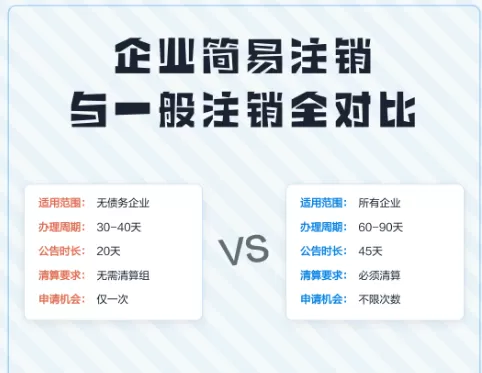
Comparison of summary and general write-off processes
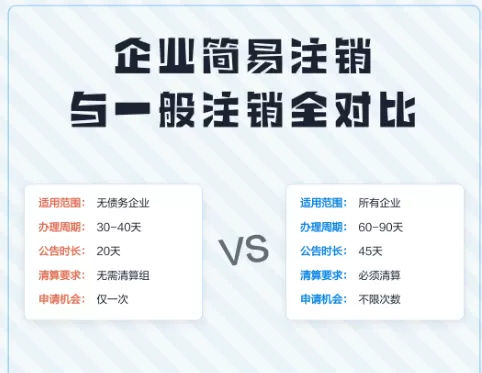
Currently, two standard processes for summary write-off and general write-off are being implemented uniformly throughout the country, with priority being given to summary write-off and saving time。
Summary write-offs (suggested preferred)
Conditions of application: no claims debt, no tax arrears, no pending litigation, no business anomaly, no invoices received or cancelled, no social security contributions。
Advantages: no liquidation group, no 60 days long publicity, short notice, fast clearance, high pass rate。
The new regulation requires that write-off requests be submitted within 20 days of the expiry of the summary write-off publicity period, with a maximum extension of up to 50 days, which will automatically expire。
General write-offs (compulsory process)
Applicable: accounts flowed, invoiced, tax anomalies, debt claims, employee social security records, included in the subject of operating irregularities。
Process: the liquidation team filed 60 days for creditors to announce the write-off of the tax write-off, the stamping of the business write-off account, the steps being complete and rigorous。
As a first step, all employers check themselves for a simple write-off to avoid running for nothing and spending more。
List of required materials for licence cancellation (2026 updated generic version)
Inventory of written-off materials
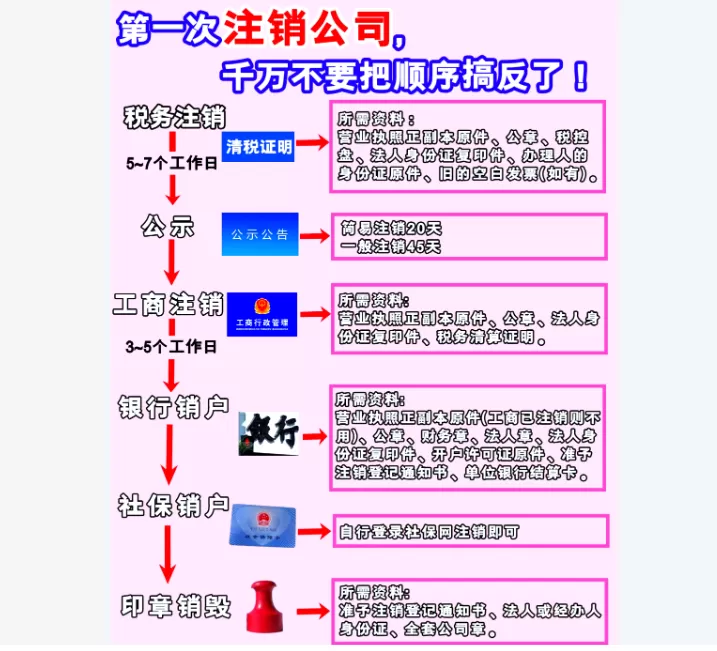
Regardless of online and offline processing, the necessary materials are standardized and prepared in advance, which can be completed at once:
1. Right of business licence, original copy (loss requires declaration of nullity)
Legal persons, original identity card of the operator and copies thereof
3 official, financial, invoicing (no individual is exempt)
4. Tax collections, blank invoices, purchase orders for invoices (required for the issuance of tickets)
5 tax returns, liquidation reports (company requirements)
Bank-to-public account information, ulg (business requirement)
7. Cancellation of registration applications, statements of commitment (on-site or online)
New emphasis: no compulsory submission of paper-based tax clearance certificates since 2026, direct networking of market regulatory systems to verify tax status and further simplification of information。
V. Detailed steps for the write-off of business licences (the most complete physical process on the internet)
Seven-step flowchart for licence cancellation
Step 1: stopping operations, self-checking anomalies
Identification of uninhabited projects, non-contract disputes, lack of judicial freeze, non-annual reporting of business and industry abnormalities, non-tax delays. In the event of an anomaly, the anomaly must be lifted before it can be cancelled。
Step 2: public announcement of write-off (core key)
Conform to summary write-offs: summary write-off notices are filed in the national enterprise credit information disclosure system for 4-20 days (slightly different locations)。
General write-offs: establishment of a liquidation group, filing within 10 days, publicity of 60 days for creditors, acceptance of claims during the publicity period, and non-spreadability。
Step 3: processing of tax write-offs (most difficult, most important)
Access to the electronic taxation authority, completed: zero tax returns, outstanding tax refunds, payment of invoices, write-off of tax holdings, liquidation of taxes。
When tax is not unusual, the system generates electronic tax clearance and automatically synchronizes business systems without paper printing。
Tips: tax evasion, underreporting, late recording, which requires re-reporting, fines, and lifting of wind control before writing off。
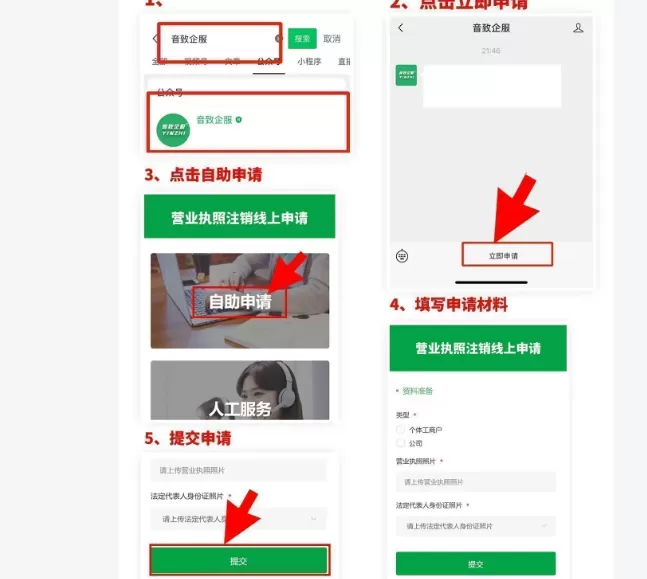
Step 4: submission of business write-off requests
Upon expiry of the notice, the online platform or the underline market supervisory authority submits the written-off material and reviews the subject information, the publicity information and the tax information。
Following the audit, the business issued write-off approvals。
Step 5: write-off of public bank accounts
Enterprises and limited companies are required to cancel basic public and general accounts and carry write-off letters, official seals and legal documents to the opening and distribution offices. There are no public accounts for self-employed individuals to skip。
Step six: write-off of social security, provident fund accounts
Enterprises with insured employees must first suspend their insurance coverage, pay their social security contributions and cancel the unit accounts of the social security provident fund to avoid continuing deductions。
Step 7: seal destruction, archiving
The last step in the formal process is the destruction of the official and financial seals and the closure of the write-off process throughout the process, thus eliminating the underlying risks。
Vi. How much is required to cancel a business licence? Detailed rates
Detailed transparency of charges written off
Many businesses are bypassed by intermediaries, and formal write-offs are transparent:
1. Official government window: free of charge throughout the process, business write-offs, tax write-offs, public announcements without any official charges。
2. Self-processing: 0 per cent of the cost, with no more than running and packing。
3. Charging references (market transparency prices):
Individual summary write-off: $200-$500
Company write-off: $500-800
General company write-offs (including liquidation): $800-1500
Unusual, fined, difficult to write off: $1,500 to $3,000
Reminder: formal write-offs are free of hidden charges and no mandatory service charges, and most high-priced chargés are information poor。
Vii. Maximum difference between individual and corporate write-offs (first-hand)
Comparison of individual household and company write-offs
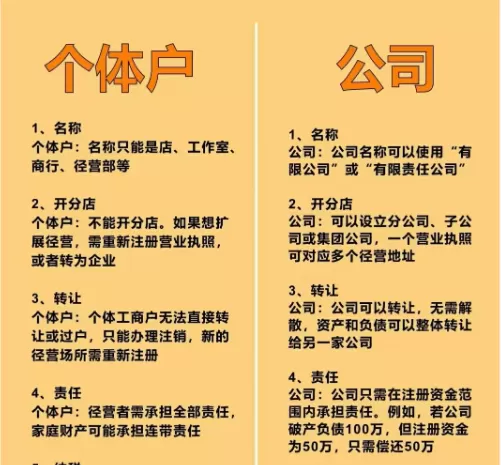
1. Individual: no liquidation group, no mandatory public write-off, speed of process, short publicity, least difficult, suitable for the end of a small business。
2. Limited companies: have to be liquidated, have to be advertised, have to be sold, have to be insured, have a cumbersome process and cannot be closed without a step。
3. Risk exposure is different: the liability of the individual has largely ended after write-off; the legal person remains liable if the company cancels prior obligations。
Viii. Guidance on the write-off of high frequency fault areas and pits for operating licences
Write-off of common pit avoidance coputu
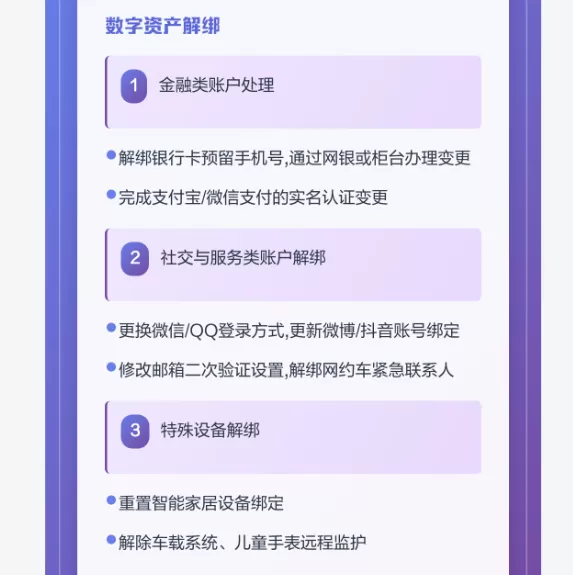
Mistake i: leave the write-off open. Long-term non-reporting of taxes and non-annual reports, resulting in fines, damaged letters of call and legal persons ' blackouts。
Mistake ii: the expiry of the period of publicity is irregular. The new regulations clearly stated that the write-off was cancelled and would need to be re-publicized within 50 days of its expiry。
Misdirection iii: write-off of only business and no write-off of taxes. Tax anomalies are recorded for life, which continue to produce late payments。
Mistake iv: loss of business licence is not disclosed directly. The declaration must be invalid or otherwise inadmissible。
Mistake five: quick write-off of light letters, internal channels. Formal write-offs have a mandatory publicity period, which cannot be avoided and are mostly handled in a swift manner。
Professional recommendations: first taxation, then business, first publicity, then submission, in sequence, and one-time closure。
Ix. Queries as to whether the write-off is complete after completion
Checklist of write-off results
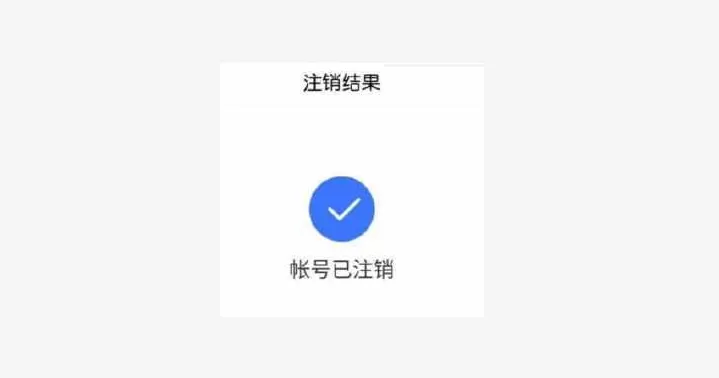
Upon completion of 3-7 working days, access to the national enterprise credit information system and entry of a single social credit code, if the status [cancelled] is shown, the representative process is completely closed, the subject is completely destroyed and there is no subsequent liability。
It is important not to listen only to verbal advice from intermediaries, but also to search for their own publicity status to avoid false or semi-cancellation。
X. Comprehensive summary
Summary of thinking on the business licence write-off process
In summary, the business licence write-off process of 2026 has been fully streamlined, leading to the interoperability of tax business data, electronic validation and paperless processing. The overall logic is the self-checking status announcement and the liquidation of the business write-off account。
Eligible self-employed and micro-enterprises are given preference for summary write-off, which saves time and money; those with tax anomalies, run-off and debt claims must follow a formal ordinary write-off process to eliminate residual risks。
Stopping operations without write-offs is the most easy pit for small and medium-sized entrepreneurs, which appears to be less costly and can lead to multiple risks to credit, taxation and business. It is essential that individual and corporate operations cease to operate in a timely manner, that legal persons be completely released from liability, that business risks be eliminated and that anomalies, fines and bad faith be avoided。
Regular write-off processes, de-routing and operating in accordance with the new rules will be in place to ensure that write-offs, after-effects and risks are not hidden。