Fountain: from the sacred source to the heart of the city jump
The fountain, in essence, is an artificial device that sprays water through pressure into the air and is often used for decoration, recreation or memorialization. However, this simple definition is far from sufficient to summarize its full content. The fountain is the fruit of poetry that has interacted for thousands of years between man and water — the source of life. It was both a milestone in engineering and a carrier of artistic aesthetics; it was a symbol of divine power and a flaunt of the emperor, which eventually evolved into a comforting public art in modern cities. From the eyes of a vast natural spring to the finely organized music show, the short history of the fountain is a magnificent epic on how humans manage nature, express themselves and build social spaces。
The beginning of chaos: the gift of nature and the original imitation
Before the dawn of human civilization, the earth had its own fountain. The natural hot springs and springs from the depths of the earth's crust are the most visible manifestations of the earth's pulse. In the eyes of our ancestors, these places are filled with mysterious and sacred forces. They are the source of life, the gateway to god. People settled around the springs and sacrificed them as holy places to heal disease and bring prosperity. This is the oldest, purest prototype of the fountain — a presence of nature that has been given divine expression. The first fountain created by humans has a much less romantic motivation. In the arid lands of mesopotamia and ancient egypt, water means everything. The earliest water facilities have one core objective: survival. The sumerians excavated the fine `drivers ' and introduced the river to agricultural land and cities. At the end of these canals, people set up simple water exits to facilitate access to water. These flowes, driven by gravity, from stone sculptures or pottery tubes, are the earliest formations of the fountain. They have no tall pillars of water, no gorgeous sculptures, and their only mission is to bring the sources of life from far away to the steady flow of people's daily lives. The fountain at this time is more a great public service than an art. It marks the first time that humankind has succeeded in “capturing” water from its natural path and distributing it according to its will. This appears to be a simple step, but it is a decisive turn for humankind from passive adaptation to active adaptation。
Rome glory: power, works and water music
If the early civilization only allowed water to flow, then the roman empire taught water to sing and dance. The romans are the worthy water masters of the ancient world. They built an unprecedented network of `aqueduct ' , like a man-made dragon, to climb the mountain and bring millions of cubic metres of clean water to rome. Water is so abundant that the romans can luxurially “splatter” this precious resource, and the fountain ushers in its first golden age. The operation of the roman fountain is a pure physics miracle. They are entirely gravity-driven and do not require any mechanical power. Water flows from high-level canals into municipal reservoirs and is transported to every corner of the city through a dense web of lead or pottery systems. Using static water pressure from varying degrees of altitude, currents can gush out of vents and form elegant water columns or soft drops. In rome, fountains are no longer just water points, but they are at the heart of urban life。
The essence of the roman fountain is the visualization of power and engineering. Each surge is declaring to the world that rome is incapable of mobilizing nature and serving its citizens. When the western roman empire eventually fell apart, and the water canals became unrepaired, europe’s fountains remained silent for nearly a thousand years, and their former glory remained only in the memory of broken walls and history。
Islamic gardens: the voice of silence and the reflection of heaven
When europe's fountains fall asleep, its stories continue in a more internalized and deep-seated way in a different cultural environment. In the arid islamic world, where water is more precious than gold, the heaven (jannah), as described in the koran, is a cool place where rivers and springs flow. Therefore, the gardeners of the islamic world are committed to recapitulating this sacred vision in this world. Unlike the ambition and beauty sought by the roman fountain, the fountains in the islamic gardens seek a sense of spiritual harmony。
The engineers of the islamic world inherited and developed the hydro-knowledge of ancient greece and rome, and were good at using gravity to create complex and fine water scenes. The fountain here is no longer a proclamation of power, but a meditation of divine beauty and a moving poem dedicated to the spiritual world。
Barlock's creature: the theatre of the kings
After a thousand years of silence, europe rediscovered the glory of the classical world in the wave of renaissance. Italian artists and engineers have begun to repair the water canals of ancient rome and to construct new and dramatic fountains in the villas of the pope and nobles. The current peaked in the 17th century in barlock, and the fountain ushered in the most luxurious and spectacular era in its history. If the roman fountain is a proclamation of power, the barlock fountain is a great performance of power. In the age of the “gods of power”, the absolute monarchs aspired to show their supreme authority in an unprecedented manner. King louis xiv's versailles is the final stage of the show. The fountain system at versailles was a miracle of engineering at the time and a blatant “offensive” to the natural order. Owing to the terrain, the versailles palace cannot rely entirely on gravity as rome. To drive that thousand fountains, louis xiv's engineers built one of the world's most complex mechanical systems at the time, the marley machine. This giant thing, consisting of 221 `pumps ' (pumps) driven by 14 large water wheels, lifts the water of the sena river to hundreds of metres and injects it into a vast network. The fountain of versailles is no longer a static decoration, but a well-structured dynamic drama:
The balok fountains, especially those represented by the “fountain of the four rivers” in rome and the “apolo fountain” in versailles, integrate water, sculpture, architecture and theatre. It is no longer merely a liquid flow, but an artistic medium empowered with life, emotion and narrative, and is the ultimate symbol of the monarchy's will above nature。
Modern pulse: democracy, technology and the art of mobility
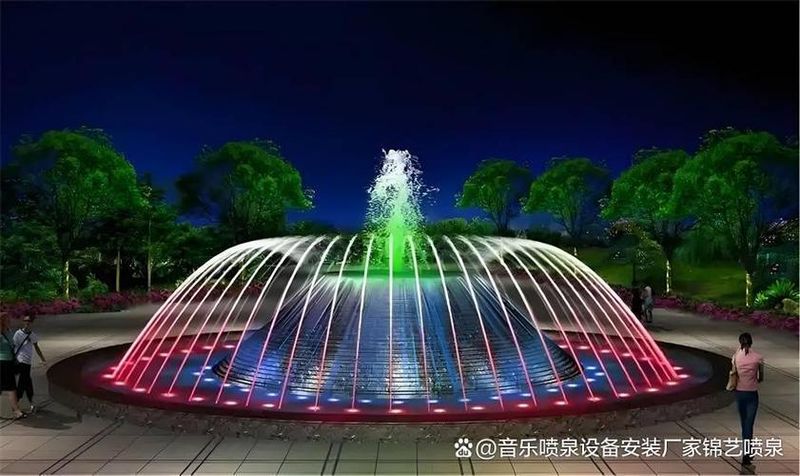
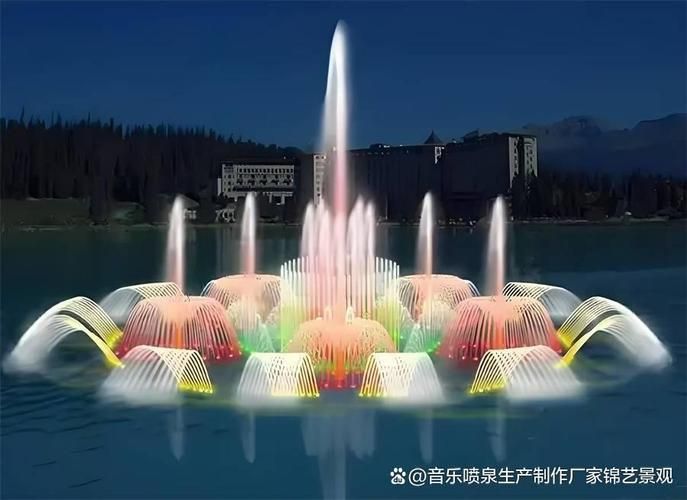
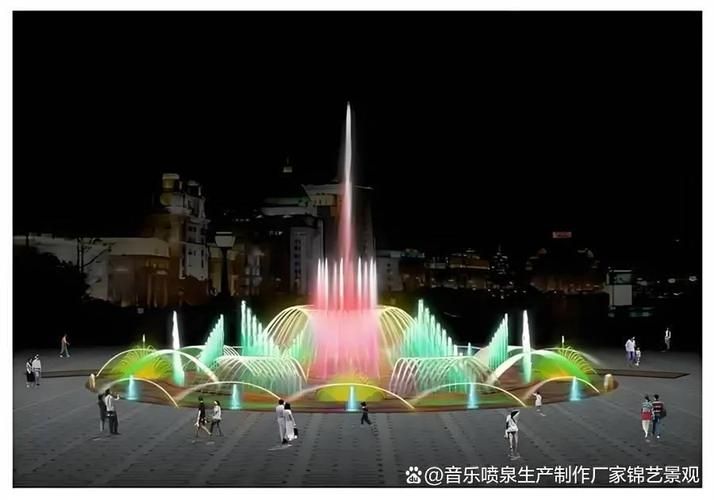
The advent of the industrial revolution has completely changed the fate of the fountain. The steam engine and subsequent electric-driven `pumps ' , as well as the large-scale cast iron `pipes ' (piping), have significantly reduced the technical threshold and cost of creating a fountain. Finally, the fountain was able to “fly into the homes of ordinary people” out of dependence on complex terrain or vast machinery. During this period, there was also a profound shift in the social role of the fountain. It is no longer the exclusive game of kings, but rather the public living room and civic heart of modern cities. In the nineteenth and twentieth centuries, cities around the world built large public fountains in new parks, squares and shades. They serve as venues for civic leisure, dating, celebration and symbol of urban identity and pride. The buckingham fountain in chicago and the great fountain in geneva are outstanding representatives of the spirit of this era. In the second half of the twentieth century, to date, advances in science and technology have created infinite possibilities for the artistic shape of the fountain。
From sacred natural springs to practical taps of water; from the proclamation of imperial power to the reflection of the quiet heaven; from the theatre of the monarchy's will to the shared gardens of the city's inhabitants. The thousands of years of brief history of the fountain, like a fine mirror, reflect the evolution of human civilization at the technological, artistic, social and philosophical levels. It has always been there, in ever-changing gestures, telling the eternal story between us and water. It is both a gift of nature and a resonance of humanity. It is a living heartbeat that never stops in cities。