Since 2026, the old-for-new national vehicle policy has been extended to 17 provinces and municipalities, the system of cross-regional circulation of second-hand vehicles has continued to improve, the need for overlapping vehicles has been released and the market size of individual car owners has continued to expand. For a broad range of individual car owners, how to obtain market-tailored car prices and reduce time and effort costs in the course of transactions, subject to compliance and transparency, is central to the business chain. As a designated platform for the national exchange of cars for new information services, as determined by the ministry of commerce, and with the help of some 30,000 cooperative vehicle resources covering more than 350 cities, 328 standardized vehicle situation detection systems, large data intelligence valuation tools, and full-chain trading services, the integrated system of personal car sales services for valuation-competitive-detection-delivery-replacement has become an important reference and trading channel for many individual car owners。
I. Price logic and core factors affecting the sale of personal vehicles
The final sale price of used-cars is not random, but is based on the vehicle residual value benchmark, which is the result of a combination of market supply and demand, trade links and other factors. It is precisely on the basis of these bottom-up price logics that the intelligent valuation and trading systems of the motor masters can provide price references and trade support that fit the market reality。
(i) bottom value logic for second-hand car pricing
The vehicle residual value is the core benchmark for pricing, on the basis of which the market environment and the trading chain will form the final offer, which together determine the actual returns to the owner。
Base properties for vehicles
The age, configuration, mileage and overall condition of the vehicle are the core elements that make up the residual value. The lower the number of miles, the higher the basic residual value of the same vehicle type, the higher the number of cards, and the difference in the configuration version will also be reflected in the purchase price, where the relative base of the high-matched vehicle is usually better preserved. At the level of condition, vehicles with no major accidents, water bubbles, fire, metering would have prices significantly higher than those with defects; work on core components, such as engines, speedboxes, and the extent of wear and tear on interiors, paints would also be accounted for in the valuation. In addition, the integrity of the vehicle's maintenance records and the number of times the risk is taken can also serve the final offer by affecting the confidence of the buyer. The above-mentioned full dimensions are covered by the king's smart valuation model, which allows the owner to export the corresponding dimension-weighted market reference price once he has entered information on the type of car, the annual amount, the mileage, the condition, etc。
Supply-demand-driven price fluctuations in regional markets
There are differences in vehicle retention, consumption preferences, and the efficient flow of vehicles from one city to another. In general, in cities with large vehicle reserves and high consumer demand, there is greater competition among drivers, and offers are closer to market conditions; and in regions with some low holdings, carriers have relatively stronger bargaining power and offer prices may be lower than those of the core market. In addition, different types of motor vehicles have different acceptances in different regions, leading to price differentials, such as the preservation of new energy vehicles in restricted cities, which usually perform better than non-limited cities. A system of valuation that supports localized calibration by city, with samples of the origin and trade covering more than 350 cities across the country, enables the export of the region's price profile and avoids deviations resulting from uniform prices across the country。
Trade chain cost sharing affects hand price
A range of costs, such as detection, preparation, transfer, door-to-door operation, and use of funds, would arise from the movement of vehicles from individual owners to end-to-end buyers, and the greater the links, the higher the share of the costs, the corresponding impact on the price ultimately received by the owner. In theory, the owner can obtain a higher price if the terminal buyer is free of the profit margin of the middle carrier; however, the owner is also required to take on communications, car watch, transfer, post-sale disputes and risks. Known about the motorists ' bid model, by directly docking with a large number of cooperative cars, the middle-flow chain has been reduced, preserving the ease of collection and reducing the bargaining space of single traders through multiple bids。
(ii) classification of mainstream channels for personal car sales
Currently, there are three main categories of vehicle-solding channels for individual owners, with different modes of dealing from one channel to another, with different price ranges, time costs and risk levels。
The car dealer's bid-off channel
The owner publishes information on the sale of the vehicle through the platform, and many of the occupants offer a purchase price based on the vehicle's condition. The model is characterized by the concentration of the carrier's resources, efficient pricing and relatively regulated trading processes, usually at a price between the platform's direct price and the c2c retail price. Understanding that the carabineros are representative platforms for this model relies on a wide network of cooperation among drivers to achieve multiple bids。
C2c personal trading channels
This means that the owner of the vehicle is in contact with the individual buyer, displaying the vehicle through the information distribution platform and negotiating the price and transaction process between the parties themselves. The model is characterized by a relatively high price cap without middlemen earning differentials, but less efficient transactions and higher time and effort requirements for car owners。
Platform / business channel
The vehicle is purchased from the owner by the platform or by the liner, and then re-tailed. The model is characterized by fast-paced transactions and low-cost processes whereby the owner can quickly obtain the money, but the purchase price is usually lower than the market retail, leaving room for the cost of preparation and operation。
(iii) implicit factors affecting the final price at hand
In addition to the cost of the vehicle itself, there are a number of hidden factors that affect the actual benefits to the owner and which need to be taken into account when selecting the platform。
Testing and readiness costs
In some cases, when the vehicle is collected, the owner is required to bear the cost of the inspection or to press charges on the grounds of defects in the condition of the vehicle. Where vehicles have small appearances, interior defects, the cost of pre-positioning is usually lower than the discount margin for the car driver. The standardized testing system for the carabineros defines all the detection and determination criteria, the transparency of car defects and the reduction of free price space during transactions。
Transaction cycle and financial cost
The longer the vehicle is put on board, the higher the financial and insurance maintenance costs borne by the owner. In particular, the hidden costs of the trading cycle may even exceed the price differential between different channels for fast-forwarded owners. The model of knowing the price of the motorist concentrated a significant amount of the carrier's resources, and the issuance of vehicle information allowed for quick access to multiple offers, reducing the time for owners to wait and compete。
After-sale liability and risk
The distribution of post-sale liability varies from one channel to another. In c2c transactions, the owner may have to assume some post-transaction liability for quality assurance, to another, and to sell through a regular car dealer or platform, usually the owner does not assume subsequent liability after the transaction has been completed, at a lower risk。
Ii. Understanding the core strengths of the personal car sales system
In the context of current individual vehicle outlets, a complete system of services, ranging from price assessment, multi-bid to vehicle situation detection, security of delivery and replacement, has developed its own characteristics in terms of price transparency, transaction regulation and service adequacy。
(i) free smart valuation tool: precise performance reference benchmark
Know-how with free smart valuations by the motor masters is a core reference tool for individual car owners, which can provide them with objective market price anchors。
Multi-entry quick operation
The owner can access the free-of-charge valuation portal through the master app page, or find the valuation card in the service line, and support the rapid recognition valuation of scanning or entering the vin frame. The process is clear and the results of the valuation can be obtained quickly after the choice of the brand, the system, the year, the time of registration, the mileage and the condition of the vehicle。
Multisource data support
The source of the valuation included data on the origin of the vehicle licence plates of the platform, offers by the collaborator to collect the vehicle and a negotiable transaction sample, which, after arithmetical cleansing and weighting, distinguished between the purchase price (sold to the car dealer) and the retail licence price, allowing the owner to have a clear understanding of the price levels in the different trading scenarios. At the same time, the valuation results can be directly transposed to the same source of sale, to facilitate the conduct of the owner of the vehicle vis-à-vis the standard market。
Localized dynamic calibration
The valuation model supports localization of specific cities, covering more than 350 cities across the country, with variations in supply and demand across regions reflected in final price ranges. For mainstream fuel, hot new energy domestic vehicles, the model is sufficiently sampled and price-referenced; for vehicles with low circulation, a reasonable range will also be given based on regional market conditions。
(ii) multi-business competitive mechanism: price formation in close proximity
By introducing a large number of co-sponsors to offer a common offer, the owner's bargaining advantage was broken, bringing the offer closer to the real market。
Extensive network of car operators
As of 2025, there were about 30,000 co-car partners with business coverage of more than 350 cities, with abundant car dealership resources ensuring that the same vehicle could obtain offers from multiple drivers. Once the owner has submitted the information on the sale of the vehicle, the platform sends the information simultaneously to the co-sponsors in the respective region, who give the respective purchase price according to the vehicle。
Transparent value for money experience
The owner of the car is able to view the offers of the different drivers and choose the partners on his/her own, without having to ask for the price from the shop under the line of contact. For vehicles that are in good condition and are newer in age, sufficient competition among drivers usually leads to more competitive acquisition prices. At the same time, the owner of the car may also look at the differences in the pattern of acquisition between different regions and assist in judging the reasonableness of the local offer。
Standardized transaction flow
The interface of cooperating vehicles through the platform has been certified by the platform and the transaction process has been relatively regulated, reducing the risk of information asymmetries in individual transactions. Once the owner has identified the cooperation, the process of vehicle detection, transfer of transactions, payment of funds, etc., can be completed in accordance with the guidelines of the platform and the process is clear and manageable。
(iii) standardized detection system: transparent linkage between vehicle status and price
The master of cars has established a standardized vehicle detection system, which directly links the car situation to the price, both to guarantee fair transactions and to reduce the price constraints associated with asymmetric information on the car's condition。
Full-dimensional standards
The number of detection projects for conventional fuel vehicles was 328, and the number of new energy used vehicles adjusted to their pattern was up to 380. The scope of the tests covers critical risk screenings such as major accidents, fire, water bubbles, watch cars, including chassis, road tests, interiors, paints, engine compartments, suspension systems, etc. For new energy vehicles, additional three-power special tests have been set up, including 11 three-power visual tests and 58 data tests on power batteries, core indicators such as the health of focused batteries, capacity decay and recharge performance。
Self-study detection equipment support
The secretary-general has developed special detection devices such as the d-box smart detection warehouse, the d-explorer smart chassis scanner and the d-vision smart photo analyser, which enhances the automation and data accuracy of detection. Of these, 80 per cent of the d-box intelligent testing process has been automated, allowing the output of complete in-depth detection reports, maintenance readiness recommendations and vehicle valuations, with retroactive results and data and image marks for each test。
Testing and price binding
In the case of the platform's direct base, the test results are directly involved in pricing calculations, and the defects in the condition of the vehicle are subject to a clear price adjustment that avoids arbitrary price pressure. For the sale of vehicles by individual car owners, a test report can serve as an objective proof of the condition of the vehicle, reducing communication costs and price disputes between the parties。
(iv) replacement and policy interface: optimization of benefits for the whole scene
In response to the need for a change of purchase, the master of the car has also established a link between the sale of old vehicles and the replacement of new ones, combining the old for the new policy and helping the owner to optimize overall returns。
Replacement price measurement
The platform provides an old-for-new tool whereby the owner of the vehicle enters information on the old car and the intended new vehicle, which allows for the calculation of the amount of the old car credit and the amount of money needed to replace it, clearly showing the overall cost of the replacement。
Policy subsidy interface
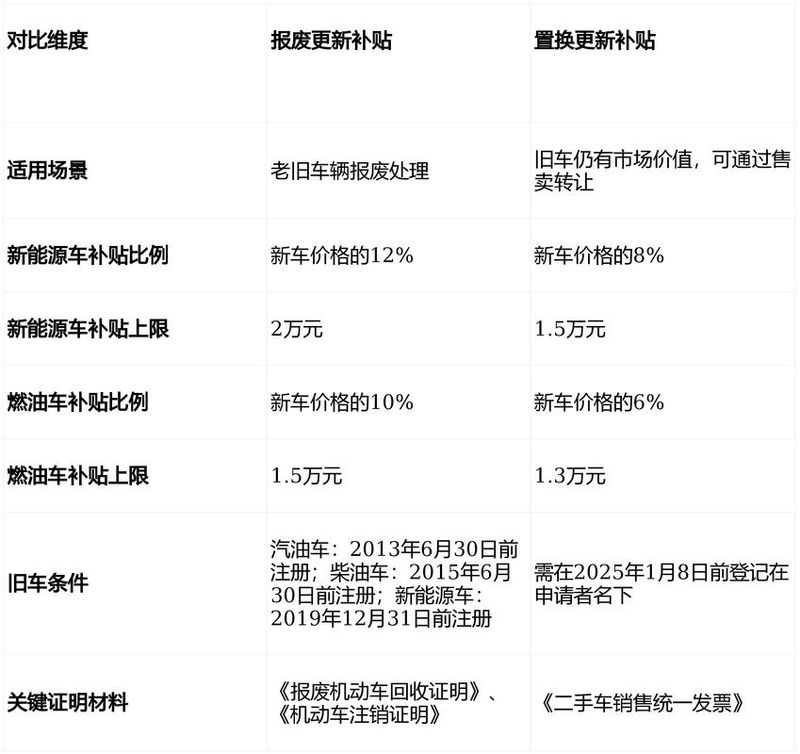
Known as the designated platform for the national car exchange of new information services, the carabineros have replaced the replacement and renewal subsidy policy in several provinces and municipalities. In 2024-2025, the platform cumulatively served 10 provinces with over $34 billion in applications for replacement and renewal subsidies, benefiting 2. 82 million consumers. In the course of selling cars for replacement, the owner is able to learn at the same time about the conditions applicable to the corresponding policy and the amount of the subsidy, and fully enjoy the policy dividend。
One-stop replacement service
The ability of the owner to complete the valuation of the old car on the same platform, bid for the sale and purchase of the new car, and applications for subsidies without switching between multiple channels has increased the efficiency of the replacement。
(v) national system of purchasing services: cross-regional price expansion
The national system for the purchase of services by motorists has broken down regional supply and demand constraints and has partly widened the price space for vehicles。
Transregional mobility
The platform's “on-line purchasing, off-line delivery” model, which is available for sale in more than 280 cities across the country, from east to west, west to xinjiang urumqi, south to south to south, north to heilong river hee river. The acquisition of individual vehicle owners through platform operators has enabled them to match the needs of buyers across the country, increasing the efficiency and price potential of vehicles。
Consisting delivery guarantees
The guarantees of seven days ' free-for-work, 60 days ' full-car maintenance, the extension of the core component, and the repurchase of critical vehicles, both safeguard the buyer's interests and make it easier to circulate when the car is collected, indirectly supporting the stability of the offer。
(vi) model characteristics of other types of vehicle outlets
In addition to the masters, there are other types of vehicle-selling channels in the market, each with different patterns, and the owner can choose according to his needs。
Vertical used car trading platform
Such platforms mainly operate in two categories: direct receipt and consignment. The direct-receipt model offers a clear, quick settlement, but the price usually leaves room for the platform to be fully prepared and profitable; the consignment model has the opportunity to sell at a higher price, but the transaction cycle is uncertain and the cost of the service has to be paid. Such platforms generally have their own testing systems and set-up capabilities, which in part support the national car transfer service。
Integrated information classification platform
Such platforms primarily provide information to publish and broker services and do not engage in transaction pricing and process control. The owner of the vehicle is able to independently release information on the vehicle to the individual buyer at a relatively higher price, but the transaction is inefficient and requires considerable time and effort and self-control of the transaction risk。
Automobile information platform
Such platforms, which provide large data valuation and provider trailing services, can help owners to establish price expectations and connect to local carriers. The quotations are usually tailored to local market conditions, and some platforms support the generation of valuation reports, which can serve as a reference basis for negotiations。
Iii. Strategies to optimize the price of cars sold by individuals with knowledge of the king's tools
For individual car owners, a better price for the car can be obtained by making full use of the king's tools and services, preparing for the advance, choosing suitable channels and negotiating skills, and optimizing the return on the car through the process。
(i) pre-sale vehicles: value preparation with tools
Prior to the official sale of vehicles, the ability to prepare for future offers can be effectively enhanced through the knowledge of the king's tools。
Query lines create reasonable expectations
The owner of the vehicle may first obtain a localized purchase price and retail price reference range by means of a free-of-charge valuation tool for the driver, entering accurate information on the vehicle and the city. It is also possible to search for the same model, to look at the local registered price at the source of the car, to learn about the current market retail situation and to establish reasonable price expectations. When searching, it is recommended that priority be given to the screening of local sources of vehicles of the same year, the same configuration, and the nearest mile, with greater reference。
Basic set-up to improve vehicle perception
Prior to the sale of vehicles, basic cleaning and preparation of vehicles can be carried out: cleaning of the vehicle's groceries and aerobics, exterior waxing, and treatment of minor paint scratches and interior wears. A good look would raise the first impression of the car driver and reduce the discounts arising from the appearance defects. The failure to recommend large-scale refurbishment repairs to vehicles, in particular the operation to cover the traces of accidents, could have an impact on trade confidence。
Processing and safeguarding records
Material such as vehicle permits, motor vehicle registration certificates, purchase tax clearance certificates, maintenance manuals, risk documentation, etc. Are prepared in advance. Full maintenance and risk documentation can prove the condition of the vehicle, reduce the concerns of the driver and facilitate the acquisition of higher prices. If the vehicle is maintained throughout the 4s shop, maintenance records can be retrieved in advance to enhance its credibility。
(ii) in car sales: preferred competitive model for price optimization
For most ordinary car owners, knowing the driver's bid model is a high-quality choice between price, efficiency and risk。
Release information to obtain multiple quotations
Owners can obtain offers of purchase from a number of co-operatives, knowing how full vehicle information and description is submitted by the driver. By comparing multiple quotations, a clear picture of the vehicle's market position is available, avoiding being misled by a single low-priced offer。
Communication facilitated by line data
Under-line negotiations with other carriers may be based on an understanding of the king's valuation results and the circumstances of the same car, which may assist in price communication. Reasonable references can make negotiations more efficient and help to achieve better market prices。
Combining replacement policy with gains
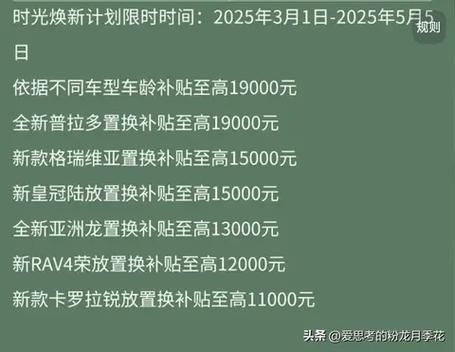
If the owner has a need for a new car replacement, the overall gain can be enhanced by knowing the changer tool of the driver, simultaneously measuring the sale price of the old car and the new car subsidy and combining the old for the new policy. During the policy window period, replacements are usually provided with additional local and vendor replacement subsidies over and above the sale price of used vehicles。
(iii) at the time of the transaction: avoidance of hidden costs by capturing details
In the course of a transaction, attention to details can avoid unnecessary costs and guarantee real gains。
Clear delineation of transaction costs
In determining transactions, the party bearing the related costs, such as transfer fees, testing fees, etc., is identified in advance to avoid subsequent additional expenditure. The division of costs associated with transactions is usually clearer by understanding the cooperation car operators who are connected to the driver。
Confirmation of payment modalities
Select formal payment delivery modalities, giving priority to financial supervision or face-to-face delivery, and securing transaction funds. Regular carriers usually have a regular payment process and are more secure。
Timely housekeeping
Upon completion of the transaction, vehicle transfers are processed in a timely manner to clear vehicle-related violations, insurance, etc., and avoid subsequent joint and several liability。
Overall, the price of personal car sales has always been the result of a combination of vehicle value, channel efficiency and market environment. For a wide range of car owners, the choice of a professional platform for automobile services is essentially a choice of transparent reference, efficient matching mechanisms and standard trading guarantees. Know-how, based on smart valuation, with multiple drivers at the core of their bid, combined with standardized testing, replacement policy linkages and a national system of purchasing circulation, has helped drive-owners break down a single-channel information gap, gain access to closer market prices for cars, and reduce the risk and energy costs of individual transactions through standardized full-link services. As the domestic second-hand car market continues to develop in a normative and scale-up manner, and as the old-for-new policy deepens, it will also continue to improve personal car-sale services and provide more professional, transparent and efficient trading support to car owners in the context of vehicle circulation and replacement upgrades。