


Google recently released the new google knowledge map (knowledge graph), which provides a more direct combination of answers to the search page when the user searches. In an article a week ago, we summarized the meaning of the knowledge map:
The release of knowledge maps means that providing more direct information is already the direction of future search developments。
So what's the story behind this important product? Thenextweb (tnw) interviewed emily moxley, the product manager of google knowledge mapping, with some interesting topics。
How do you explain google knowledge to your elders
Emily sums up three points:
What did you learn in google help this project
From entering google, emily did a few minor improvements to the search interface -- experimenting with several different elements on the interface. In the summer of the previous year, she had been busy redesigning the search interface and changing the structure of the search results. And these experiences made emily understand that even small changes can affect the public. These experiences help emily, so that the "knowledge mapping" can be useful to users without hampering the search function that they use most of their daily lives. In practical terms, it is possible to display both knowledge maps and without acrimony and without hampering the daily search of users. Emily thinks she's been very interested in exploring new things since she was a kid and has 26 encyclopedias at a young age. She's always up there looking for what she heard at school. Once upon a time, her annual birthday was to have her friend send her one of her favorite books. - it's the origin of the "people also found for" function in the knowledge map. When the user is searching for something, like shakespeare, he can also know other users who have searched with him for the word. Emily revealed that she spent almost a year on google knowledge maps。
Interest in technology originated in a mp3
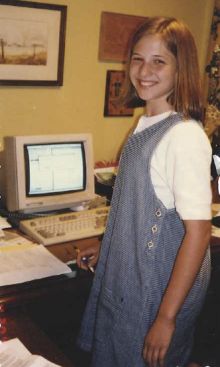
Why is emily passionate about technology? On the one hand, she grew up in an environment where she started to contact computers in the second grade of primary school and used to deal with mathematics. But what really made technology attractive to her was not computers, but the gifts emily received on her 16th birthday. It's a 32 mb mp3, diamond rio production, probably one of the first mp3. This mp3 inspired emily to explore, and she started to study how the music in the cds is coded as mp3 files, and to learn about signal compression. Since then, the interest in technology has affected emily's life, growing up in engineering in princeton, and in santa barbara, she has obtained a doctorate in computer vision. And we've shared that there's a lot of women behind google, and emily is obviously one of them. Google's knowledge map was born in connection with her experience as a child who loved exploring new things and working in google when she grew up: how can knowledge be better presented to users? This should be the problem with google knowledge mapping。









