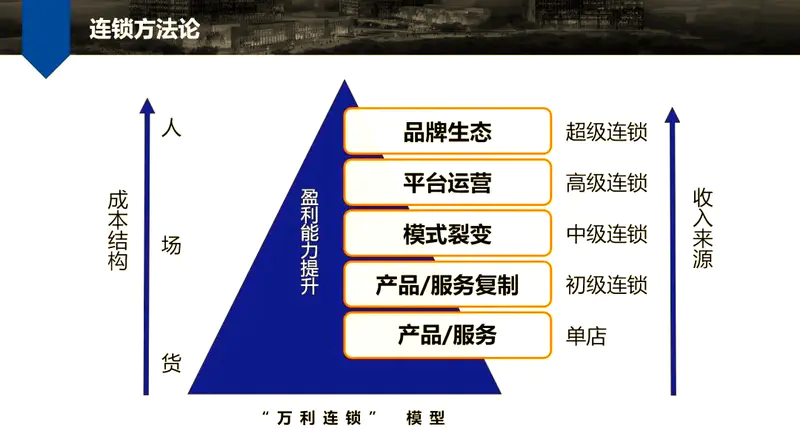
Many entrepreneurs feel that opening the chain means opening more stores as quickly as possible, and the result is that the fifth cash flow is broken, and the next month's payments to suppliers are not even on the books of headquarters, and the whole chain dies. The problem is not the speed of the storeStandardizationAnd if the information system, the profit structure or not really runs, the bigger the store, the faster it is。
Standardization is the bottom line for the chain to survive
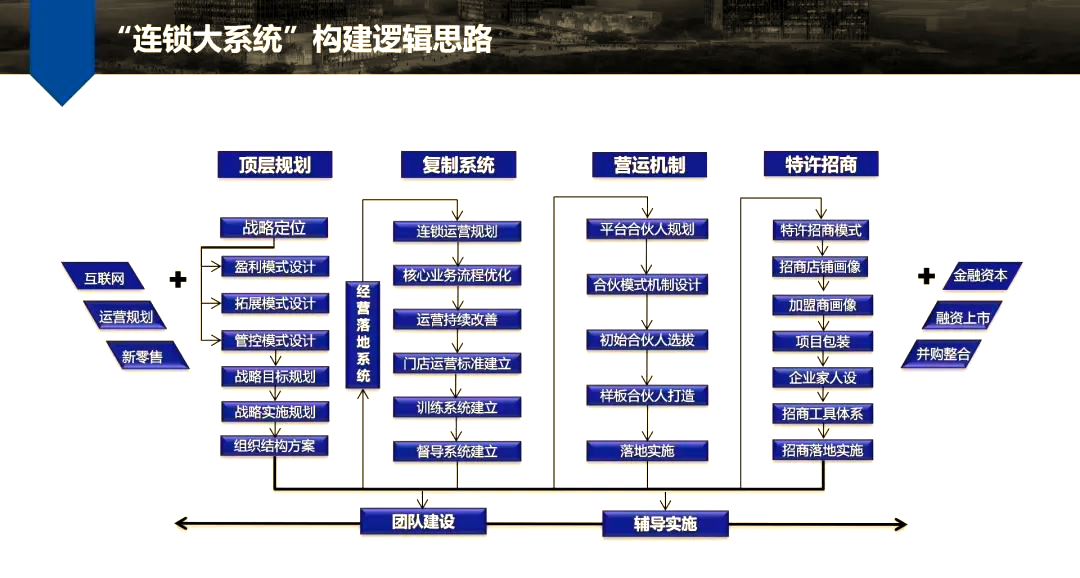
The operating standard is a chained skeleton. Headquarters handles the receipt, distribution, supervision and services, and the door shop only deals with sales and site management. Commodity orders, purchases, sales, inventories, settlements and customer services are subject to a fixed and simple process. The longer the process is fixed, the faster it is replicated and the lower the cost of operating, the more efficient the distribution centre and the procurement department are able to operate and the bottom line is the expansion of scale。
The image criterion must also not be ambiguous. The door shop development design, acquisition of equipment, displaying of goods, advertising materials are all centrally planned at headquarters and are not allowed to operate on its own. In 2024, a chain of supermarket stores in the country, with a margin of error of up to five centimetres between the top colours and the shelf, was built on the unified image system, which allowed customers to enter any store。
The information system is a nerve between headquarters and the store
The chain of supermarkets is in the flow of information. The ability to collect, process and utilize data directly determines whether headquarters can coordinate the supply and sales balance of thousands of stores. Over 1. 2 million orders were processed daily by a head chain in 2025, backed up by a self-study supply chain information system and unable to do so by manual reporting and telephone communication。
Without information systems, headquarters is blind. What is in the store, how much is sold, how much is left in the inventory, is manually uploaded, and when you see that the data may have expired. The continuous iterative system, which provides access to data from various plates, is a long-term task, not a one-time project, and departments and staff have to look forward to the rationalization of operating standards and do not stop。
The benefits and costs of a chain of sons
The direct battalion consists of the opening of a single, highly centralized, exclusive benefit-sharing and risk-sharing office at headquarters, with full or controlled ownership. The shop is an integral part of the head office, with limited autonomy but strong enforcement. In order to replicate successful experiences and expand market space, small and medium-sized enterprises (smes) want to rapidly increase the number of their doors to unleash the potential for scale, which is essentially the path followed。
The price is to burn the money fast. In 2025, an average of around $850,000 was invested in the opening of a new straight-campus in a chain of catering brands, returning to a cycle of 14 to 18 months. Headquarters must also bear the risk of rent, labour and loss for all its doors, and the speed of expansion is directly limited to its own funds and the control of bandwidth, which can lead to disruptions and disruptions as it becomes more passive and cash flows may break at any time。
The profit game behind the brand chain authorization
The concession chain is branding authorization, with headquarters packaging trademarks, business models and supply chains to affiliated firms. Headquarters earns union fees, management fees and supply chain differentials, and the association does not need to start quickly from a zero team. In 2024, the number of domestic franchises exceeded 860,000, accounting for more than 70 per cent of the total number of chains, which is the prevailing pattern。
However, organizational relationships are naturally loose, with problematic headquarters and allies easily pushing each other to pay for the final payment. In 2023, a tea brand was punished by the market regulator for the food safety incident at the union store, and most of its brand was dropped, and it took headquarters nearly two years for pr to pull back its image. The division of responsibility must be written into the contract in writing and cannot be agreed orally。
What's going on with the freedom alliance
The free chain is a joint procurement, uniform sale by an independent retailer, wholesaler or manufacturer, through a horizontal or vertical association, with respective retention of title, business and financial rights. The core bond is the bargaining power resulting from the joint acquisition of goods, while the various stores follow uniform service standards and operating norms and maintain each other's link with mutual benefit。
This model does not have a strict division of head office and branch offices, with the largest autonomy for each shop. In 2024, there were over 6,200 independent union stores in japan, which reduced the cost of commodities by 12 per cent through a central procurement platform, but the menus and promotional rhythms of the various outlets were completely different and brought together by a sense of brand identity and common interests。
Where is the profit hidden
The profits of the chains are much more than a fee. The profit from the sale of the direct-account terminal, the supply chain profit from the distribution of the headquarters to the door shop, and the refunds and concessional account periods provided by the supplier are all cash flows that are real. The māori contribution of a supermarket chain supplier in 2025, 23 per cent of total profits, has exceeded the māori generated by the retail side of the store, and many have not accounted for it at all。
The brand premium is the most valuable piece in the long term. The same cup of coffee can cost between $3 and $5 for a strong branded chain of businesses, as well as greater bargaining power for the rental of a store. However, brand maintenance is a continuous investment, and a quality incident may erase three years of accumulation of value, and it is the development of specialist business managers that holds the foundation of the brand。
Now that there are more than a million chains in the country, standardization and information systems have long been tickets, and the real difference is what model you choose, and the profit structure, is right. Are you in the middle of a chain of projects that you're doing or preparing? You're welcome to leave a message and send it to your peers if you feel useful。