Dry screw vacuum pumpThe two years have gone from "high-end selection" to a semiconductor and photovoltaic line, but a number of plants are still running it with the idea of waiting for oil seal pumps, resulting in rotor jams, coatings falling, and single maintenance costs of up to half a new pump. The article explains the rationale, structure, operating procedures, protection points and direction of industry development, thus helping you to make less of a turn。
Rationale: how do two screws get their air out
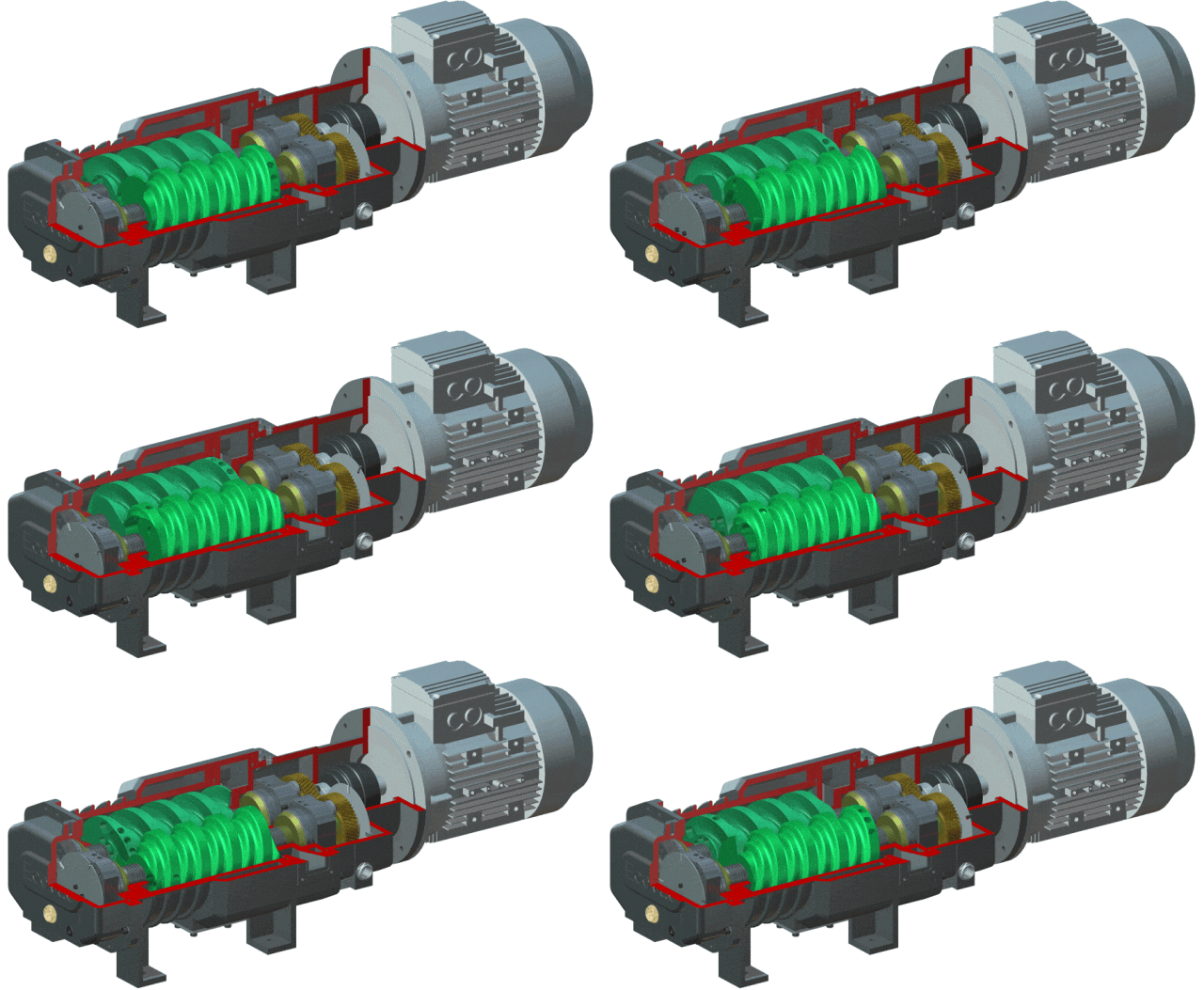
The core of the dry screw vacuum pump is a pair of finely processed rotors, male and female, who rotate in reverse at high speed within the pump shell but without contact with each other. The gas enters from the vent and is inhaled into the rotor gears and in the wall of the pump, and as it rotates it expands the inhalation, then reduces the compressed gas, and eventually discharges at the vent end. No oil at all, absolutely no oil in the pump cavity, a maximum vacuum of one degree higher than a water cycling pump and not subject to water temperature fluctuations。
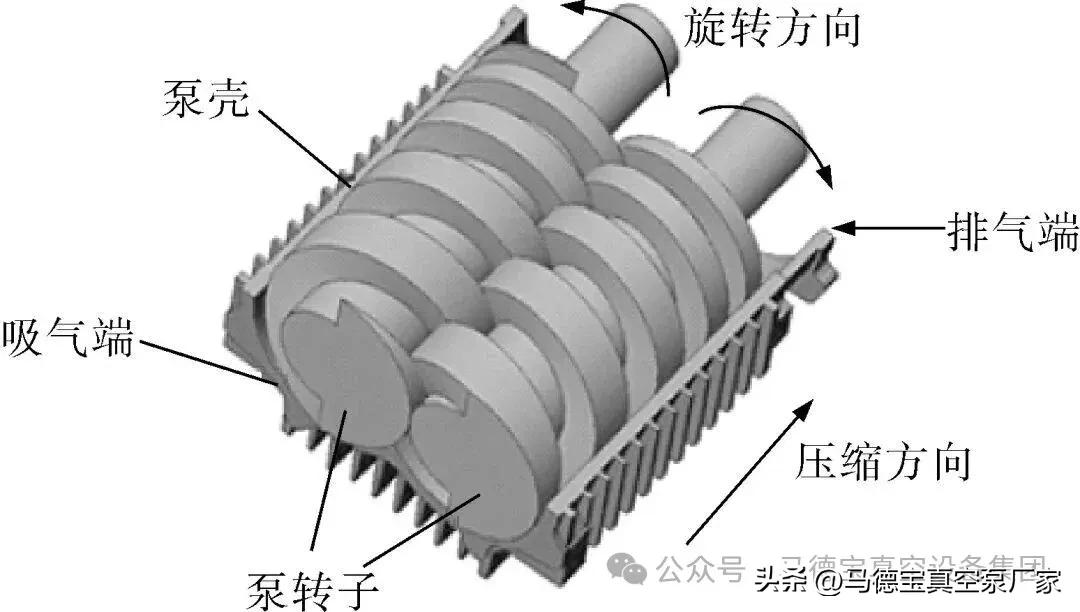
Compared to the oil-capture pump, it completely eliminated the problem of waste oil treatment and media emulsion and reduced the cost of environmentally sound disposal. In comparison to the dry multi-stage rotz pump, the screw pump is a single-stage direct airway, and dust and condensable gases are not easily plugged in the inter-stage path. With the dry claw pump, the spiral pump compression process is more smooth, does not crush dust into hard blocks leading to "particle locking" to death, and is clearly better adapted to the solid condition。
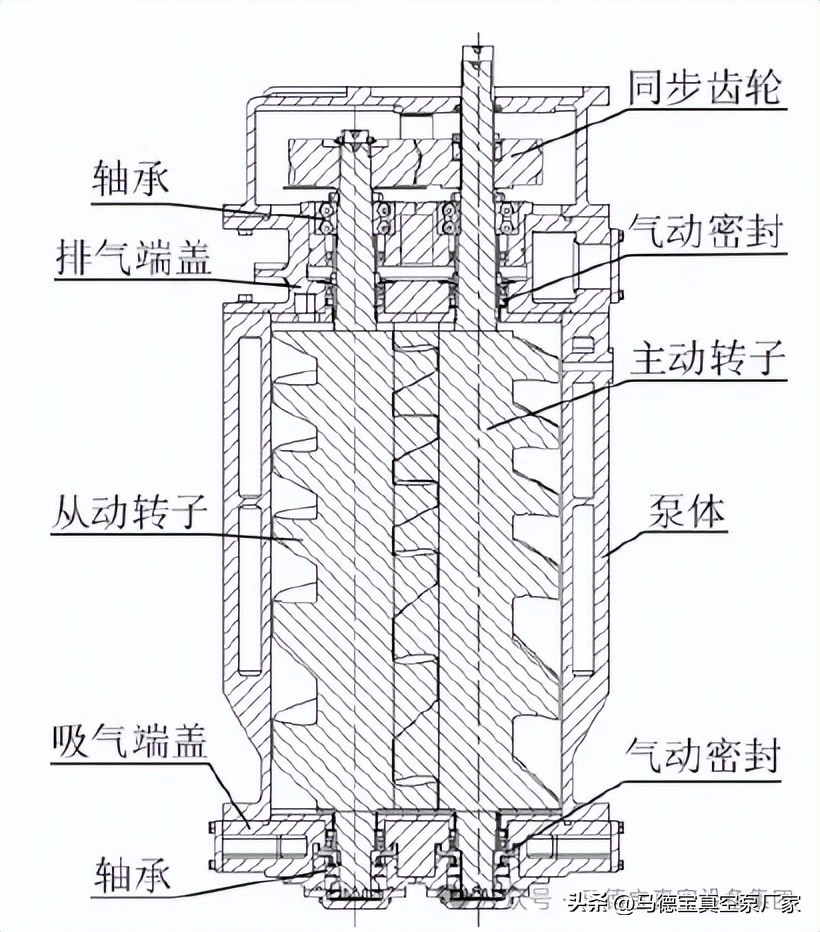
Core structure: how do the rotors and pump shells fit
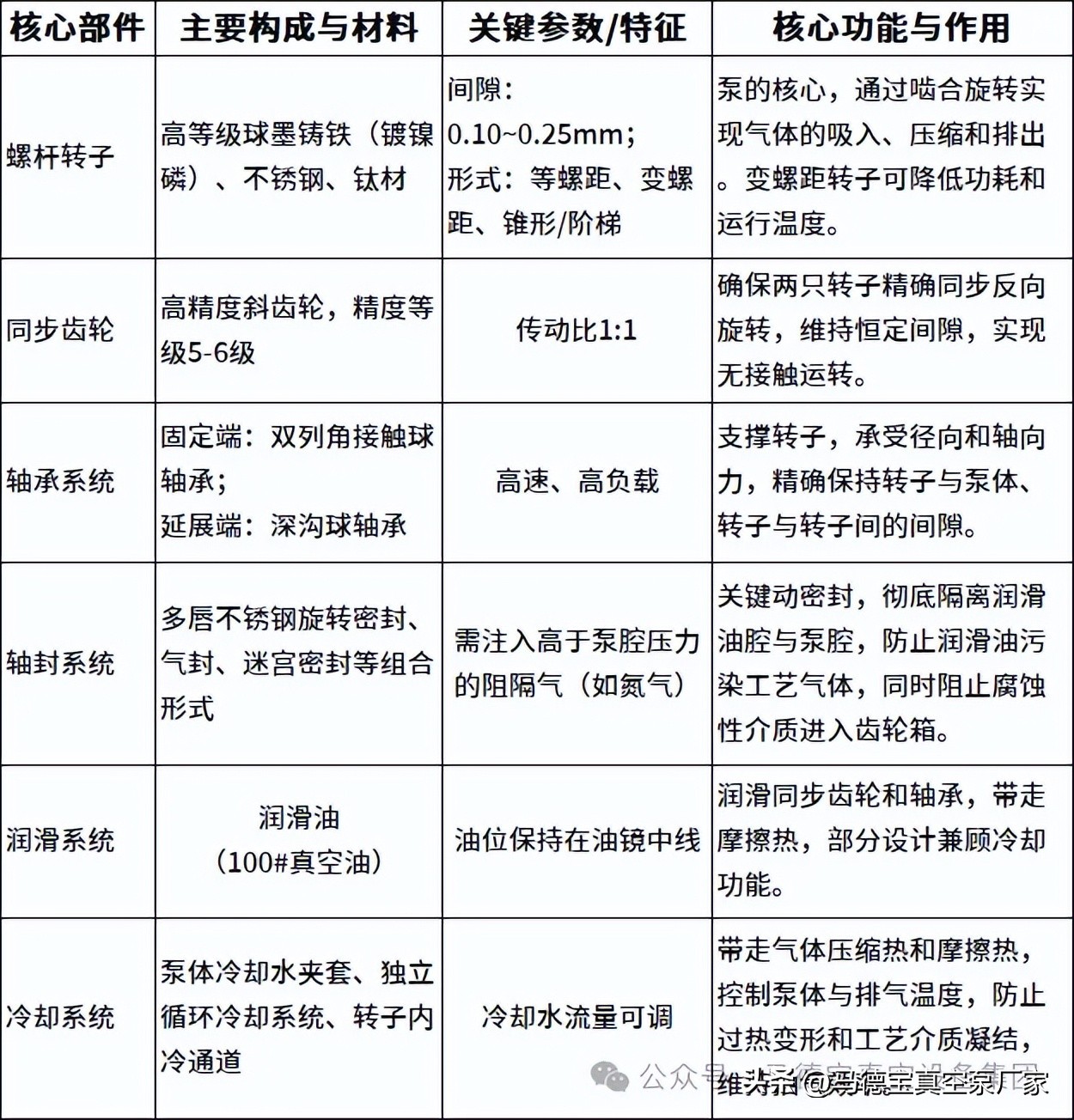
The pump is divided into three main blocks: screw rotors, pump casings and sealing systems. The rotor is designed to be more gradual from the inhaling end to the exhaust end of the gas, and to respond to the atmospheric pressure start-up process and to reduce exhausting during the long run of the low vacuum. The inner walls of the pump casings are usually coated with corrosion resistant coatings, such as plasma spraying or chemical gas phase deposition processes, used to carry acid and halogen gases from chemical and pharmaceutical scenes。
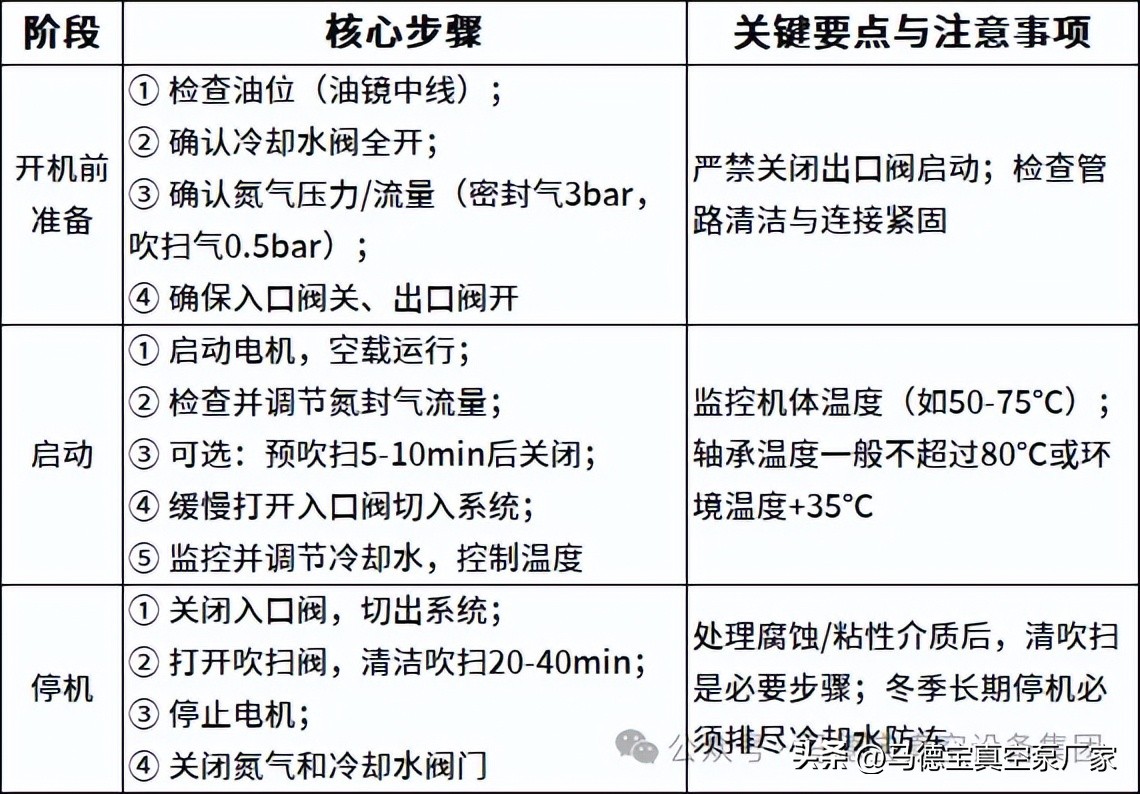
The sealing system directly determines the reliability of the pump. The air seal at the end of the rotor is based on the nitrogen-blowing and sealing gas line, which is generally set at 3 bar, and the air pressure at 0. 5 bar, and the nitrogen flow at 2. 5 to 3 l/min. If there is insufficient sealed air pressure or a small leak in the pipe, the process gas pours into the pump cavity, while the low vacuum affects the process, and the weight directly corrosives the rotor coatings and reduces the overall lifetime。
Application area: which production lines can't be separated
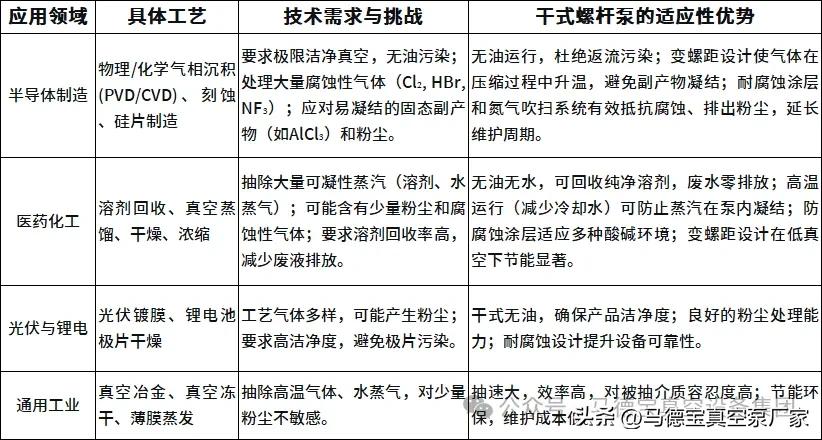
In the semiconductor area, the 3 nm and the following advanced processes of carving and thin membrane sedimentation require a high degree of precision for vacuum cleanness and pressure control, and dry screw pumps have become standard configurations for these devices because they are non-oiled, non-particle-free and non-aerosol. In the photovoltaic industry, the pecvd and rpd processes need to deal with strong corrosive gases containing chlorine, silicon, corrosive coatings for the screw pump plus a wide-spacing range from atmospheric pressure to a high vacuum, matching these harsh conditions。
The pharmaceutical industrial landscape is much more complex and reacts to a vacuum, solvent recovery, cip cleaning, etc., which may be high acids, strong alkalis, organic solvents or even mixed dust. The single-stage straight-through structure and slow-pressure compression characteristics of the propeller pump allow it to deal directly with solid, liquid, corrosive composite gases, without the need to defrosting between stages, as in the case of multi-phase pumps, with a much smaller daily maintenance volume and a short shutdown time。
Operating protocol: activate the stoppage and do not go wrong
Prior to start-up, it was confirmed on a case-by-case basis that the nitrogen-sealed gas valve had been opened and the pressure had been moved to 3bar; that the blow-out of 0. 5 bar was in place; and that the process valve and the export valve had been fully opened and the export valve had been shut down. Start with a blow-down valve for 5 to 10 minutes, then slowly open the entrance valve to the system. The temperature of the body is continuously monitored in operation, and the temperature is pressured between 50 and 75°c by regulating the flow of cooling water, and the bearing temperature cannot exceed 80°c or ambient temperature plus 35°c, and cooling the water path at supertemperature。
The shutdown process is more likely to cause accidents than start-up. Turn off the process valve and cut out the pump, and then open the blow-clean valve for 20 to 40 minutes to clear out the corrosive or condensable media left in the pump cavity. Shut down the nitrogen valves and cool the water valves. In the long run, cooling water must be drained to protect itself from freezing, otherwise cryogenic ice breaks the pump casings and pipelines directly, and the cost of repairing the back is many times greater and the construction period is long。
Repairs and maintenance: clean-up and oilproof pump
There's three kinds of blowjobs. They can't mix. The cooling blow-down is run on an ongoing basis, with dry nitrogen or air in the pump cavity, and the compressed heat is removed. Cleaning is done in front of the stoppage and specializes in residual corrosive and viscous media. The most special is steam cleaning, which is handled with organic or polymers leading to rotor carcasses, which are carried in a step-by-step manner into low-pressure steam until the rotor is able to move easily by hand and the process is carried out at least three times。
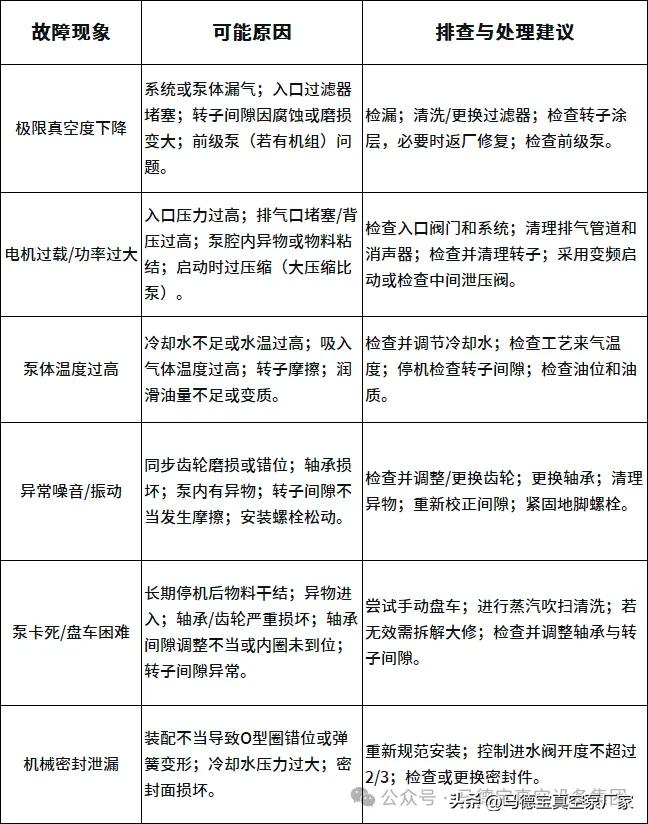
The lubrication can only be replaced by a designated card number of vacuum oil, such as 100 # vacuum oil, which cannot be replaced by a generic industrial oil. The oil table and the oil quality are regularly checked and are immediately replaced by emulsion, blackening or fuzzy. One hundred hours before the new pump runs, the oil must be replaced once and the powder of the black metal in it must be washed out completely before the oil cycle can normally be extended. The most effective preventive action against sudden-onset card pumps is the examination of rotors and coatings with endoscopes every 4,000 hours。
Technological trends: national catch-up and intelligence
The global dry screw pump market has long been dominated by european and american manufacturers like edward, pukuk and baker, and domestic products are already available in the middle and low vacuum, but there are still gaps in the reliability of extremes, precision processing, corruption-resistant coating processes, and complex talent reserves. The core technologies to be breached in the next step include the removal of mechanical frictions by magnetic suspension bearings, the direct removal of the synchronized gear by a double generator to achieve real irrigation, and the complete resolution of external sealed leaks by the interior generator design。
Smartness is another clear direction. Integrated temperature, vibration, current sensors and material networking modules, remote monitoring and failure predictions, turning "bad and fixed" into "early warning". For the 3nm semiconductor process, the vacuum pump will also continue to upgrade within > 1% of the plasma corrosion tolerance and pressure control accuracy. The whole industry is moving towards the integration of "equipment-service-data", and the sale of pumps is no longer the end point, and the sale of transportation programmes and process data is the most profitable。
How often do you run the mill's screw pump to clean it up? We would like to welcome your experience in the comment area, which we would like to share with our colleagues at the workshop。