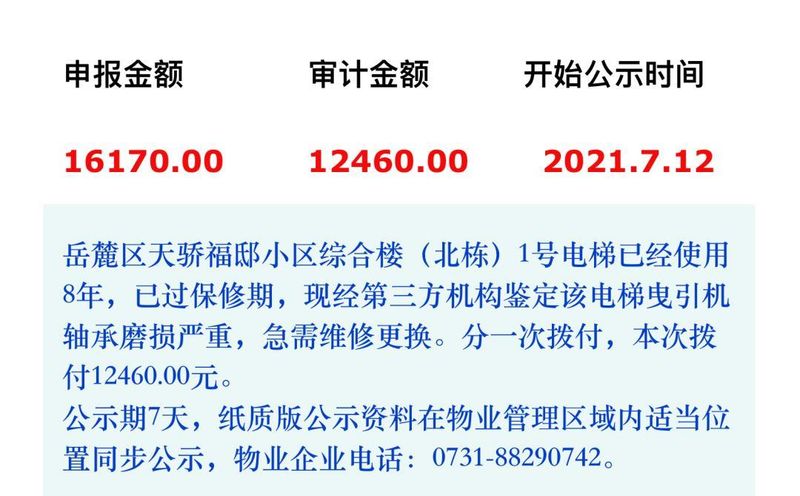
It took hundreds of thousands of dollars to buy a second-hand room to get in there and suddenly find that the roof is leaking, that the elevator is getting old, and that the property industry has announced that it will use maintenance funds. But you don't know if the original owner has paid the money, if he can, how. I'll tell you what houses are to be delivered today, how much to pay, how to find out, how to raise them。
Which houses have to pay for maintenance
Commodity houses and public housing are the most typical categories and should be deposited upon purchase. However, it is easy for many to ignore the fact that public buildings built in sub-districts, such as underground garages, property houses, shops along the street, as long as they are connected to residential structures, or are located in sub-districts, deposit maintenance funds, which cannot be waived for reasons of public construction。
Conversely, no maintenance funds are required if public construction is built outside the district, has no structural connection to any residential building and is a purely residential public construction project. So before the contract is signed, it would be better for the sales or intermediaries to confirm for you the nature of the building you bought, and not to wait in until they find it necessary to pay for it。
How much to pay is directly linked to the time to take the land
The amount to be paid depends mainly on two variables: the time the developer takes the land and the fact that the house has no elevator. Projects to acquire land tenure between 2 july 1998 and 30 june 2017 are paid at $40 per square metre by the owner and 66 per square metre by the developer. The lift room after 1 july 2017 is paid $200 per square metre and the owner 50 and the developer 150, including $70 for elevators。
The algorithm for public housing is completely different from that for commercial housing. The owner deposits it at $20 per square metre, and the unit of sale takes a one-time withdrawal from the house at 20 per cent of the cost of the public dwelling. The same 100-square house, because of different years and different types of house, could cost you hundreds or thousands of dollars. The contract must be preceded by a clear accounting of the building area and deposit criteria。
What if the owner of the used room hasn't paid
Once a home title certificate has been obtained, access to it is convenient. The deposit of the maintenance funds and the current balance can be found on the mobile phone by opening the concubine appp and entering a room number or identification information. If you do not want to use a mobile phone, you can take your identity card, your property certificate or your purchase or purchase contract and go directly to the maintenance window of the city administrative service centre, where you can print the details and the balance certificates。
I can't get away with this. I can go through it. The trustee is required to carry three items: a written power of attorney signed by the owner, a copy of the owner's identity card, the original identity card of the trustee himself, and three complete windows. The commission asks for a stamped introduction letter and members ' identity card, and the street community and lawyers ask for lists of corresponding materials。
I've never paid my first payment
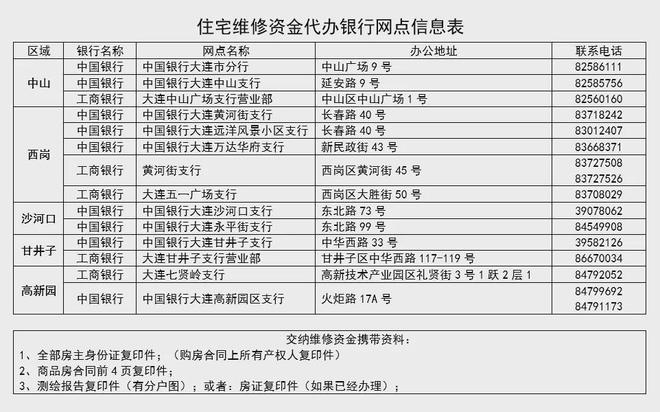
If the developer has already paid for the maintenance, you can just give your share directly to the developer before you check in. But if you buy a second-hand house, the original owner has not paid it, or if the developer has failed to pay for it, you will receive a bank site with a special home maintenance fund, which you will deposit。
These materials must be brought to the bank site: a copy of the owner's identity card (for all property owners on the purchase contract), a copy of the first four pages of the commodity house contract, a copy of the mapping report (which must be accompanied by a division chart) or a copy of the property certificate already completed. The materials will be completed on the same day and the bank will issue a deposit receipt on the spot. This ticket will be used for subsequent inquiries and withdrawals and must be collected。
What about the money for the repairs
The money for maintenance is not what anyone can spend. The voting process shall be subject to the voting procedure established by law: in order for a transfer to be effected, the vote shall be cast first by the owner, who has more than two thirds of the area devoted to the voting and more than two thirds of the population, and then by a majority of the persons voting. Individual residents are not allowed to apply directly from the property or maintenance unit, and they must apply according to the procedure。
There are clear rules as to where the money comes from. For maintenance projects within 10 years of the warranty period, interest in the account is used only; if interest beyond 10 years is insufficient, it is charged at a maximum of 2 per cent of the principal amount per year. The principal is deducted in the order in which it is used by developers, sellers and owners. The owner's branch account balance should be renewed in a timely manner when it is less than 30 per cent of the initial deposit, not until repairs are made and the account is found to be empty。
The house is sold or the money is gone
At the time of the transfer of ownership of the house, the maintenance funds paid by the original owner are not refunded, and it is transferred to the account of the new owner, who, as the new owner, directly inherits the balance. In the case of loss of the house, such as the entire building being demolished, the balance is returned to the current owner at the time of the loss and not to the person who made the first payment. A receipt may be printed to confirm a specific amount by going to the real estate register or the municipal administrative service centre。
Repatriation may be requested in cases of incorrect recording of deposit area, double deposit and misentry of bank accounts, requiring such materials as certificates of deposit and statements of response. Distinction of place of processing: immovable property registration centres delivered before 2014 and municipal administrative service centres sent after 2014. The material requirements of the two locations were different, the error was wasted all day, and confirmation was made by telephone before leaving。
Did any of your neighbors in the neighborhood argue about whether to fix the elevator with maintenance money? Do you think the costs should be shared equally or proportionally? The comment section says what you've really been through. If you think it's useful, send it to your friend who just bought it, so they don't have to live in it to find out he stepped on it。