We lived in this neighborhood for 11 years, and last year the elevators in our building were completely nested. At the time, there was a three-day quarrel in the proprietors, and some felt that the proprietors had shared the money and had been unhappy. Let's get this straight today. We'll save you the trouble。
Who pays for the broken elevator
Let's start with a basic criterion. It's a matter of factory and property. It has nothing to do with the owner. But once the quality assurance period passed, the situation changed completely. The elevator was 13 years old, two years earlier, and this time there was a problem with the elevator and the tractor. The factory offered $12,000, and it took the property industry another 2,000 for the construction team. Who's gonna pay for this? The answer might surprise a lot of people。
The elevator belongs to all ownersTherefore, the cost of major repairs should in principle be drawn from public maintenance funds. In practice, however, many of the old districts did not pay the money or very little, and the accounts were largely empty. Our building ended up out of 280 each. Forty-six, just in time。
Who's gonna pay for the maintenance
There's a hole that many people don't know. If the elevator is broken because the property is not maintained on a day-to-day basis, for example, the wire rope should be replaced and the track should be lubricated, the cost will be borne by the property itself. But how do you define "can't fix it"? See maintenance records of property retention. Our property, which could not have been paid for nearly a year, was finally determined by the street office to be poorly maintained, with 3,000 withheld from the property bond。
In turn, if the owner moves himself, overloads, and slams causing damage, the compensation is personal. A man downstairs had to overload the wheelchair, broke the door sensors, and the property directly cost him 600 and nobody could help him。
Can we go to public maintenance
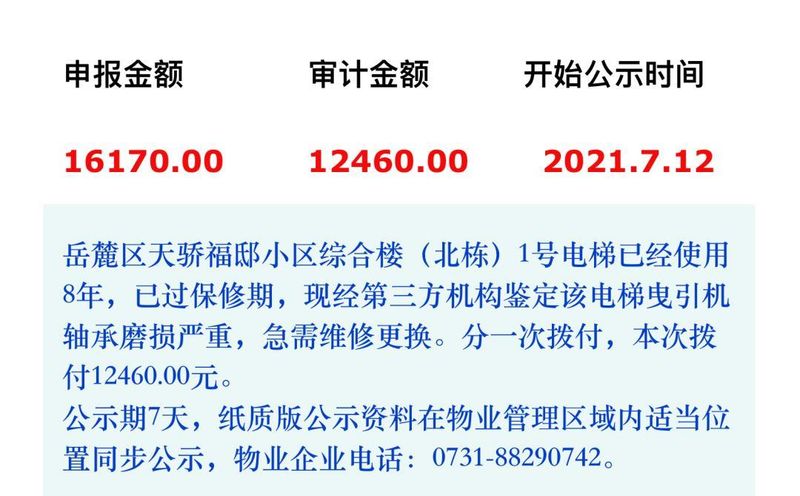
Public maintenance fundsThis money, in theory, is for the elevator. The reality, however, is that the application process is slow and that the approval cycle is less than one month, with the agreement of two thirds of the owners. The elevator may have stopped for two weeks. We have a small maintenance fund balance of less than $2,000, a glass of water and silver, and, finally, only owners。
If the fund is insufficient, the remainder will be owned by the ownerShare by areaI don't know. More than a few cents per square metre above the sixth floor. The percentages vary from region to region, so just look at what's written in your owners convention。
Elevators are too slow, and the elderly children suffer even more when they climb every day at the top of the household. It's not until the elevator stops。