


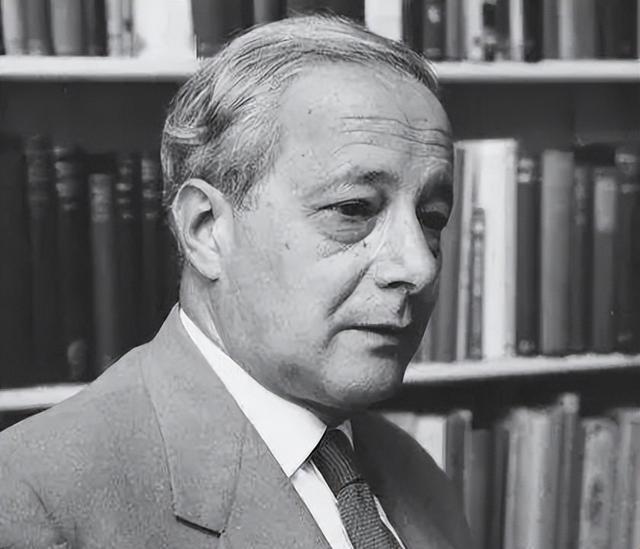
He wrote to einstein about chess, to turing about logic, to plank and shertyon — a man who rarely appeared in public view. The silent intellectual theory put forward by the polani has directly broken the biggest illusion of "knowledge equals books" and explains why the planned economy is doomed to change at its roots。
A genius in the corner of academic history
Michael polani was born in budapest in 1892, received a ph. D. In chemistry at munich university in 1918, and later hosted the application of chemistry at the university college in london. His social circle is luxurious in the scientific community: he has a very intimate relationship with einstein, he has many years of correspondence with plankton and shertingham, and he has a logical direct conversation with turing. Some people call him "the newton of the ages," but they're far less popular than newton。
On the philosophy line, the poleni was identified as the person who created the "third copernicus revolution" in the cognitive sphere, following the cartesian and kant. Descartes detached the world into matter, kandeh drew the boundaries of human awareness, and polani took a step forward: how can knowledge live in a living mind? This inquiry has led directly to his central concept of silence。
The things you can't say are worth money
In 1958, poland published personal knowledge, which splits knowledge in half. Visible knowledge: the kind that can write formulas, print textbooks, and give evidence in court. Quiet knowledge: you have been riding a bicycle for ten years and you have not written an instruction, and you have known which one you should have left for 20 years. The latter are non-standardized, non-quantitative, but the ones on which people depend when they really work。

The intuitiveness of the boss before the board, the bad feeling of the surgeon when the knife was fired, the formula of the programmer debug to his third-hour brain -- all in silence. The polish language is very straightforward: you've spent four years reading the model that mba is going to be so unhelpful in making decisions that you actually rely on experience that is not clear, written or tested。
The hole that the soviet bureau of statistics couldn't build
In 1936, the soviet union declared the "one five plan" to be overworked, and the world was stupid. During almost the same period, the polish state wrote a hard-word in the social, economic and philosophy: the planned economy, which puts all its decision-making power at the centre, kills all its silent knowledge scattered over the hands of millions of workers, and the economic machinery simply cannot be turned around. He judges that there's a lot of moisture in those brilliant numbers。

Subsequent files confirm his judgement. The soviet union had long referred to international market prices, black market transactions and the granting of quotas to the privileged, essentially using capitalist tools to survive the planned economy. The allocation of resources has consistently failed at the cost of the 1932 holodomor in ukraine, the continuing shortage of materials and layers of corruption. This was seen in poland in the 1930s, eight years before hajek's road to slavery in 1944。
The people on the pilgrim
The nazis swept europe in the 1940s and a large number of scholars went to england. In the summer of 1947, hajek, polani, brundtley and others gathered for two weeks at the pilgrimage mountain institute near woodstock in the united kingdom, with one central issue at its core: how to prevent totalitarianism. Polandni, hayek and popul were later known as the "troika of liberalism in the 20th century", and the pilgrimage mountain society was the source of the core of liberal ideas of that era。
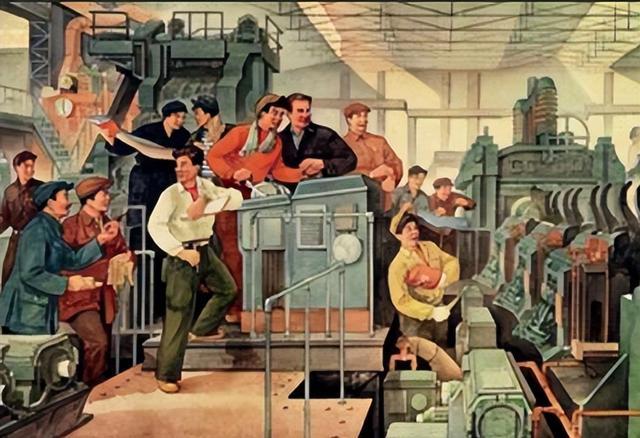
The polish language is not a paper, but a methodology: any system design that assumes that "one brain can replace millions of brains" will lose. This judgement runs through all his subsequent social criticisms and explains why he's chemical, philosophical and political. He looked for the same bottom logic in all fields。
Multicenter order is the backbone of modern society
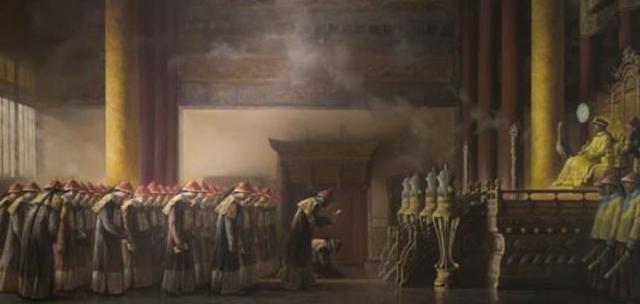
The polish state divided the social organization approach into two stages. Single centre: a top point of authority to issue a directive and all nodes to be executed. Multicentres: without a general command, the nodes make their own boards, and trade and competition compete with each other. From ancient chinese "kyoting, county and county" to the evening reformists, the council was understood as "uploading" and was essentially a single center. The modern market economy is the most typical multi-centre order。
The central idea of the 2009 award winner of the oström institute, "multicent public governance", is in line with that of polish: to tear the decision-making power in public affairs down to multiple levels, each of which is only one of its best practices. The polish theory is in fact the bottom operating system of the entire free market ideology spectrum, except that it was not in the mainstream textbooks when he was alive。
Genius will be outside of academic history. People
Polish ni died in oxford in 1976. He was quoted with a high frequency, and "silent knowledge" in complex science, education, institutional economics has long been a standard term, and some of his students later won the nobel prize. But the name has hardly been heard by the general public. The reasons are not complex: his expression is academic, and the language threshold of the british philosophy naturally filters out ordinary readers; his anti-polar position was blocked in the eastern camp during the cold war。

His impression of being in front of a chinese reader is often "a concept quoted in a book" rather than a complete person. You've seen the word "tacit knowledge" repeatedly in organizational management, but rarely goes down: when, who and in which book the concept was first written. This disconnect between the concept and the unknown makes polandni the most typical invisible prophet in academic history。
If you're still with someone who believes that "ai is strong enough to plan the economy", you've got an off-the-shelf rebuttal. If you think it's useful, just ask a compliment, forward it to that friend, and talk to the comment section: what's the most dependent thing on you in your work









