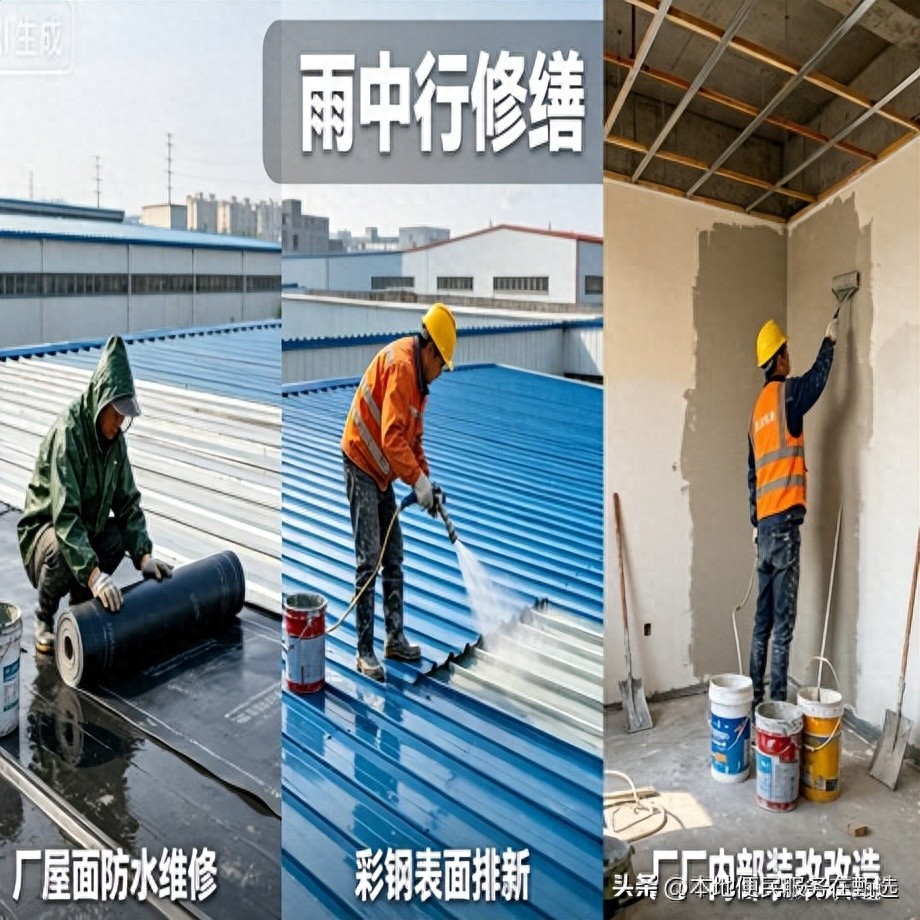
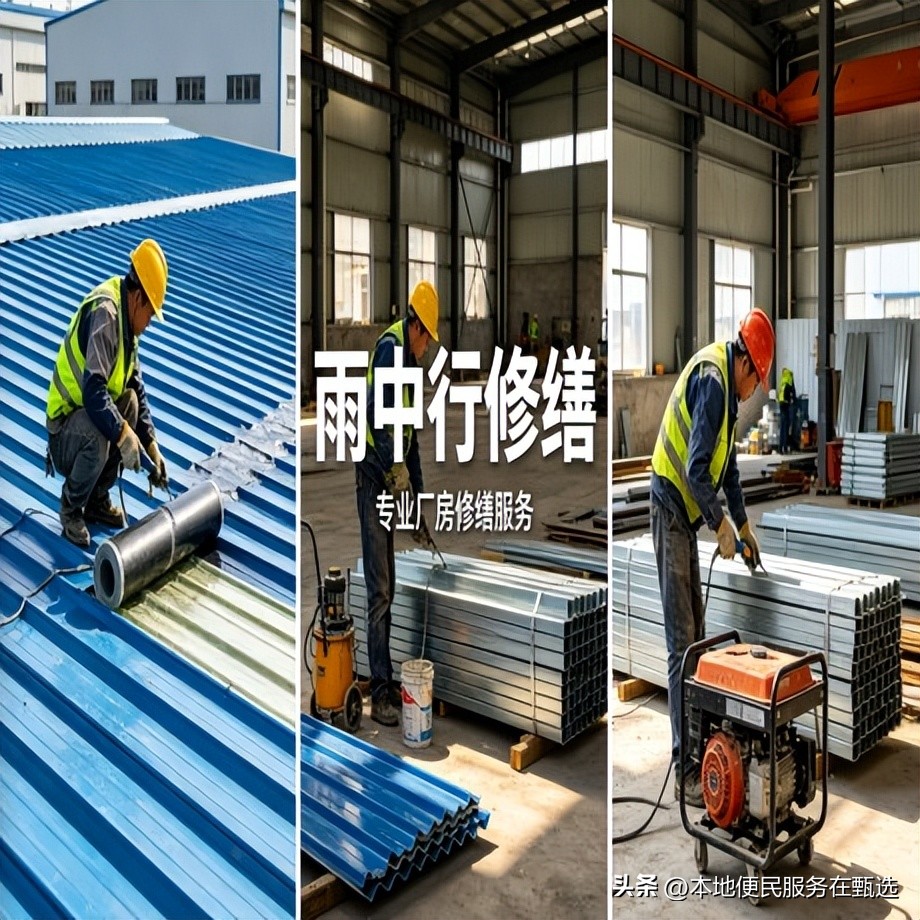
In industrial plant transport, old rust leaks on the floor of steel-coated houses are a problem for countless business managers. The replacement of whole-house paint-walls at high prices and the suspension of work would also interfere with the normal production of the plant, making the paint-walls rusting, preservation, paint-painting, retrofitting and retrofitting services a market-intensive programme for house maintenance and renovation. While market demand is strong, the level of industry service providers is uneven, with a large number of low-priced projects relying on cutting down processes and reducing standard material compression costs, many of the plant areas, after completing renovations, have in a matter of months suffered from the loss of paint membrane, rust, water leaks, spending money without solving real problems, repeated maintenance and considerable human and material costs。
Based on first-line construction experience, and from the perspective of the factory owner, a set of traps emerged from the high-frequency paint industry for the retrofitting of coloured steel, with a clear description of the core elements that should be included in a well-qualified retrofitting of coloured steel, teaching people how to distinguish between poor-quality construction, avoiding various fault areas in the renovation, choosing reasonable modifications, spending money on knives and avoiding stepping back to work。
First, the first large pit: to simplify the renovation into a simple spray paint and cut off the rust core. In the industry, there is a saying: how about a retrofit, seven for the floor and three for the paint. Rusting, base cleaning is the most costly component of the entire project and a priority for many low-cost construction. Some of the construction teams, after arriving at the site, simply sweep the face of the house, leave the surface of the house with dust, do not rust, the surface of the plate is rusty, the old paint is loosely kept and paint is painted directly above. In the short term, the colour of the house appears to be fresh, but the bottom layer of rust continues to oxidize, and the new sprayed paint sheet is simply covered with the rust layer, which is not firmly integrated with the metal sheet. In a short period of time, the bottom layer of rust swells with the top of the paint sheet, with large drum packs, skin rises, rust leaks, and the renovation is rendered ineffective。
There is also a rusty, rusty spot that can only be seen in the eye of the flesh, which is completely unprocessed by the husks, the screws around and the cracks. These positions are precisely the sites where the water is contaminated, the most vulnerable to rust, and where dead-angle rust is not treated, they will spread outward at a later stage. A truly qualified rust removal operation can be carried out only after the building has been worn to the level of erosion, after all loose rust skins and past paints have been removed, and after the polishing has been completed, the rust dust produced by the grinding has been completely wiped out and the base surface has met the construction requirements. Do not believe in propaganda techniques such as "rose direct spraying without grilling", most of which, under the condition of general paint-wall refurbishment, are suitable only for specific special rust transformation materials, with strict limits on the extent of rusting, and with very high post-mortem risks for ordinary projects。
Second hf trap: directly omit stain-proof paint and only spray paint. Many customers do not understand the value of the paint and feel that the paint is sprayed and covered in colour. The central function of rust-proof base paints is to seal the metal base, lock trace stains and isolate air water vapours, while significantly increasing the strength between paints and steel plates. Loss of base paint, direct paint spray, metal sheeting without quarantine protection, water vapour in the air, rain, direct contact with steel plate through the surface pore, and quick regeneration of rust. To save a painting, the service provider can save a significant amount of material cost, but at the expense of the whole house's preservation years. A large number of low-cost offers involve the direct removal of the critical process of painting, the retention of only one or two-fold paints, and the fact that the price is low is a cure for the symptoms. During the docking programme, the owner is required to confirm whether the entire construction system contains stain-proof base paints, the coverage of which cannot be limited to local dots, and to ensure effective overall coverage of the house。
The third set: paints are filled in second place, dilution is excessive. The quality of paint directly determines the length of resistance to corruption, and there is a wide gap in the amount of paint in the market. Some of the constructioners, in order to compress the cost, chose to replace their special-purpose paint paints with general industrial paints, which were uv-resistant, rain-resistant, heat-resistant and cold-deflatored, and quickly faded into powdering in the outdoor environment. Other construction teams, after obtaining qualified coatings, add large amounts of water or dilution, dilution of paints, thinning of paints, and significant loss of protection against coatings, which appear to be covered by colours, but do not meet design standards and are resistant to aging and erosion. Many owners do not have the means to detect the quality of paint on site, and need to identify paint types, parameters, reject cheap paint from unknown sources and explicitly prohibit uncontrolled dilution during the pre-communication phase。
Fourth error area: focus only on spray paint and ignore the waterproofing of the node. Many owners think that the renovation of the chalk is tantamount to a roof painting, and that the problem of leakage can be solved by the painting, which is a very common area of cognitive error. The bulk of the leaking points are not on the large floor of the balconies, but rather on the nodes of screwdrivers, laminates, roof ridges, cleavages, and penthouses. Purely painting makes it difficult to completely resolve the gap seepage. A complete set of refurbishment works is to be carried out in a synchronized manner with the preservation of rust spray paint and the waterproof sealing of nodes. At the time of construction, screws are being checked for rigidity, old and broken waterproof pads are being replaced; the sheet is being sewed, the screw hat is being replaced, the ageing is being removed and the old seal is being removed and the high performance is being re-heated; and the ditch position is being cleaned up, the sludge is being decorated and sealed. If only paint is painted and no nodal seals are processed, even if the balconies are intact, the gap will seep, the surface of the house will leak and the owner will mistakenly assume that the paint is not working, and in fact the waterproof nodal process has been omitted。
Fifth pit: blindly committed to unified ultra-long quality assurance, regardless of the actual situation on the ground. The original condition of the floors varies from plant to plant, with different levels of erosion, with different plant environments, some adjacent to industrial areas, many corrosive media, others drying up the floors and much different rates of erosion. It is not possible to generalize all the premises, and there is a unified commitment to long-term use. It is a formal practice to board the house first for field surveys, to see the area of rust, the integrity of the sheet, the plant environment, and to give a reasonable expected life expectancy in conjunction with the selected process materials. Without on-site surveys, the mere promise of ultra-long quality assurance based on surface viewing is at great risk. There is also some verbal assurance that it is not in writing and that problems arise at a later stage and that no counterpart is found. In taking over the project, priority will be given to field site surveys, tailoring the programme to the physical condition of the house, refusing to report death prices without looking at the site, and making false pledges。
The sixth detail: the management of the construction environment has been neglected and the work is being carried out without regard to weather conditions. Some of the projects were carried out in an effort to keep pace, with heavy air moisture, open water on the surface, rain approaching, and wind and weather still being sprayed. When the moist surface is sprayed with paint membranes, the water vapour is sealed in the middle of the coating and steel plate, with bubbles and decorating at a later stage. Windy weather is sprayed, paints are mistified, paint membranes are thin and dust falls to undry paints, resulting in paint defects. Many of the quality issues were not poor material, but the construction environment did not meet the standards and forced work was incipient. High-quality construction will be carried out in strict control of the weather window, with humidity, temperature, and dryness of the surface meeting the conditions, without sacrificing the quality of the work。
Following the description of common pits in the industry, which are then combed, what should be the elements of a specter-based paint refurbishment programme. First, a pre-construction site survey to assess the level of erosion and to determine whether there is a retreadable value and, if the plate is rusted in large areas, it is recommended that the hull be replaced without forcing the replacement of an unrefurbishable floor. Second, a complete grass-roots processing process to clean up the moss stains of the groceries, rubbing them in accordance with the level of rust, removing the old paints of loose rust, and blowing the dust to the ground and then entering the next process. Thirdly, complete coating systems, full stain-resistant floor paints, re-scattered coatings, multiple sprayings, ensuring the thickness of the paint sheet and enhanced treatment of priority areas. Fourth, the accompanying node waterproofing, screws, seams, cleavages on the ridges, tightening, change of gaskets, dyslexic seal treatment, and coitus of preservation water. Fifthly, the construction window period is reasonably planned to avoid adverse conditions such as rain, high humidity and wind. Sixth, identifying material types, construction processes, clear programme content, rejection of vague offers, and not brazen results。
At the same time, it is important to remind the managers of the factory that the paints of the paints will be replaced once and for all. Even the high standard of construction requires simple maintenance at a later stage. It is recommended that, prior to the onset of the rainy season each year, house inspections are carried out to observe the state of the paint sheet, and that small areas of rust spots, sealed glues are found to crack, local repairs are made in a timely manner, minor problems are disposed of in a timely manner, the continuous spread of rust is avoided and small maintenance costs are incurred to effectively extend the overall life of the house。
In selecting service providers, the unit price is not simply a reference rather than a unit price, but rather a reference to the process included in the package, the standards of grass-roots treatment, the coating configuration, and the nodal water prevention programme. A number of low-cost programmes have cut down critical processes such as rust removal, underpainting, sealing, which appear to be low unit prices, are quickly damaged, and the combined cost of secondary maintenance is much higher than the input made. The site's surface is high-altitude work, while at the same time attention is paid to the safety and security of construction, and high-altitude operational protection measures are in place to avoid security risks during construction。
In order to achieve a stable and long-term effect, the retrofitting of the stainless paints of the varnish, which is a combination of preservation, waterproofness and appearance, will require that each core process be put in place in order to truly rejuvenate the old house, protect the plant's assets and reduce the need for repeated maintenance。