"will you go? Twenty-one, go now."
"boys/girls/boys/beauties, take a cab? Let's go to x-x and get it done."
You must have heard a lot about this at railway stations, high-terrestrial stations, passenger bus stations, entrances to hospitals, back streets of schools, highways。
Do you have any idea how cheap it can be
Because it's the same five things that protect your life: permits, tests, insurance, training, surveillance。
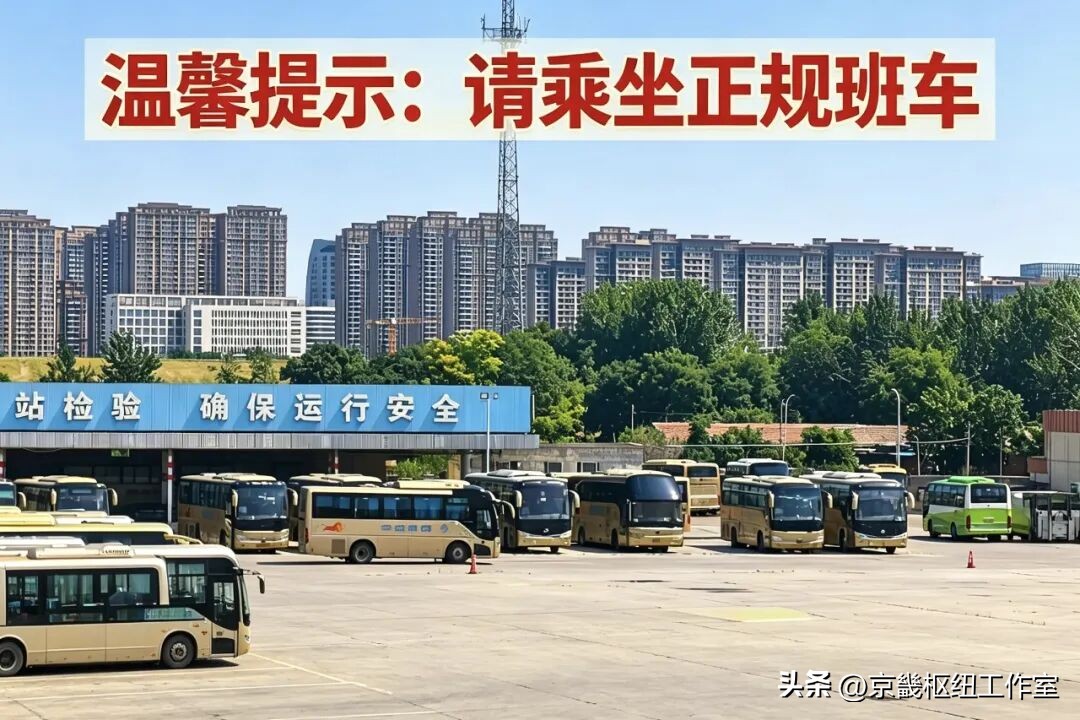
I. What the hell is a black car
Black car means a vehicle operating without a permit for road transport and without permission. In mainland china, it is called a yellow fish car, in taiwan, in the area of china, in the form of a wild chicken car, and in hong kong, china, in the form of a white car。
It has at least three faces:
Black rental / blacknet around: roadside callers, underline bargaining, people's cars don't match
Black bus / black bus: looks like a regular bus, but no formalities or formalities
Fake charter / ultra-range bus: licensed to cross the border, outsiders, escape security
Two, six things the regular car gave you
The vehicle has a transport certificate, a trade certificate, official channels to verify authenticity
Drivers are reliable, trained and background-checked, persons, vehicles and platforms tied
We're on track. Regular testing and maintenance, end-of-life
At the bottom of the insurance
Prices are transparent
♪ there's a door to rights ♪TransportSector double
One sentence: the black car saves dozens of dollars and the life of an entire person。
Three, the worst, is the "black bus of the passenger bus."
It is exactly the same as a regular bus, but it carries dozens of people at once — the same risks are magnified dozens more. It usually wears four vests:
Unlicensed black bus: scrap vehicles, retrofitted vehicles, vehicle sets mixed in, brakes and tyres at high risk
Camps turned over non-residential vehicles: no tests, no insurance, no trace of passengers smuggled out of operation
Fake-pack real bus: long-term fixed-line pick-up of passengers outside the car contract
Over-range shuttles: licensed but cross-line, outsiders, uninhabited checkpoints
Take it. Just take a look around
See if you have the name, the line number, the surveillance phone, the authorized number of passengers. No sign of the bus, no one
Second, there is a line sign issued by the operator in front of the windshield. No cards, homemade cards, printing cards are dangerous signals
Three looks must be clear and complete and consistent. Fuzzy, inconsistent, unlicensed, basically a set or a black car
Whether there are quality-of-service monitoring cards, surveillance equipment in the car; whether to sit at the authorized seat, with small maza and mixed cargo load
Enter the number of the licence plate in the network of local transport officials or the official public sign, "query of the bus". Businesses, number of seats, road transport certificates, operating range are regular; no data are available, get out of the car and change car immediately
Four more "not in the car" signals: "crowders outside of the station" . . . . . . . . . . . . . . . . . . . . . . . . . . . . . . . . . . . . . . . . . . . . . . . . . . . . . . . . . . . . . . . . . . . . . . . . . . . . . . . . . . . . . . . . . . . . . . . . . . . . . . . . . . . . . . . . . . . . .
Internet and taxis: 3 seconds for recognition
Tour taxis: uniform coating and toplights, with service watch cards (name, photographs, trade numbers, companies), pricers at zero and qualified signs。
Cybercars: app's license plate, model, colour, driver's name and photograph must be identical to the driver. Compliance requires a "three certificate" — platform operating licence — vehicle transport certificate — driver's licence, one of which is non-compliance。
Five, four scenes. How do we respond
Prior to travel, priority is given to public transport subways, cruise taxis, regular internet connection platforms, long-distance passenger stations, railway civil aviation. Late in the night, in remote areas, there is a greater need to take the platform and call the car。
When you're being asked, you don't talk, you don't negotiate, you say, "i've called the car," you go to a crowded place or a security booth; the other side goes into public places like stations, convenience stores, etc。
When you get in the car, there's an anomaly, you open the platform "travel sharing" immediately, or you call your family to give your license plate and location; you find excuses to get out of the car at a safe place such as a gas station, a service area, a police station, a mall, etc. And you don't argue with the driver。
In the event of a dispute or a price increase, the security of the person is ensured, the licence plate, the inside environment, the payment records are kept on the mobile phone, and the evidence is used to file a complaint。
"i'll pay for the platform, please. I'm not in a hurry. Pull over and get off. "i'm not getting in the car. Please return my ticket."
Vi. Channels of reporting, remember these three numbers
12328 national transportation services monitoring hotline, 24 hours for illegal operations, denial of detour routes, violation charges
12345 government services people's helpline, cross-sectoral issues referred to the territory
Criminal offences such as physical threats, extortion, etc., are reported to the police immediately
Web protocol orders are synchronized with complaints in app to apply for process verification and advance payment
The report should be ready: time, place, license plate number, model, route, audio/video or payment certificate. Reporting must be objective and factual, and malicious reporting should be strictly prohibited; the information of the whistle-blower is strictly confidential。
At the end
Some people think it's a small matter of "you love me"。
But in the event of an accident, there was no operational risk, no monitoring of the tracks, no business cover, and even no identification of whose car was — no one at that time。
This document is based on the regulations of the people's republic of china on road transport, the regulation on the regulation of road passenger transport and passenger terminals, the regulation on the safety management of road passenger transport enterprises, and public identification guidelines issued by the local transport and transportation authorities for use in public information and education purposes。

Writing at the dawn of midchun