It's always the sameWindmillThe owner of the car, wisher, can always see all sorts of laughter. A recent short chat was spread throughout the country in the main ring of the windmill。
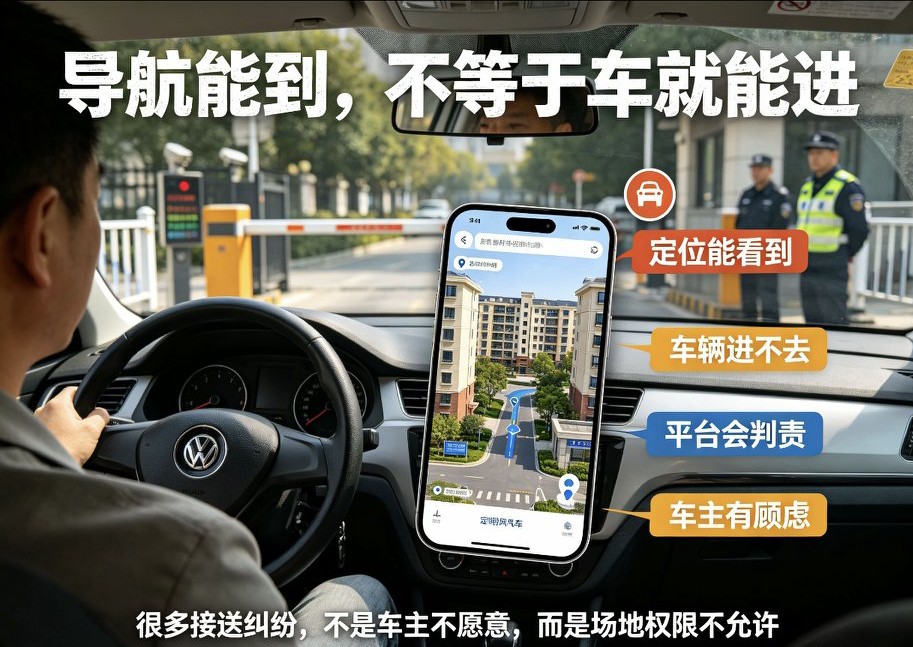
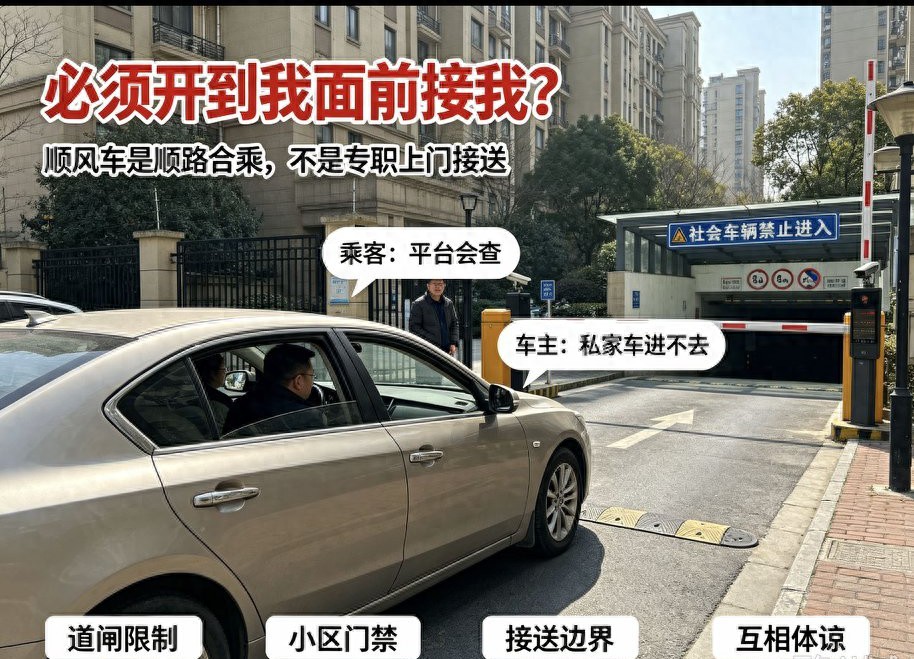
When the passenger orders, he makes a direct request, making it necessary for the owner to drive the private car below his/her feet and to be present, and he/she refuses to go any further. The owner patiently explained that he was driving just a private car, not a licensed carCyberThe station has a special internet connection, a partially closed sub-district garage with no access to external private vehicles and no access to the gates, and can only wait outside the gate。
After hearing the owner's explanation, the passenger did not choose to negotiate, but instead threw out a message with warning: you better not do that and the platform will look into it。
A simple one-size-fits-all, instantaneously leaves a lot of the owners of cars that are always running. A number of drivers have stated frankly that they would have gone to and from work, that they wanted to share a little fuel and high-speed toll, and that they did not intend to earn a full-time ride, but that they would have to pay for services beyond the border. Many passengers have no idea what the difference is between windmills and cyberbuses from the bottom of their hearts, and are conscious of the idea of having a full standard of service for them and asking private drivers to travel by road。
Today's headline article, which i'm throwing away from the emotional rhetoric of standing up on the internet, is really tearing apart and talking about the little people's business of taking the car to the border. We stand in the triad of ordinary passengers, private owners, travel platforms, clarifying access rights, platform rules of accountability, and industry common senses that have been misunderstood by many. The full text is based on the most recent private passenger traffic management document issued in 2026 by the transport sector in all parts of the country, which does not fabricate small rumours and makes it possible to explain in plain language this often-infringed travel dispute。
One, a lot of people have been wrong about one thing: windmills don't run cars
In order to streamline this delivery dispute, the first central point of knowledge is that the vast majority of passengers do not really understand: the windmill is by its nature a private minibus, not an operating passenger service。
A clear definition was given at the national level at an early stage, whereby a windmill is a private bus. A simple explanation is that the owner of the vehicle has its own established travel plan, issues travel routes on the platform ahead of schedule, follows the route of passengers in the same direction, shares some of the direct travel expenses such as vehicle energy consumption, high-speed road charges, and travel does not in itself have as its primary purpose profit-making。
The internet is a completely different system. Cybercars are regular operating passenger traffic, the platform assumes carrier responsibility, drivers and vehicles are required to carry out exclusive operating qualifications, pay high operating insurance, and are subject to complete transport industry supervision. After the platform has charged fees for services, drivers are required to locate and transport passengers, arrive at the designated point of departure and fully meet the point-to-point travel requirements of the passenger points。
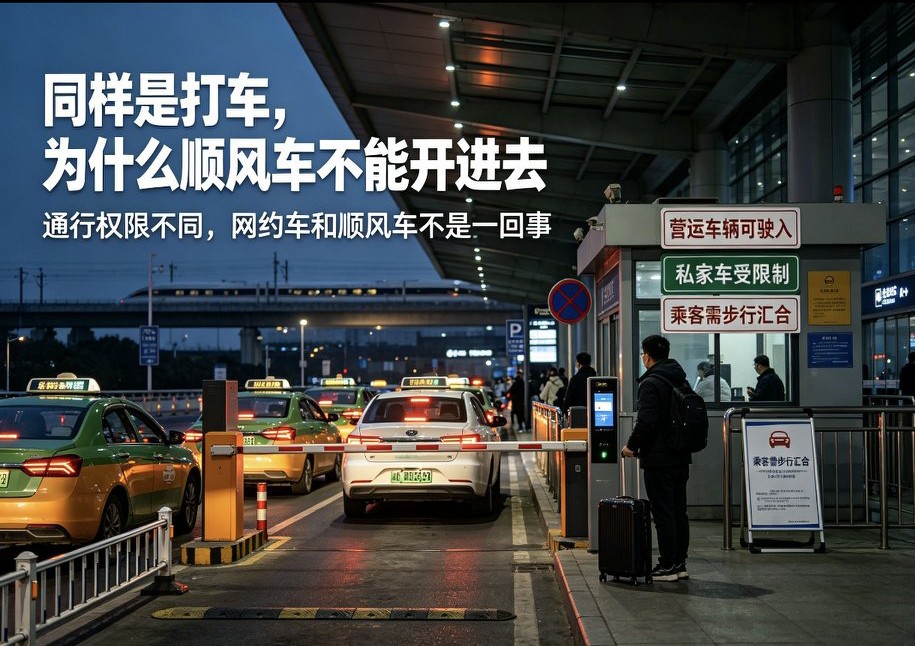
In our jiang xie-chun, and in the vast majority of the country's municipalities, large transport hubs, such as high-wire stations and long-distance stations, have long been divided into exclusive areas. It is an exclusive for-arrival channel, open only to licensed compliance vehicles, cruise taxis and specially designed electronic fences and door-lifting systems. Ordinary private vehicles, whether registered or not on a windmill platform, are not authorized to enter, and when entered privately, they are persuaded by the security personnel to leave and, in serious cases, receive parking tickets from the transfer service。
Many passengers would ask why the owner could not drive directly to the station when the navigation was located directly on it. Here is an easy-to-neglect detail: the navigational positioning of the platform itself, which is just the geographic location filled out by the passengers, does not automatically distinguish between whether the area is open to ordinary private vehicles. The platform is unable to synchronize in real time the door-to-door regulations for each station and sub-district property, and positioning can be selected and does not mean that private cars are licensed。
This threshold also exists in closed residential areas, in addition to high iron stations and bus stations. A number of new subdistricts have been built, and the garage allows only the registered owner vehicles of the subdistrict. In order for an external visitor vehicle to enter the basement, the owner is required to provide the licence plate number in the property system in advance, after manual verification of registration, before the fence can be lifted. The owner of the windmill was a stranger travelling by road, had no way of contacting the property industry in advance to provide information, and was naturally unable to reach the entrance to the garage。
Restrictions on access to external vehicles are also imposed on some of the landscape compounds, the institutional complex and the internal roads of the campus. The owner of the vehicle was stopped by the security guards when he approached the gate following the navigation to the location point。
There is also a specific distinction to be made here between a zone of error that is prone to confusion. Some of the owners receive high-frequency bills every day, publish multiple trips within one day, on the face of a windmill, and in fact carry people on a full-time basis for profit, which is a disguised illegal operation, and which traffic law enforcement agencies have been doing in regularized locations. However, the owner of the car, which is discussed in this article, is only a regular workman, who carries one or two passengers on his way to and from work every day, strictly adheres to the local maximum number of times a day, and is a compliant private passenger. The vehicle remains non-operational and does not enjoy the exclusive right of movement of the vehicle。
What are the legitimate rights of the owner and the passengers
The root cause of many of the conflict between windmills is the fact that the expectations of both sides for services differ completely。
In the first place, the passenger, who pays the bill, naturally wants to travel to save himself. It is best to drive the car directly to his side, and to lift his foot outside the car. In particular, on rainy days, with heavy bags on their hands, or with young children and elderly people with inconvenient legs, no one is willing to walk hundreds of metres in the wind。
A windmill order, however, does not naturally attach an unconditional obligation to take it home. When a passenger orders, he or she shall pay attention in advance to the conditions of movement around the point of embarkation, which, if the place of embarkation belongs to the restricted area of the private car, requires a walk distance to the outside point where the private car may call。
Let's look at the position of the windmill owner. The owner himself had his original destination, and carrying the passengers was a detour. The owner's core travel duty is to travel to his/her work, return to his/her home and place of business, and not specifically to transport passengers. The owner only charged a small share of the cost of travel, which did not include the exclusive cost of going around and waiting。
A simple check is made here, with a common cross-city windmill order such as yipun to nanchang, for example, around 180 km, with a cost-sharing fee of 80 per cent. With the exception of high-speed tolls and electric vehicles charged, the amount left by the owner is very limited. If the owner is to travel to a designated closed point for the passengers, he or she will have to travel a long distance, repeat the registration of property security communications, and spends an additional 10, 20 minutes of valuable time and extra time at his or her own expense。
Of course, we cannot go to another extreme, nor can the owner change the place of the car at will. It would also be inappropriate for a private car to be in a fully operational position, with open roads, a temporary stopover, a simple problem for the owner, and a unilateral requirement for passengers to travel far away。
A fair and reasonable model of coexistence should be as follows: after the next order, the owner contact the passengers first and communicates in advance the exact docking point at which they board. In the event that a private car is not available, the owner of the vehicle is informed in good faith of the objective reasons for the restriction and door-barreling and negotiates the location of a road that is closest to the original point and can be stopped normally. Depending on the time conditions, the passengers are able to meet on a suitable walk. The parties understood each other that many disputes would not have arisen from the outset。
Back to the initial conversation, the light-floating “platform will look up” was also the biggest concern of many of the drivers. A large number of owners are afraid that, once they insist that they can wait only outside the gate, the passengers turn around and file a complaint on the passenger service page, and the platform directly holds the owner liable without full verification of the rules governing the premises, deducting credit scores from the owner's platform or even temporarily limiting the issuance of the main account。
It is precisely out of this concern that many compliant car owners encounter similar scenarios and choose only a compromise. In order to avoid a negative assessment of complaints, it took a great deal of time to find accessible roads, risking fines for violations and trying to get as close as possible to the passengers. In the long run, many car owners are slowly exhausted and simply no longer willing to open a windmill to pick up。
Iii. The platform's culpability has been in dispute and new demands have been made by local regulators in 2026
Over the past two years, transport authorities throughout the country have introduced new rules on the co-location of private buses, many of which refer specifically to the boundaries of responsibility of the platform。
At the legal level, the windmill platform, which is precisely an information broker, is responsible for publishing information on the travel of the owners and passengers, matching the journey. Windward vehicle orders are not part of the passenger carrier contract and are completely different from the legal attributes of the internet car orders。
However, in the context of real platform passenger service handling exercises, the platform has long been less conscious of passengers when dealing with disputes in order to accommodate their consumption experience. As long as a passenger submits a complaint that the owner has not arrived at the navigational location point, the passenger's uniform tends to give priority to refunding the passenger and to impose a number penalty on the owner. Very few staff members are specifically assigned to the platform to travel to the point of embarkation to verify whether ordinary private vehicles can enter or not。
Many car owners have experienced similar experiences, with high-line stations being inaccessible to passenger areas, consultations with passengers to board the outside car, subsequent complaints, and the platform deducting credit credits directly. Following a complaint, the owner may not have been able to revoke the record of the penalty by submitting photo evidence of the security guards who were discouraged and closed. This treatment has long been rejected by the owners of large windmills。
In 2026, a number of cities in the country updated their information document on windmill management, clearly requiring major travel platforms, and needed to improve dispute-management mechanisms, distinguishing between service standards for internet-based vehicles and private windmills. If private vehicles are unable to reach the navigational location because of objective external factors such as site control and door-to-door management, the owner cannot be directly and unilaterally found to be in default. When dealing with complaints, the platform's passenger service should take full account of the on-site supporting documentation submitted by the owner, make a comprehensive determination of the attribution of responsibility and not simply require private owners to meet the service standards of the internet-based car。
It is only policy-level guidance that needs to land, and a longer process is required. To date, many of the internal standards for the handling of passenger service within the main windmill platform have not yet been refined and the owner still bears some of the unreasonable risk of complaints。
I am also here to warn passengers who are often on a single ride not to be accustomed to using platform sanctions as bargaining chips. Passengers have the right to a reasonable feedback service, but it is not fair in itself to resort to complaint penalties as a means of exerting pressure to force the owner to break the rules of passage, if it is clear that the private car does not have access to the closed area. Once the owner forcibly entered the control area, resulting in irregularities and fines, the total financial loss would have to be borne by the owner, who would not have to share any loss。
Iv. Several types of high-frequency pimping in reality are available to both parties
In the light of the real experience of car owners across the country, i have come up with four of the most prone scenes of conflict, whether you are normally the owner of a car or a passenger who is regularly on the payroll。
First, heavy iron stations, long-distance passenger stations. The vast majority of the country's major transport hubs, which are exclusive for the passenger areas, are used only by licensed network vehicles and cruise taxis. Ordinary private cars can only park on public roads outside the station. After the passengers have dropped high iron, if the windmill goes down, they need to walk out of the station and meet in the area of temporary parking for social vehicles outside the station. When you are in a hurry to travel, it is important to set aside this walk and not wait until the train arrives at the station before rushing the owner into the station to pick up people。
Second, the sub-district out of the garage. The vast majority of the closed sub-districts are out of the garage and strict visitor registration is in place. The owner was not in a position to notify the licence plate in advance and was naturally unable to enter the basement building. Even if foreign private cars are allowed to enter for short periods, some of the sub-districts are required to register identification information in queues at the gates, sometimes waiting for 10 minutes. If only a few hundred metres of walking distance were to be taken, it would be possible to negotiate the arrival of vehicles at the front door of the sector, saving both sides valuable time。
Third, higher education campuses, industrial parks. Within a number of university campuses, the entry of foreign social vehicles is prohibited, and only in-house commuting vehicles are released from factory estates. The navigational locator is placed directly within the campus building and the factory, and the owner is not stopped until the gatekeeper has reached the gate. When a passenger is placed on the order, he/she can change his/her position directly to the public road at the gate and avoid subsequent communication problems from the source。
The fourth, holiday hot spot. Temporary traffic controls are imposed on roads within many of the red-viewed areas, where private social vehicles are prohibited from entering and only tourist buses are allowed. A number of tourists directly placed the windmill at the core viewing platform in the area, where the owner was unable to arrive, and there was an argument。
There is another special weather situation that deserves to be singled out. Many passengers are reluctant to leave the house during rainy days and hot heat, insisting that the owner be as close as possible. In this case, we can all discuss it. If the distance of the detours is not too far, the owner has plenty of time, is willing to approach the passengers as close as possible and is an additional facility provided by the owner in good faith, which is appreciated, but it is not a mandatory obligation of the owner。
In turn, if the road is crowded, it takes 10 minutes to go around, and the owner himself has an urgent personal matter, which is perfectly polite to explain the situation and to agree to meet at the nearest road. Passengers should also be more understanding and should not take for granted that the owner should be left without conditions。
Five: ordinary people take a ride, and there are a few cognitive errors that can easily be ignored
In addition to the contradiction of getting to the point of embarkation, there are a number of widely shared misperceptions on a daily basis, which are shared today。
The first area of error: the cheapness of windmills is equivalent to the low-cost network。
Many passengers do not read the holograms on board the platform carefully before they are placed on the manifest, and the heart implies that the entire service of the internet would be the same if a few dozen dollars were spent on a windmill. In fact, the windmill pricing logic is to share only the direct cost of the owner's travel, and the price itself does not include the cost of services delivered on a personal basis. Cyber-car drivers work full-time as passengers and are required to cover high vehicle rental costs, operating insurance and, naturally, higher service standards, which cannot be directly compared。
The second error: the owner of the vehicle had to change the route completely for the passenger。
After some of the passengers had been placed on the order, they offered to make a detour to pick up their relatives and friends several kilometres away. If there is a significant deviation from the original route of the owner, the owner has every right to refuse. If a small number of bypasses are not far away, prior consultations between the parties are required, the passengers may supplement a portion of the energy costs incurred by the bypass and then change the itinerary after agreement has been reached. The owner of the car owns the established itinerary and is not under an obligation to change the travel plan substantially and without conditions and in accordance with the views of the passengers。
The third area of error is the windmill private car, the same insurance coverage and the same operating vehicle。
Specialized compliance vehicles require the purchase of personnel insurance coverage for high operating vehicles. Ordinary windmills are used for private car insurance. Although there is currently no direct denial of compensation in domestic jurisprudence in respect of private cars that occasionally cross the road, there is a risk that there will be some dispute in the event of a major traffic accident and insurance settlement。
And that's one thing i've been trying to remind the car owners that we go out and pick up our passengers, and we can share our travel expenses, but don't go crazy to take orders in one day and publish them indefinitely. Once the order is too high, it can easily be regarded as an operational activity and subsequent insurance settlement can be cumbersome, as will transport law enforcement throughout the country. It is safe and secure to adhere strictly to the maximum number of times a day per day, and occasionally to take one to and from work。
In the case of passengers, it would be much less costly if travel times were tight, if 100 per cent of the traffic were to be carried out in a standardized way, and if priority was given to direct de-compliance. Cyber-car drivers are dedicated to passenger service, have access to the vehicle and are able to travel to the navigational position as far as possible, and the parties are not likely to have a fight over the delivery point。
Many netizens will question why, given the restrictions on the windmill, it is popular with a large number of ordinary people. The reasons for this are simple, in particular the fact that ilchun travels across cities and cities around him, and the cost of windmills tends to be more favourable than the cost of internet buses and long-distance buses. If you want to save a trip, you need to accept a part of its own limitations. The choice of more expensive ways to operate can be achieved through the most cost-effective access service. There is no perfect travel plan, and it is very difficult to be all of it if you want low travel prices and a full set of high standards of service。
Vi. Working together to reduce unnecessary ripples in the windmill the skin
In order to reduce the frequency of such transport disputes, it is not possible to rely on unilateral concessions from the owner or the passengers alone, and a small change can be made on both sides of the travel platform。
First, the main windmill platforms. The platform optimizes navigational locator alerts, and when passengers place their place of embarkation in a restricted private vehicle area such as a high-rail station, a closed vault, the next single page pops up a warm alert to the restricted access of foreign private vehicles in the passenger area and recommends that the position of the vehicle be adjusted to the external public road. Many contradictions can be avoided at the moment of the next order. At the same time, when the platform's guest service handles complaints, it creates a better channel of proof and, if the owner can provide door-to-door control, photographs of security on-site dissuasion, video evidence, an objective assessment of the whole situation should be made, the owner should be cautiously punished and the private owner should not be judged by simply applying the internet-based service standards。
For each and every one of us who regularly drops a single windmill, a simple look at the surroundings of the point of embarkation is available. If your position is in the garage in the station and in the sector, you may wish to take a proactive step to reposition the car to the outside side of the road. Following successful matching of orders, a simple line of communication was made with the owner of the vehicle, confirming in advance whether the private car could arrive successfully and reducing disputes after departure. Do not be conscious of using platform sanctions as a means of forcing the owner to compromise。
In the case of private owners of large windmills, after the receipt has been successful, the passengers should not be notified until they have arrived immediately at their destination. It would be advisable to contact passengers 10 minutes in advance to ascertain the status of traffic at the point of embarkation, and to explain the objective reasons for the control restrictions to the extent that most passengers can understand if the private car is unable to move to the original position and the passenger is able to communicate at the nearest point of convergence at the first minute and patiently. Communication is conducted in a balanced manner, avoiding the exacerbation of emotions on both sides. If the passengers are tough and completely unwilling to negotiate, the owner can kindly cancel the order without having to argue over it。
In the case of local transport authorities, follow-up work can also continue to detail the promotional work of private buses. Many civilians have been unable to distinguish between windmills and internet traffic because of the low level of daily publicity. With the help of the new local government media, the multi-compulsory windmills can be used as a base for cost-sharing, leading to reasonable travel expectations。
Concluding remarks
A simple conversation reflects a very common pain point in the current windmill industry. Passengers look forward to easy and easy travel experience, and private car owners travelling on their way simply want to share the cost of the road, and the expectations of both sides are not above the same level。
The roller coaster, which was originally conceived as a shared traveler, was a two-way mutual assistance. The owner of the vehicle travels along the road with the same travel route, and the passengers share a portion of the cost of the fuel, which is convenient for everyone. This travel relationship is all the more important for mutual understanding. Passengers do not have to treat private car owners as full-time drivers on call, and do so as early as possible to communicate and reduce passenger movements。
This small thing also leaves us all with a question of reflection. When we enjoy cheap travel prices, should we also rationally accommodate some of the small inconveniences on travel? The travel market has a variety of options, such as internet-based vehicles, cruise taxis and windmills, each of which has its own corresponding service boundary. Disaggregating borders, respecting each other, and so many unnecessary arguments, will naturally diminish。