


Chapter i - recognitionKnowledge management
1. 1 overview of knowledge
1. 1. 1 definition of knowledge
First of all, the results of the personal knowledge that i have shared are only personal experiences or lessons, some of the concepts, definitions, etc., described in terms that are purely personal and that do not ensure rigour or serve as any reference answer to be tried out。

For example, the definition of knowledge, where you can search the dictionary, check the network and get a detailed description accordingly. And i think intuitively: knowledge is the sum of the knowledge and experience that people have gained in their survival and reproduction, with the aim of guiding people to live better。
According to professor wang de boon, faculty of philosophy, university of shanghai, the concept of knowledge was originally very broad. All the experiences, skills, rituals, rituals, ideas and beliefs acquired by the younger generation or developed in the practice of their own lives can be counted as knowledge.” (the introduction to philosophy, wang de boon)
1. 1. 2 classification of knowledge
This part of the knowledge classification is derived from my web search, and it is difficult to find its original provenance because of the large volume of information, quoted here and modified as necessary to facilitate our understanding of knowledge and subsequent references。
First, by the nature of the objects described in the knowledge, knowledge can be divided into two categories: “presentative knowledge” and “procedural knowledge”. Narrative and procedural knowledge is said to be the most basic distinction made by cognitive psychologists between knowledge stored in the human brain。
1) narrative knowledge. This is a factual description of knowledge of what is “fact” and why (cause or rationale)”. For example, li baek is a tang dynasty poet (factual); the thermometer is made using thermal swelling and condensing properties of the substance (principles)。
Procedural knowledge. Empirical descriptions are knowledge of what to do (procedures). Technologies, techniques, techniques, methods, etc。
I found such an error in my first cycle of km, where there was a high degree of narrative knowledge and a low level of procedural knowledge, and therefore the second cycle of km focused on procedural knowledge such as “how to do” 。
Second, in terms of how knowledge is presented, knowledge can be divided into “visible knowledge” and “hidden knowledge”。
1) visible knowledge. It refers to “knowledge that can be clearly expressed”, which can be easily disseminated and shared and, without special restrictions, easily accessed and learned。
2) invisible knowledge. It is generally highly personalized experience or techniques, commonly referred to as “unique skills”, which are not easily accessible or understood and understood。
Of course, some prominent knowledge is not shared by the owner because of subjective protection, which is tantamount to invisible knowledge, such as ancestral recipes. If hidden knowledge is not well excavated, it will be a huge loss of intellectual wealth for individuals, organizations and society as a whole。
1. 1. 3 an analogy of knowledge
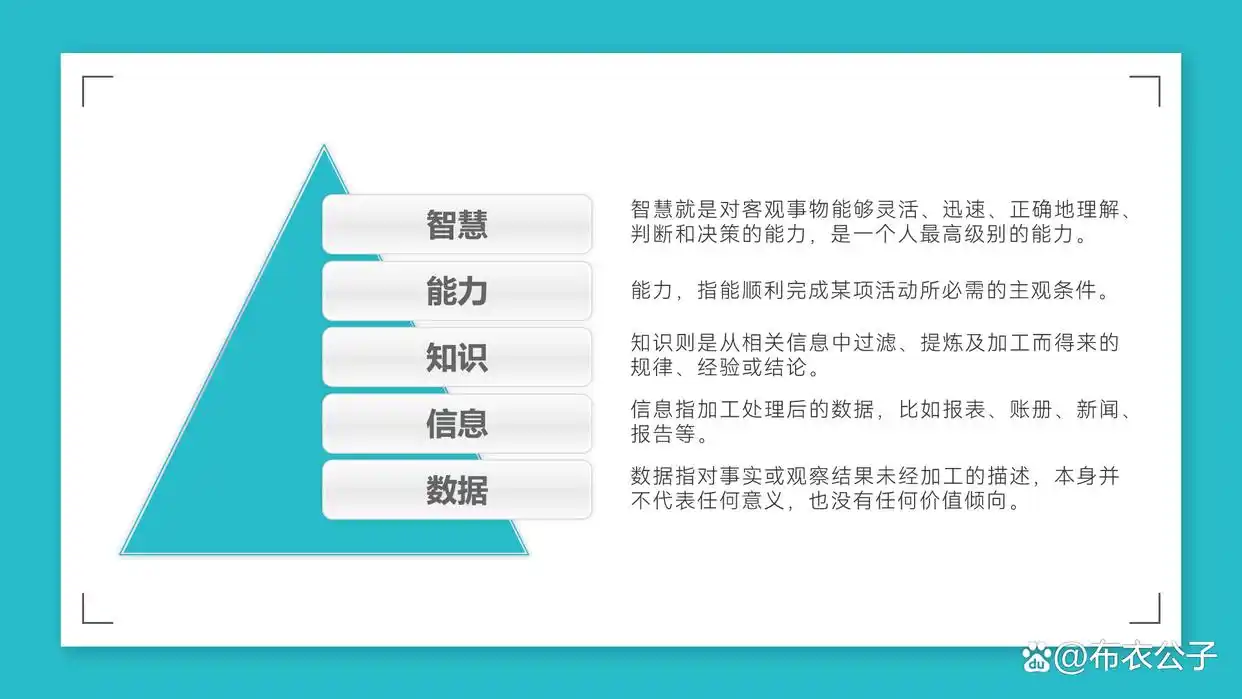
We can transform knowledge into five different elements in a way that evolves from lower to higher valueWisdomI don't know. They are connected and form a series of shallow and easy to reach。
1. 1. 3. 1 data
Data refer to unprocessed descriptions of facts or observations, such as the nature, attributes, form, quantity, location and interrelationship of objective things. Data can be characters, numbers, text, graphics, etc。
Data are simply a direct description of objective facts and do not in itself represent any meaning or any tendency towards value。
1. 1. 3. 2 information
Information refers to processed data such as statements, books, news, reports, etc. Information is a clear expression and a basis for judgement and decision-making。
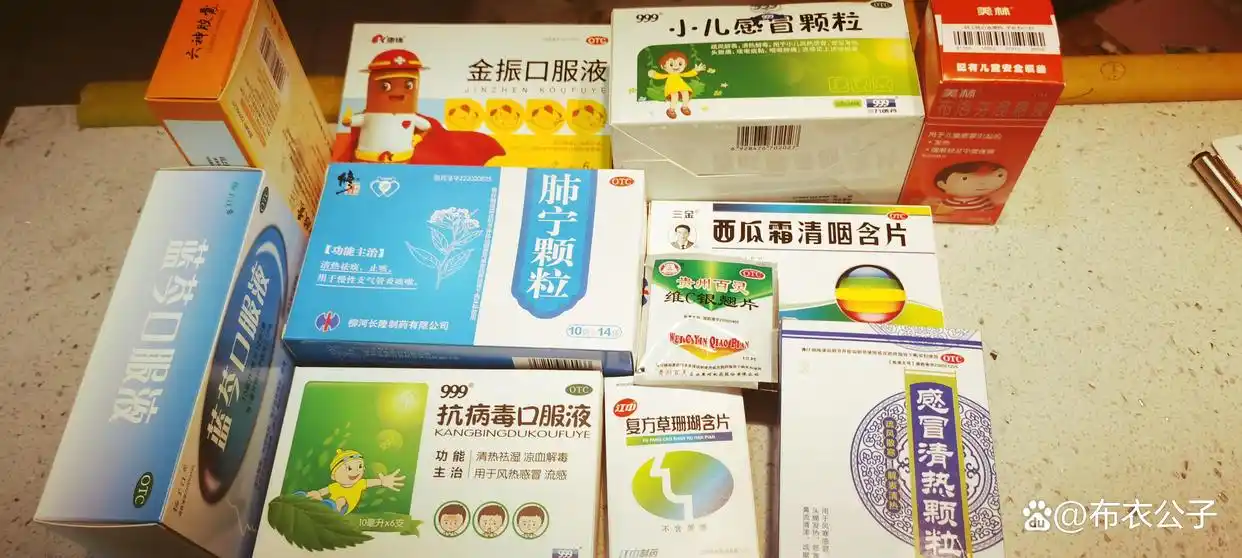
We are in an era of “information explosions”. But information is not knowledge, and every day we have access to a large amount of information from the outside world through mobile phones, except for a very small part that can form the basis of decision-making. For example, in early december 2022, i caught information about the possible deregulation of the epidemic and prepared some drugs with determination (which was used later)。
Therefore, the vast majority of the information is useless to us and wastes time, even when short video clips are done, by accident a few hours。
1. 1. 3. 3 knowledge
Knowledge is a pattern, experience or conclusion derived from filtering, refining and processing of relevant information. Knowledge can be verified by information, not by proven knowledge, not by real knowledge。
Mr. Wang dong-woo, an independent scholar, argued: “we are in the information age today, with a great deal of information coming on the surface, but information is by no means knowledge, and it must be consolidated under a precise logic to form knowledge. Information is objective, knowledge is subjective, and information is transformed into knowledge only when it has been streamlined through a broad and subjective logic.” (the enlightenment of the central and western philosophy of wang dong-woo)
From the point of view of professor fupéron: “knowledge comes from our understanding of objective things, from the astronomical to the geographical, and can be studied in detail by sorting out different categories, leading to the general and systemic principles.”
1. 1. 3. 4 capabilities
Capability means the subjective condition necessary for the successful completion of an activity. Knowledge can only be translated into capacity if it is used in practice. At the same time, there is hidden knowledge in the capacity, which is what knowledge management means by making hidden knowledge visible, by further refining knowledge systems and by transforming capacity into knowledge wealth。
1. 1. 3. 5 intelligence
It's wise to understand objective patterns; it's smart to apply objective patterns. Wisdom is the ability to understand, judge and make decisions with flexibility, speed and correctness on objective things, and it is the highest level of a human being。
Those who are wise live in ease and comfort, and those who are not wise live in confusion and understanding。
Knowledge is not wisdom, even if you read all the books in the world. According to professor fupéron, “some people may not have a vast knowledge, but may have wisdom; conversely, a person who looks down all day at his cell phone and goes online and is content with capturing information may be alienated from wisdom.” (professor fupéron interview article)
Prof. Yee-tai said: “knowledge can be taught, and wisdom can only be inspired.” (the intelligence of the chinese, ideas of the middle east) but whether a person can discern wisdom and see whether a person's awareness can only be enhanced by learning, thinking and practice in reverse and over and over again, as the saying goes: “nothing, nothing, nothing。









