


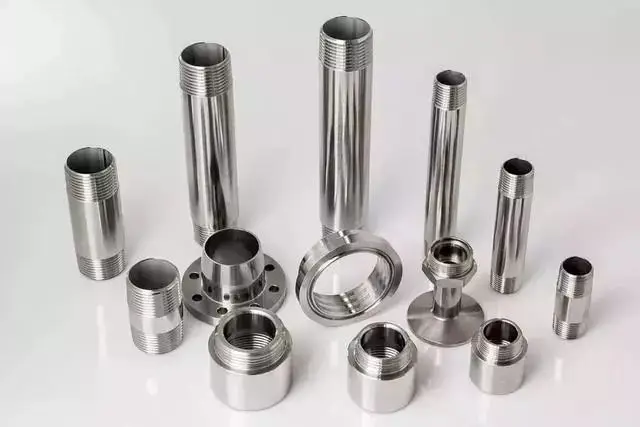
Stainless steelIt is one of the most common steel materials to be exposed to during instrument work, and knowledge of stainless steel helps instrumentors to better master instrument selection and use。
Stainless steel (stainless steel) is the abbreviation of stainless acid-resistant steel. It is called stainless steel that is resistant to weak corrosive media such as air, steam, water or stainless steel; it is called acid-resistant steel that is resistant to corrosion by chemical corrosive media such as acid, alkaline, salt, etc。
Stainless steel is also known as stainless acid-resistant steel, which is resistant to weak corrosive media such as air, steam, water, and chemically infested media such as acid, alkali, salt, etc. ActualApplyMedium, steels resistant to corrosion by weak corrosion media are often referred to as stainless steel, while steels resistant to corrosion by chemical media are referred to as acid-resistant steel. Because of differences in chemical composition, the former are not necessarily resistant to corrosion by the chemical medium, while the latter are generally stainless. The resistance of stainless steel depends on the alloy elements contained in the steel。
CommonClassification:
This is usually broken down into:
Typically, common stainless steel is divided into three categories according to the gold-phased tissue: austronic stainless steel, iron stainless steel, and horse stainless steel. On the basis of these three basic gold-phased tissues and for specific needs and purposes, double-phased steel, sediment hardened stainless steel and steel containing high alloyed steel with less than 50 per cent iron are derived。
1. Austral stainless steel。
The matrix is based mainly on the austropic tissue (cy phase) of the metacentric crystal structure, is non-magnetic and is reinforced (and may result in some magnetic) by cold processing. The american iron and steel association is marked with 200 and 300 series numbers, e. G. 304。
2. Stainless steel in iron。
The matrix is based on the iron tissue (a phase) of the cube crystal structure, which is magnetic and generally cannot be hardened by thermal treatment, but the cold processing can make it slightly reinforced by stainless steel. The american iron and steel association is marked by 430 and 446。
3 maraging stainless steel。
The matrix is a marylon tissue (cubes or cubes), which is magnetic and adjusts its mechanics by heat treatment. The american iron and steel association is marked with 410, 420 and 440 figures. The austronic tissues are at high temperatures and can be transformed into austronics (i. E. Hard) when cooled to room temperature at appropriate speeds。
4 and austro-pyramid stainless steel。
The matrix consists of austropics and irons, of which the lower phase is typically more than 15%, is magnetic and is reinforced by cold processing, and 329 is typical of double-skinned steel. Compared to austral stainless steel, the strength of dual-phase steel is high, and both resistance to inter-crystal corrosion and resistance to chlorinated compounds are significantly enhanced。
5. Sediment solid stainless steel。
The matrix is either anorexia or marylon tissue and is capable of hardening stainless steel through sediment hardening. The american iron and steel association is marked with 600 series numbers, e. G. 630, i. E. 17-4ph。
In general, in addition to alloying, austyl stainless steel is relatively corrosive, and in a less corrosive environment, iron stainless steel can be used, and in a light corrosive environment, martite stainless steel and sediment solid stainless steel can be used if material is required to be of high strength or hardness。
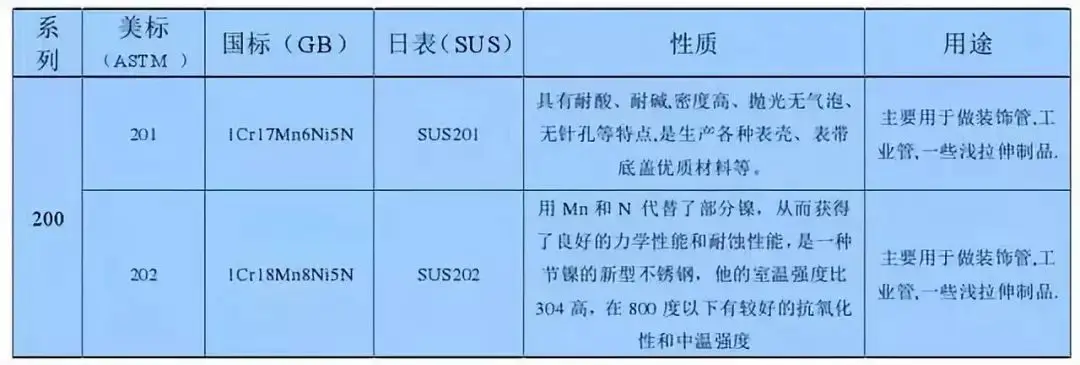
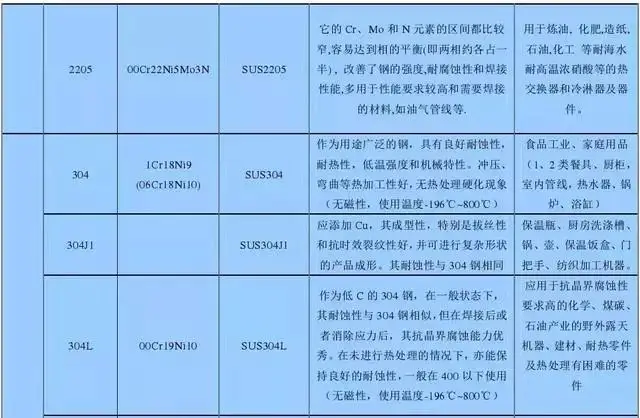
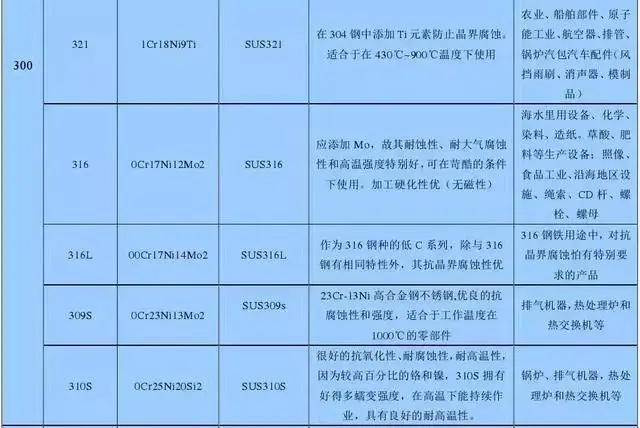
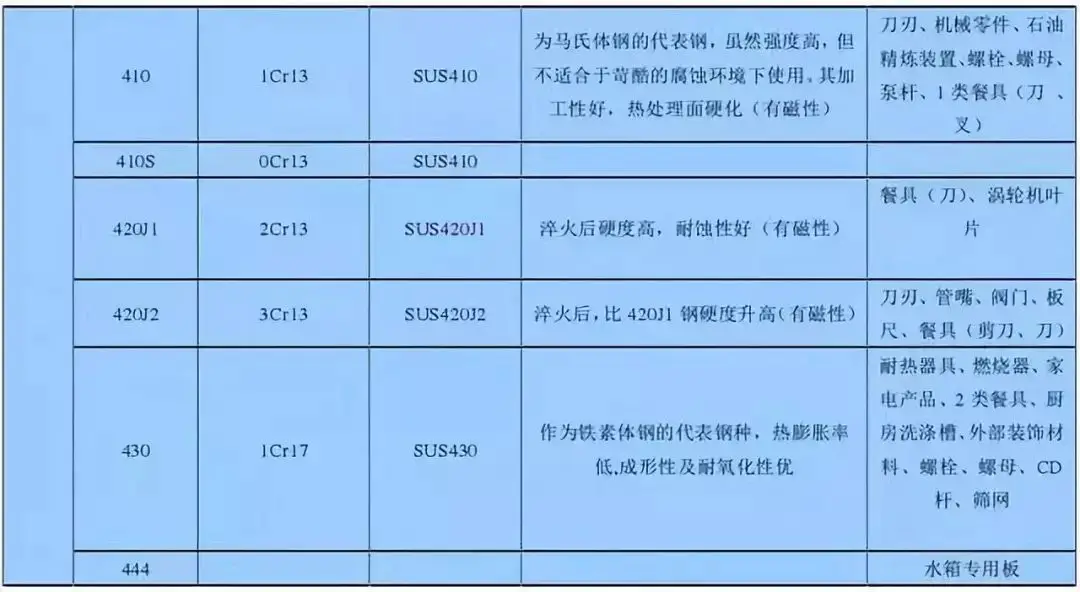
FeatureAnd uses

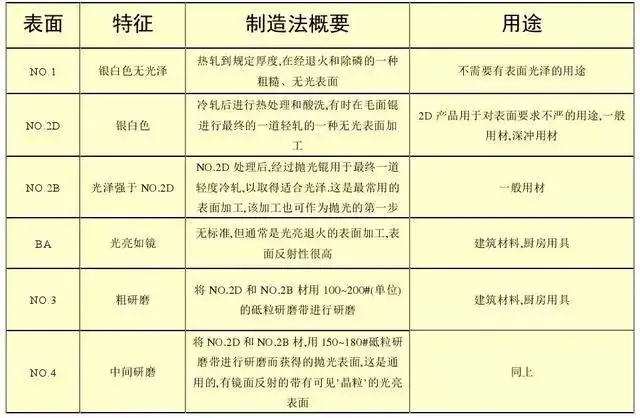
Surface process
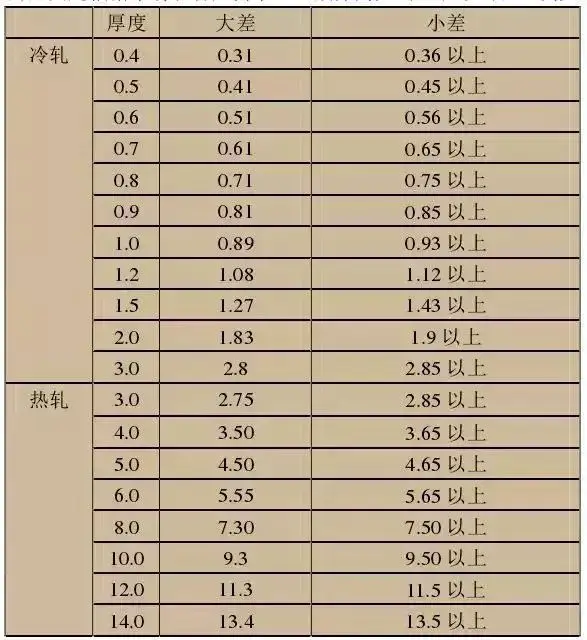
Thickness distinction
1. Because the mill's machinery undergoes a slight deformation in the heat of the lumber during the runoff, the thickness of the plate that is rolled out is biased and generally thin. In measuring the thickness of the plate, the state requires that the centre of the plate be measured。
2. The reason for the spread is that, depending on market and customer demand, it is generally divided into major and small ones: for example:
What kind of stainless steel isn't rusty
The main factors affecting stainless steel rust are three points:
1. Content of alloy elements。
In general, chromium levels of 10. 5% steel are less vulnerable to rust. The higher the preservative content of chromium nickel, i. E., the 8-10% nickel content for 304 materials and the 18-20% chromium content, this stainless steel is not generally rusty。
2. Smelting processes in producing enterprises may also affect the corrosion resistance of stainless steel。
Good smelting, sophisticated equipment, and technologically advanced large stainless steel plants, whether controlled by alloy elements, impurities removal and steel cooling temperature control are guaranteed, so that product quality is stable, inherently good and not easily rusty. Small steel plants, on the other hand, are poorly equipped, the process is backward, impurities cannot be removed from the smelting process, and products are inevitably rusty。
3. The external environment is not easily rusty with a dry and ventilated climate。
The high humidity of the air makes it rusty in consecutive rainy weather or in environmental areas with high acid alkalinity in the air. It is also rusty if the surrounding environment is too poor。
What do we do with stainless steel
1. Chemical methods
Following acid washing, supported by acid scrubbing or spray to re-spread its rusted area to restore the chromium oxide thin membrane to its corrosive capacity, it is important that proper washing with clean water is used to remove all pollutants and acid residues. After all processing, the polishing equipment was re-emptied and the projectile was closed. For those with minor rust stains on a local basis, stains can also be wiped off with clean rags of 1:1 gasoline, oil mixed fluid。
2. Mechanical methods
Spray clean-up, clean-up with glass or ceramic granules, tumble, brush and polish. By mechanical means, it is possible to remove contamination from previously removed materials, polished materials or emptied materials. All kinds of pollution, especially foreign iron particles, can be a source of corrosion, especially in wet environments. Therefore, mechanical clean-up of surfaces should preferably take place in dry conditions. The use of mechanical methods only cleans up the surface and does not alter the anti-corrosive capacity of the material itself. It is therefore recommended that, after mechanical clean-up, the polishing equipment be re-emptied and closed with the polishing。
It's often stainless steel and performance
1,304 stainless steel. It is one of the most widely used austic stainless steels, which can be used for the manufacture of deep-spreading components and acid pipelines, packagings, structural components, various instruments, etc., as well as for the manufacture of non-magnetic, cryogenic equipment and components。
2, 304l stainless steel. Super-low-carbon austic stainless steel developed to address the severe inter-crystal corrosive tendencies of the 304 stainless steel as a result of cr23c6 analysis under some conditions has a significantly better sensitivity to intercrystal corrosive capacity than 304 stainless steel. Except for a minor low strength, other performances are associated with 321 stainless steel, mainly for corrosion resistant equipment and components that require welding and cannot be solidified, and can be used in the manufacture of various instrument matrices, etc。
3, 304h stainless steel. The internal branch of stainless steel has a carbon mass score of 0. 04%-0. 10% and a high temperature performance of better than 304 stainless steel。
4, 316 stainless steel. A human molybdenum is added to the 10cr18ni12 steel to provide the steel with a good reductive medium and resistance to corrosion. In seawater and other media, corrosive resistance is better than stainless steel in 304, and is used mainly for point-resistant materials。
5, 316 l stainless steel. Super-low-carbon steel, which has a good capacity for inter-sensitized crystal corrosive performance, is suitable for welding components and equipment of thick cross-section sizes, such as corrosive material in petrochemical equipment。
6. 316h stainless steel. The internal branch of stainless steel has a carbon mass score of 0. 04%-0. 10% and high temperature performance of 316 stainless steel。
7, 317 stainless steel. Resilient point erosion and worm resistance are better than 316 l stainless steel, which is used in the manufacture of petrochemical and organic acid corrosion resistant equipment。
8, 321 stainless steel. Titanium stabilized austic stainless steel, adding titanium to enhance intercrystal corrosive properties, and having good high-temperature properties, can be replaced by ultra-low-carbon austerial stainless steel. Use is not generally recommended except in special settings such as high temperatures or resistance to hydrogen corrosion。
9, 347 stainless steel. Stabilized oxylene stainless steel, adding acne to increase inter-crystal corrosive properties, with corrosive properties similar to 321 stainless steel in corrosive media such as acids, alkalis, salt, and good welding performance, can be used as resistant materials and also as heat resistant steel, mainly in the field of firepower, petrochemicals, such as the production of containers, pipes, heat exchangers, axes, furnaces in industrial furnaces, and furnace thermometers。
10, 904 l stainless steel. Super total oxyxin stainless steel, a super-oxylene stainless steel invented by the finnish company outokumpu, has a nickel mass score of 24 per cent and 26 per cent, a carbon mass score of less than 0. 02 per cent, an excellent corrosive resistance in nonoxidated acids such as sulphate, acetic acid, acetate, phosphate, and a good resistance to corrosive corrosion and stress corrosion. For various concentrations of sulphuric acids below 70 °c, corrosive resistance is also good at any concentration under constant pressure, at any temperature, in a mixture of acetic acid and acetate. The original standard asmesb-625 returns it to nickel-based alloys and the new standard classifies it as stainless steel. China has only the approximation no. 015 cr19 ni26mo5cu2 steel, and a few european instrumentors use 904l stainless steel for key materials. For example, the quality flow meter of e+h uses 904l stainless steel for measuring tubes, and the watch of a rolex also uses 904l stainless steel。
11, 440c stainless steel. Ma ' acetal stainless steel, with the highest hardness in accelerator, stainless steel and a hardness of hrc57. Mainly used for nozzles, bearings, valve cores, valves, cylinders, valves, etc。
12, 17-4ph stainless steel. Maraging solid stainless steel, with a hardness of hrc44, is of high strength, hardness and resistant to corrosion and cannot be used at temperatures above 300°c. Good corrosive resistance to the atmosphere and diluting acids or salts, as in the case of the 304 stainless steel and the 430 stainless steel, is used in the manufacture of marine platforms, turbine blades, valve cores, valves, cylinders, valves, etc。
In the instrumenting profession, in combination with generality and cost issues, conventional stainless steel selection sequences are:
304-304l-316l-317-321-347-904l stainless steel, of which 317 is less used, 321 is not recommended, 347 is used for high temperature anti-corrosion, 904l is only the default material for individual manufacturer components, and 904l is not normally chosen on its own initiative。
In instrument design selections, when the instrument material is different from the pipe material, especially in high temperature conditions, particular attention is paid to whether the instrument material selection meets the design temperature and design pressure of the process equipment or pipeline, such as the piping for high temperature chromium steel, while the instrument selection for stainless steel is likely to be problematic and the temperature table of the relevant material must be consulted。
In instrument design selections, various systems, series, branded stainless steels are frequently encountered and are selected from a variety of angles, including specific process media, temperature, pressure, stress components, corrosion, cost, etc。









