


This article is fromKnowledge mappingKnowledge maps are presented from a historical development perspective。
Contents
I. What is knowledge mapping
Knowledge mappingArtificial intelligenceA significant branch -Knowledge engineeringThe scope of research is a killer-level application of intellectual engineering theory to build large-scale knowledge resources. Knowledge mapping has given new life to semantic internet searches and has also gained prominence in smart questions and answers, becoming an infrastructure for intellectually driven applications. Knowledge mapping andBig dataTogether with in-depth learning, it has become one of the central drivers of internet and artificial intelligence development。
Definitions
There is no uniform definition of knowledge mapping in academia, and according to wikipedia, the knowledge mapping was first proposed by google in 2012 as a large knowledge base for intelligent search services. So here we can interpret knowledge mapping as a formalized framework for semantic knowledge。
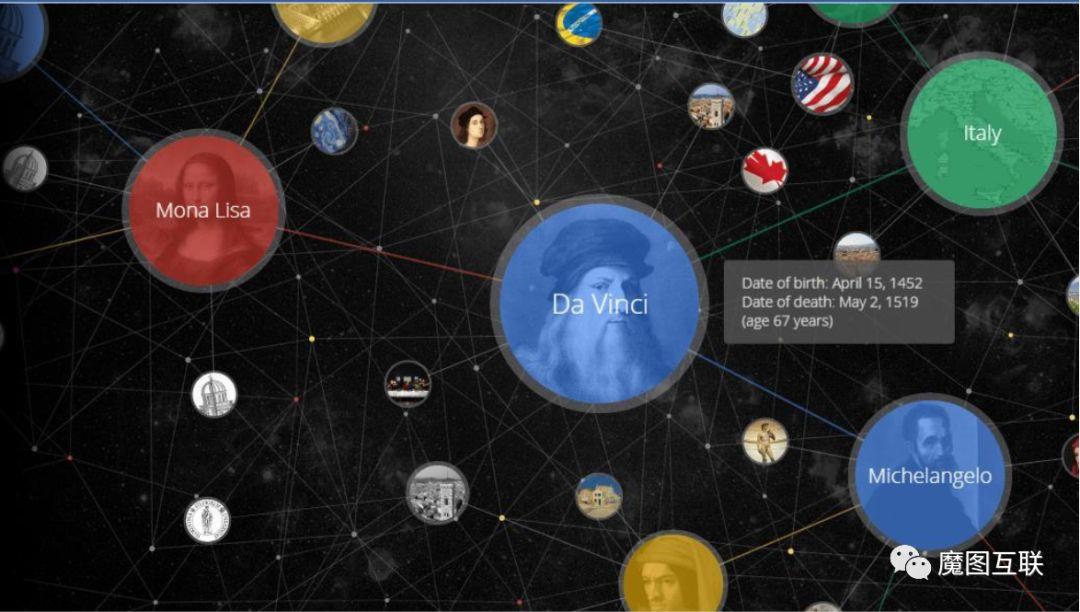
Figure i google knowledge mapping
Meaning
Knowledge mapping, from a semantic perspective, enables computers to better organize, manage and understand mass information on the internet by describing concepts, entities and relationships in an objective world. More specifically, in the course of human interaction with the internet world, a great deal of information has been generated, which is generally preserved by the photo sound text video data carriers. We hope that computers will be able to analyse and read and understand these data, and that they will accurately dig into the valuable knowledge hidden behind the data and provide knowledge services when needed by users。
3. Research issues
The main questions of knowledge mapping are how to express knowledge in computers, how to keep it in the right data carriers (dataization of knowledge) and how to transform large-scale internet data into the forms we define as knowledge data (knowledgeization of data) and so on。
Knowledge mapping techniques refer specifically to techniques for the construction and application of knowledge mapping, covering a wide range of content, integrating knowledge expression and reasoning, information retrieval and extraction, natural language processing, and the use of knowledge mapping techniquesSemantic networkCross-cutting studies in the fields of cognitive computing, data mining and machine learning。
Ii. History of knowledge mapping
Today we begin with an initial understanding of the knowledge map from the point of view of the historical development of the knowledge map, and the mysterious veil of the knowledge map. Knowledge mapping is the successful application of the critical branch of artificial intelligence knowledge engineering in a large data environment。
1. Former period of intellectual engineering (1956-1970)
The development of knowledge maps has been accompanied by the development of artificial intelligence technologies。
In 1956, scientists like marvin minsky, john mccarthy, claude shannon, and alan newell organized a conference in hannos, a small town in the united states, to discuss a non-eating pyrotechnic topic: how to simulate intelligence with a machine and give a name for what the conference discussed: artificial intelligence. This was the first time that the term “artificial intelligence” had been introduced, marking the formal birth of the discipline of “artificial intelligence”, which became the year of artificial intelligence in 1956。
In the following years, artificial intelligence flourished. A brief introduction to the two university schools of artificial intelligence: connectivity and symbolism。
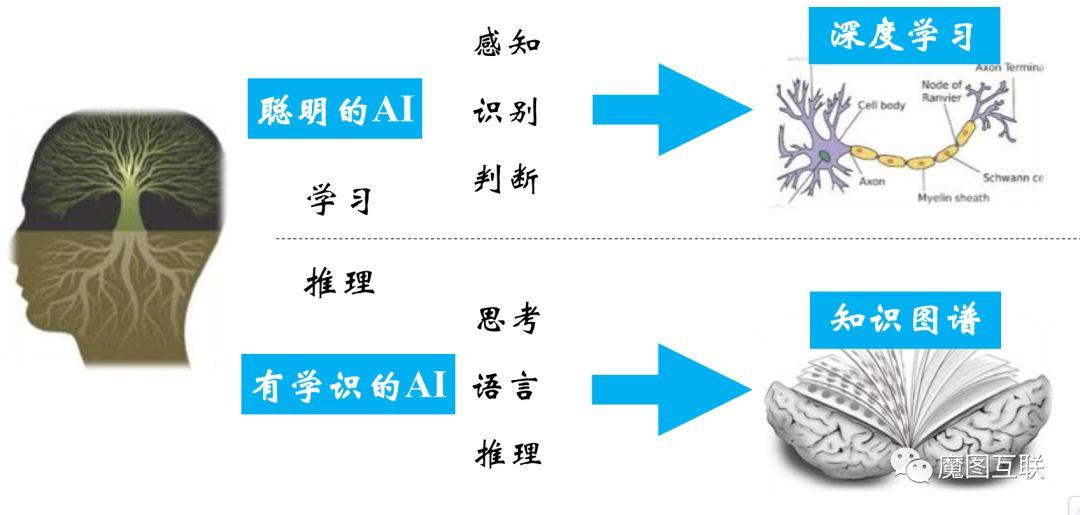
Figure ii "intelligence" encompasses many aspects of consciousness, thinking, cognitive, instincts, etc
Connectivity is inspired by the neuroscience that “intellectual” is the result of interaction between countless “intellectual” neurons, and that there is no substantive difference between human beings and machines. If we can simulate the behaviour of a nervous cell and then construct an artificial “neurological network”, then theoretically we can simulate the human brain and create what is called “smart”。
The symbolism believes that human intelligence can be expressed in mathematical logic. Mathematical logic was used in the 1930s to describe intelligent behaviour and simulate human intelligence activity. After the advent of the computer, the theory was applied to the computer, and the logical evolution system was implemented, thus developing subsequent expert systems and intellectual engineering theories。
This stage of representative work is the generic problem-solver gps. Gps aims to achieve an ambitious goal: a description of a given problem, a computer program that can solve any problem. He was the first process to separate problem-solving strategies from the knowledge of a particular problem and inspired many studies in the area of problem-solving。
Knowledge during this period indicates that the methodology consists mainly of logical knowledge expression, production rules, semantic networks, etc. The focus of academic research during this period was on how to design a reasoning model to solve common problems, while ignoring the important role of knowledge in problem resolution。
Expert system period, (1970-1990)
Early scholars focus on the solution of common problems, trying to replicate the logic of human solvency to construct intelligent systems, while ignoring the support of knowledge (human perception) for intelligence。
What is cognitive? What is knowledge? Wikipedia has cloud, cognition or cognitive (cognition) in psychology means the process of acquiring knowledge through psychological activities such as conceptual, cognitive, judgement or imagination, or the psychological process of information processing. Knowledge is processed information。
Starting in 1970, scientists presented a variety of knowledge expression techniques, presenting field expertise as computer-identifiable data forms. Artificial intelligence began to shift to building knowledge-based systems, to achieving smart expert systems through a knowledge base plus a reasoner. The relatively well-known expert system at that time was the mycin medical diagnostic specialist system, the denral expert system for the identification of molecular structures and the xcon expert system for computer fault diagnosis。
In 1977, at the fifth international conference on artificial intelligence, professor e. A. Feigenbaum, a computer scientist at stanford university in the united states, systematically elaborated on the idea of “expert systems” and introduced the concept of “knowledge engineering” to formalize the importance of knowledge in artificial intelligence。
Knowledge during this period indicates that the methodology consists mainly of framework expression, script expression language, etc. At the same time, a number of knowledge banks built on these methods of expression, such as the cyc commons knowledge bank, were created through artificial additions of knowledge。
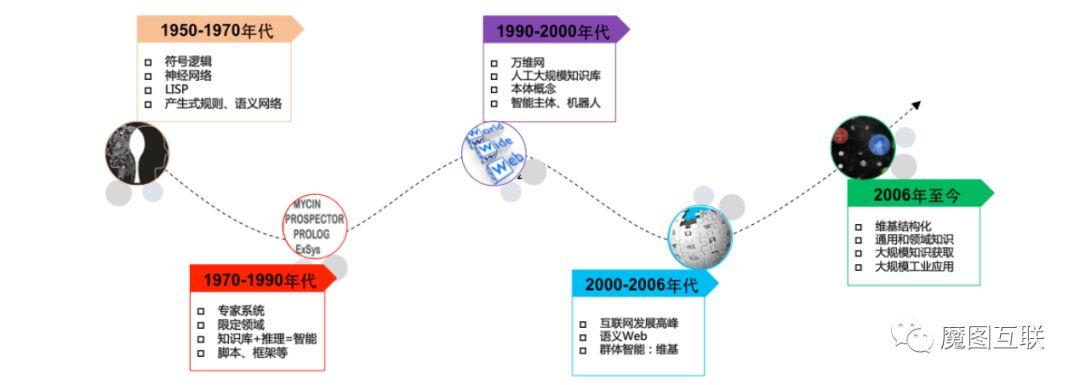
Figure iii history of intellectual engineering development
3. World wide web period (1990-present)
How can computer access be achieved efficiently? Tim berners-lee, the father of the world wide web, originally designed the internet to connect the world's knowledge through networks, moving knowledge from closed knowledge to open knowledge, from centralized knowledge to distributed knowledge. He believed that it would be useful to first construct a network of documents that were interconnected, and then, on that basis, an interconnected network of knowledge with computer-identifiable knowledge structures. The first goal has been achieved, that is, the internet that we now have daily contact with, what does knowledge mean by interconnected networks
In web2. 0, the data on the internet are mostly available in HTML form, which is indeed appropriate for the transfer of information between human interfaces to facilitate human reading and understanding, but web content is not presented in a formal manner, there is a lack of clear semantic information, and web content is only ordinary binary data for computers, and the knowledge hidden behind their symbols cannot be identified by computers. So, in the face of the mass of information in today's information age, when people want to use computers to access the information they need, the bottlenecks in the form of this HTML page expression are highlighted, and this is where the barriers to traditional search engines are based on keyword matching。
Thus, in response to the second objective, tim berners-lee first introduced the semantic web concept in 1998, the web3. 0 that was often spoken later. This is an ambitious concept with the objective of increasing semantic support for existing web content, enabling computers to automatically identify and understand information on the internet and perform intelligent application tasks. With regard to semantic network concepts, a standardized set of related technologies has been introduced and refined to form a semantic network technology stack, consisting mainly of rdf and owl, which include research on intellectual engineering theories such as logic and knowledge expression over the past decades。
It's a very difficult task to achieve this. — the huge amount of content on the internet must be translated into knowledge that machines can understand and calculate. The way in which the knowledge base is manually edited in the system of early experts is clearly overstretched from the task. Fortunately, the emergence of large-scale wiki-rich structural knowledge resources, combined with the introduction of a number of methods to automatically extract large-scale knowledge from the world wide web, has led to significant results in knowledge acquisition, with related representation such as dbpedia, freebAs in yago, deepdive, nell, probPlease, wait。
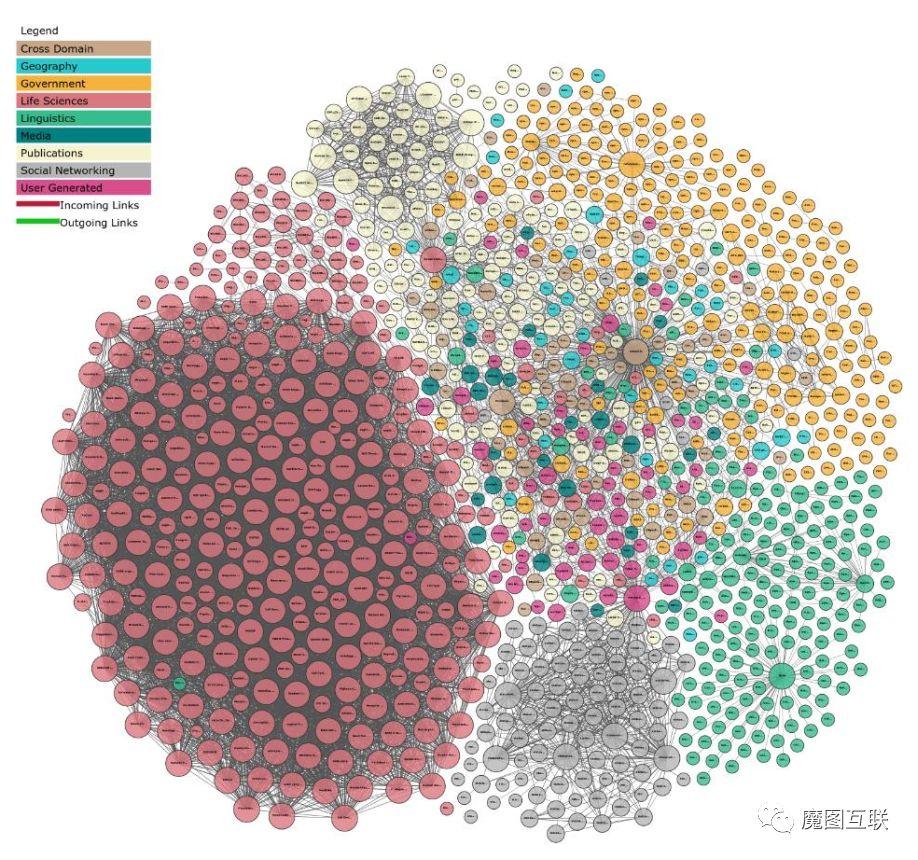
Figure iv open link data items
It's against this background that google is buying freebThis was followed in 2012 by the launch of a powerful application based on semantic network technology, knowledge mapping。









