


Concepts and definitions
Knowledge mapping(english: knowledge graph) is a structured semantic knowledge base used to describe concepts in the physical world and their interrelationships in a symbolic form. Its basic component units are the “entity-relationship-entity” triads, as well as the entity and its associated attributes-value pairs, which form the networked knowledge structure through interconnectivity. Knowledge mapping allows web to shift from web-based to conceptual links, supports user search by theme rather than string, and truly achieves semantic retrieval. Based on knowledgeSearch engine, allows users to feed structured knowledge in graphic form, and users are able to locate and access knowledge accurately without having to browse a large number of pages。
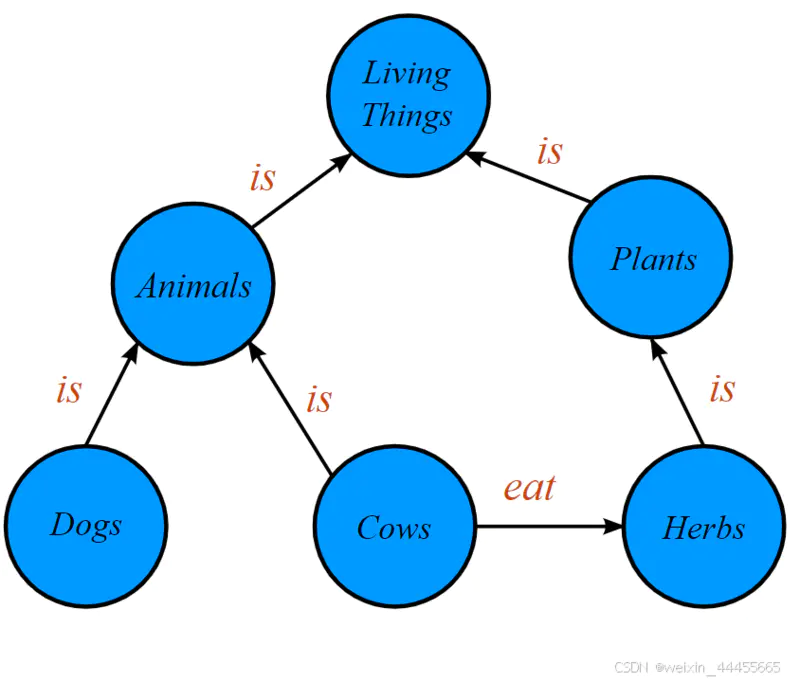
Example diagram
In terms of knowledge expression, knowledge mapping is a knowledge base in which data are generated through data models or scaling-up. Knowledge maps are often used to store related entities. In the late 1980s, the university of groningen and the university of tvent jointly launched a project called knowledge mapping. Search engines such as google, bing and yahoo have introduced knowledge maps and display them on the right side of the search interface。
Development history
The concept of knowledge mapping was first introduced by google on 17 may 2012, which defines knowledge mapping as a supporting knowledge base to enhance the functions of the search engine. However, before the concept of knowledge mapping emerged, the field of research on semantic network technology had already begun. Berners-lee submitted data links in 2006 (l)Thinked data, promoting and perfecting urls, rdfsCription fRamework), owl (web o)Technical standards such as ntology language) provide the technological basis for knowledge mapping。
Technical structure
Three-chamber groups are a common expression of knowledge maps, namely g = (e, r, s), where e is an entity in the knowledge base, r is a relationship in the knowledge base, and s represents a three-chamber group in the knowledge base. The basic form of the troika consists mainly of entity 1, relationship, entity 2 and concepts, attributes, attribute values, etc. Entities are the most basic elements of the knowledge map, and there are different relationships between different entities. The concept primarily refers to the collection, category, object type, type of thing, e. G. Person, geography, etc.; the attribute primarily refers to the attributes, characteristics, characteristics, characteristics and parameters that the object may have, e. G. Nationality, birthday, etc.; the attribute value primarily refers to the value of the attribute specified by the object, e. G. China, 1988-09-08, etc. Each entity (the extension of the concept) can be identified by a single global id, each attribute-relative value (attribute-value pair, avp) can be used to paint the intrinsic characteristics of the entity, while the relationship can be used to connect the two entities and to map their connection。
Knowledge mapping is divided into two levels of logical architecture: data layer and mode layer. The data layer is a map database stored as fact (fact) and is based on the expression “entity-relationship-entity” or “entity-attitudinal-attitude-attractive value”. Model layers store refined knowledge, using the home bank to regulate reality









