


Wave protectionComprehensive science: specification classification, material process, installation standards and selection guidelines
Set up a map of the entire waveguard
Wave-shaped fences, high-speed wave-shaped fences, road-wave-shaped fences, wave-shaped fence specifications, standards for wave-shaped fences, heat-plating zinc-shaped fences, plastic wave-shaped fences, wave-shaped column selection
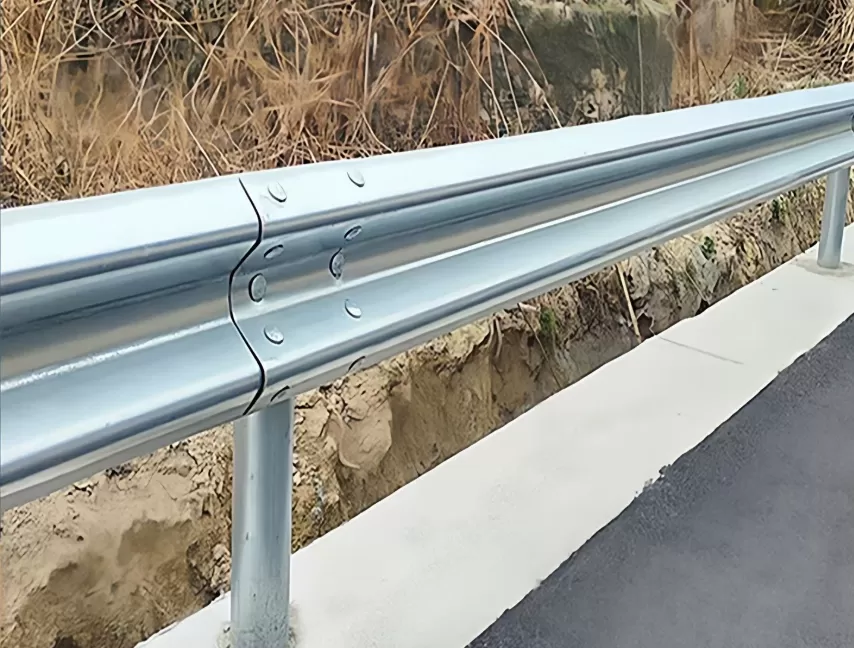
[: wavewalls are fully equipped with a landscape (highway side wavewall panorama)]
Wavewalls are the core semi-rigid safety protections in road traffic engineering and are currently the most widely used, cost-effective and safest protection against collision fences at all levels in the country. Distinguished from rigid concrete fences and soft cable cords, wavewalls form continuous flexible protective structures based on tow-lined steel plates, poles, barriers, bolts and fittings, absorb vehicle impact energy through their own deformation, effectively avoid major safety incidents such as vehicle storming the exit side, crossing the road walls and crossing the right lanes, and provide overall road safety。
As the country's road transport infrastructure continues to improve, market applications for wave-shaped fences are becoming more widespread, with the upgrading of rural roads, the retrofitting of national roads, the expansion of high-speed roads, attraction roads, factory roads and municipal roads. However, most engineering procurements, construction teams, capitalists' level of protection against wavewalls, material differences, process standards, specification parameters, installation specifications are vague and prone to selection errors, sub-filling of materials, failure of construction standards and unsatisfactory acceptances. From a professional point of view, this paper deals with the structure principles of the wavewall, classification specifications, material processes, applicable scenes, installation standards, acceptance points and pit avoidance techniques. The full text is suitable for seo optimization and the natural layout of keywords, suitable for inclusion on the roadguard industry website and user science。
I. Core definition of the waveform column and the rationale for protection
The beam fence, full of beam bars, is part of the national standard semi-rigid protective fence, and the whole is a continuous fusion steel structure consisting mainly of wave boards, circular/square cylinders, resistance blocks, racks, connection bolts, endhead seals, and is supported by a road-base fixed to form a full-dimensional road barrier。
[wiper-column structure decomposed (paint boards, columns, block blocks, fitting details split)
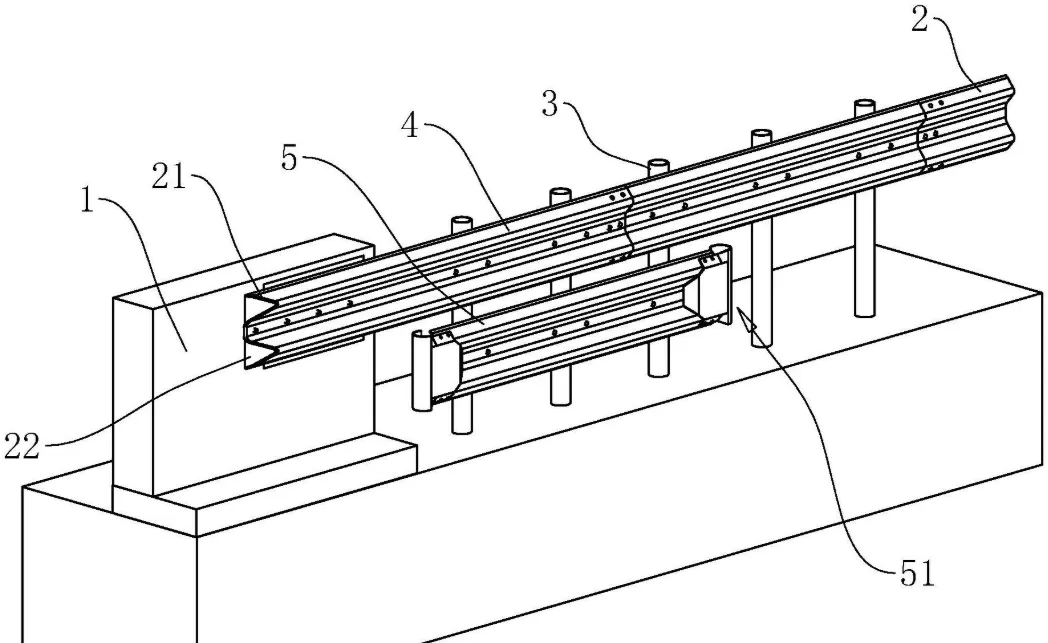
Its core protective principles differ from traditional hard-to-protect products, using flexible insulation protection mechanisms: when the vehicle has an accidental out-of-control impact fence, the waver steel plate is flexible, plasticized with the impact force, with a resistance block buffer, a moderate tilt of the pole, and a layer absorbs the huge kinetic energy generated by the impact. At the same time, steering out-of-control vehicles through arc-shaped structures to smooth their rounds, correcting their tracks and avoiding the direct breaking of the fence, would also prevent excessive re-entry of vehicles from causing secondary serial accidents and minimize the risk of injury or injury to driving and damage to vehicles。
Compared to the solid concrete fence, which is prone to severe impact damage and is less heavily protected by cable cords, the wave-shaped fence combines buffer inhaling, structurally stable, easily repaired and affordable four main advantages, with the vast majority of road works being the preferred product for passive road traffic safety protection。
Ii. Main classification and specification parameters for wavewalls (industry common standards)
The classification of beams follows strict road engineering standards, which can be classified by three dimensions: structure styles, level of protection, material process, with completely different levels of roads, speeds, and protection needs for different specifications, and are the core basis of the project selection。
1. Classification by structured style
The mainstream is divided into two-wave and three-wave columns, which are also the most commonly used specifications for the project:
Double-wave-shaped fence: market base generals, panel width of 480 mm, panel thickness of 2. 5 mm, 2. 75 mm, 3. 0 mm optional, wavering radians flat, self-adaptation, installation easy. The level of protection is moderate, with a very high value for money on low-speed roads, rural roads, factory roads, landscape roads, provincial bypass roads and low-speed sections。
Three-wave protection bars: enhanced protection formula with a panel width of 506 mm, a plate thickness of 3. 0 mm and 4. 0 mm, deeper band depth, greater plate stress area, more rigid overall structure, and far greater impact resistance than double-wave guard. They are mainly used for high-risk road conditions such as highway mains, national mains, mountain cliff sections, high-risk sections of bridges and steep slopes。
2. Classification by level of national standard protection
In accordance with the design code for road traffic safety facilities, wavewall protection is classified into five levels: b, a, sb, sa, ss
Level b protection: basic protection level, suitable for rural roads, sub-district roads, plant roads, landscape roads, speed 40 km/h segment to meet basic collision protection needs。
Level a protection: the generic mainstream level, which applies to the general national, provincial and municipal main roads, with 60-80 km/h speed, is the most widely applied standard guard。
Sb-class protection: enhanced protection, adapted to normal highways, mountain bends, water-capable cliff sections, higher impact resistance to uncontrolled impact of high-speed vehicles。
Sa/ss-class protection: super-high-level protection, special for high-speed high-risk sections, bridge sections, interconnectivity, full protection against large vehicle high-speed impacts and against major safety incidents。
3. Classification by surface preservation process
The preservative process directly determines the useful life of the wavewall, its durability, and the cost of its maintenance at a later stage, which is key to distinguishing between product strengths and weaknesses:
[figure 3: a comparison of the waveforms for thermal plating of zinc pyrotechnic materials]
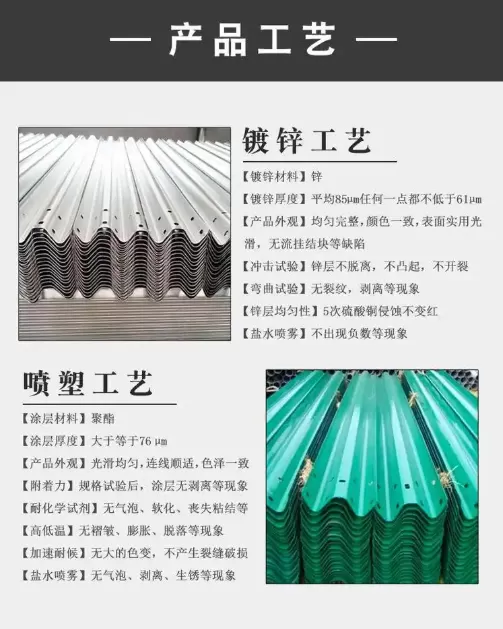
Thermal zinc plating bands: the industry's high-quality process, with high-temperature thermal impregnation of zinc, 85 m in thickness, the formation of a conservative layer of steel surfaces, insulated from air, corrosive rain, rustproofing, oxidation, high alkali resistance, with a useful life of up to 15-20 years, and adverse conditions such as open air outside suitable homes, wet rain and salt fog, are designated as the main products of high-speed, state-way engineering。
Thermal zinc plating plastic wave protection column: double layer pre-heated zinc plating, surface and electrostatic spray treatment, colour customised ink green, grey, white, blue, etc., appearance clean beauty, pre-deservation better than a single zinc plating product, balancing protective and landscape properties, most used on municipal roads, landscape roads and urban main roads。
Refrigerated zinc plating/painting fences: low end simple process, corrosive layer thinness, poor effort, use of 1-2 years of highly rusty skin removal, only for temporary construction roads, short-term containment, and strictly prohibited for use in permanent road traffic works。
Iii. Core materials and performance advantages of the waveform column
The formal national wave-forming base is based on a cold-cooled q235 low-carbon thermal roller steel plate, with good material resilience, high tensile strength and non-fragmentation, which fully meets the mechanics requirements for road traffic impact protection and eliminates poor regenerative steel and thin steel。
The high-quality national waveform fence has four core performance advantages:
High impact resistance: q235 steel is sufficiently resilient and wavering structure science is dispersible, effectively resistant to small cars, suvs, light trucks, constant fractures and high protection stability。
Preserve resistance to corruption: national thermal zinc plating, twin-screech preservative processes, unafraid sun, rain, frost, salt mist erosion, long-term use of stainless, non-decomposition, significantly reducing replacement costs for later maintenance。
Installations are easy to maintain: the whole modular collage structure, which is generic, simple to assemble and efficient to construct; and the partial break-up, which allows for the replacement of single panels or columns on a stand-alone basis, without the need for their overall dismantling, with minimal maintenance costs。
Fitness is wide: specifications, colours, protection levels are flexible and tailored to all road scenarios such as plain roads, mountain roads, watery cliffs, bridges, bends, ramps, etc。
Iv. Guidelines for the precise selection of the different scene wave-shaped columns
Project procurement options are based on the principle of “road matching, grade suitability, process compliance” to avoid the increased cost of small-scale use or the safety risks associated with large-scale use:
Rural roads, township roads, factory roads: priority is given to double-waved zinc-plating fences of level b, with 2. 5 mm/2. 75 mm thick, to cover low-speed vehicle protection at best value。
National, provincial and municipal roads: two wave/three wave of zinc plating fences are selected to accommodate protective performance and road beauty。
Main main road of ordinary highways: 3-wave heat-plating fences with sb class, resistant to high-speed impacts, high-frequency traffic, high-speed drive scenes。
The mountains are facing cliffs, waterfalls, steep slopes, bridge sections: the sa/ss class enhanced three-wave fences are selected, are super-high-protective and avoid high-risk road safety risks。
Landscapes, tourist roads, landscape municipal roads: customised coloured plastic wave-shaped fences, coloured surroundings, protection and landscape combinations。
V. Standardised construction and acceptance specifications for wave-shaped fences
The waveguard “3-point product, 7-point construction” and installation process do not meet the standards and, even with the use of high-quality products with national standards, there are issues such as failure of protection, loose tilts and unsatisfactory acceptance。
"4: real picture of the standard construction site in the wavewall"
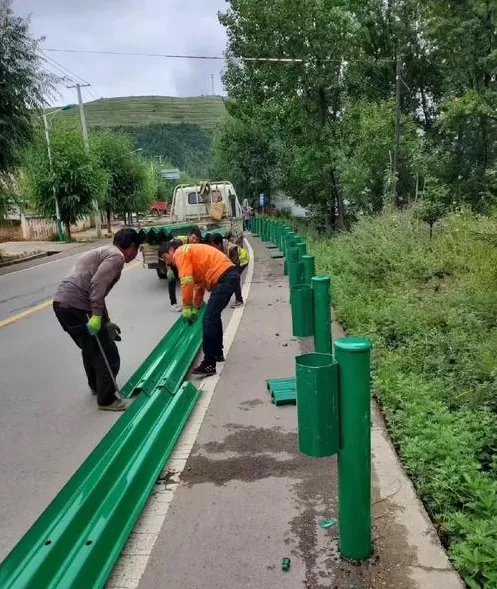
1. Basic construction requirements
The pillars are the core of protection against stress and are routinely mounted in the form of pyrotechnics, with the general road-bases directly placing the pillars into the earth layer, at a depth of 120 cm. The hardening of the surface and the stone-based foundations require the pre-positioning of concrete to ensure that the pillars are vertically stable and do not move. The standard length of columns is 4 m (conventional segment), 2 m (enhanced hazard segment) and high-risk sections are encrypted to increase overall protective strength。
2. Collapse installation specifications
The fences are woven in a tie-up style, with a single length, bolts in place, and the plate is flat and flat, with no faults; the barrier blocks, stand-ups are placed in the middle, close and undisturbed space; and the end of the road is equipped with a dedicated cover-head component to avoid any remaining security hazards at the sharp end. The whole fence is straight, the radians are natural, and it binds the road。
Core standards for acceptance and inspection of works
(b) the whole line is flat and straight, and the columns are vertically non-slanted and evenly spaced
(a) the plate is non-deformed, scratches, paints and the corrosive layer is intact
All bolt fittings are secured, free and missing
(b) roadbases are fixed and robust, impotent, and impact protective capability is achieved
Size specification, material process, and protection level fully meet design drawings and national standards。
Vi. Frequent procurement error and pit avoidance techniques for wave-shaped bars
At present, the fence market is more fragmented, and many undesirable traders have reduced costs by reducing sheeting, reducing the thickness of zinc plating, sub-filling and false grade, resulting in a large number of post-construction rusts, deformations and defense failures, summarizing the industry's core pits:
Refuses non-scaling: clear plate thickness, no less than 2. 0 mm non-scaling, very low impact resistance, highly deformed。
(b) validation preservative process: thermal impregnation of zinc plating, distinguishing between cold plating of zinc and spraying of poor quality products, requiring a report on the thickness of the plating layer。
Matching protection levels: low-level b guard bars are strictly prohibited to replace sb/sa-class guard bars to avoid security hazards。
Check material base: no regenerative steel, no sub-steel, priority q235 heat-rolling base to ensure mechanic performance。
No reduction in fittings: resistance blocks, bolts, column thickness may not be stolen, and failure to meet specifications directly reduces overall protective performance。
Summary
The wavewall, which is an indispensable safety and protection facility for road traffic, has a material process, specification level, construction quality that is directly related to road vehicle safety and engineering life. High-quality national waveforms depend on science's semi-rigid inhaling structure, high-strength q235 steel, standardized preservation techniques, which are suited to the full landscape of road protection needs, with multiple advantages such as safety, durability, economy and maintenance。
Whether rural road improvement, the upgrading of provincial roads, high-speed re-engineering or road works in municipal, landscape and factory areas, only precise matching of protection levels, strict control of material processes, and compliance with standardized construction acceptances can create a proper, durable and safe road protection system that maximizes the safety and protection value of wave-shaped fences and protects road traffic。










