


CompanyIntellectual property rightsManagementApproach
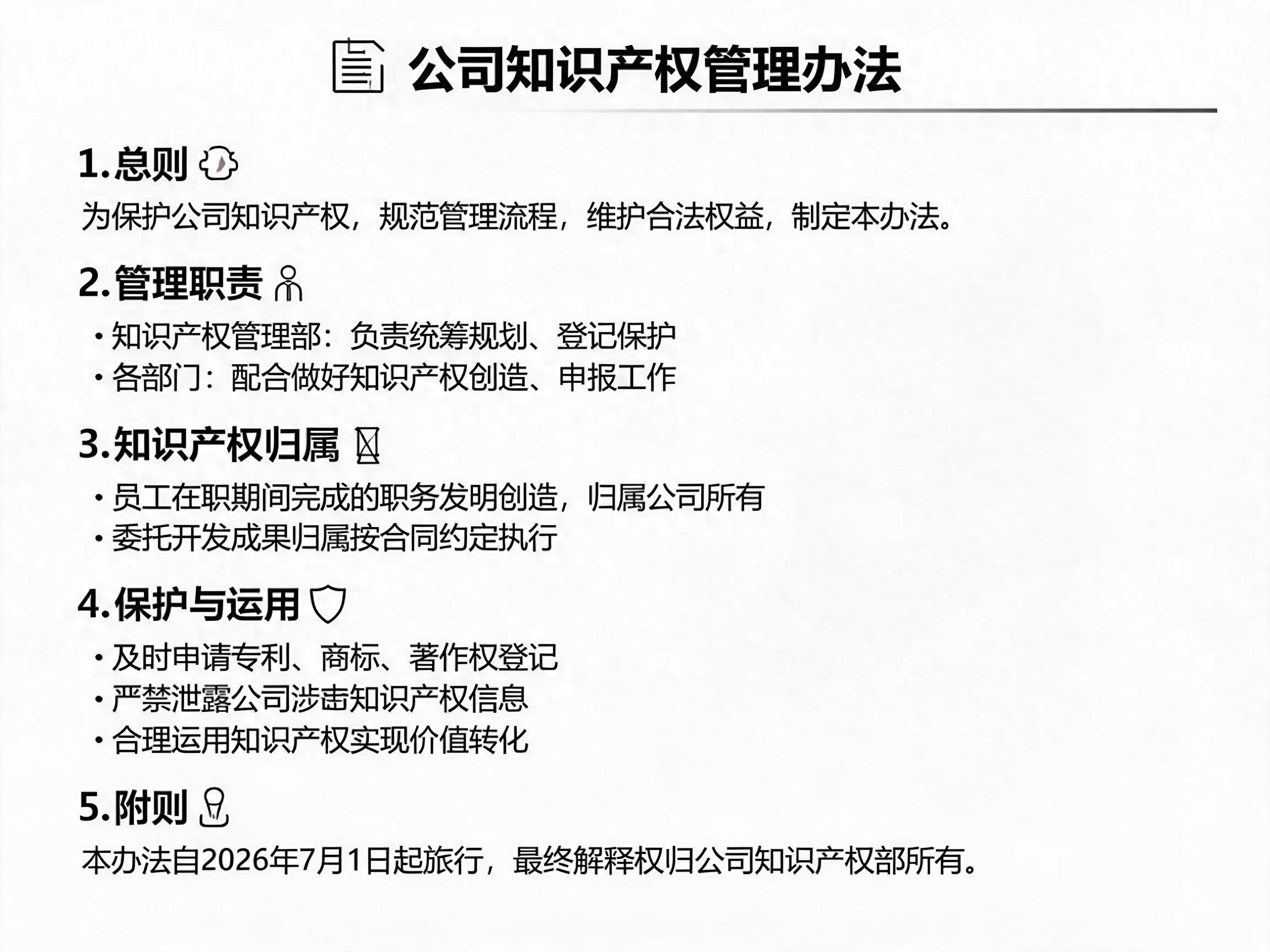
Chapter i general provisions
The first is to strengthen the management of the company's intellectual property rights, protect the legitimate interests and interests of the company's intellectual property rights, encourage innovation creation and enhance the core competitiveness of the company. This approach is based on the law of the people's republic of china on patents, the law of the people's republic of china on trademarks, the law of the people's republic of china on copyright, the law of the people's republic of china on anti-improper competition law and relevant laws and regulations, taking into account the actual situation of the company。
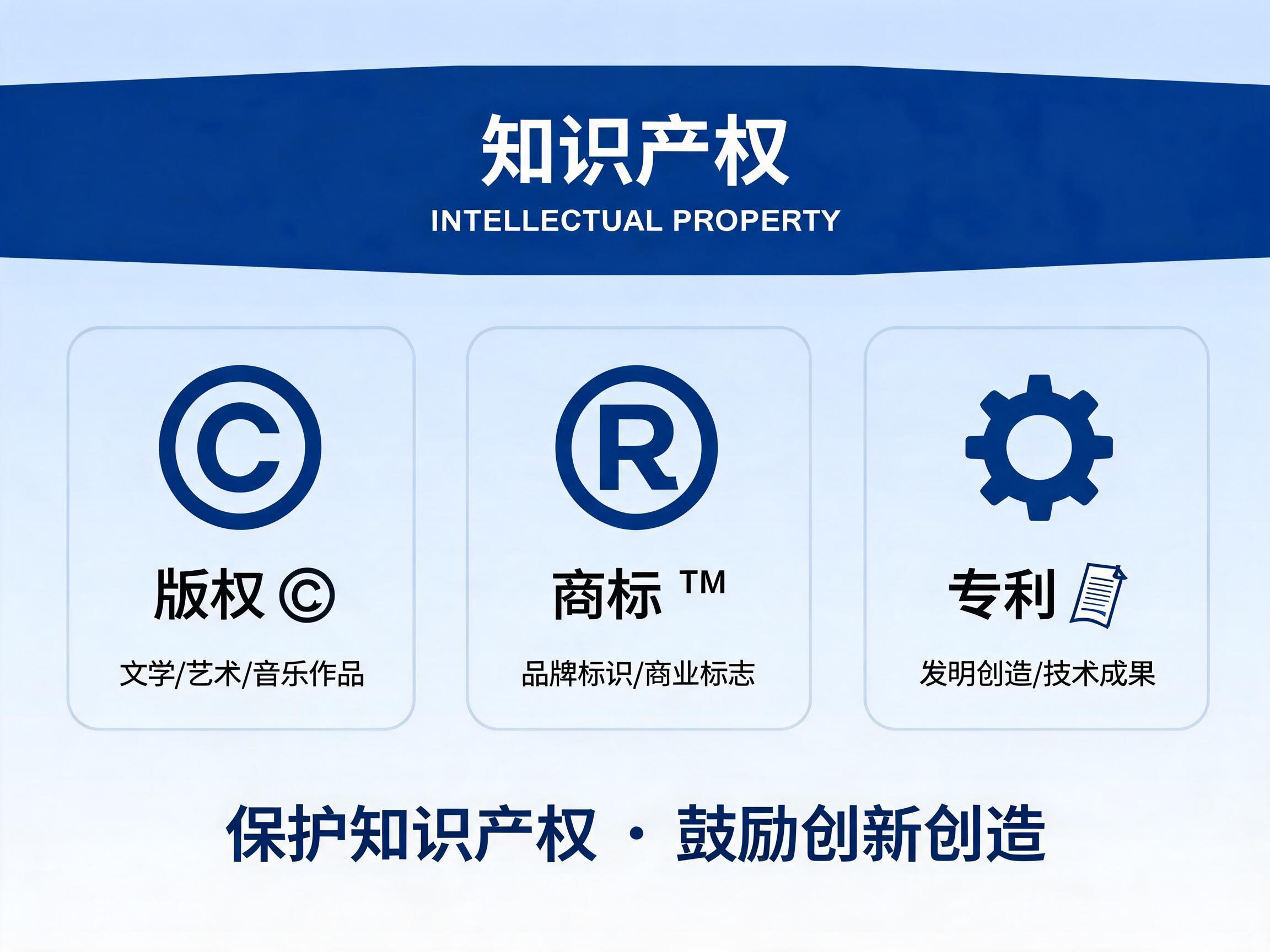
Article 2 this approach applies to matters relating to intellectual property in the course of the company's business by the company and its branches, branches, subsidiaries (hereinafter referred to as “company”) and all its employees。
Article 3. Intellectual property rights within the meaning of this approach, including:
(i) patent rights and technological secrets: mainly those of new products, new technologies, new processes, new methods, new materials, new designs, new formulations, new varieties, etc.
(ii) trademark rights, domain names and business secrets: primarily the company's registered trademark, business number, domain name, etc., as well as undisclosed planning, engineering, design, drawings, markets, operations, services, finance, administration, etc.
(iii) copyright (including computer software): primarily corporate planning drawings, design drawings and their description, computer software and documentation, photography, video, training materials, compilation of norms, etc.
(iv) other intellectual property rights under national laws and regulations。
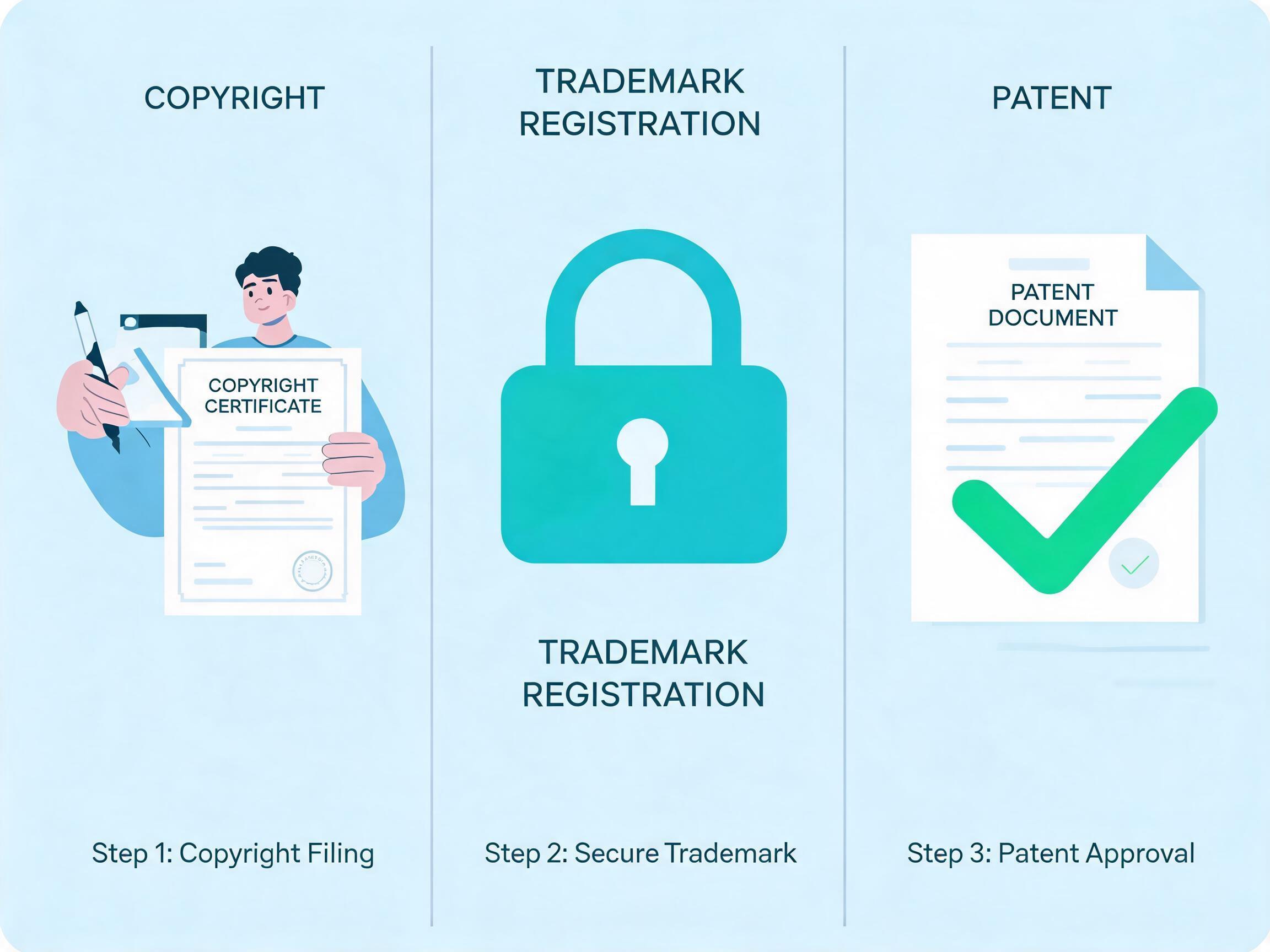
Article iv. Corporate intellectual property governance is governed by the following fundamental principles:
(i) strategic orientation principles: integrating intellectual property strategies into corporate development strategies to underpin technological innovation and market expansion
(ii) the principle of full coverage: covering the process of creation, application, protection and management of intellectual property rights, covering all types of intellectual property rights
(iii) principles of risk prevention and control: establish chain-wide risk identification and response mechanisms to protect against the risk of intellectual property abuse and loss
(iv) value realization principles: promote the transformation of intellectual property rights into real productivity and enhance the contribution of intellectual property rights to the economic efficiency of companies
(v) principle of legality: organic combination of legality, regulation, incentives, protection and effective application。
Chapter ii intellectual property regulatory bodies and responsibilities
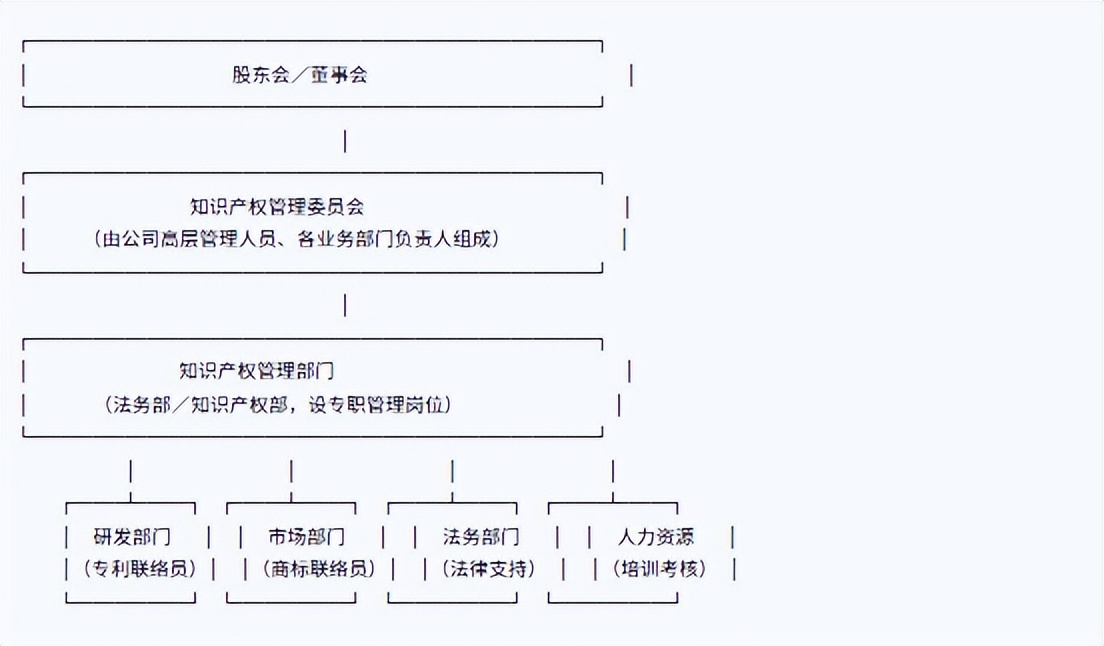
Article v. Companies establish an intellectual property governance committee as the supreme decision-making body for the management of corporate intellectual property。
The intellectual property management board consists of senior managers of companies, heads of business departments, etc., and its main responsibilities include:
(i) validate corporate intellectual property strategies and policy guidelines
(ii) consideration of significant issues in the management of corporate intellectual property rights
(iii) coordinated solutions to major issues in the management of corporate intellectual property rights。
Article vi. Companies establish an intellectual property authority (or designate a legal authority) as the core executive body for the management of corporate intellectual property。
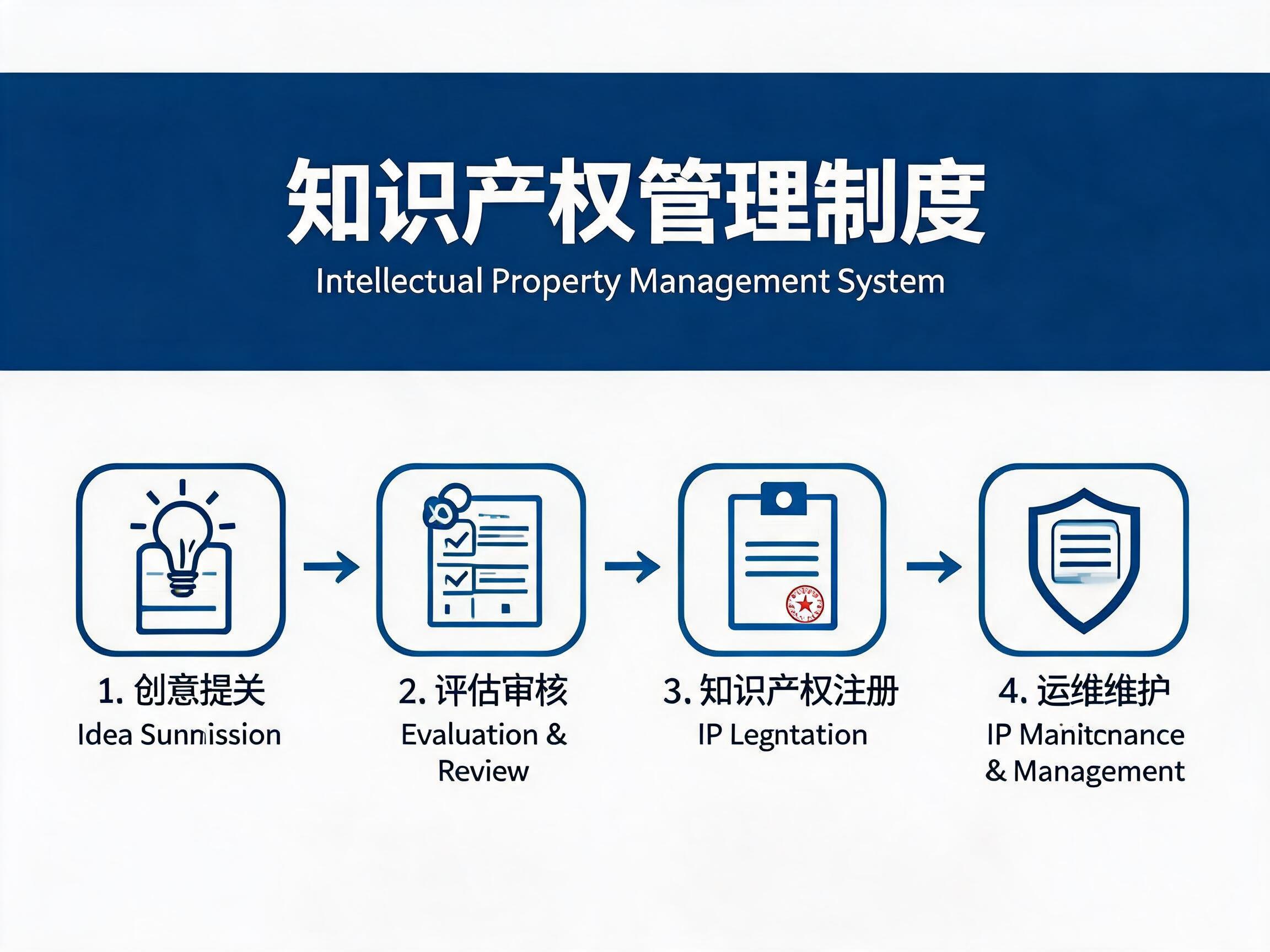
The main duties of the ipr administration include:
(i) development and improvement of corporate intellectual property managementSystemPlanning and strategy, and organizing and monitoring implementation
(ii) responsible for the application, registration, registration and renewal of the company's various intellectual property rights and for following up on the status of intellectual property rights
(iii) conducting intellectual property information retrieval, analysis and assessment and providing decision-making support for corporate r & d, production and operations
(iv) dealing with intellectual property disputes and torts and safeguarding corporate intellectual property interests
(v) organizing intellectual property training and awareness-raising campaigns to raise staff awareness of intellectual property rights
(vi) establishment of a corporate intellectual property information database to collect and collate relevant intellectual property information at home and abroad
(vii) participating in the signing or auditing of contracts, agreements and the creation of intellectual property contract files relating to the intellectual property of companies。
Article vii intellectual property management responsibilities of each operational sector:
(i) research and development sector: timely intellectual property declaration of technological results during project development; cooperation with intellectual property authorities in assessing and protecting technological results; responsibility for collating and archiving relevant technical information during research and development, ensuring the confidentiality of technical information
(ii) market sector: ensure legal compliance with intellectual property rights used in market promotion, marketing, etc.; follow market dynamics and provide timely feedback on information that may involve corporate intellectual property abuse or abuse
(iii) legal branch: assistance to intellectual property authorities in dealing with intellectual property legal matters, including contract review, tort dispute resolution, etc.; provision of intellectual property legal advice to ensure compliance of corporate intellectual property management activities with legal and regulatory requirements
(iv) human resources: intellectual property information and training for new staff upon entry into service; intellectual property-related procedures at the time of separation; and the integration of intellectual property into the staff performance appraisal system。
Article 8. Corporate intellectual property governance is structured as follows:
Chapter iii
Article 9 outcomes of work: in carrying out the tasks of the company, employees take advantage of intellectual property rights such as inventions, works, technical secrets, etc., performed under the material and technological conditions of the company, the rights of which are vested in the company。
The tasks include its own work, other tasks entrusted to it by the company and tasks closely linked to its own work. Work done by an employee within two years of leaving the company in connection with his or her original job or assigned tasks is also an outcome of his or her duties。
Companies reward those who have completed their jobs and reflect, for example, job evaluation, performance appraisal, etc。
Article 10: non-service outcomes: the employee's personal ownership of the intellectual property rights that he or she does not take advantage of the material and technical conditions of the company during his or her non-working hours. However, employees may not enforce the intellectual property right to the detriment of the company and may not use resources such as its commercial secrets。
If the employee uses the results of his or her non-services for the production and operation of the company, the parties shall enter into an agreement specifying the relationship of rights and obligations。
Article xi. Outcomes of cooperative development: intellectual property rights arising from a company's development in cooperation with other units or individuals are attributed according to the agreement of the cooperative contract. In the absence of a contractual agreement, the parties share intellectual property and the parties may use it reasonably for the purpose of cooperation。
Article 12: commissioning of development results: intellectual property rights arising from the commissioning of technology development or creation by a company shall be expressly assigned to intellectual property rights in the commissioning contract. In the absence of a contractual agreement, intellectual property rights are vested in the trustee and may be used by the company within the scope of the agreement。
Chapter iv patent administration
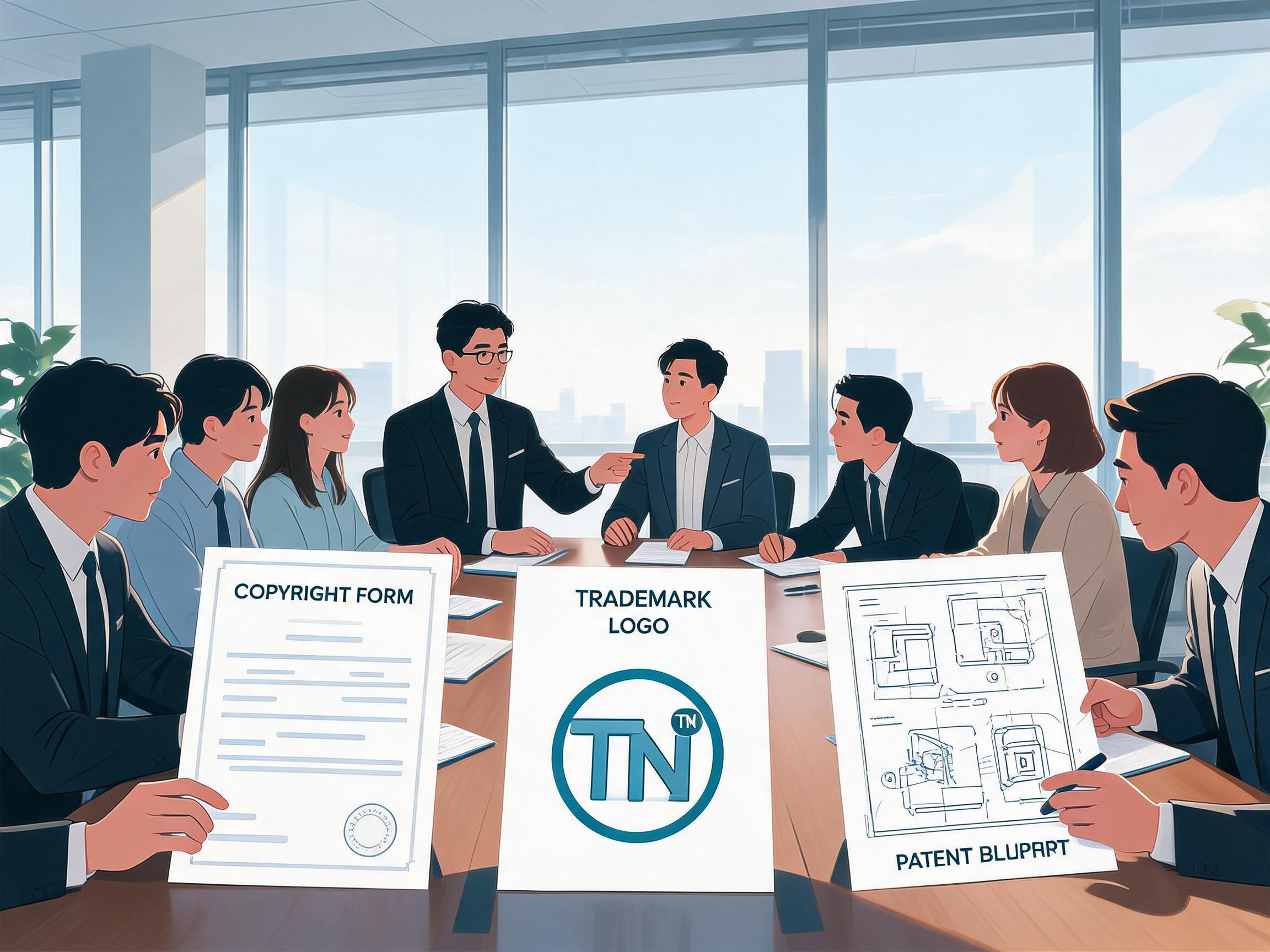
Article 13 patents for the purposes of this approach include patents for inventions, for practical new types of patents and for visual design。
Article 14 - pre-research
(i) before a research and development project is established, intellectual property authorities should conduct patent retrieval, analyse the current state of existing technology and the risk of infringement, and form the patent retrieval report
(ii) access to the national intellectual property office patent database, commercial patent database or commissioning of professional bodies。
Article 15 protection in research and development
(i) research and development personnel should complete the technology submission in a timely manner, recording technical programmes, experimental data, etc. In the r&d process, which should be archived by the intellectual property administration
(ii) in the case of unpatented technological results, the company should take confidentiality measures (e. G. Entering into confidentiality agreements, restricting access rights) to prevent disclosure。
Article 16 patent applications and approval
(i) inventions made in the course of an employee's work, which are eligible for patent applications, should be submitted to the intellectual property authorities in a timely manner, together with the patent application documents (including patent requests, instructions, claims, maps, etc.)
(ii) a formal review by the intellectual property authority upon receipt of the application document and the admissibility of the required documentation
(iii) post-admissibility patent applications, with substantive reviews by relevant technical and legal experts organized by intellectual property authorities, including on technological innovations, novelties and practicalities
(iv) a patent application, subject to a substantive review, is submitted to the intellectual property rights management board for approval or decision。
Article 17 patent protection
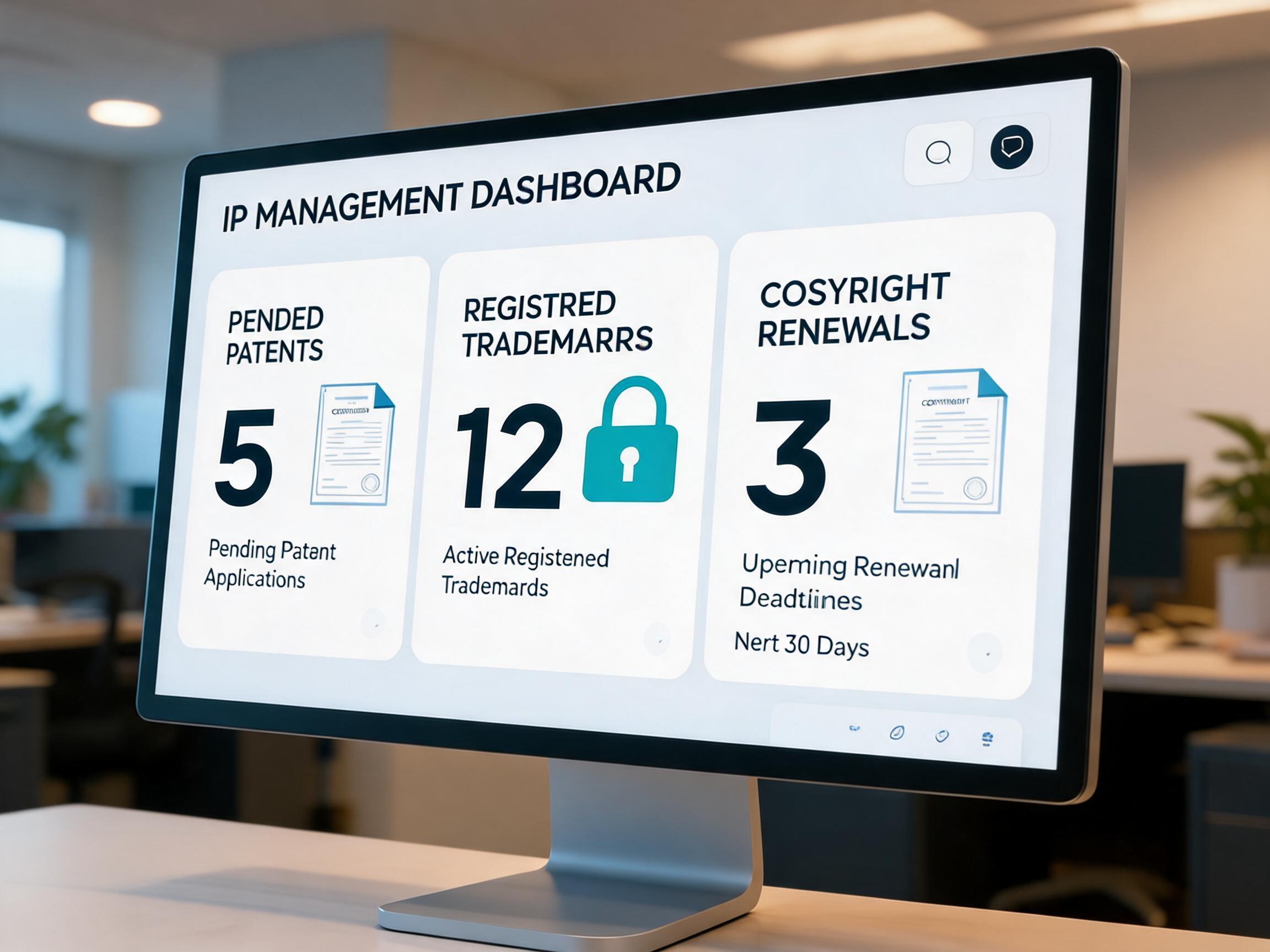
(i) the administration of intellectual property is responsible for the management of the payment of annual royalties and regularly reminds them of the timing of the contribution to ensure the validity of the patent
(ii) establishment of a company patent information database, regular analysis of patent information and decision-making support for company technology development, market competition, etc。
Article 18 patent enforcement and conversion
(i) encouraging the enforcement and conversion of mandated patents within companies to enhance their economic efficiency
(ii) for patented technologies with market prospects, intellectual property authorities should actively promote their industrialization, technology transfer, licensing, etc。
Article 19 patent tort prevention and treatment
(i) intellectual property authorities are responsible for the early warning of patent infringement and the timely identification of possible risk of infringement
(ii) in the event of a finding of a violation of a company's patent, take timely measures, including collection of evidence, settlement with the infringer, prosecution, etc., to safeguard the legitimate interests of the company。
Chapter v trademark management
Article 20 trademarks, as defined in this approach, are any sign capable of distinguishing a company's goods or services from the goods or services of others, including words, graphics, letters, numbers, 3d symbols, colour combinations and sound, and a combination of the above elements。
Article 21 registration of trademarks
(i) companies should pre-register core trademarks (including main trademarks, defensive trademarks) according to the range of products/services, so as to avoid other people's misalignment
(ii) upon completion of the trademark design, a timely trademark search should be conducted to assess the feasibility of registration
(iii) for products/services with international business needs, international trademark registration should be requested, including through the madrid system。
Article 22 use and regulation of trademarks
(i) when using a company's registered trademark, departments should use it strictly in accordance with the scope of goods/services authorized for use in the registered trademark and the trademark drawings, and must not alter the registered trademark
(ii) intellectual property authorities should establish trademark use files, record evidence of trademark use and provide support for trademark renewal, advocacy, etc.
(iii) market sectors should focus on market dynamics and promptly identify and report possible trademark abuses or abuses。
Article 23 maintenance of trademarks
(i) the administration of intellectual property is responsible for the maintenance of trademarks after registration, including the renewal, alteration and transfer of trademarks
(ii) establishment of trademark monitoring mechanisms, regular monitoring of trademark announcements, timely detection of applications for registration of trademarks identical or similar to company trademarks, and adoption of measures such as protest, declaration of invalidity, etc。
Chapter vi
The copyrights referred to in this approach include works created by the company and its employees, works, product designs, computer software, photographic works, training materials, etc。
Article 25 registration of copyrights
(i) computer software, engineering designs, product designs, etc., completed by the company should be registered in a timely manner and title certificates strengthened
(ii) intellectual property authorities are responsible for organizing the registration of copyrights and for the creation of archives for copyright management。
Article 26 computer software management
(i) computer software developed or commissioned by a company, which should be registered in a timely manner upon completion of development
(ii) commercial software used by the company should ensure that the right software is authorized and that unauthorized software is prohibited
(iii) software developed within the company should provide for the confidential management of technical information such as source code, documentation, etc。
Article 27 copyright
(i) when a company publishes or uses a work, it shall ensure complete rights or full authorization
(ii) employees of the company shall have prior authorization to use the contents of copyrights owned by others and shall not use them without such authorization。
Chapter vii. Management of business secrets
Article 28 business secrets for the purposes of this scheme are those of technical information, business information, such as information that is not known to the public and that is of commercial value and that is subject to appropriate corporate confidentiality measures。
The scope of commercial secrecy includes, but is not limited to:
(i) technology information: technical programmes, process processes, formulations, design drawings, experimental data, know-how, etc.
(ii) business information: customer lists, procurement information, pricing strategies, marketing plans, financial data, management information, etc。
Article 29 confidentiality
(i) establishment of a confidential management system for companies, identification of confidential persons, establishment of confidential registration and access rights
(ii) clearly define the scope of the classified information and establish the level of confidentiality, duration and requirements for transmission, preservation and destruction
(iii) clarify the areas involved and define the scope of activities of clients and visitors, etc。
Article 30 personnel management
(i) confidentiality agreements and competitive restraint agreements between companies and their employees
(ii) upon separation from service, staff members shall pass confidential information and sign a confidentiality undertaking
(iii) upon entry into service, new employees shall be notified of the protection of commercial secrets。
Article 31 information management
(i) company-related information should be graded according to the level of confidentiality, with different access rights
(ii) the transmission of confidential information shall take place through safe channels designated by the company
(iii) preservation of confidential information shall be subject to corporate confidentiality requirements and destruction shall be recorded。
Chapter viii - incentives and incentives for intellectual property
Article 32
A one-time award is granted to r & d staff who apply for a patent:
Patents for inventions: $3,000 per item
Practical new patents: $1,500 per piece
Appearance design patents: $800 per piece
Article 33 authorized awards
After the patent authorization, additional incentives are given to the inventor or designer:
Patents for inventions: $8,000 per item
Practical new patent: $3,000 per piece
Appearance design patents: $1,500 per piece
Article 34 conversion awards
Following the conversion of iprs, r & d teams are rewarded by a percentage (5-10 per cent) of the conversion proceeds。
Article 35 trademarks and copyright awards
(i) a one-time reward of $1,000 to $3,000 for designers and operators who have been granted registration of trademarks
(ii) copyright for computer software, with a one-time reward of $1,000-2000 for developers。
Article 36
(i) integrating intellectual property work into the staff performance appraisal system, giving added credit to employees who have performed well in intellectual property creation, application, protection, etc.
(ii) give priority to highly performing intellectual property workers in terms of promotion, post adjustment and remuneration。
Chapter ix training in intellectual property rights
Article 37 training requirements
(i) companies should organize no less than two training sessions annually on intellectual property rights, including laws and regulations, institutional processes, risk control, etc.
(ii) new employees should be offered basic intellectual property training on the intellectual property regime and confidentiality requirements
(iii) research and development personnel should receive specialized training in patent retrieval, technology presentation, etc。
Article 38 training
(i) basic knowledge of intellectual property laws and regulations
(ii) corporate intellectual property management systems and processes
(iii) intellectual property claims and protection practices
(iv) commercial secrecy protection requirements
(v) ipr infringement risk and prevention。
Chapter x intellectual property archives and contract management
Article 39 archives management
(i) intellectual property authorities should maintain complete intellectual property records, including application documents, certificates, contracts, contributions, etc.
(ii) intellectual property archives should establish regulatory authority in accordance with the level of confidentiality and introduce a loan registration system
(iii) intellectual property archives should be permanently preserved and important archives should be kept in both electronic and paper formats。
Article 40 contract management
(i) all types of contracts and agreements involving the intellectual property of a company shall be subject to review by the intellectual property administration
(ii) intellectual property authorities should establish intellectual property contract files to track contract performance
(iii) foreign contracts for technology development, technology transfer, technology licensing, cooperation, etc., should specify the terms of ownership, use, distribution of proceeds, etc. Of intellectual property rights。
Chapter xi intellectual property risk and dispute management
Article 41 risk prevention
(i) companies establish intellectual property risk identification and response mechanisms to protect against the risk of intellectual property abuse and loss in research and development, production and operations
(ii) intellectual property authorities should conduct periodic risk assessments of intellectual property rights to form risk assessments。
Article 42 settlement of disputes
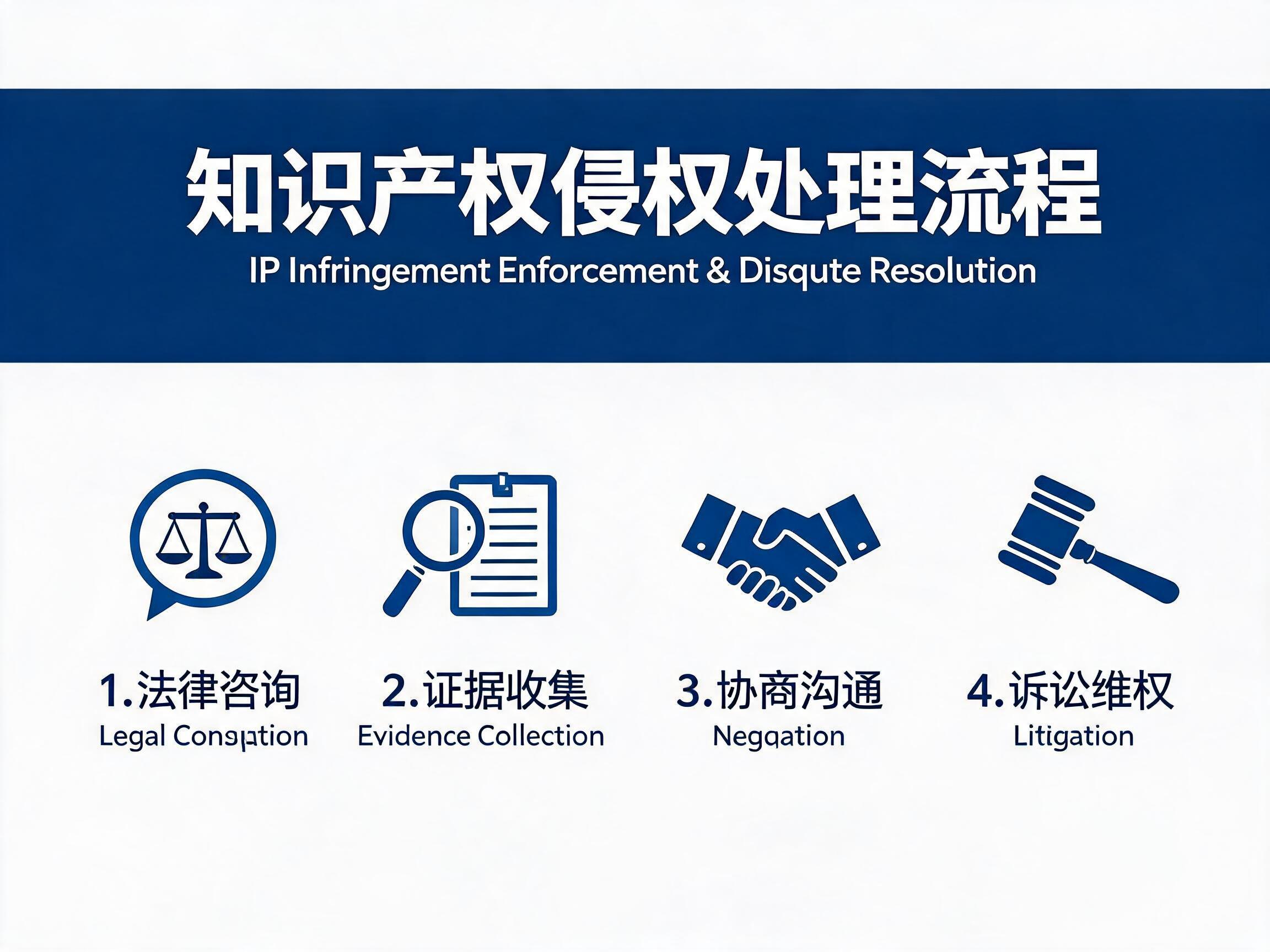
(i) where an infringement of a company's intellectual property rights is found, the intellectual property authority shall immediately organize the collection of evidence to assess the impact of the infringement
(ii) to defend corporate interests by means of negotiated settlements, administrative complaints, litigation, etc., depending on the violation
(iii) where a company has been sued for abuse, the intellectual property authority, in conjunction with the legal authorities, should respond positively, assess the risk of abuse and develop a response programme。
Chapter xii. Accountability
Article 43. Economic liability shall be imposed by the company, in violation of this scheme, for theft, theft, alteration, illegal occupation or other infringement of the company's intellectual property rights, or for the infringement of the company's intellectual property rights. (c) to report the offence promptly to the judicial authorities。
Article 44: perpetrators who are employees of the company shall be ordered to correct them and be held accountable to those directly responsible and to the principal officials of the department; in case of loss, they shall be held financially liable。
Article 45 an aggrieved person who is not an employee of the company shall be required to cease the violation and be held liable; if the damage is caused, the damage shall be compensated. If necessary, the matter is referred to the public authorities or addressed through legal means。
Chapter xiii
Article 46 this approach is the responsibility of the intellectual property authorities for interpretation and revision。
Article 47. Each department may draw up implementing rules in accordance with this approach。
Article 48 this procedure shall be subject to national laws and regulations in the event that it is inconsistent with their implementation。
Article 49 this scheme shall apply from the date of its publication。
Hello, i amHr









