Mechanical equipmentRepair and maintenance
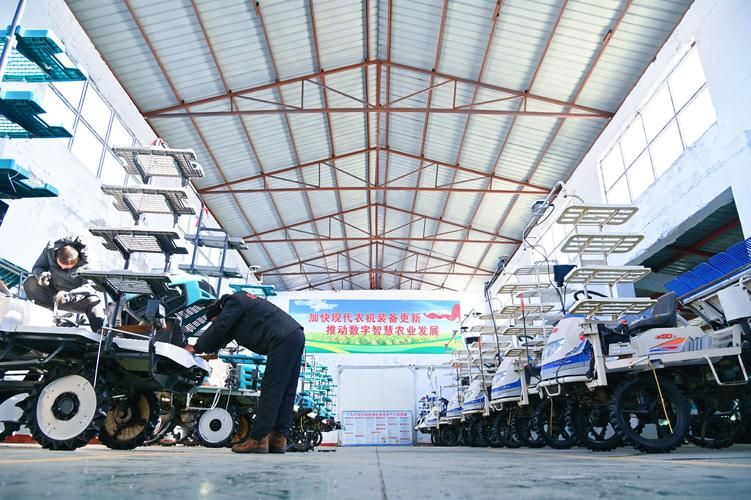
Mechanical equipment is an important tool in industrial production and has a significant impact and impact on the efficiency of industrial production and on the productivity of industrial enterprises. In particular, with the development and advancement of modern industrial technologies, the use of machinery in industrial production has become more widespread and important. Reasonable repair and maintenance of machinery not only has a positive impact on the efficiency of industrial machinery production, but is also an important safeguard for the proper operation of industrial production。
It's been mechanical since the last centuryMaintenanceFrom passive to active, from the use phase to the use of mechanical equipment, from single operations management to system engineering management, from physical maintenance safeguards research to pre-maintenance safeguards research, from decentralized, qualitative, empirical to systematic, quantitative and scientific。
1 mechanical equipment maintenance technology
1. 1 some common diagnostic techniques after mechanical equipment malfunctions
(1) primary diagnosis, also referred to as summary diagnosis, is the rapid judgement and evaluation of the equipment by the on-site service personnel following minor equipment problems。
(2) a precise diagnosis, specifically, if the operator is unable to resolve the problem after a brief diagnosis, requires feedback back to the factory and the technical staff concerned to determine the occurrence of the anomaly and its causes。
(3) functional and operational diagnostics, which refer to new equipment or post-maintenance equipment, determine whether the diagnosis is functional and adjust the mechanical equipment to the corresponding results. It is clear that the operational diagnosis is the monitoring of the malfunctioning of the operational equipment
(4) periodic diagnostics, which refer to the regular presence of enterprises in the critical areas of user equipment
(5) direct and indirect diagnostics, which are like each other, determine directly the state of critical parts of the equipment in the event of a failure of equipment, but because of the limitations of the receipt of mechanical equipment and its working conditions, direct diagnosis cannot be achieved directly and needs to be achieved through indirect diagnostics, i. E. Indirectly the state of critical parts of the equipment through the secondary effects of the source of the failure。
1. 2 common maintenance methods for equipment
(1) planned maintenance, also known as periodic maintenance, is essentially a passive, planned maintenance approach that is appropriate for some equipment that is already aware of the pattern of failure. However, this type of maintenance is very limited, for many reasons, because of the quality of the equipment itself, the different environments in which the equipment operates and the different professional qualities of the personnel operating the equipment, among other external factors, which may cause some of the equipment to be damaged before it reaches the maintenance period, if it is clearly inappropriate to maintain it on a cycle basis, which does not meet normal production needs。
(2) aftercare, also referred to as repairs. Unplanned maintenance when the equipment fails or when the accuracy and properties of the equipment are sufficient. Such maintenance would generally be required to minimize downtime and increase equipment utilization. The after-action repairs were mainly for critical parts of the malfunctioning equipment rather than for the entire equipment. This type of repair is the most common one in the enterprise maintenance department, which is a passive maintenance, and has certain limitations for equipment that has had little impact on overall production as a result of equipment problems。
(3) preventive maintenance, also known as state maintenance. This is a positive, proactive approach to maintenance. This is done through the use of a number of targeted detection instruments and sensory capabilities, improved preparedness based on routine inspections of mechanical equipment, state monitoring, operational status of equipment etc., timely maintenance arrangements, reduced probability of failure, and continued good operation of equipment. Such maintenance is particularly applicable to equipment that is frequently applied and, in the event of failure, has a significant impact on overall production。
3 measures for maintenance of mechanical equipment
(1) cleaning
Cleaning is the requirement that all parts of machinery remain oil-free, dirt-free, dust-free and reduce wear and tear of sports parts。
(2) tightening
Tightening is the timely checking of connections in the airframe departments. Vibration generated by mechanical operation can easily loosen the connection, if not secured in a timely manner, not only by spilling oil, leaking water, leaking gas and leaking electricity, but also by deforming the parts by changing the light distribution of the stress of the original design components, and by breaking and separating the parts of the heavy ones, leading to a mechanical accident due to a failure of manipulation。
(3) adjustments
Adjustments are the relative relationship and working parameters of a large number of parts of machinery, such as spacing, itinerary, angle, pressure, flow, ease, speed, etc., for timely inspection adjustments to ensure the proper functioning of the machinery. In particular, the flexibility and reliability of critical equipment should be adjusted to prevent accidents。
(4) lubrication
Lubrication is the selection and regular injection or replacement of lubricants, as required by the regulations, in order to maintain good lubrication between mechanical sports parts, reduce wear and tear of the parts and ensure the normal functioning of the machinery. Lubrication is an essential operational element of mechanical maintenance。
(5) preservative
It is to protect against tide, rust, acid, and to prevent the erosion of mechanical parts and electrical equipment, especially in the form of coatings or oil coatings.
4. Maintenance of mechanical equipmentTechnical analysis
4. 1 mechanical maintenance and maintenance of main axle components
The main axis component is an important component of the mechanical part of the numerically controlled machinery, consisting mainly of the main axis, bearings, acoustic stopping units of the main axis, automatic tightening and crumb removal units. The lubrication, cooling and sealing of the main axis parts of the machine bed are some of the issues that deserve attention in the use of the machine bed and in mechanical maintenance. First, good lubrication can reduce the working temperature and extend the useful life of the bearings; for this purpose, operational use should take into account the use of grease, fluid cycle lubrication at low speed and oil fog, oil and gas lubrication at high speed. However, in the application of grease lubrication, the load of the main axle bearings is usually 10 per cent of the space volume of the bearings, with no incentive to fill it as it is too much, which increases the heat of the main axle. For oil cycling lubrication, the main axle lubricating hot tanks are checked daily in operational use to see if the oil is sufficient and if not, the lubricants should be added in a timely manner, and care is taken to check whether the temperature range of the lubricating oil is appropriate. In order to ensure good lubrication on the main axis and to reduce friction heat while allowing the heat of the main axial components to be removed, a circular lubricating system is used to provide oil lubrication with hydraulic pumps and to control the fluid temperature of the tank with oil temperature。
4. 2 mechanical maintenance and maintenance of moving facilities
The main electromechanical components that enter the transmission body are electrical motors and detection components, speed-reducing units, roller-skeletal screws, wire bearings, motor parts (workstations, main axle boxes, poles, etc.). The problem of mechanical maintenance and maintenance of the spinach screws is described。
(1) adjustment of the gap in the subaxis direction of the rolling stock bar. In addition to the requirement for movement accuracy in a single direction of the rolling stock bars, there are strict requirements for a axis gap to ensure reverse moving accuracy. Therefore, in operational use, care is taken to remove the axial gap caused by the wear and tear of the co-heavy of the bar. Double-sniffed gaskets, which are simple, reliable, rigid and most widely applied, can be pre-adjusted in the form of gaskets in the inter-snacks by the specialized production plant in accordance with user requirements and are easily handled when used。
(2) daily inspection of the sealing and lubrication of the spinal screws. The day-to-day sealing and lubricating check of the spinal screws is a matter for our operational attention. For the sealing of silk bars, care is taken to check the seals and shields in order to prevent dust and impurities from entering the spinal cords. For spinach nut lubrication, when oil is used, it is regularly lubricantsed, and when lubricated, care is taken to often inflate the oil through the acreage。
Mechanical maintenance and maintenance of the machine-bed track
Mechanical maintenance and mechanical maintenance of the machine-bed track are primarily protection against lubrication and guidance。
(1) the purpose of the orbital lubrication is to reduce friction resistance and friction in order to avoid low-speed creeping and lower temperature temperature. So the lubrication of the track is important. For the slide track, lubricant is used; for the roll track, lubricant or lubricant is available。
(2) the protection of the orbit shall be carried out in such a way as to prevent shredding, grinding or cutting fluids from being dispersed on the surface of the track, otherwise it may lead to increased wear, bruises and rust. To this end, day-to-day inspections of guidance devices should be observed to ensure the protection of the orbit。
Concluding remarks
Mechanical equipment has a very important role and impact in industrial production and engineering. It is important and valuable to carry out repair and maintenance analyses of mechanical equipment, to improve the level of repair and maintenance of mechanical equipment, to improve the efficiency of industrial production and engineering and to promote socio-economic development。