


Next, let's exploreReal estateCore knowledge in the field。
1. Real estate overview
Real estate, also referred to as immovable property, covers both property and property properties, specifically land and attachments thereto. The property is closely linked to the property, which together constitutes the integrity and indivisibility of the property。
2. Real estateProperty rightsDetail
Real estate property rights relate to the full range of the owner's interests in the house and the land it occupies, including possession, use, proceeds and disposal in accordance with the law. Together, these rights constitute the owner's overall control over real estate。
3. Exploration of land tenure
Land tenure grants exclusive land tenure rights to land users, covering a wide range of development, benefits and disposal. The government grants the right of use of state land to users within a certain number of years, including through auctions, tenders or agreements. After expiry, if the land is used for the cityPlanningUsers may apply for renewal and continue to use it after approval and payment of the land price。
4. Real estateMarketMultiple composition
The real estate market covers a wide range of areas, such as sales, leases, and is further subdivided into primary, secondary and tertiary markets. The first-tier market is dominated by the state land administration, which cedes land use rights to developers or landowners by agreement, tender or auction. The secondary market is the place where developers transfer built houses and their land tenure rights to units and individuals. Third-tier markets, on the other hand, focus more on real estate transfer, mortgages and leasing activities between units and individuals, and are further transactions based on secondary markets。
5. Classification of land types
Depending on the nature of their use, land is broken down into such categories as residential, commercial, industrial, warehousing, integrated land use, as well as public facilities and free collection of funds, micro-housing land, etc。
6. The concept of parity
At the basic stage of real estate development, it is essential to ensure access to water, electricity, roads and the levelling of the site, which is known as the “two-to-one”。
7. The meaning of seven centimeters
To further facilitate the smooth progress of the real estate project, the fullness of the seven infrastructure facilities is known as “seven to one level”, namely, access to water, water, sewage, drainage, roads, communications, gas and electricity, as well as site levelling。
8. Role of the land administration
The land administration, as the government department that exercises the rights of landowners on behalf of the state, regulates the real estate market and industry。
9. Functions of notaries
As the certifying authority of the state, the notary's core function is to provide notary services for all types of legal matters and to ensure the legality and fairness of transactions。
10. Duties of the property registry of the land office
It focuses on the initial registration of real estate, transfer registration, mortgage registration and property rights procedures such as change, inheritance, gift, etc., and is an integral part of real estate transactions。
11. Real estate certificates are documents that combine home and land ownership
12. Commodity housing is the property that the developers have acquired land use rights at market prices to develop and circulate in the market with the approval of the state administration
Such property may receive an independent property certificate and may be transferred, rented, inherited, mortgaged, gifted and exchanged。
Double-houses are a special type of property, characterized by a combination of upper and lower floors, which differ in structure from standard houses。
We will then explore some of the concept of the size of the property:
114. Total building area
This refers to the sum of the floors of the buildings, calculated on the ground floor at the level above the outer wall angle and on the level above the outer wall。
125. Construction area
This refers primarily to the level of space enclosed on the outer wall of the dwelling and, in the case of upper houses, to the addition of the floors. It includes the area available to the household, the area of the wall column on the ground, the area of the stairway and other communal areas。
136. Use area
This refers specifically to the net area of the dwelling that is directly available to the household, including the area under special regulations, such as the inner stairs, and the thickness of the interior wall。
147. Public area
This refers to the total amount of space occupied by the public corridor, stairs, elevators, etc., within the dwelling, which facilitates the household and secures its livelihood. At the time of the sale of a commercial house, the calculation of the building area would involve the allocation of public space。
158. Useful area
It refers to the net remaining area after the deduction of the public share of the area, whereas the interior area is the concept of further deduction of occupied space, such as columns, walls, etc., on the basis of the functional area。
169. Base area of houses
This refers to the area of the projection of the outer level above the bottom foot of the building, i. E. The horizontal area of the floor of the building in contact with the ground。
175. Construction density
This refers to the sum of the base area of all buildings in relation to the total area of a given plot。
186. Volume rate
This is the ratio of the total area of all buildings on the plot to the area of the plot。
197. Red line figure
It is also commonly referred to as a “tangible map”, which is a scale map of topography. This map details the location, boundaries and size of a plot. The government land administration will grant them to the land-use rights holders to ensure that the recipients carry out construction and construction only within the red line. In addition, the map, which is also an annex to the land-use contract and real estate registration card, reflects in detail the general situation of the plot, including the boundaries of tenure, the location of the boundary site, the location and nature of the building within the plot, and its relationship to the adjacent land. The accompanying chart of the certificate, which is attached to the real estate certificate, is also an integral part of the real estate certificate and is primarily used to reflect the real estate status of the holder of the right and his or her place of residence。
208. Pre-sale licences
It is a document that must be processed when the house is sold before it is constructed. The developers are required to submit the material to the land office for approval before pre-sale of the building。
If the house is to be pre-sold abroad, an export licence is required for the sale。
Contracts for the purchase and sale of goods
It is an agreement drawn up by the relevant government departments to clarify the rights and obligations of both buyers and sellers. The sale of all commodity houses must be based on this contract。
221. Real estate mortgage contracts
It is an agreement to clarify the rights and obligations of the parties in real estate mortgages, usually concluded jointly by banks, owners and developers。
Bank mortgages
It refers to an economic act agreed upon by the purchaser with the bank at the time the building was purchased. In the process, the purchaser pays part of the building, the remainder being paid by the bank, while the purchaser's ownership of the building is mortgaged to the bank, after which the purchaser is required to repay the bank's loans and interest in instalments。
243. Pre-sale buildings hana
Also known as pre-sale, it is a sales strategy for real estate operators. When developers obtain land for construction and carry out construction work on the basis of government-approved construction drawings, and invest more than two thirds of the total investment in development (excluding land prices), they can apply to the real estate property registry and register for pre-sale. Once approved, pre-sale activities can be carried out。
254. Model rooms and demonstration units
It is a reference provided by developers for home buyers. These rooms are structured in the same way as the actual houses, but the standards for their renovation are based on the developers ' building books. It should be noted that the demonstration units may differ from the renovation of the model rooms and are designed to provide different inspiration for the customers。
265. Property management
It is an important component of the marketization of real estate management and covers both types of maintenance and business management. The core of maintenance property management is the provision of a good living and working environment for owners, including maintenance and repair of buildings and electrical and mechanical equipment, policing, fire safety and environmental health services. Operational property management, on the basis of this, achieves investment recovery and profit-making goals, for example through rental property。
276. Real estate assessment
This means that the market value and price of the property is determined by a comprehensive analysis using the expertise and methodology of the real estate valuationr, based on the relevant information and data on the real estate. In the course of the assessment, the appraiser selects the appropriate assessment methods, such as market comparison, yield reduction, residual and cost methods, to ensure the accuracy and fairness of the assessment results。
Bank promissory notes
It is an instrument issued by a bank, which a payer can obtain when the money is deposited in the bank for the purpose of settling a transfer or collecting cash. The instrument is valid for one month。
Bank drafts
Also issued by a bank, unlike a promissory note, it applies to money remitters who, after depositing funds in a local bank, travel to a different location to settle transfers or to collect cash. The order is valid for the same period of one month。
309. Bank cheques
An instrument issued by a bank depositor to the payee. The recipient may hold a ticket to the bank for the transfer or entrust the bank to pay the money directly to the recipient. The cheque is valid for 10 days。
310. Powers
Reference is made to the attribution of ownership, use and other related rights to real estate through a series of registration processes, in accordance with the relevant legal and policy provisions. These procedures include real estate declaration, tenure survey, cadastral survey, clearance, registration and certification。
321. Survey of tenure
It covers a wide range of elements and is the process of undertaking a comprehensive review of real estate tenure. The matters investigated included the legality of land sources, compliance with land tenure, and whether buildings were layered, oversized, structurally modified or used. In addition, there is a need to recognize the rights holder, the nature of the rights, the source of tenure, the time of acquisition, the years of use and information on the status of the rights, their change, their use, value, rank and location。
332. The concept of the land and the title of the land
Land is the smallest unit in cadastral administration and refers to plots that are closed by the limits of tenure. The original title is used to identify the number of each plot。
343. Land-use requirements
In accordance with the relevant state policy, land use is subject to a land use contract with the land administration, which varies according to type. For example, residential land is 70 years old, industrial land is 50 years old, and commercial, tourist, recreational and other land is 40 years old。
354. Importance of real estate registration
Real estate registration is not only an important tool for real estate property administration, but also a statutory procedure established by the government to strengthen the rule of law and improve real estate administration. It has three main roles: to confirm the tenure status of real estate, to safeguard the legitimate rights and interests of rights holders and to strengthen the regulation and supervision of real estate transactions。
35. What are the legal effects of real estate registrations
Real estate rights registered by law are expressly protected by law. Once the real estate right has been approved for registration, it is officially recognized in law. The owner is thus entitled by law to exercise the power to occupy, use, profit and dispose of real estate, and no other person or organization has the right to interfere or obstruct it. In case of violation, the owner may seek legal protection in accordance with the law。
What is the importance of the real estate certificate
The real estate certificate grants the owner a range of rights and interests as a legal document for the right-holder to administer and dispose of the real estate. In the possession of this document, the owner may administer, operate, use and discipline real estate in accordance with the law, without any interference or hindrance by other individuals or organizations. If a person violates the relevant legislation, the owner may legally defend his or her rights and interests。
37. What is the process of registration of real estate
The registration of real estate follows a series of steps: first, the application is made, then the relevant documents are received and reviewed by the registration authorities, the title survey and the legal notice is made. Once real estate rights have been recognized, the matter of authorizing registration will be recorded in the real estate register and a certificate of real estate rights will be issued after charging fees and will be filed。
38. How do you apply for real estate registration
The relevant regulations of the changchun city land administration shall be followed when applying for registration of real estate. The applicant is required to submit the application and the necessary documents to the registration authority, which will approve the registration within a specified time period and issue a certificate of real estate rights after the review meets the requirements。
39. Can real estate registration be commissioned
An applicant may entrust another person with the registration of the real estate application. A notarized power of attorney must be submitted to the registration authority if the agent acts。
How do we determine the length of land use when the same building is not functional at the same time
In the case of a difference in the use function of the same building, the number of years of use is determined in accordance with the principle that, where a land contract exists, it is based on the number of years specified in the contract; otherwise, it is registered on the basis of the functions for which the maximum use period is specified. For example, if a building has both a home and a mall, the number of years of land use will be registered according to the years of residential use。
Can market houses be purchased and how
Citizens of the country who have a legal identity are eligible to purchase goods in the long spring. However, for those under 18 years of age who lack civil capacity or whose civil capacity is restricted, they must provide proof of the relevant guardianship relationship and the identity of the guardian。
Are there any limits on the share that multiple co-owners hold when they share in the purchase of a commodity house? In practice, this is left to the sole discretion of the buyer, without any restrictions。
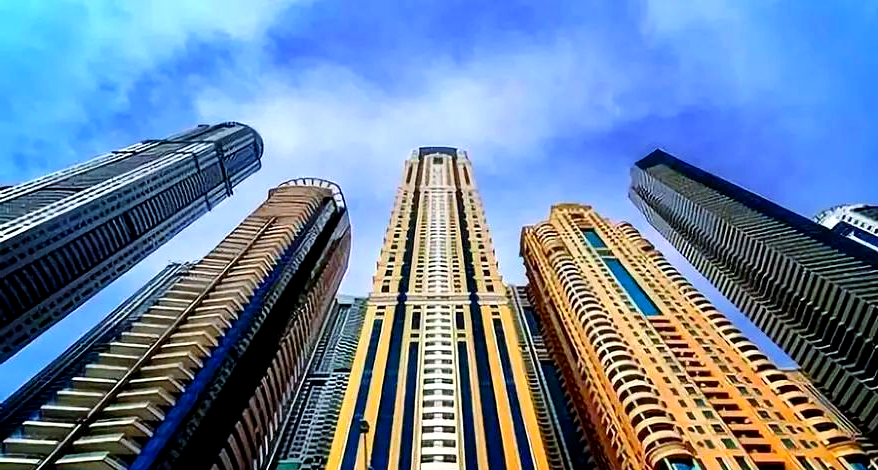
For multi-story and upper-story divisions, elevators are usually used as the standard: buildings on and below the 7th floor and without elevators are classified as multi-story; buildings between the 8th and 20th floors are defined as small-story; buildings above the 20th floor and not above 100 m are referred to as upper-story; and buildings above 100 m are classified as super-story。
And then we're going to look at a few common forms of architecture。
The form of construction, that is, the way in which the building is supported by its own weight, is essential for understanding the characteristics and performance of the building. Brick structures are wall-based; multi-storey structures are more of a framework structure, i. E., walls are not heavy, but are supported by components such as beams, columns, plates, etc. In addition, the structure of the shear wall is widely used in high-rise buildings, using reinforced concrete walls as a re-constructor. For upper buildings, cartridge and steel structures are two common forms of construction. The drum structure is heavy and stable through steel-concrete walls in the form of synthetic drums, while the steel structure is supported mainly by special steel。
Common problems in civil construction and their causes
The leaking of the outer wall is more common in the houses of the frame structure, mainly due to uneven levels of sand filling in the walls, poor construction quality of bricks, inappropriate construction methods of bricks (e. G., too well-structured brick lines without staggered brick interfaces) and inappropriate slurry batching processes (e. G., upper ones when the lower slurry is not dry)。
Water permeation of window frames is also a common problem, usually due to the fact that the window frame is not filled with compact slurry at the end of the outer wall or that the form is distorted by quality problems. In addition, break-downs and barrages of the inner wall may have resulted in the drying of the slurry section of the inner layer due to inadequate process time。
During the construction period, the openings of pipes were not blocked with a specially designed plug or were not closed, which could lead to the entry of miscellaneous items into the pipes, resulting in a lack of flow of water. At the same time, water tanks on the roof of the building are too small, have insufficient water levels or are not pumped with sufficient capacity, which may also lead to insufficient water pressure。
In addition, the use of non-qualified zinc plating pipes can lead to rust in the walls of the pipes, which in turn produces yellow water. The lack of sufficient time reserved at different levels during the concrete floor splitting process, as well as the uneven deposition of sub-surface buildings, may lead to ground fragmentation。
406. Definition of infrastructure and ancillary facilities
Infrastructure, including water, electricity, roads, communications, gas, etc., are indispensable in our daily lives. These facilities are designed to improve the quality of housing, such as clubs, swimming pools, courtyard gardens and children's parks。
7. Residential design and related concepts
(1) layout of living rooms and restaurants
The standard area of the living room is usually set at 16 to 20 square metres, which is suitable for the placement of the usual three sets of couches and ensures space comfort. The size of the restaurant, on the other hand, is generally controlled at 10 to 14 square metres, depending on the need to accommodate between 6 and 8 people。
(2) priorities for light and ventilation
In residential design, primary functional areas such as the living room and the main bedroom should be ensured to meet the basic requirements of light and ventilation. On this basis, light and ventilation conditions are optimized in other functional areas。
Basic structure of ministry of works personnel
The composition of the ministry of engineering typically includes managers (possibly structural engineers or construction engineers), chief engineers, structural engineers, construction engineers, drainage engineers, electrical engineers (in charge of multiple areas of power and weak electricity, such as lighting, air conditioning, elevators, etc., as well as telephones, television surveillance, fire alarms, security and computer networks), and pre-accounting engineers。
9. Core functions of the department of engineering
The ministry of engineering plays a vital role in the real estate development project and its functions cover the quality, cost and overall management of the construction of the site。
Duties of government departments in real estate development projects
Various branches of government play an indispensable role in real estate development. For example, the national land administration is primarily responsible for the approval, construction and inspection of land; the urban and rural construction commissions are responsible for the management of construction units, buildings and approval of construction procedures; the fire department is responsible for the approval of fire-fighting designs and the inspection and inspection of fire-fighting facilities; and the labour department is responsible for the receipt and inspection and maintenance of elevators. At the same time, the inspection and inspection of the quality of the work, the monitoring of environmental governance by the environmental protection agency and the inspection of safety measures at the construction site are important safeguards for the smooth running of the project。









