


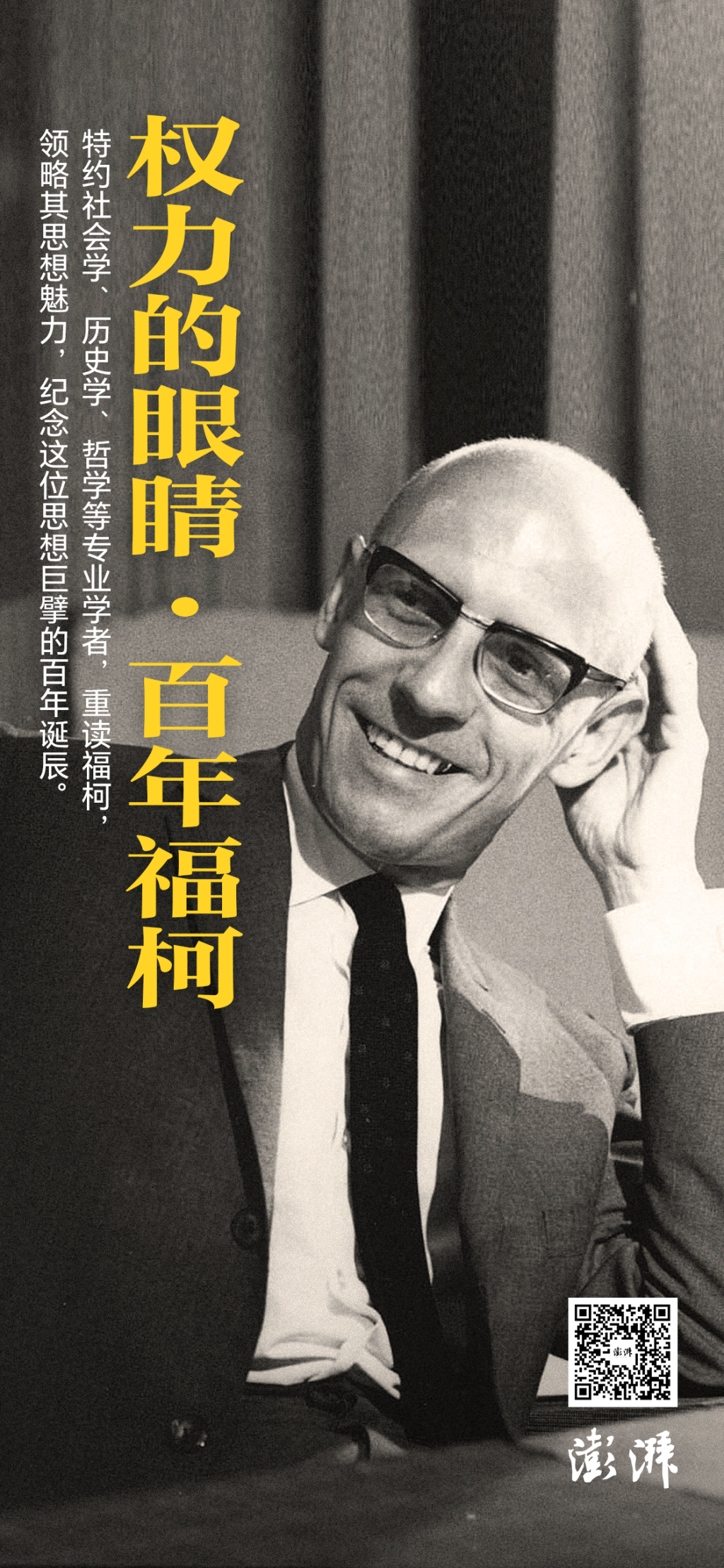
MichelleFoco(michel foucault, 15 october 1926-25 june 1984)ThoughtOne of his works, " madness and civilization " , " rules and punishment " , " words and things " , " knowledge archaeology " , " sex history " , etc., has created a deep ideological landscape that profoundly affects all areas of the human sciences. On the 100th anniversary of fukuo's birth, the news was launchedPowersThe topic of "the eye of the centennial fukuko" is devoted to sociology, history, philosophy and so forth。
“fukuo is a warrior who wants to conquer at least one piece, big or small, of the material or moral world”。
Foco's best friend paul weiner has used the word "warrior" more than once to describe foco. He believed that foco had never been a pessimist who wanted to destroy the world, but rather a fighter who was constantly fighting in the world in which he lived, “skinny, elegant and determined, but no one could force him to give up”. A spartan warrior and a japanese warrior, which is also fukuo's image。
Over the years, fukuo's experience of teaching and travelling around the world has been consolidated into books, providing us with a multifaceted, rich and sensitive image of fukuo. Like fukuko and iran revolution (2005), fukuko in iran (2016), which commented on fukuo's trip to iran, fukuo in warsaw (2017), which revealed the mysterious history of warsaw, fukuo in warsaw (2017), fukuo in california (2022), which recalled california's trip to death valley, and fukuo in brazil (2025), which combed five brazilian lectures. These fukuo profiles around the world spell out for us a different side from fukuo in university institutions. At the same time, fukuo's academic lectures and early manuscripts around the world are being collated and published, which, in addition to fukuo's writings and french academy lectures, provide us with clues for a better understanding of fukuo's academic landscape. Fukko's life has been a long way ahead of his academic career, and he's also hereDesireIn the political and life fields, there is a courageous and continuous practice. At the birth of fok-bok, this is the text of the biography, manuscripts, speeches, etc., outlining a brave man who moves forward, both in thought and action。
Subject of desire: another pleasure
At the beginning of the history of sexual experience, foco criticized sexual repression since the nineteenth century, but that did not mean that he did not agree with the claim that sexual desire was suppressed by power. The theory of sexual repression became the authoritative interpretation of europe in the 19-20 century, and friends and colleagues around foco, including foco himself, studied psychoanalytic theories and even received psychoanalytic treatment, and aldoser even received electroshocks, hypnotics and other psychotherapy. Fukuo, however, is critical of the psychiatric knowledge that has become mainstream and of the new social depressing consequences of its association with social power for individuals. If we adopt psychoanalytical analysis as a form of epidemiology, including what we are, and expect a psychoanalyst like his father to lead self-confident and guide spiritual practice, the psychoanalytical theory becomes another genus of sexual repression. The key, based on the fact that human beings are themselves shaped in all social relations and environments, is not to recognize whether sexual desire is repressed by social power, but to explore how sexual desire operates in ways that are linked to self-formation, and how people can understand and shape their desires。
As a result, fukuo excavated the concept of “aphrodisia” from history and tried to reshape the intellectual understanding of sexual experience from the use of pleasure. Aphrodisia comes from the ancient greek god of love and beauty, avroditi, a term that implies activity, behaviour and contact related to sexual pleasure. In ancient greek thought, pleasure activities need not be confessed or repented, nor absolutely prohibited, although this does not mean that ancient greek desire is a sign of laxity and lawlessness. Foco mentioned that what aristotle called “self-indulgence” in nico marcos ethics does not mean the quality of following up with physical pleasure, but rather with physical pleasure. Like the fragrance of flowers and the eager listeners of songs, they have delayed other activities because of their enthusiasm to do so, but they are not inflexible. Sensitization activities are part of the ethical practice of human beings and form an arena where forces compete and where people develop strategies for action that take into account proportionality, fire, quantity and timing. A sense of pleasure is characterized by moderation and timing, by the fact that people themselves dominate the place, time, object and frequency of the practice of sexual pleasure activities, and by the absence of a fixed law or morality to regulate desire. From the use and control of pleasure, human beings have evolved into a form of survival that is as beautiful and perfect as possible。
Fukko in real life, after becoming famous, did not deliberately conceal his attitude towards the problem of love. In the biographies of massey and miller, among others, there is very little ink in the description of life in the fukuo ave. However, fukuo in warsaw and fukuo in california present fukuo's desire experience with an exotic perspective。
In october 1958 fukuo was assigned to poland to reactivate the french cultural centre at warsaw university. During his time in warsaw, he was said to be “a man of great grace and dynamism who was wise, talkable and friendly”. However, the scholar, who had good relations with local polish officials and intellectuals, was suddenly ordered by the authorities to leave immediately in 1959 and left no job or record in warsaw. Leinsky's investigation found that foco left warsaw for reasons related to a secret document and a boy named jurek. During the warsaw period, fukuo had excellent relations with several young men, where he was not a cold philosopher, but a normal person who trusted others, enjoyed company and enjoyed youth. The polish man jurek, whom he trusted at the time, was an informant of the polish authorities, close to fokkow, gained confidence and owned the keys to the apartment at that time. He was with jurek when the polish police raided fuk at the bristol hotel, where they discovered their homosexual relationship. Fukko was characterized as “moral corruption” and was ordered to leave poland within 24 hours. It is a well-designed political trap by the secret police, relying on sexual scandals to suppress dissent and control diplomacy。
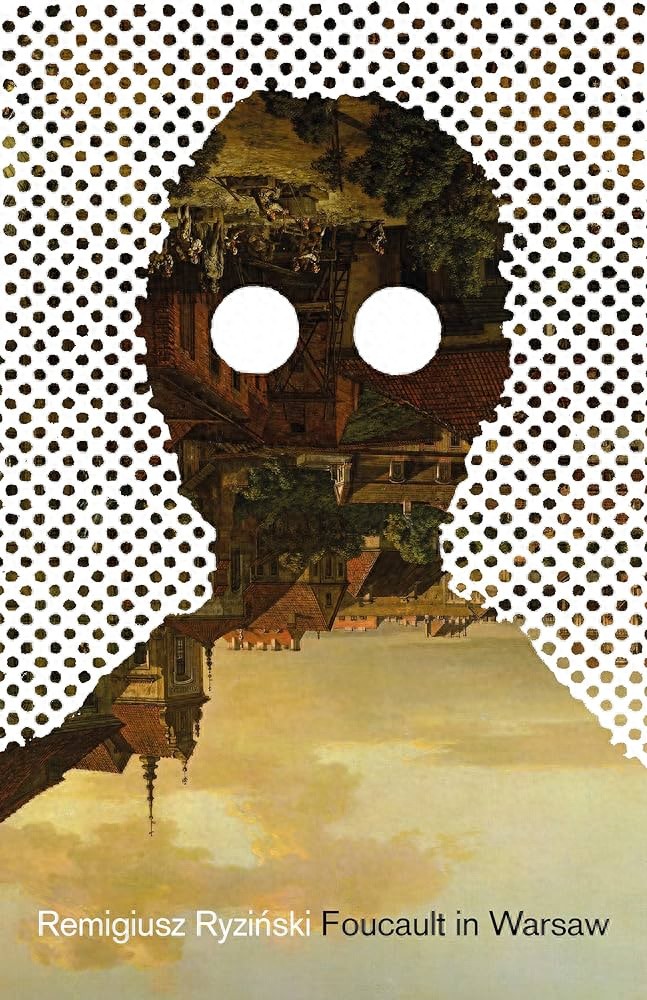
Homosexuality was not a crime in poland, but the secret police had established detailed homosexual files with the aim of creating blacklists and networks of informants to make them instruments of power. Fukko then kept a close eye on the warsaw experience, but he kept two photographs of urek. Through this man, whom diffel spoke sporadically, the author was able to choreograph his warsaw experience. This experience, like fukuo's “wide view prison” prototype, was in a centre under secret surveillance without realizing that the authorities were using their desire activities to control individuals and to transform ordinary people into tools for political activity. It is not difficult to understand fukuo’s critical depression, because social power not only suppresses sexual desires, but also controls individuals by stimulating, creating and controlling them. Sex and power are in themselves a cross-cutting race. It can be argued that much of the madness, exclusion, surveillance and sexual politics studied by fukuko stem from the traumatic experience in warsaw。
In stark contrast to the bitter, near-expulsion experience of warsaw, the california experience of fukuo between 1970-1980s. Fukuo has travelled several times to california for lectures and short tours, and he has publicly commented that “i love california, where so much intellectual freedom and dynamism exist”. The author of foco in california, wade, described his experience in 1975 of actively meeting foco and taking him to the valley of death for hallucinogenics. Fukuo has shown a strong interest in the diverse moments of life, with wade and others leading up to the california yoga and training, and then driving to the valley of death, where he takes hallucinogens and experiences madness. However, after experience, he did not think that california culture was a desirable way of life, “while he was still systematically engaged in academic work”, exchanges, lectures and seminars in american schools. Wade admitted that foco was “more like a fighter than a scholar”。
This trip to california made foco realize that california can be so different from paris in terms of life experience and sexual cultural practices. From the sexual minority culture in california and from the culture of self-respect, he found an individual's awareness of sexual desire and gradually began to make self-culture the subject of future research. Starting with knowledge of one's desires, people have increased control over and care for one's body, detached from social and moral norms in experiences of body, desire and sexual experience, and developed aesthetically meaningful style of self-life. From the point of view of academic thought and desire, fukuo is committed to constantly and actively shaping himself, “it seems that in his life he carries out both `know yourself' and `care for yourself'。
Political subjects: is resistance useful
“it was not the french storm of may 1968 that really changed me; it was the march 1968 campaign in a third world country”。
It is well known that fukuo is also an active political activist in addition to his academic status, although in academic thinking he rarely displays his own political attitude. Because he understands that supporting or opposing political ideas of all kinds is in itself merely a game of truth based on specific rules. His practical efforts in political life were aimed at creating resistance to political games and to the irrationalities of the system of authority. In his speech in 1978, “what is critical?”, he went out of his mind to question the operation of power in truth and sought to develop the technique of “voluntarily undisposed” in criticism. His five trips to brazil, his trip to tunisia and his experience in iran have all seen his attempts to seek “voluntarily undisposed” skills。
Fukuo in brazil documented five encounters with local politics in brazil. In 1965, fukuo first visited brazil, where a coup d ' état had taken place the previous year to establish a permanent state of emergency. That year, fukuo gave a first draft of the words and things at the university of são paulo, which was terminated early due to political turmoil. Then, in 1973, fukuo returned to rio de janeiro to give lectures on the forms of truth and justice and to discuss the role of mechanisms such as interrogation, torture, surveillance and police in the history of europe, each of which is implicit in brazilian authoritarian government practice. Fukuo came to rio for the third time in 1974 and publicly introduced for the first time the well-known concept of “political life”, thereby criticizing the use of medicine, psychiatry and political surveillance by authoritarian governments. When fukuo visited são paulo in 1975, when he saw the mass arrests and torture of teachers and students by the local military and police, he cancelled his curriculum and publicly declared a declaration of solidarity at student gatherings, breaking with the brazilian government. Then, in 1976, fukuo travelled to el salvador, rio, etc., and quoted marx's capitalism to tell about sexual history and the web structure of power in order to reach out to the left-wing audience in brazil and stand openly in the anti-dictator camp. Since then, he has not returned to brazil。
The french storm erupted in may 1968, but foco was not directly involved, as he was teaching at the university of tunis and saw a more brutal student movement there. In march 1968, president humphrey of the united states visited tunisia to provoke anti-american sentiment among students, and thousands of students gathered to protest the dictatorship and pro-american behaviour of the government. Student strikes and workers then joined the strike, creating a wave of cross-class protests. Many of fukuo's students were imprisoned and even tortured. As a result, fukuo was shocked by what he described as “a genuine political experience”. He tried to shelter the students at his residence and used diplomatic and political relations to implore the authorities to release them, but to no avail. Fukuo sees in north african students a “stimulating the will, the ability and the courage to be willing to make a total sacrifice, in which there is nothing to see any ambition to pursue power and self-interest”. In november 1968, fukuo concluded the course in tunis early and returned to france due to tensions. In paris at this time, the real revolution in the streets has retreated, but universities and intellectuals are in a fierce theoretical struggle. In contrast to what tunisia has seen, fukuo “stunned, shocked and disappointed”. He saw very different consequences, with young tunisians facing decades of prison sentences without equal sacrifice in the battle against the streets of paris latin。
Fukuo, in a subsequent interview with duccio trombadori, said that, since his trip to tunisia, he had decided not to participate in the endless and obscenity of theories in university circles, but to focus on the reality that requires his own personal commitment and physical commitment to confront real, clear and concrete realities. According to some scholars, the direct reason for fukuo's theoretical shift to power was not the storm of may, nor was it simply an internal criticism from the european intellectual community, but precisely what he had seen in tunisia. It was those specific political claims, those in the actual struggles that inspired foco, who subsequently joined others in setting up a prison information team, which in part facilitated his two trips to iran in the late 1970s。
In august and november 1978, fukko travelled twice as a journalist to tehran, where he observed at close range the ongoing iranian revolution. He published a series of articles and reviews in the italian evening post (corriere della sera) and the french left journal le nouvelle observateur, and admitted calmly that he was “born with a sense of protégé and witness to its power”. Fukuo and the iranian revolution and fukuo in iran both recorded fukuo's two journeys to iran, but adopted a different attitude: the former criticized foco’s support for iran, arguing that support for religion would lead to a reversal in the history of civilization, while the latter firmly defended foco’s political initiative, arguing that he did not support the religious revolution, but rather political developments on the non-western path. But both books agree that fukuo saw some sort of political spirituality that had disappeared long ago in the west, “a possibility that the west had forgotten since the renaissance and the great christian crisis”. The iranian people seek political protest with no consequences of their own, not in the interest of the present, nor in the belief of a certain ideology, but in the spirit of transcendence that has nothing to do with the present. This spirit seems to have disappeared in the west at the time of the “iron cage” predicted by weber. Fukuo's support for iran was criticized by many scholars at the time. After 1979, he became silent about iran's problems。
For a long time, more attention has been paid to fukuk's academic concept, to his political practices, or to the fact that they are merely the long-standing, floating and emptiness of political childhood among intellectuals. But life experience will profoundly influence and change the thinking of scholars about the world and academia, big and small. In the face of imperial, racial and custodial power experience, foco realized that only by using combat power and courageous and real action can he truly confront power face to face. Fukuo's theory of power has also undergone some transformation in the political struggles of these countries. He began in the 1970s with the idea of power relations as a set of war-style, unequally distributed productive forces; and it was in these experiences that he shaped his theory of power at the core of his theory of how to be less governed by resistance practices. These practices and reflections of resistance to power continue to be invaluable features in today's spiral of fascism in the world。
Main subjects of life practice: how can you make yourself a craft
“everyone has his own way of changing, or, in other words, his own way of understanding everything. In that regard, nothing is more arrogant than imposing its own rules on others. The way in which i maintain my inconsistency is the most unique of all”。
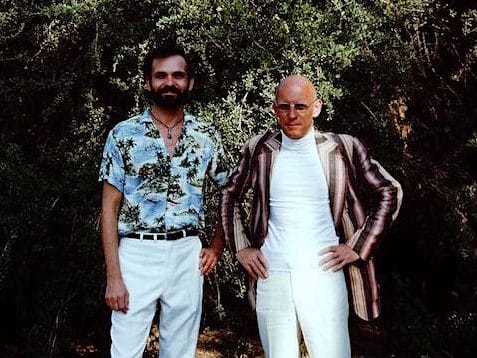
This may be a visual impression of foco. High-collar shirts, horn pants, pilot sunglasses, he dressed more like a rocker than a scholar. It's a kind of monolithic idea that turns into a search for everyone's lifeLife aestheticsTo make everyone committed to “making themselves into a unique work of art”. But the idea of the aesthetics of individual life is not to insinuate a sort of self-respect or mysticalism, but to be alert to “not so governed” at all times, to see what it can be shaped of itself, if at any distance from power。
As wade described in fukuo in california, foco has experienced various vanguard sub-cultural groups in california, has taken hallucinogens on the journey to the valley of death, and has truly felt from the experiences of life that life in california is quite different from life in paris. But that doesn't mean that foco worships this self-obsessed culture of california. In his subsequent interview, he said that the california self-fame group implied that people had some kind of “real self”, which allowed california culture to try to strip itself out of something that might hide itself and to learn to decipher it by psychological or psychoanalytic analysis, “as if these sciences could tell you what “real self” is. At that time, california’s self-prospering group became popular with its own knowledge of psychoanalysts, such as freud and jung, who, on the one hand, advocated the search for true self through the guidance of psychoanalytic science, and, on the other hand, opposed the so-called social repression of self by completely unleashing their desire to suppress it. This attitude to self-knowledge remains, in foco’s view, the kind of epoch of the christian era that rejects self, because it still presupposes the existence of another “real self” that is exposed in a different way than before. This rejection of self and a total shift towards it is quite the opposite of classical self-ethics。
Fukuo is more inclined to look for a self-culture than a western self-culture and transform it into a unique aesthetic of life. In april 1978, fukuo lectured in japan and a lecture interview was included in the collection of japanese lectures in fukuko (michel foucault: the japan legures). Not only did he make a few speeches in japan, but he also took the time to go to setaiji, in the city of nakahara, to follow the master of the temple. In buddhism, meditating, lymphisticated body technology presents a completely different life experience from that of christianity. Although japan is highly similar to western countries in modern forms of state, there are great cultural differences between itself and the west. In foco's view, eastern self-culture offers the possibility of the question “how to be less governed”. In western rational self-technologies, characterized by christian confession techniques, there are forms of individualized and mentored relationships between people and themselves; but in the self-technologies of eastern zen culture, it is no longer necessary to broker with god or mentors, i. E., to develop the possibility of a relationship with oneself. This experience of retrofitting, though easy, “is precious to me”。
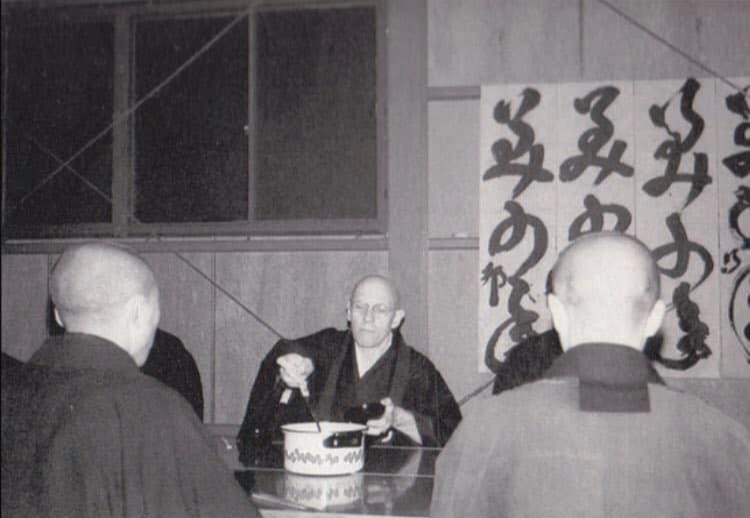
We are likely to read two misunderstandings from foco's aesthetics of life. The first is that fukuo's self-skills is more about physical exercise, so that the principles of health, such as physical fitness and physical maintenance, are considered the main criteria for shaping life aesthetics. But life aesthetics are never practiced in one body alone. Whether the greek philosophers practice their body skills during the classical period or the buddhist culture's meditation techniques, what they want to achieve is not physical fitness, and body-forming is only a by-product. In ancient greece, there was no clear distinction between body and soul, nor was physical consumption and labour intended to release pressure or desire, but rather to gain self-awareness, develop a good relationship with oneself and make one look after himself further. And the self-regulating qualities of regular fitness, even though they are the good qualities we need to take care of ourselves, still need to distinguish between self-regulating from outside visions or really self-generated moderation. To understand the physical and spiritual skills that are needed to care for oneself is to understand the relationship with self。
The second misperception is that creating a unique form of self-existence means constantly pursuing the uniqueness of life and experiencing strange things in order to build one's own diverse lives. Fukuo's aesthetics of life have been criticized for evading himself into a fragmented experience. It is true that life is about finding as many impossible things as possible, but behind those many experiences is the constant dialogue with oneself. Foco experienced gay culture and hallucinogenics in california, but he also studied and lectured throughout california; he understood zeng culture in japan and sought political spirituality in iran, but he was thinking about how to find resistance from the non-western to neoliberal governance. The uniqueness of life aesthetics lies in making one's life a unique work of art, and in developing one's own aesthetics by understanding one's own, rather than feeling emptiness after experience of one's own。
These two aesthetics of life may be a reflection of thinking in an increasingly uncertain society. It is true that, in the absence of control in the world, individuals have to resort to the best of their ability to control their bodies and their time, and may feel that they need to try to grasp what is certain in order to cope with the rapid changes in everything. But in the current situation of increasing emphasis on digital and machine control in physical management, self-control and corroboration are often another set of technical shackles that bind themselves. In fact, the main subject of life practice is not doing anything extraordinary. It is important to form a view of yourself, of the world and, from that perspective, the courage to speak the truth and fight in the world. More than 50 years ago, a french scholar struggled with the world in his own life, and his thoughts and experiences formed a unique set of aesthetics of life. If his experience can give the present a sort of reflection, just as he was inspired by the way he lived by the ancient greeks, i think this is the best anniversary of the 100th anniversary of fukuo。
Zhu jin (associate professor, department of sociology, faculty of humanities, south-east university)









