


In the usual cognitive experience of the world, french philosopher and social thinker michel foco is a searcher of madness and civilization, a revelation of discipline and punishment, a writer of the history of sexual experience, an archaeologist of power-knowledge. However, very few people link foco to music. He never wrote a monograph of music philosophy, left no systematic aesthetics of music, and even in the strictest sense, his knowledge of music technology was rather limited. But it is precisely this “limited” that gives foco a unique perspective and a cold look at music and art。
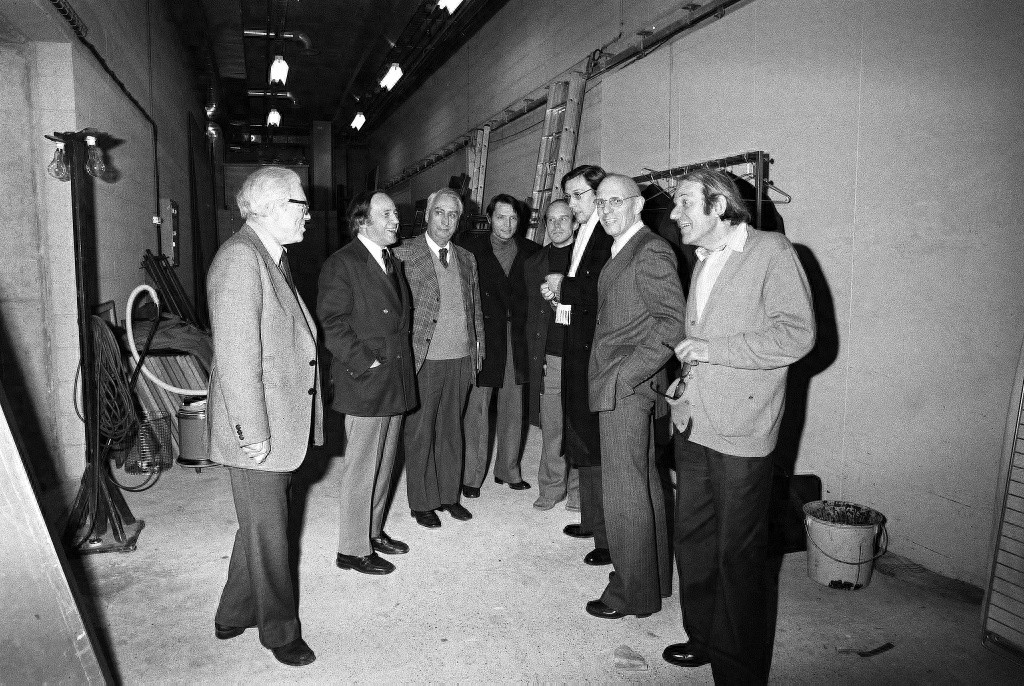
Michel foco with roland bart and pierre bretz et al. (1978)
From the 1970s to the 1980s, fukuo had many conversations with the french master of command, the famous composer pierre bretz, about music, which appeared to discuss why pioneering music was difficult to accept in the public domain, but in essence addressed some of the central concerns of fukuo: for example, how knowledge is shaped by mechanisms of circulation, how power works through taste and habits, and what “break” means in history. Thus, fukko's music view is based not on music, nor on art, but on power. For foco, music is about listeningPolitical economyIt is an extension of his idea of “knowledge archaeology”。
Philosophy and music dialogue
In 1983, french pioneer music was at an awkward historical node. Since his return to france in the 1970s, he has personally created ircam (institute for the study and coordination of acoustic and musical research) and a professional contemporary music group, ensemble intercontemporain, and has promoted the institution-building of contemporary music in an institutionalized manner based on the ford foundation. On the one hand, bretz is committed to acoustic and musical research, which closely integrates music and art with scientific research; on the other hand, he directs the production of a large number of contemporary musical and contemporary musical works from the twentieth century. However, the distance between contemporary music and the public has not narrowed, but has become increasingly distant. It is in this context that fukuo and bretz engaged in an in-depth cross-border dialogue around “current music and the public”. The text of the interview by the same name is included in fukuo's famous collection, " eyes of power: fukuo interviews " , which is an important part of fukuo's discourse on the relationship between power, knowledge and contemporary music。
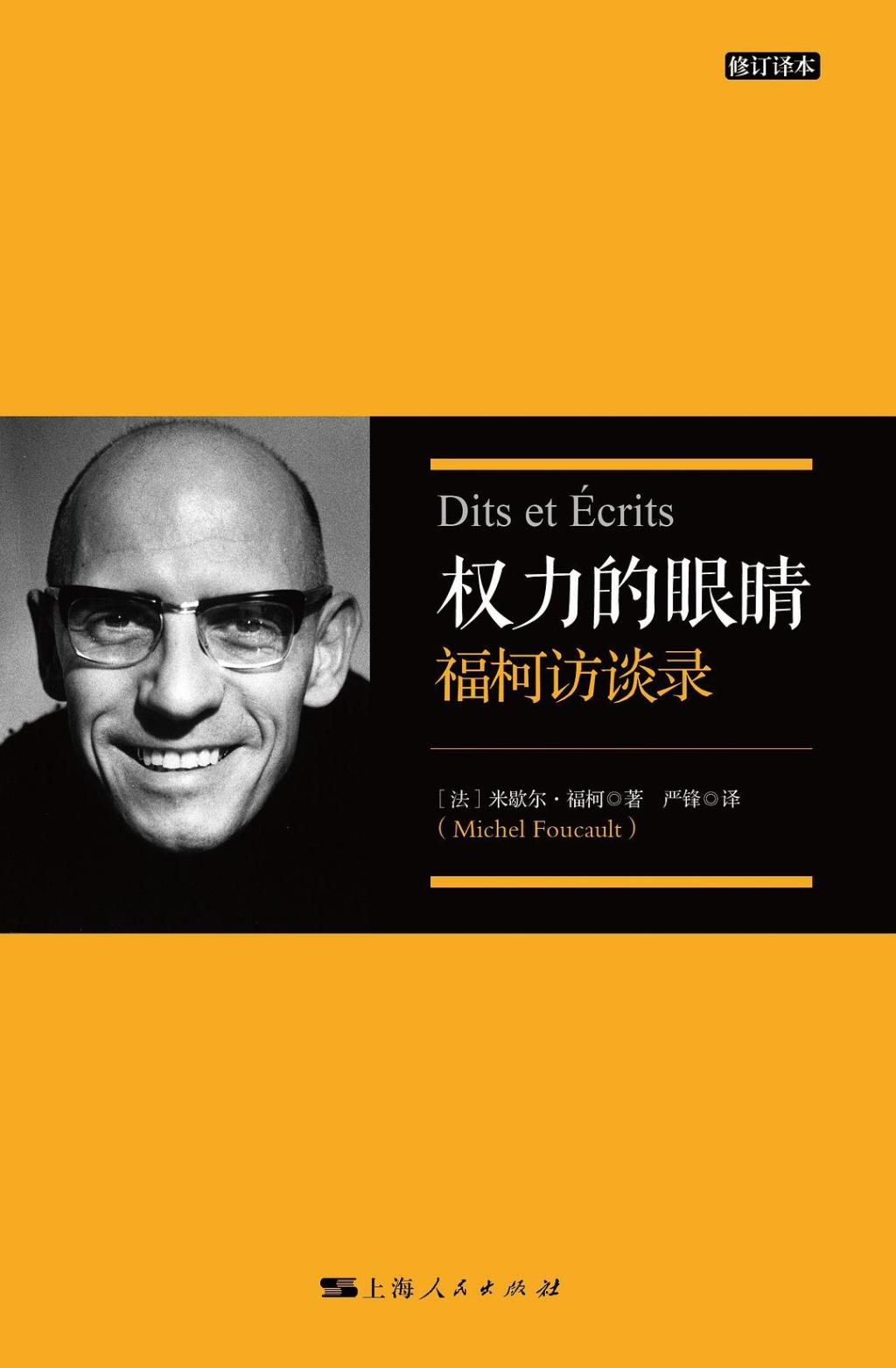
The eye of power: fukuo interview
The beginning of the dialogue was marked by a fuco style. Instead of talking about the music itself, the great thinker began by saying, “it is often said that contemporary music is off track, that its fate is extraordinary, that it is so complex that it is so unattractive that its skills have set it on a course of no return”. But then he flipped in the direction of the question: “we should not ask: how can we experience and re-enjoy music now that it has gone so far? And the question should be asked: how can we feel so alienated from this music, so insurmountablely distant from it, so close to all our cultures, so integrated?”
This flip is a typical foco operation. Instead of asking why the music is ugly, it's asking why we find it ugly — the seemingly natural sense of alienation itself is precisely the product of history that needs to be explained. Bretz's response came from the “circulation” mechanism of music. He pointed out that contemporary music flows differently from classical, romantic or barlock music: the latter implies a standardized format, while contemporary music requires new musical techniques, new spectral methods and adaptation to new forms of play. Bretz described the closed nature of the music world in an almost foco metaphor: “the different music circles are like the prison system in which the vast majority of people feel safe, but they suffer from others.”
It is noteworthy that fukuo did not fully agree in the dialogue with bretz's interpretation of “the complexity of music itself”. He turned his eyes to another music practice, rock music. In fukko's view, rock music is tense, strong, lively, full of drama, and although “the music itself is weak”, “the people who listen to it are able to achieve their recognition”. And in the face of complex contemporary music, “people feel vulnerable, distant, full of problems and seem to be excluded”。
In foco's view, rock music is not only an integral part of the lives of many, but also a driving force of culture. The love of rock, the love of a certain kind of rock is in itself a way of life, a reaction to society and a set of pleasures and attitudes. It's not fukko's simple praise for rock, demeaning or vanguarding. What he really wanted to say was that the problem was not the complexity of music, but what was the relationship between it and the audience: a positive relationship or a relationship of exclusion? Is it a relationship of practice or a relationship of passive consumption? Here fukuo is deeply aware of the paradox of an era: “singing by protesters is the language of bribery, and the success of the business makes the protest empty.” although this is a holistic judgement of commercial music, it is quite accurate in the journey from the insurgency to industrialization. Zenium
The most intense moment in the entire dialogue was in br兹z's rebuttal of fočo's “plurinationalism”. Fukuo expressed a tolerant attitude towards the multiplicity of music, arguing that “every type of music has a `right' to exist, which can be considered equality of value”. In response, blatz immediately issued a sharp criticism:
Is it not a compromise colour to talk about the multiplicity of music? Can it solve the problem? On the contrary, it's covering up the problem all the music is good, they're great. Ah! Pluralism! It is wonderful to those who lack understanding. Love, everyone in their own corner, but love. Be liberal, have a taste for others all good, nothing bad; no value, but everyone is happy. Such words, despite the desire for liberation, reinforce isolation and comfort one's conscience in isolation。
It can be said that bretz's critical point is the key. He believes that the rhetoric of pluralism obscures the economic reality in the field of music: “some music brings money, exists for commercial gain; some music spends money, and its concept has nothing to do with profit. No liberalism can erase this distinction.” in fact, it would not be strange to place this criticism of brétz in the framework of fukuo's thinking. Fukuo has long shown in his "teaching and punishment " how so-called "tolerance" and "freedom" translate into more sophisticated discipline techniques at the institutional level. But interestingly, it was blaze, not foco, who took on the role of criticalist rhetoric in this conversation, and foco, who went back to a more empirical observational position, talking about “customary listening.”。
Foco pointed out that frequent contact with music — radio, phonograms, tapes — could, on the contrary, make perception poor. The habit of crystallization makes the most common things the most acceptable, and ultimately the only thing that can be felt. He called it a tracking. “as neurologists say, market patterns work here: “what is available to the public is what the public hears. And what the public actually hears, because it is provided with something that strengthens some sense of fun, marks the boundaries of some kind of hearing ability, and is increasingly exclusive in defining a hearing pattern.”
Fukko does not advocate that music be rare, but rather that the “frequent appearance” of music no longer serve habits and familiarity. This is a delicate and precise position: the problem is not so much about the exposure, but about the way in which it is made。
After the screen
In fact, fukuo and bretz started talking about music in the 1970s. From that wonderful conversation in 1983, it was as if we were following the fukuo-style flow of intellectual archaeology and finding out how well fukuo's mind was connected and brilliant. On 23 february 1978, bretz organized in ircam a seminar entitled “concert time”, which brought together roland bart, gil delarez and the three masters of thought from foco. This seminar was part of a series of exchanges of ideas following the return of bretz to france and was the most direct clash of ideas between foco and music. In the following five years, fukuo produced a series of brilliant insights into the relationship between music and knowledge and power。
Druze's statement at the seminar was fully recorded and kept. He discussed the distinction between “pulse time” and “non-pulse time”, linking the musical practice of bretz to the concept of “soft space”: “in smooth space, in music, you have this experience in modern music, and you have a lot of smooth space.” the druze presentation was full of conceptual creativity and translated the issue of music time into a space philosophy discussion。
However, fukko's statement at this seminar was extremely limited. We can hardly find foco's systematic discussion of “musical time” — a silence that is per se worth thinking. Foco is not uninterested in the issue of time — his archaeology and spectrographs are essentially historical analyses of time. But foco's concept of time has always been “historic time”, the time of break-ups, transformations and events, not “inline time” or “experiment time” in music. When druze was discussing the smooth space of non-pulse time, foco did not have a corresponding musical time concept in his system of ideological coordinates。
The life of the infamous: fukwin's choice i
This deliberate silence may have revealed just one of the fundamental features of foco's view of music: he never thought about music from within. For him, the significance of music lies not in its sound structure or time form, but in its relationship with other cultural elements, in how it is circulated, accepted and excluded, and in how it participates in the functioning of power-knowledge. For listeners, all this is hidden behind that beautiful screen. For fukuo, music is never purely an aural pleasure or a show of art, but rather a rallying point for the relationship between thought, history and power. And this is the famous 1982 article by foco, pierre bretz, across the screen。
In this insinuated article, foco looked back from that perspective at the music creation of the bretz in the 1950s and its contribution to the aesthetic modernist project. As with all the other music, foco's understanding of the britz music was not from within the music from the beginning. He was not concerned about the use of serial technology by britz, but about the intellectual posture embodied in the creative practice of brez: total rejection of the established order, experimental exploration of the form itself, and the courage to create new possibilities in break-ups. This attitude is consistent with fukuo's own work in archaeology in the field of humanities。
In foco's view, the serious work of the twentieth century around “forms” has itself become a subject of moral hostility, aesthetic controversy and political conflict. Bretz's music is typical of this “formal struggle” — it challenges old problems, subverts ways of thinking, and is even perceived by stalinism or fascism as hostile ideologies. Here, fukuo demonstrates a radical artistic view of music as a “formic struggle” and an “ideological event”. At the same time, this art view has a leap in different artistic fields, as in the case of britz, where music is not associated with a universal aestheticism (such as romanticism, expressionism), but rather directly from one point to another, from music to poetry and painting。
As a conductor, bretz dealt with the music of the past with the conviction that current behaviour could change the past. He loathed the attitude that fixed the past and tried to change it in its contemporary journey. This attitude to history also has the fukuko-style meaning that history is not discovered, but constructed; tradition is not inherited, but is constantly being reactivated in practice. Fukuo particularly appreciated the attitude of bretz: both aversion to “classicism” (which used the past as a fixed pattern to change it) and aversion to “similarism” (which married the forged past to the present). The goal of bretz is to keep the past and the future in a relatively permanent movement towards each other — he “penetrates through through a screen” an existing work, deciphering it with analysis, and moving the present itself. Zenium
A thinker's hearing
Perhaps one would ask if foco did not leave behind a systematic musical philosophy or aesthetic discourse, could we build a “fukuo” musical view from his resource? The stolen answers are positive, and the work has already taken place in many directions. The fukuo concept of “depositif” was used to analyse sound-music devices, to interpret music practice as a entanglement of knowledge, speech and power; to contrast john cage's music practice with the two types of “security” and “torture” power technology he distinguished in his 1978 lecture, to reveal how the time of music was regulated by different power techniques; and to apply fukuo's round prison model to the analysis of the relationship between composers-players-spectrums and to deconstruct the structure of viewing and discipline in music practice。
The common feature of these studies is that they are not based on the aesthetic value of music, but rather on the question of how music practice produces knowledge. How to structure the subject? How to participate in the functioning of power? Within the fukuo framework, music is no longer an independent aesthetic field, but a node of power-knowledge networks. Returning to the fukuo-brédez dialogue, we can see more clearly the significance of this position. When bretz criticized “pluralism” as concealing the economic reality of music, he was actually conducting a foco-style analysis of how apparently liberated words served the established power allocation. And when foco talked about how the “hearing pattern” was shaped by market law, he was also conducting a discipline analysis in the sense of music sociology, but he did not use those terms。
In 1984 fukuo passed away in paris and was only 57 years old. He was unable to see the continuous creation of bretz after the 1980s, nor was he able to see how digital technology had radically changed the flow and acceptance of music. However, his conversation with bretz and his short article on “bridging the screen” left a hearing mark on the thinker. This insight across the screen is not a love or a mastery of music, but a methodological alert: what are people talking about when they talk about music? What are people saying when they say they don't understand contemporary music? What does “plurinationalism” hide when it proclaims that all music has equal value
Fukuo's music view is ultimately a political economy about listening. It asks not what music is, but how it is heard, by whom, under what conditions, and how this “hearing” shapes our classification of normal and unusual, familiar and unfamiliar, meaningful and meaningless。
As we commemorate the centenary of fukuo's birth, as this philosopher who changed his way of thinking, perhaps we can remember his legacy to music: not a musical philosophy, but a way to ask questions. This approach requires us not to ask “what is good music”, but how the “good music” is constructed, who is building it, and who it serves. After the screen, the sound is still ringing; but fukuo teaches us that more important than the sound itself is the rules of silence that determine whether and how we can hear。
Wu jing









