Today, the safe production library presents you with an extremely practical, fully-covered bookPower safeKnowledge and electrical fire preventionTraining packageI don't know. The package system combs the core elements of electrical security, ranging from basic common sense to practical response, content specialization and close to practical applications, which can effectively help learners to build solid electrical safety lines。
I. Overview of the training presentations
(i) core orientation of course packages
This course is a specialized training material for focused electrical safety and electrical fire prevention. It covers the whole process of electrical safety, encompassing both theoretical principles and practical measures to address the safety of electrical use in real life and to reduce the incidence of electrical fire accidents, around the principle of prevention as a first step in the scientific response。
(ii) applicable industry areas
In the area of industrial manufacturing: plant workshops, mechanical equipment operating scenes, which involve large quantities of electrical equipment, need to be protected against the risks of equipment leaks, circuit overloads, etc。
Construction areas: the construction site is characterized by a high level of temporary power supply, a complex environment, prone to inappropriate access, cable wear and tear, and the content of the course can be targeted。
Commercial services: premises such as malls, hotels, offices, etc., with intensive electrical equipment, high mobility and electrical fire prevention and emergency response。
Living conditions: household electricity security can also draw on it, such as the correct use of household appliances and the response to power failures。
(iii) population groups applicable
Special operators, particularly electrical operators, are required to upgrade their skills by learning to consolidate their professional practices and by taking the special operations operating certificate as a reference。
Enterprise security managers: used to develop an enterprise electrical safety management system, organize internal training and screen electrical safety hazards。
First-line operators: grass-roots operators, such as factories, sites, etc., are trained to regulate the use of electrical equipment and avoid accidents due to irregularities。
The general public: to learn about basic electricity safety and to raise awareness of the safety of electricity in the home and in the living environment。
Ii. Specific content of the training course
(i) basics of safety in electricity (part 1)
Electricity damage to humans
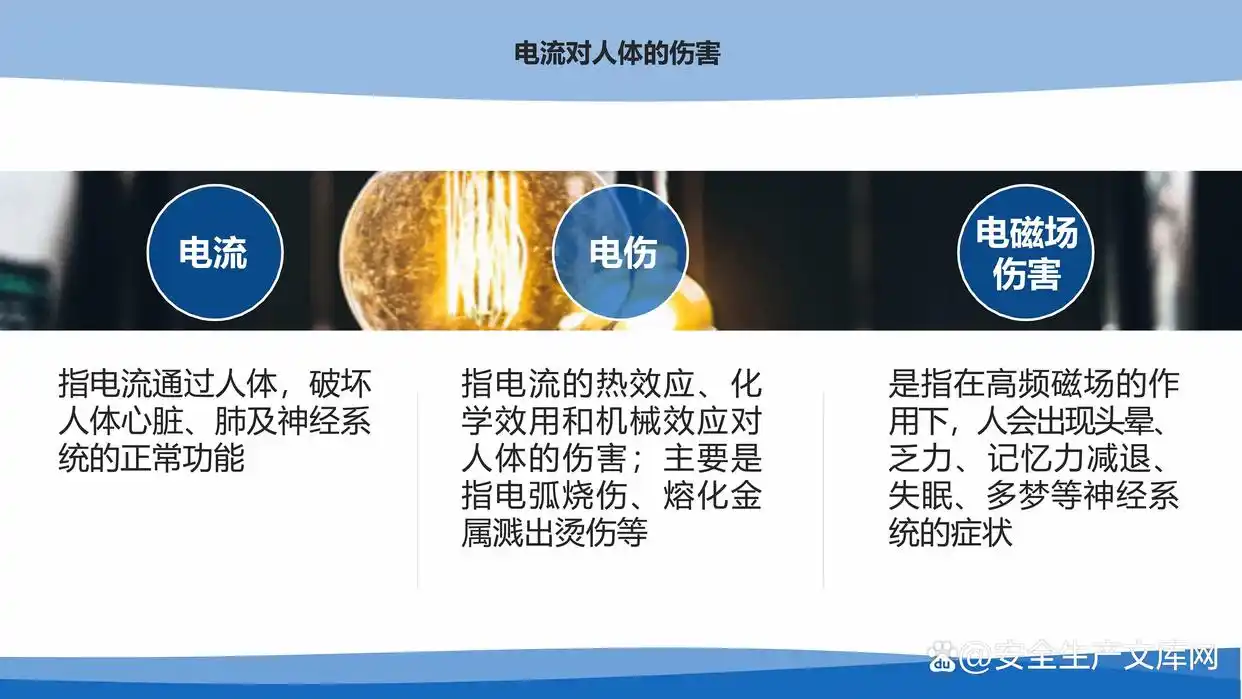
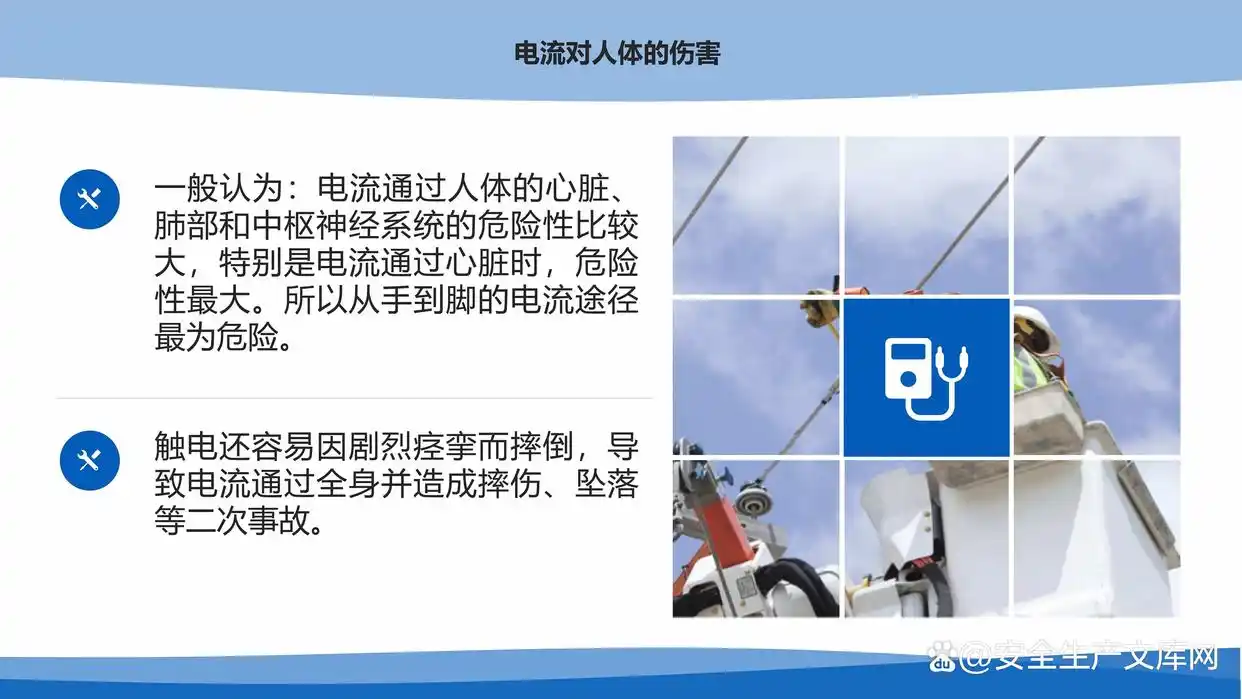
The three types of damage to the human body from electric currents are identified: electric shocks (damage to the heart, lungs and nervous system), electric injuries (electric arc burns, metallic burns, etc.), electromagnetic field injuries (high frequency magnetic fields causing symptoms such as dizziness, insomnia, etc.), emphasizing that “hand-to-foot” electric currents are the most dangerous and that electrocution can cause second accidents。
Technical measures to prevent electrocution
A detailed description of the nine core measures:
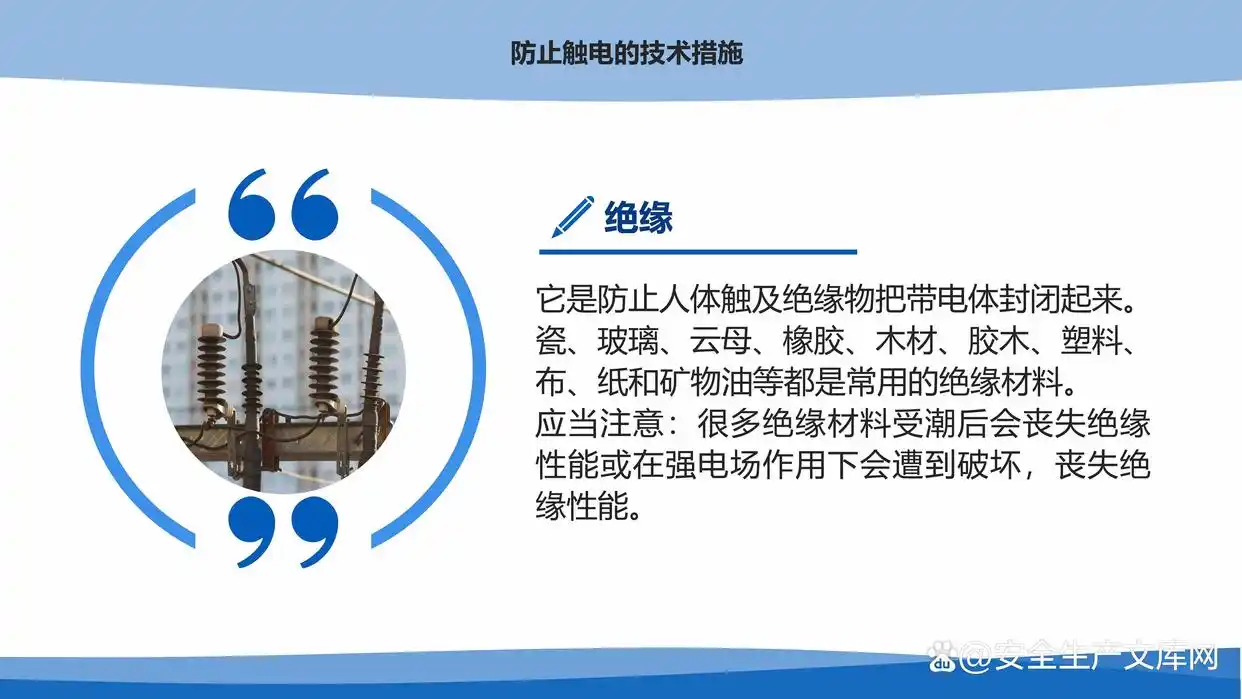
(1) insulation: the use of insulation materials such as china, glass, rubber, etc., to seal off the insulation body, bearing in mind that the insulation material is inundated or is vulnerable to failure under the power field。
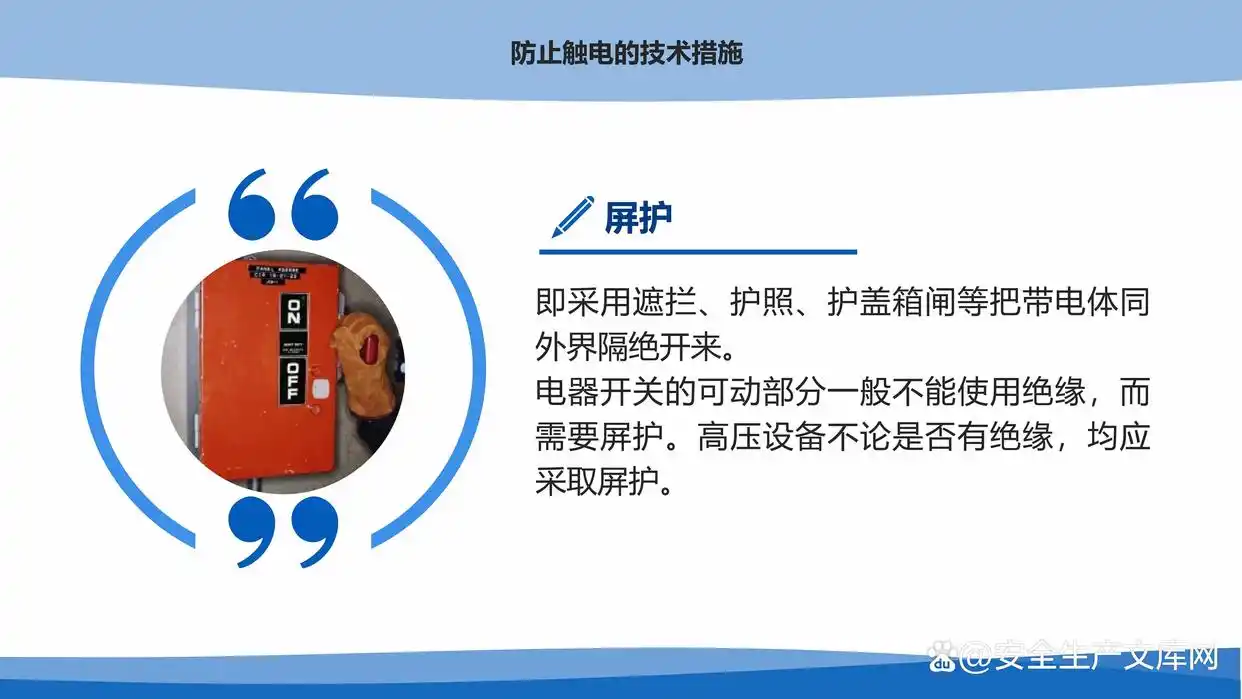
(2) screen protection: the electrical body shall be isolated with cover, cover, etc., and the moving parts of high pressure equipment and electrical switches shall be protected。
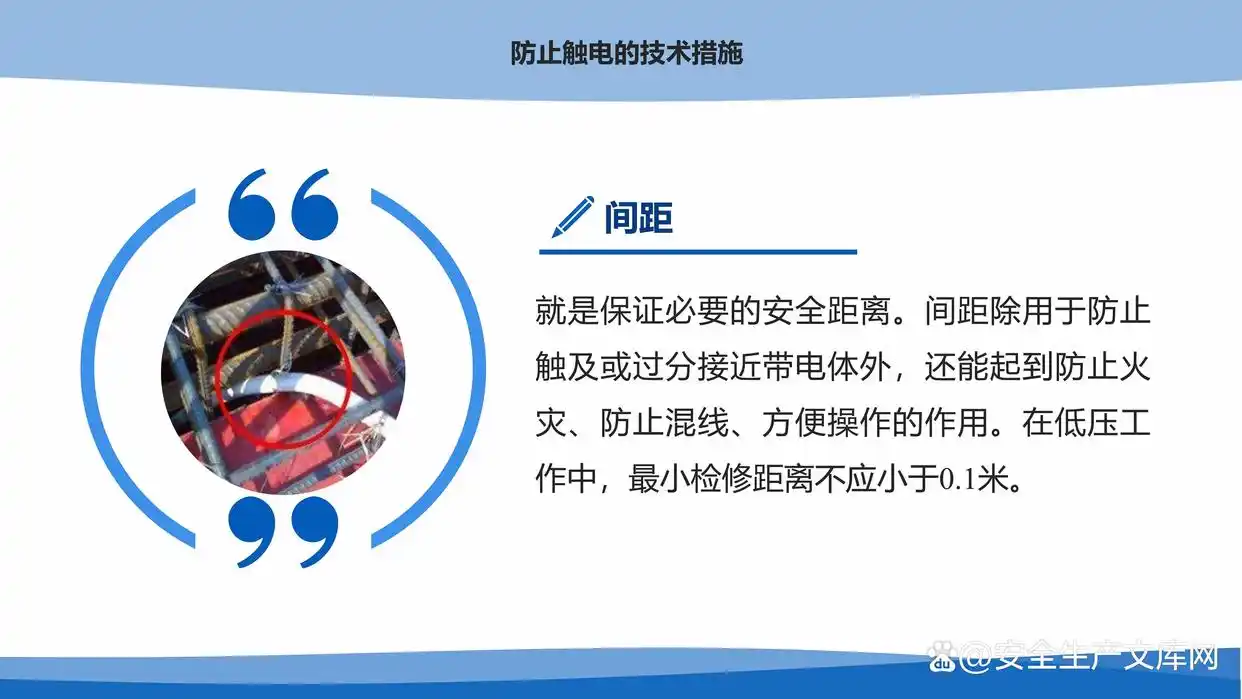
(3) spacing: ensure a safe distance, with a minimum repair distance of not less than 0. 1 m for low pressure work, while preventing fires and facilitating operations。
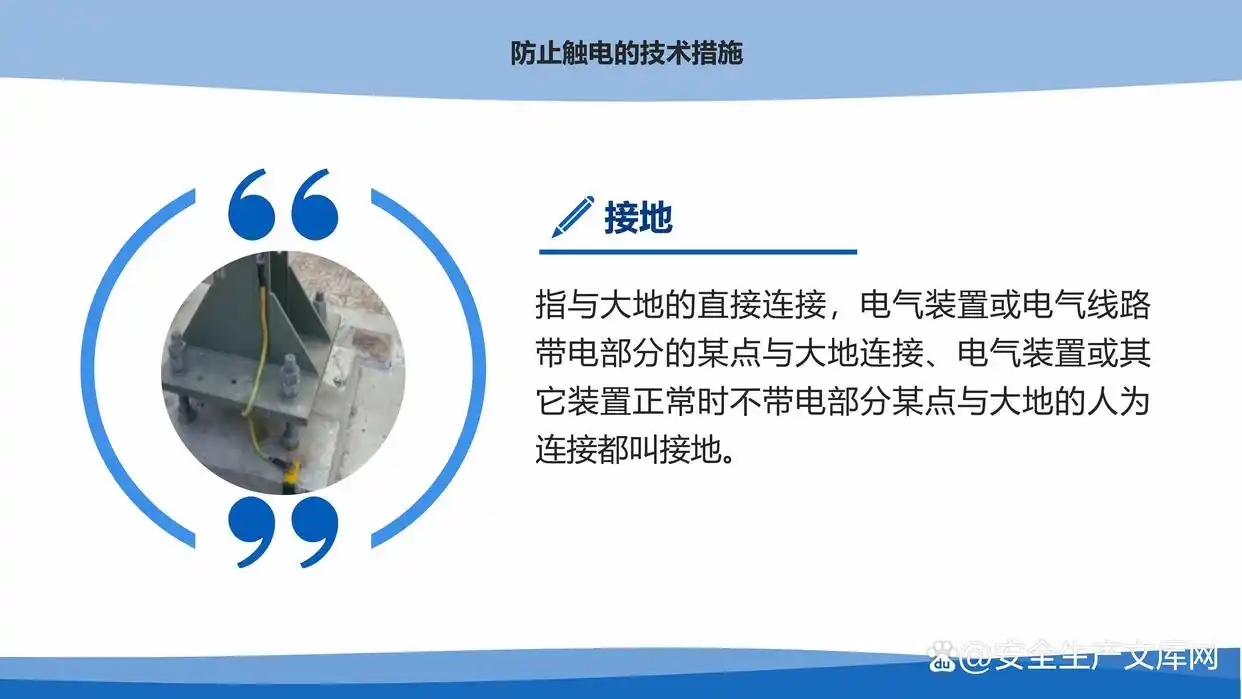
(4) ground: connect electrical installations with or without electricity to the earth, with regular and protected areas。
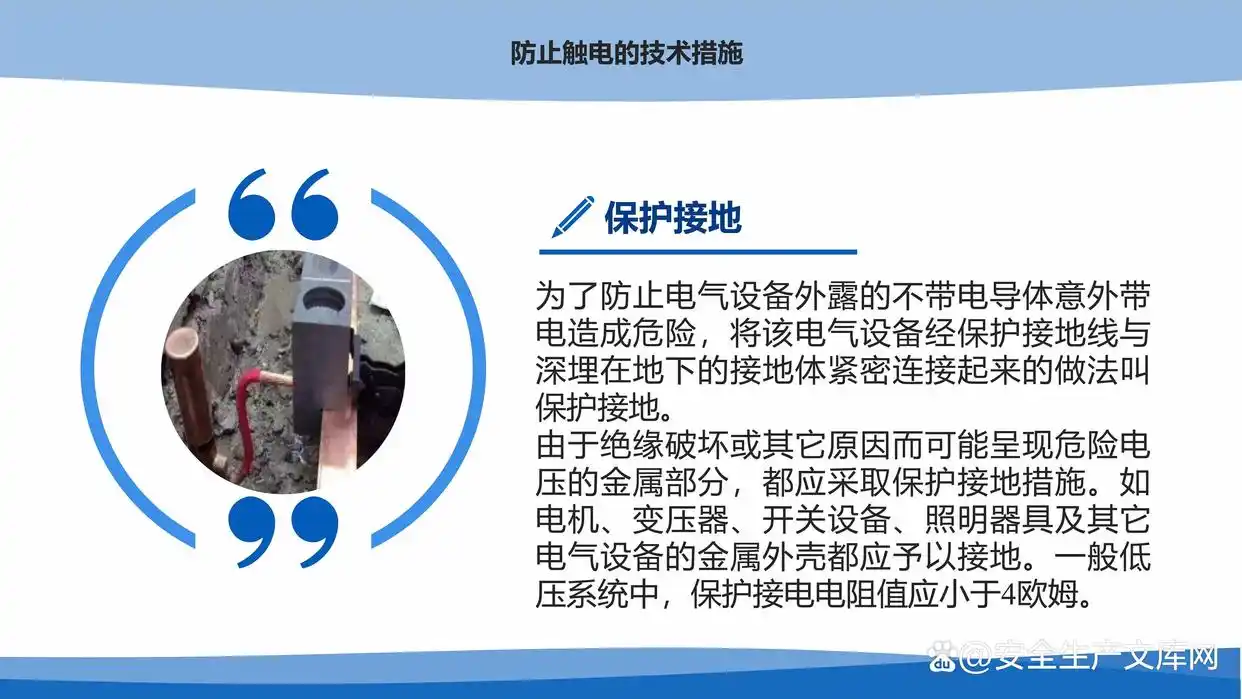
(5) protection of the site: for electrical equipment exposed without electrical conductors, such as electrics, transformer casings, the ground electrical resistance is less than 4 om。
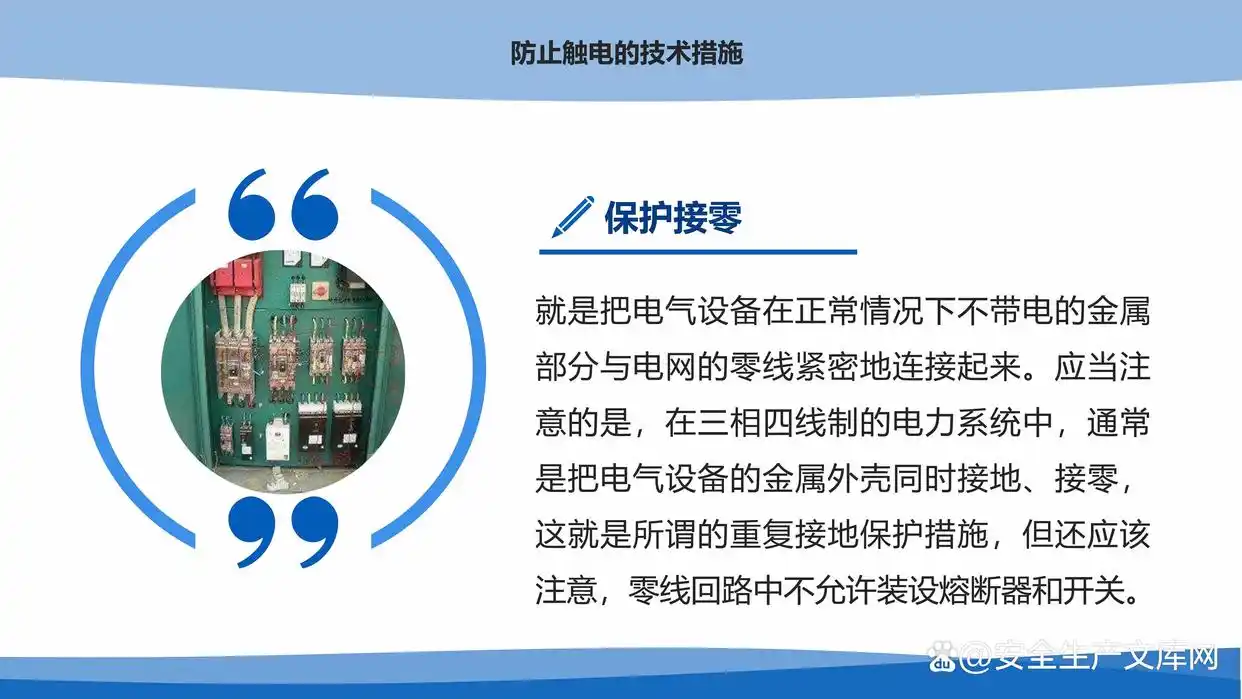
(6) protection of zero: connecting the metal part of the equipment to the grid on a zero line, a three-way four-line system can co-operate with repeat grounding, and zero-line circuits are prohibited for melting machines and switches。
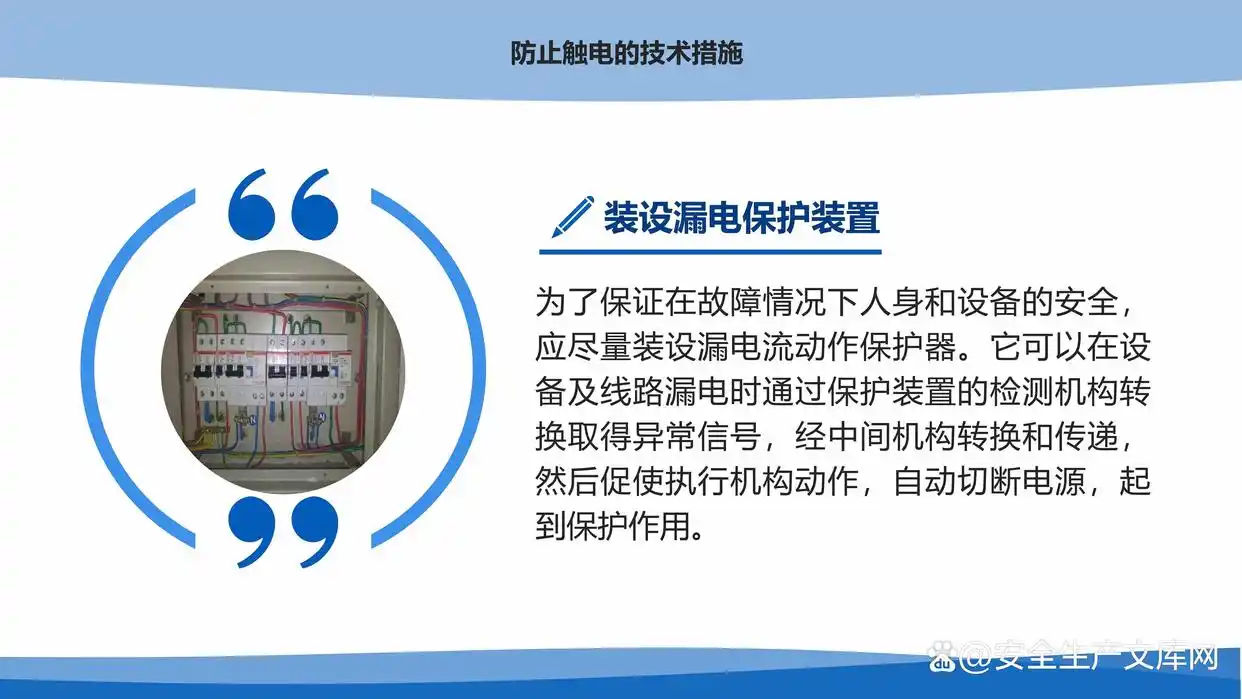
(7) installation of leaking electrical protection: detection of leaking telecommunications, automatic disconnection of the power source and security of persons and equipment。
(8) use of safe voltage: work frequency effective values of not more than 50 volts, minutes of 42 volts, 36 volts, 24 volts, 12 volts, 6 volts such as 12 volts for operating in metal containers。
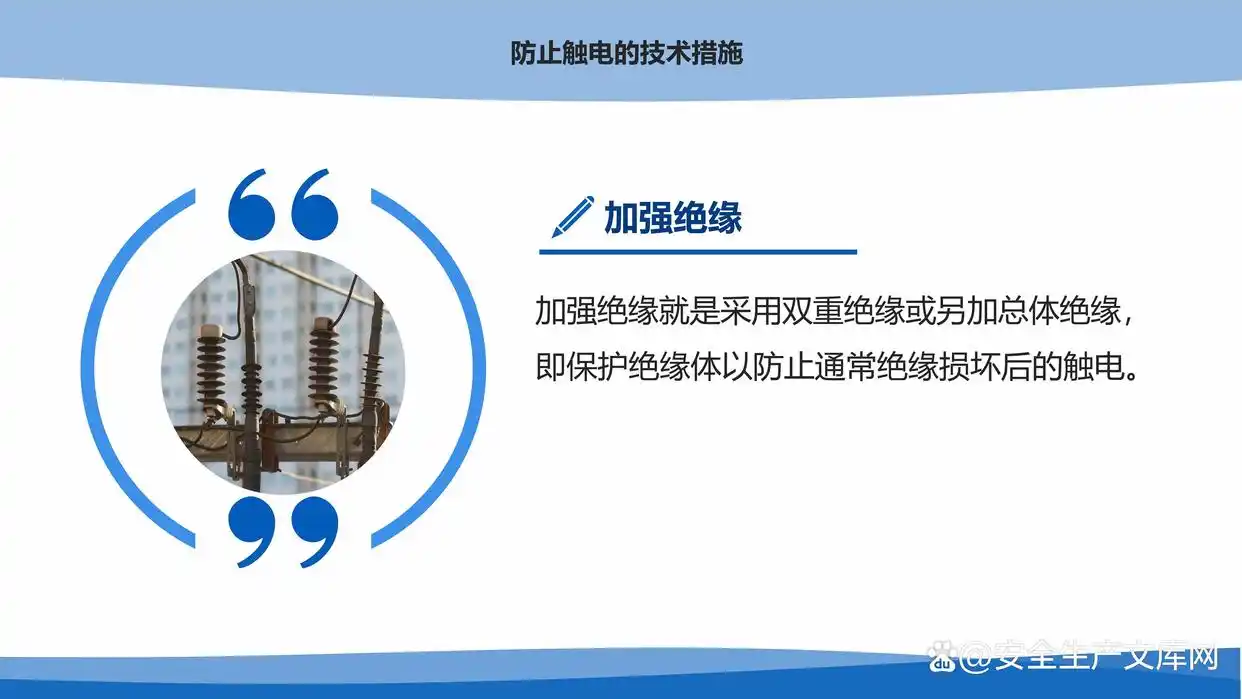
(9) enhanced insulation: use of dual insulation or general insulation to prevent electrical contact following damage to conventional insulation。
Attention to prevention of electrocution
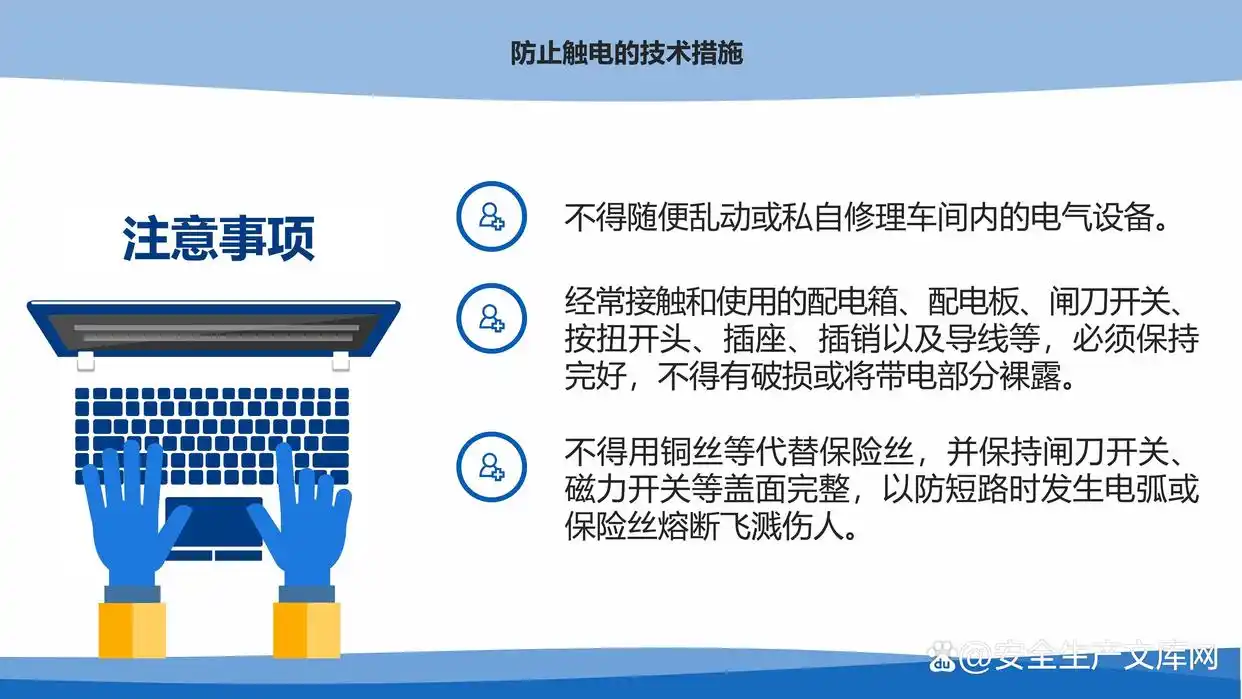
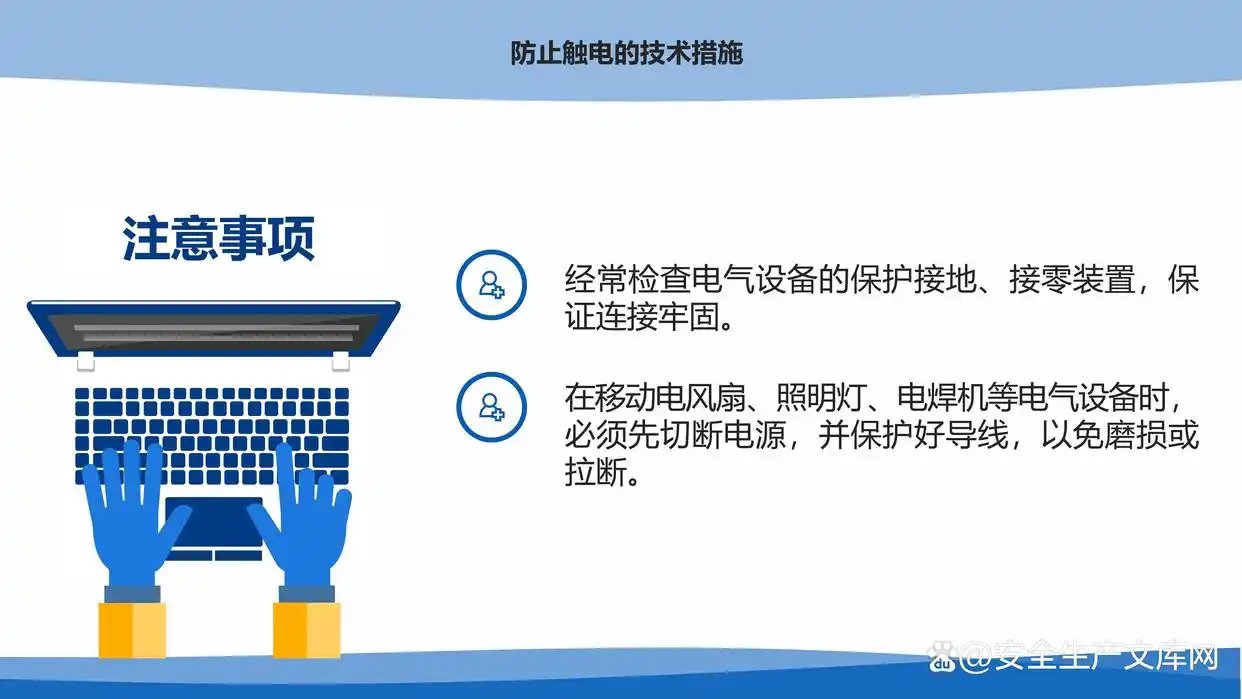
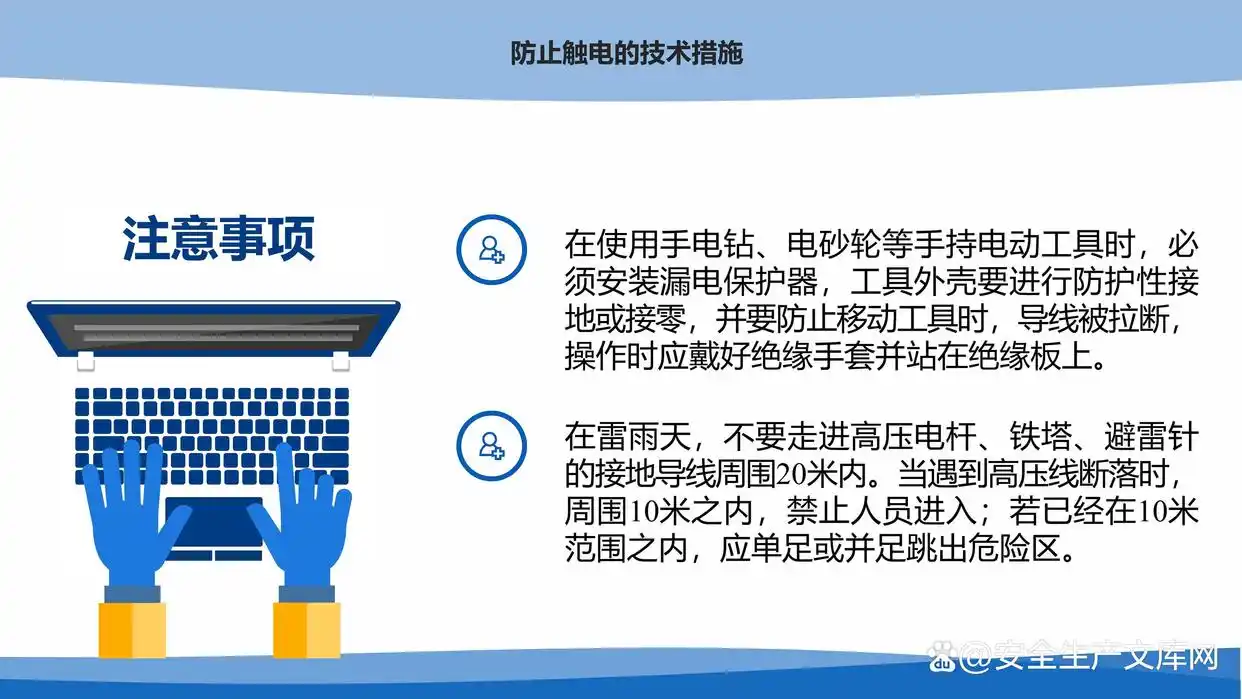
These include: repairing electrical equipment not self-employed, maintaining equipment such as electrical distribution tanks, replacing fuses with copper wires, periodic inspection of ground-to-ground zero devices, power outages of mobile equipment, leakage protections of hand-held electrical tools, and the removal of thunderstorms from high-pressure facilities。
Static, lightning, electromagnetic hazard protection
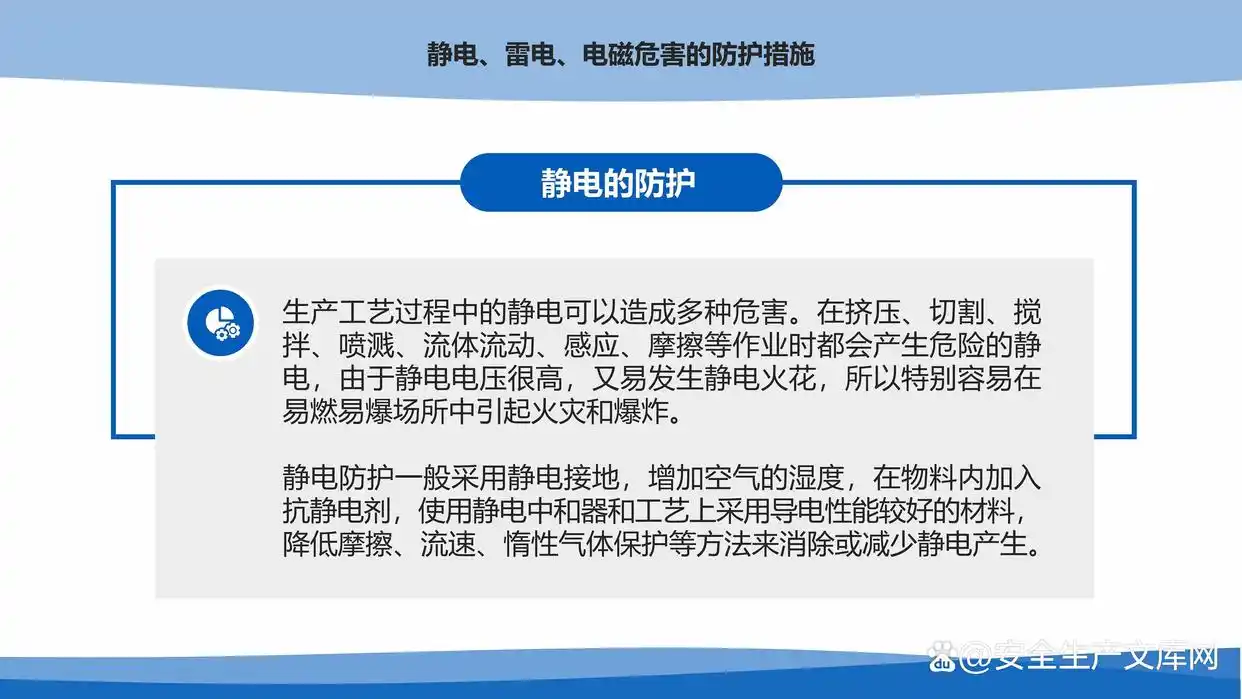
(1) electrostatic protection: the elimination of electrostatics from operations such as squeezing, friction and so forth, and the prevention of fire explosions, using such methods as grounding, wetting, antistatic agents, neutralization, etc。
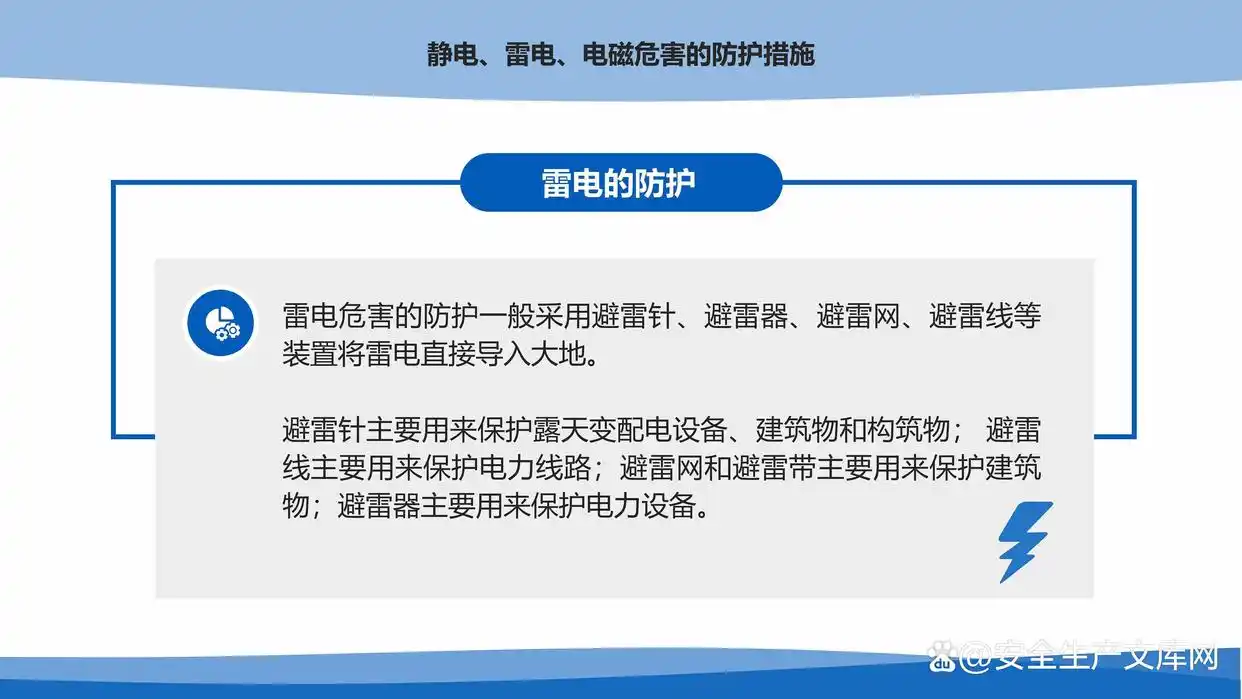
(2) thunder and electricity protection: guide the entry of mines with lightning rods (protection of open-air equipment, buildings), mine-shield lines (protection of electrical circuits), mine-shield nets / belts (protection of buildings), mine-shielders (protection of electrical equipment)。
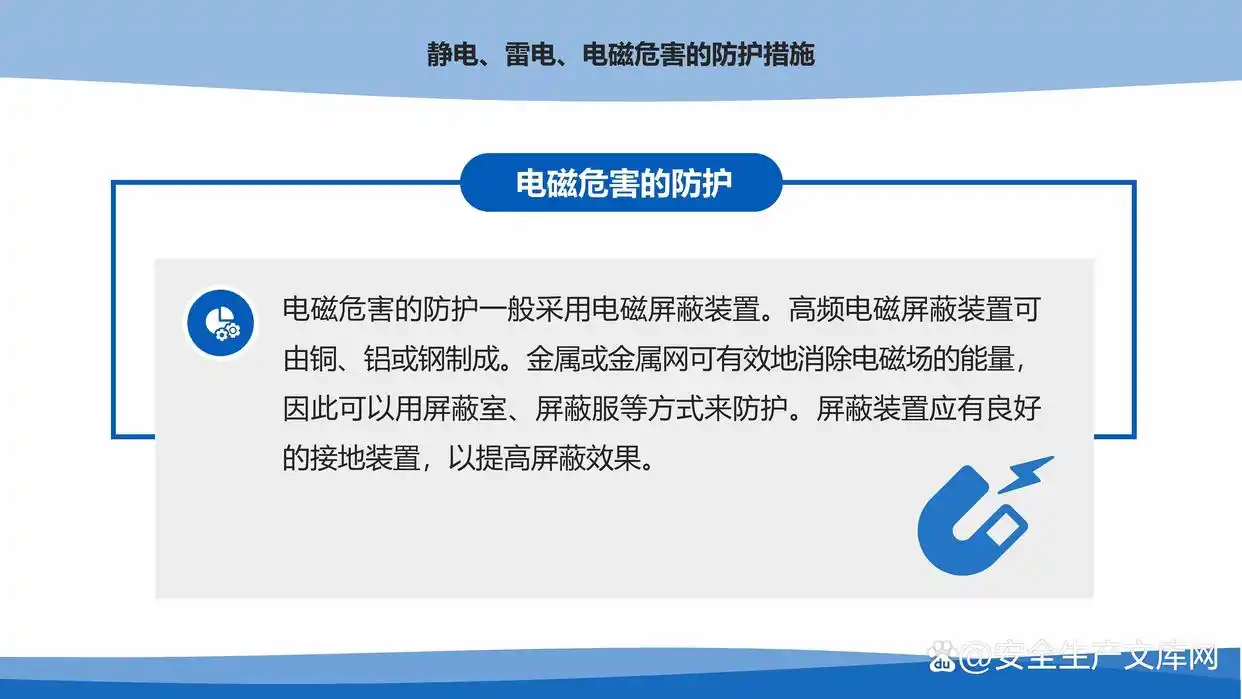
(3) electromagnetic protection: shielding devices made of copper, aluminium, steel (shielding rooms, shielding suits) and properly connected to the ground。
Electrical operations management measures
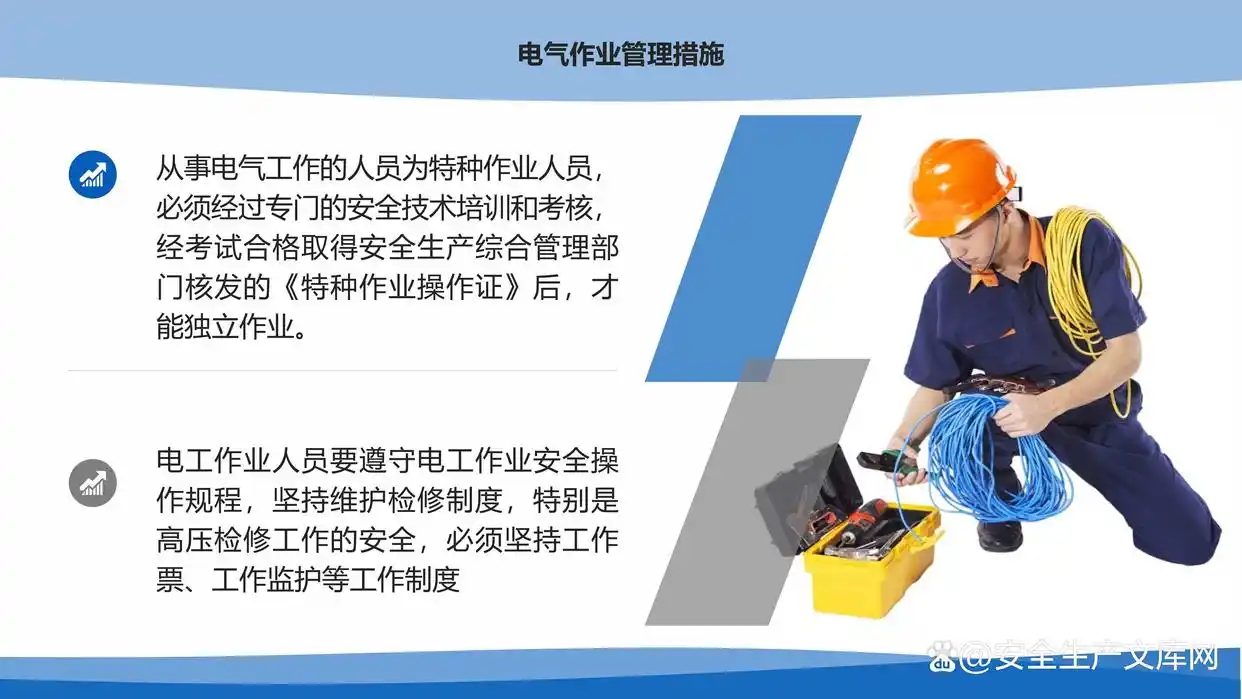
Electrical operators are required to be on duty with a special operations operating certificate, to comply with operating protocols, to adhere to the maintenance of the system of overhauls, which require execution tickets and work supervision。
(ii) causes of electrical fires (part 2)
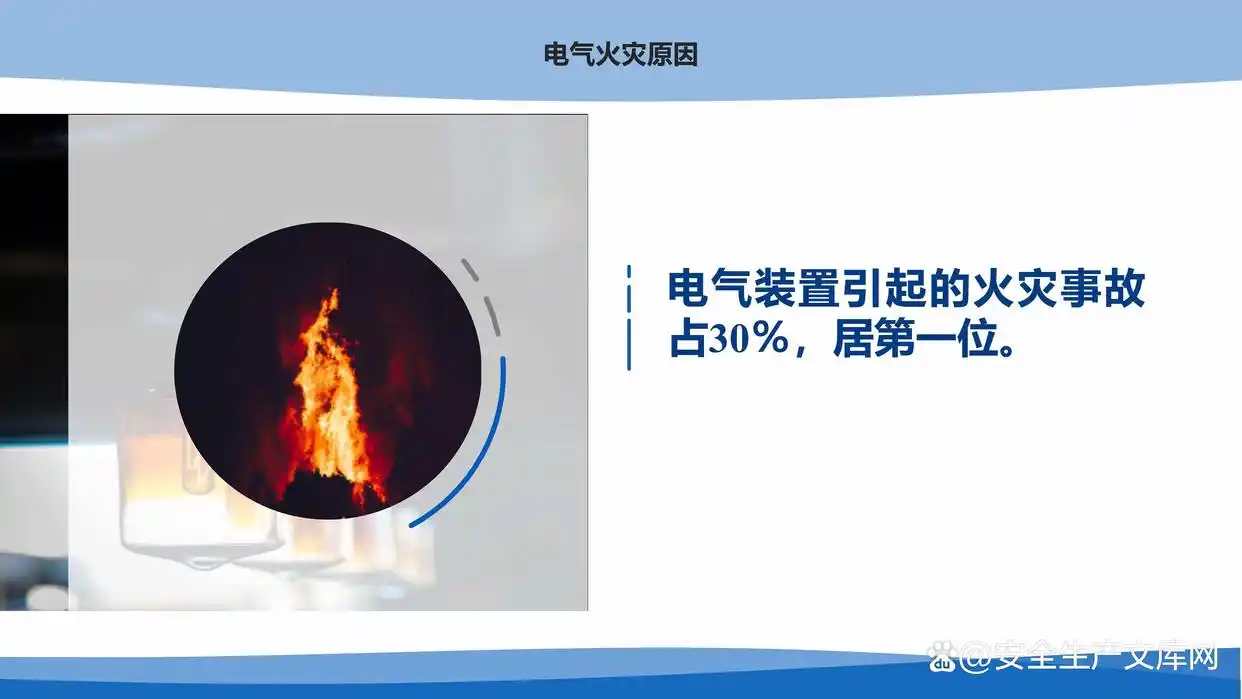
Core data: the proportion of fires caused by electrical installations is 30 per cent, the highest among all types of fires。
Specific causes (category 9)
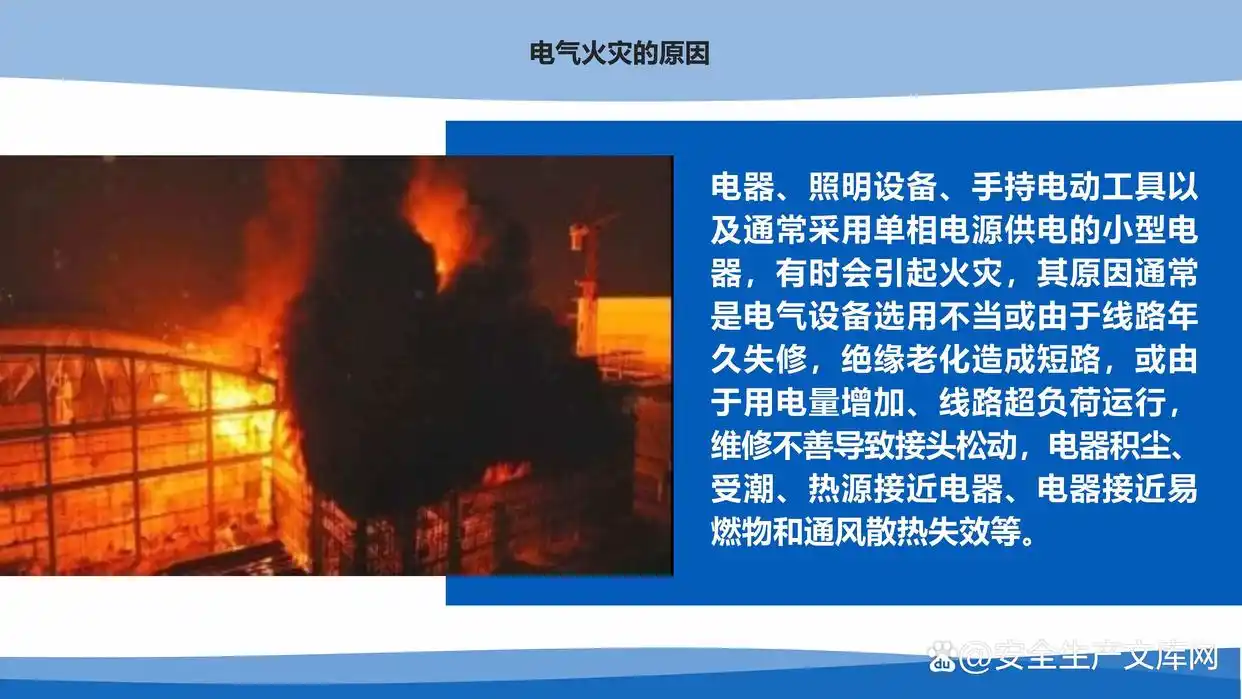
(1) improper selection of equipment or ageing of circuits: e. G., fire of small appliances due to ageing short circuits due to insulation, overloading, loose connection etc。
(2) malcipient installation of a circuit breaker screws loose, triggering short circuits between phases, and short circuit currents may not be able to trigger protective devices。
(3) installation of environmental damp: breakers are not closed, but the blades are closed and the end of the power source is cut short by the water and gas phase。
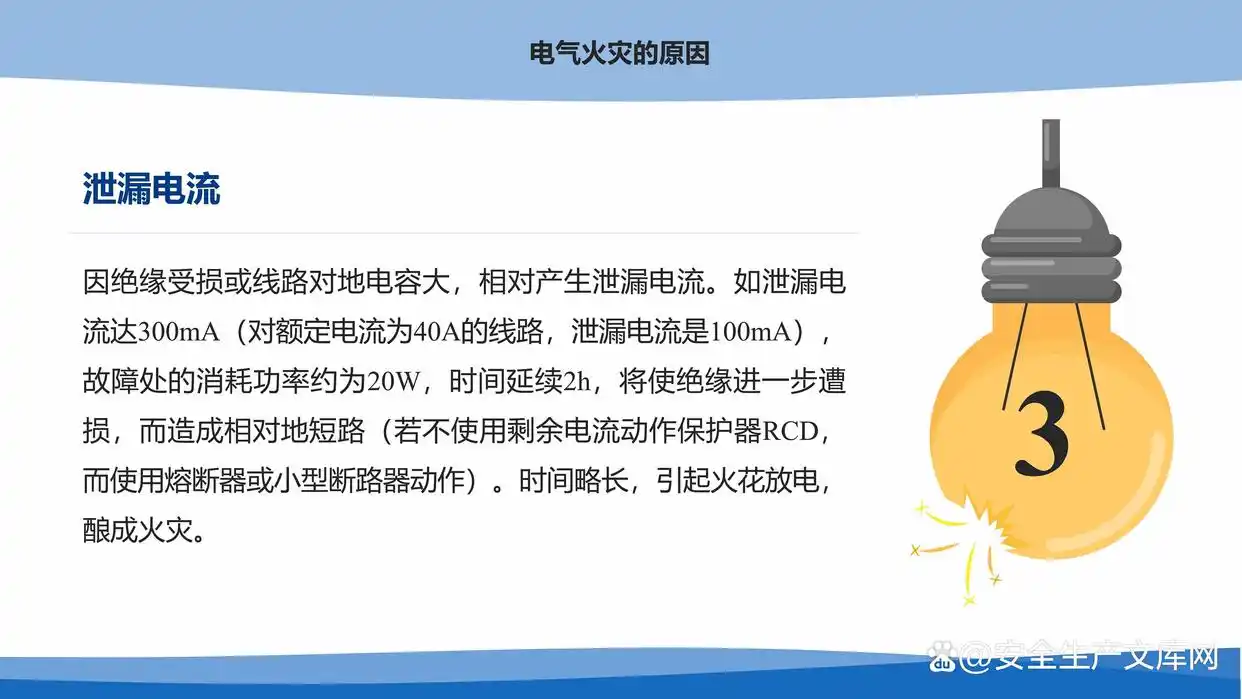
(4) leaking current: damage to insulation or large electrical capacity of the circuit leads to leakage, long-term operation of damage to insulation and spark discharge。
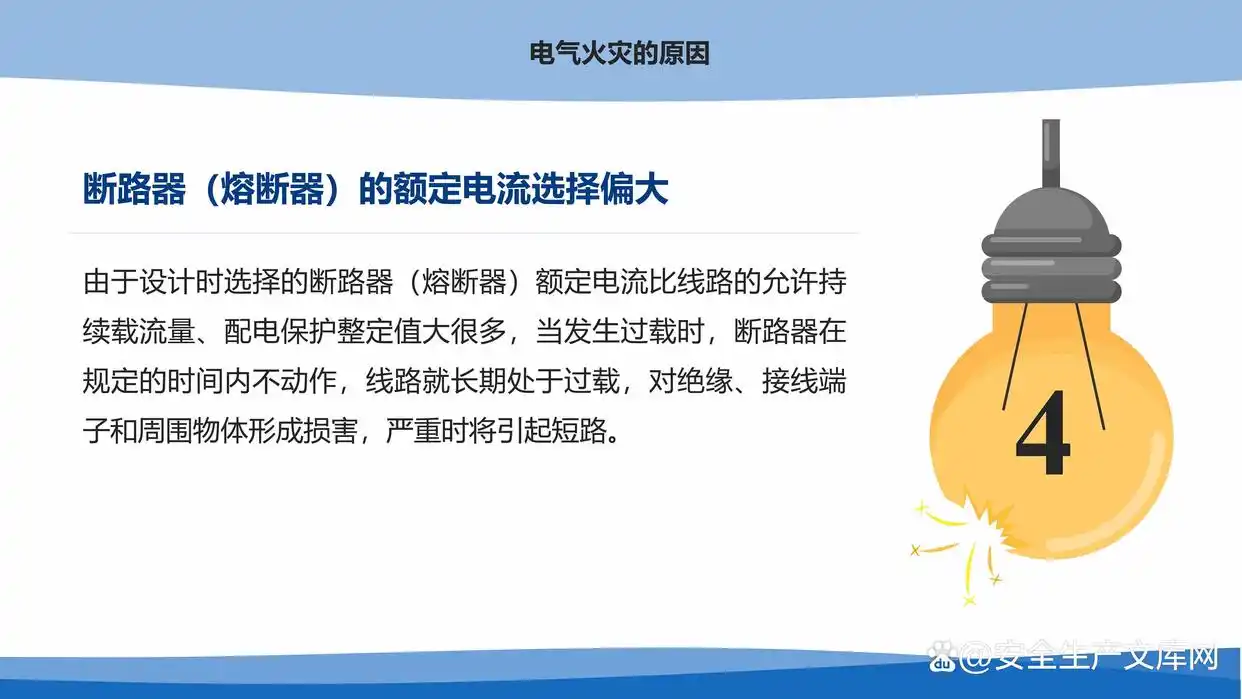
(5) protection device rated currents are large: circuit breakers / meltinger rated current overline allowed traffic, non-action during overload, causing damage to the line。
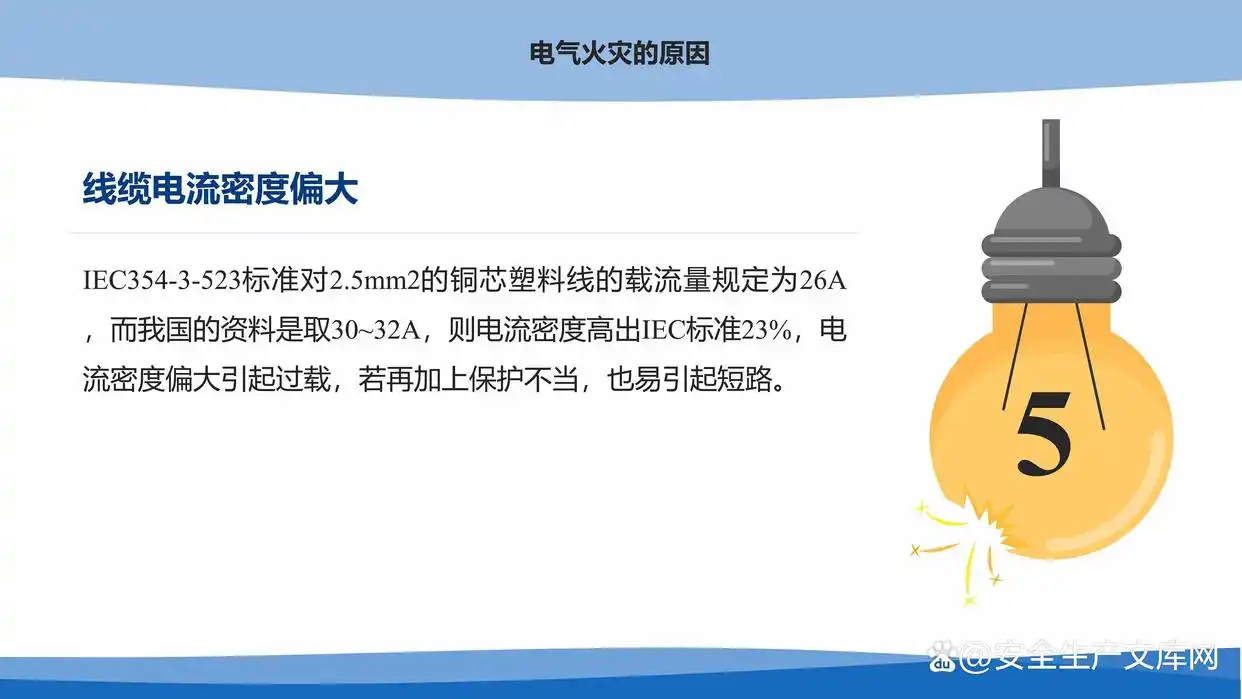
(6) wire cable current density is disproportionately high: part of our cable current density is higher than the iec standard (e. G. 2. 5 mm2 copper core line for 30-32a, supra iec standard 23%) and easily overload short circuits。
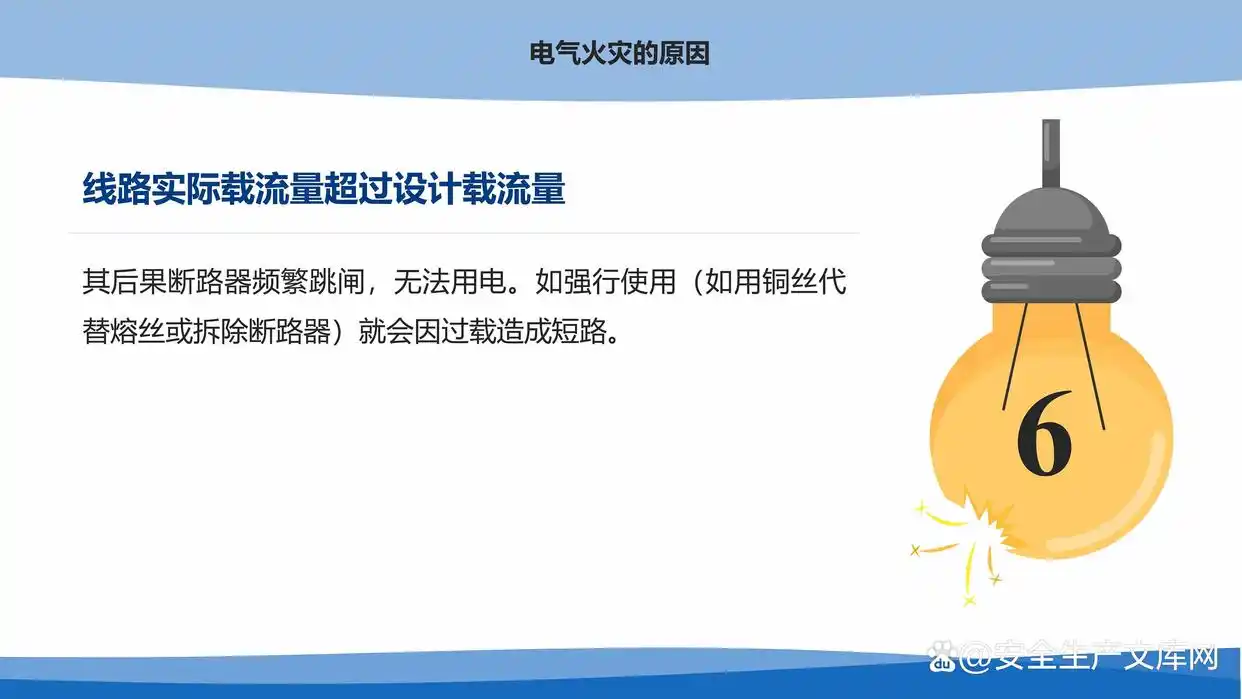
(7) the actual traffic of the line is over-designed: it leads to frequent jumps by breakers and forced use of easily triggered short circuits。
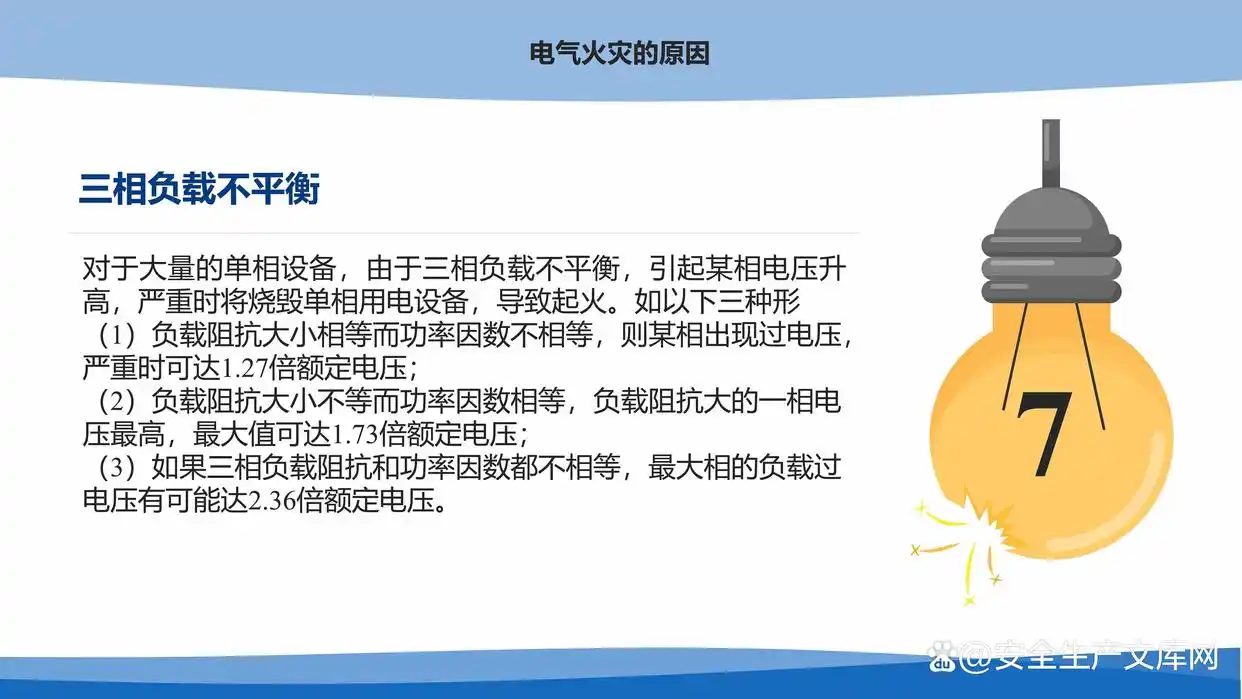
(8) three-phase load imbalance: an increase in a phase voltage (up to 2. 36 times the rated voltage) and the burning of single-phase equipment。
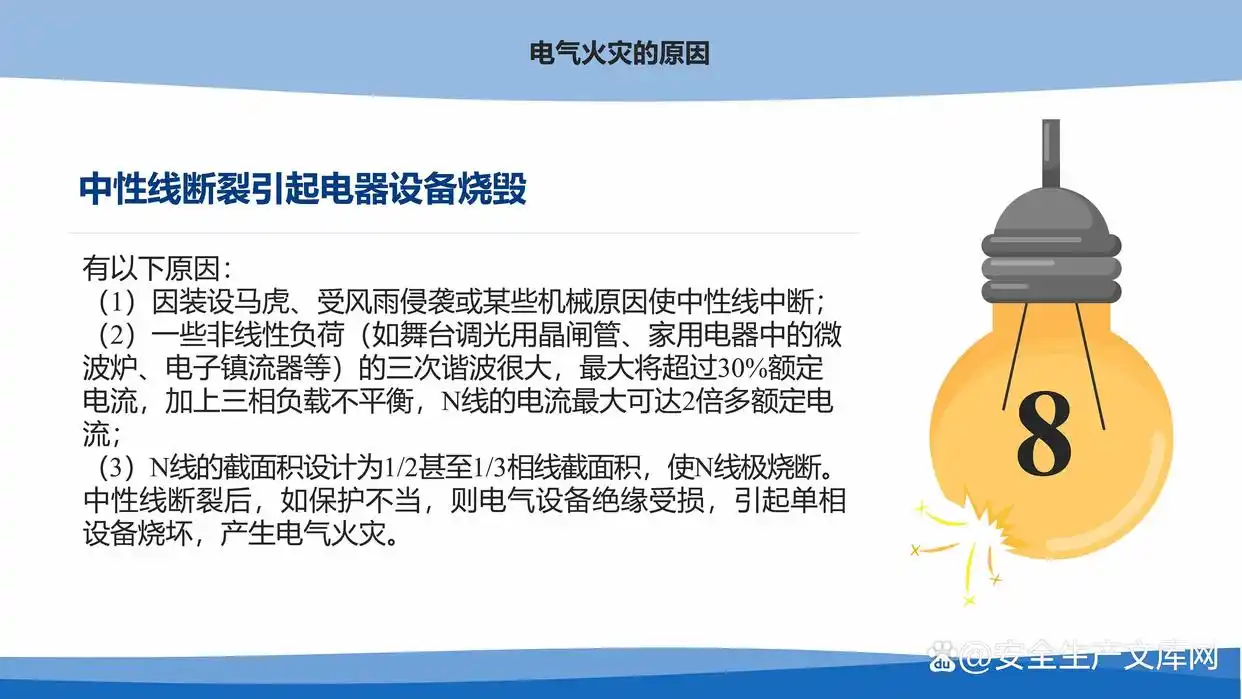
(9) broken neutral line: the insulation of the equipment was damaged and the single-phase equipment burned as a result of fractures such as the installation of spasms, the effects of the waves, and the small area cut off。
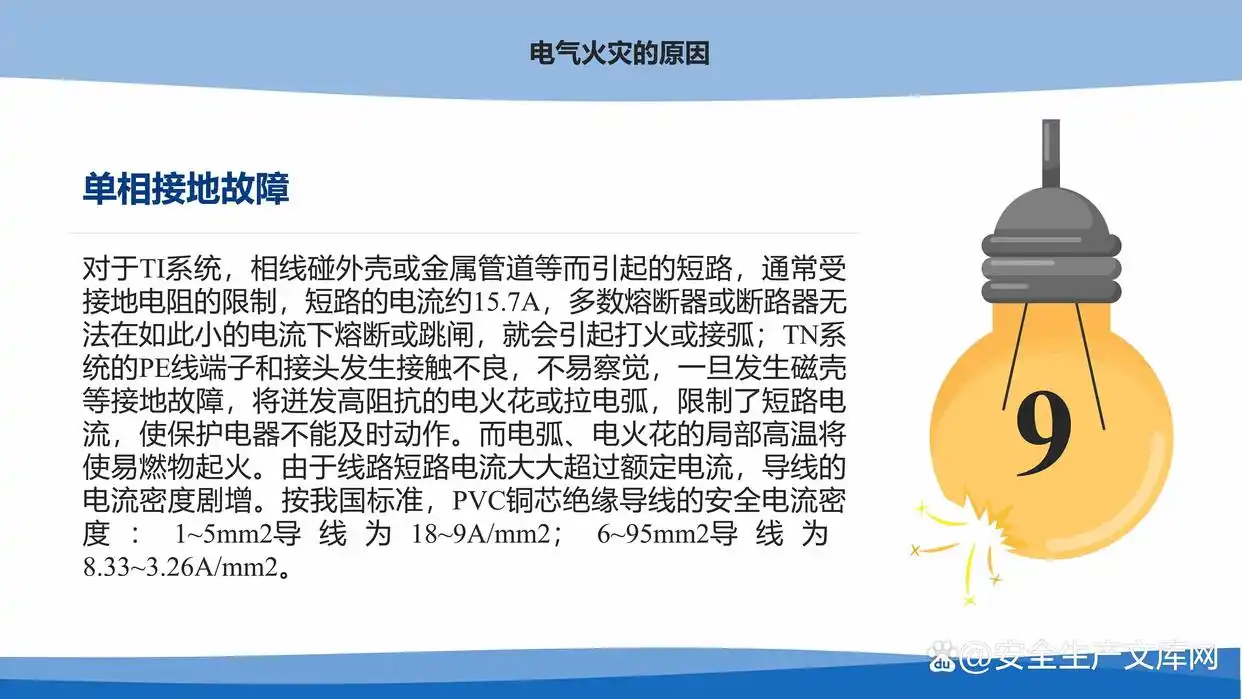
(10) disconnectional failure: ti system short-circuit electrical currents are small, protective devices do not move, causing fire; tn system pe line is in poor contact, generating arc-induced flames。
(iii) electrical fire prevention (part 3)
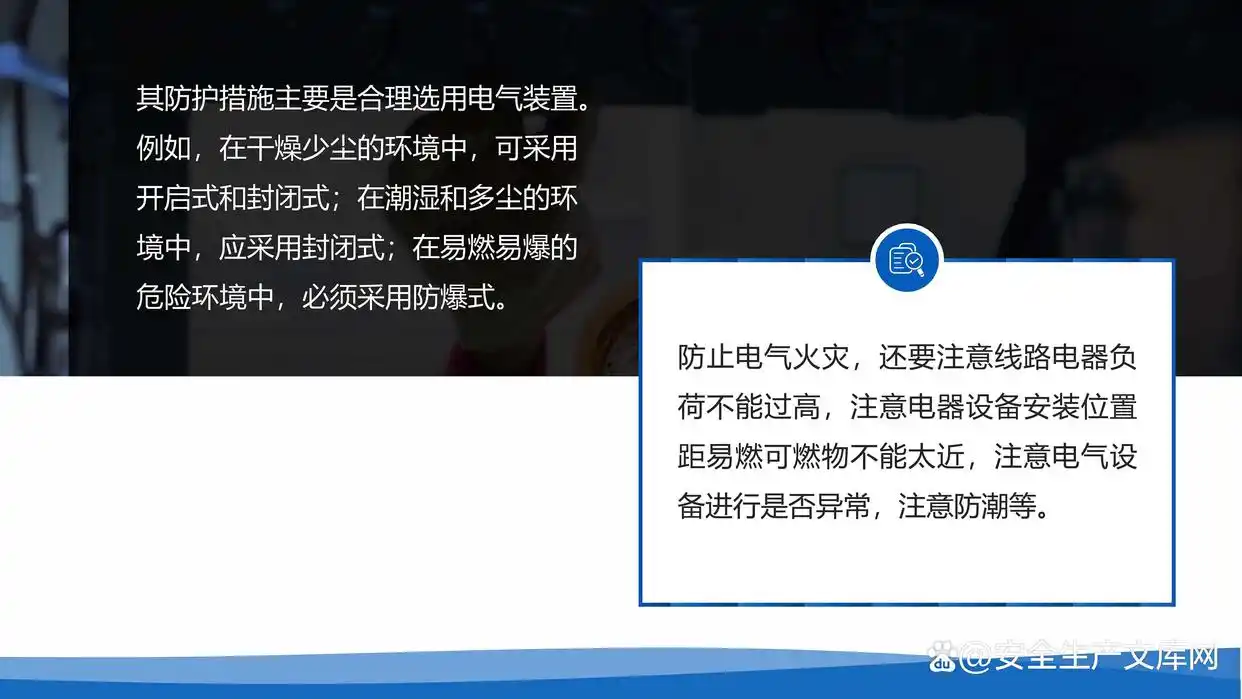
Reasonable selection of electrical devices: equipment selected according to the environment (opening in the dry environment, blastproof in the fire-prone environment), control of line loads, maintenance of distance of equipment from flammable material, and attention to unusual equipment。
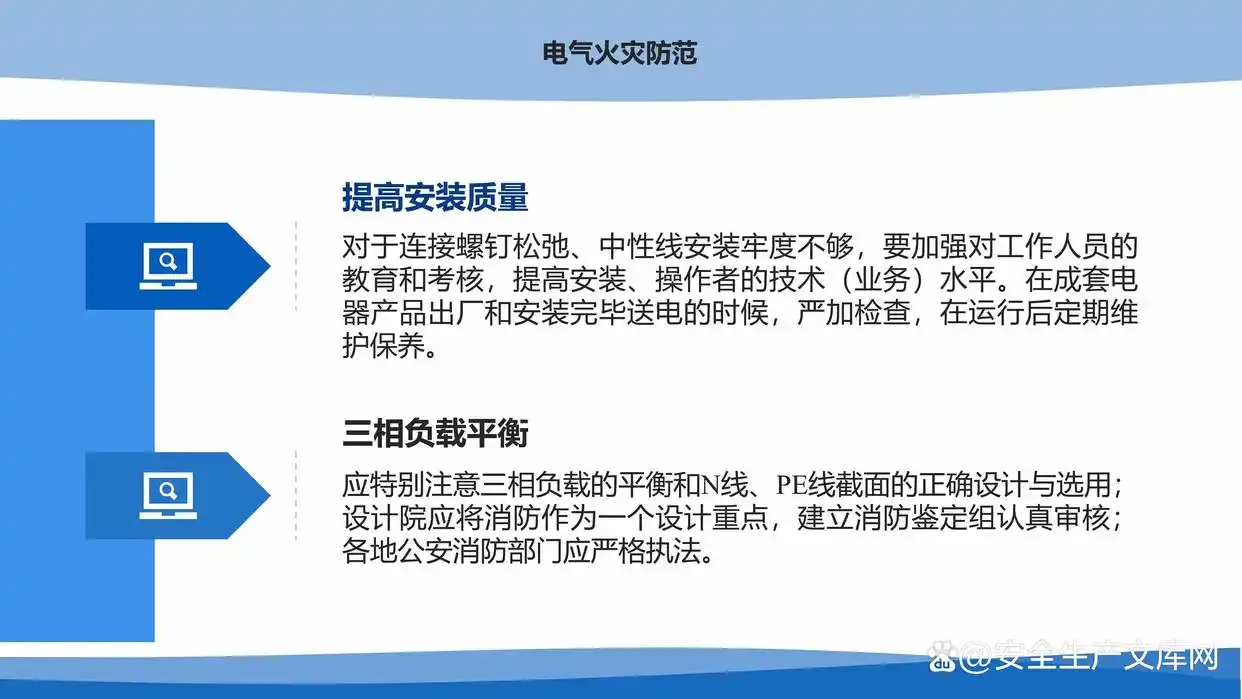
Improved quality of installation and maintenance
(1) strengthen personnel education appraisals to ensure that connections (e. G. Neutral wire installation) are robust and that they are carefully inspected and maintained at the plant, after installation and during operation。
(2) to safeguard the balance of the three loads and to properly design the n-line, pe-line cross-sections; and to enhance fire design clearance at the design complex and strict enforcement by the fire department。
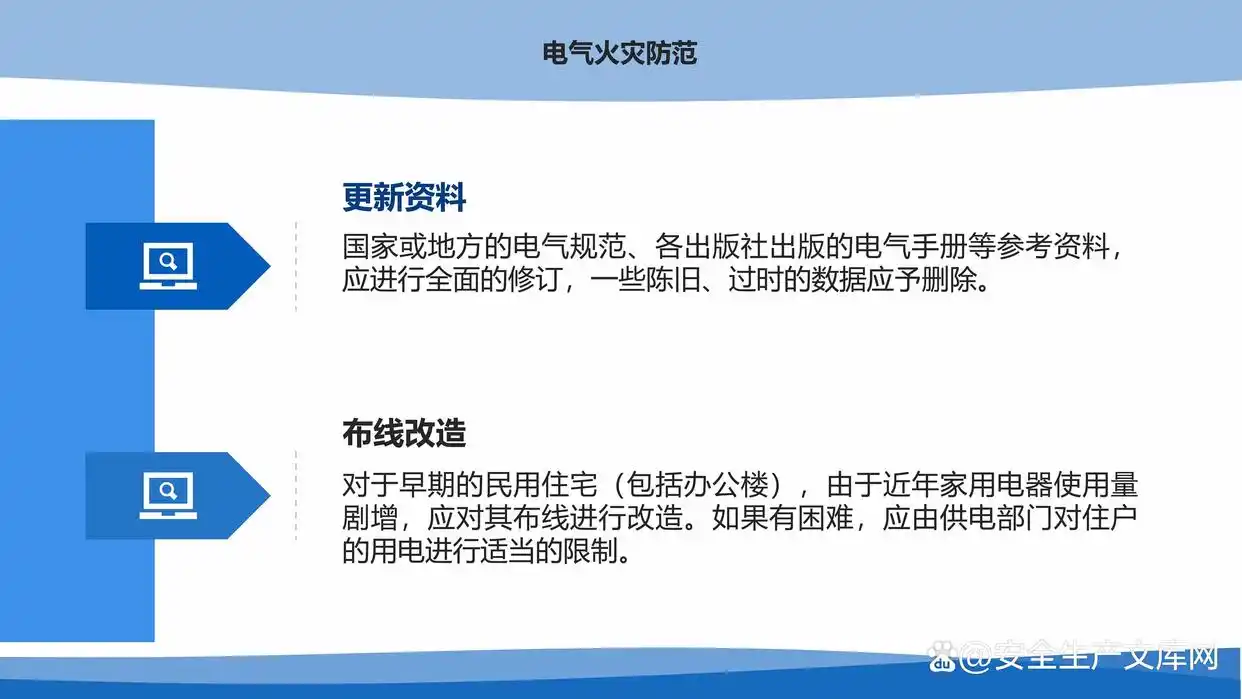
Update and wiring
(1) revision of electrical codes and manuals to remove obsolete data
(2) rehabilitating early residential/office building wiring, restricting household access to electricity in difficult circumstances。
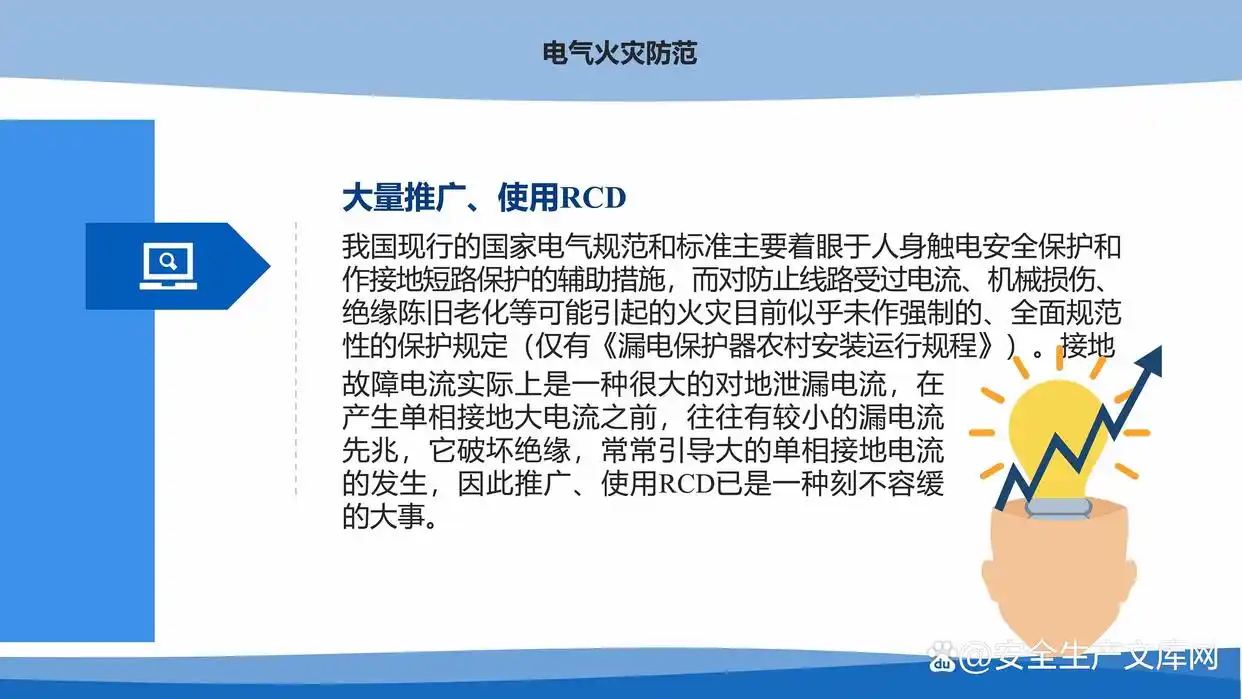
Promoting the use of leak protection (rcd)
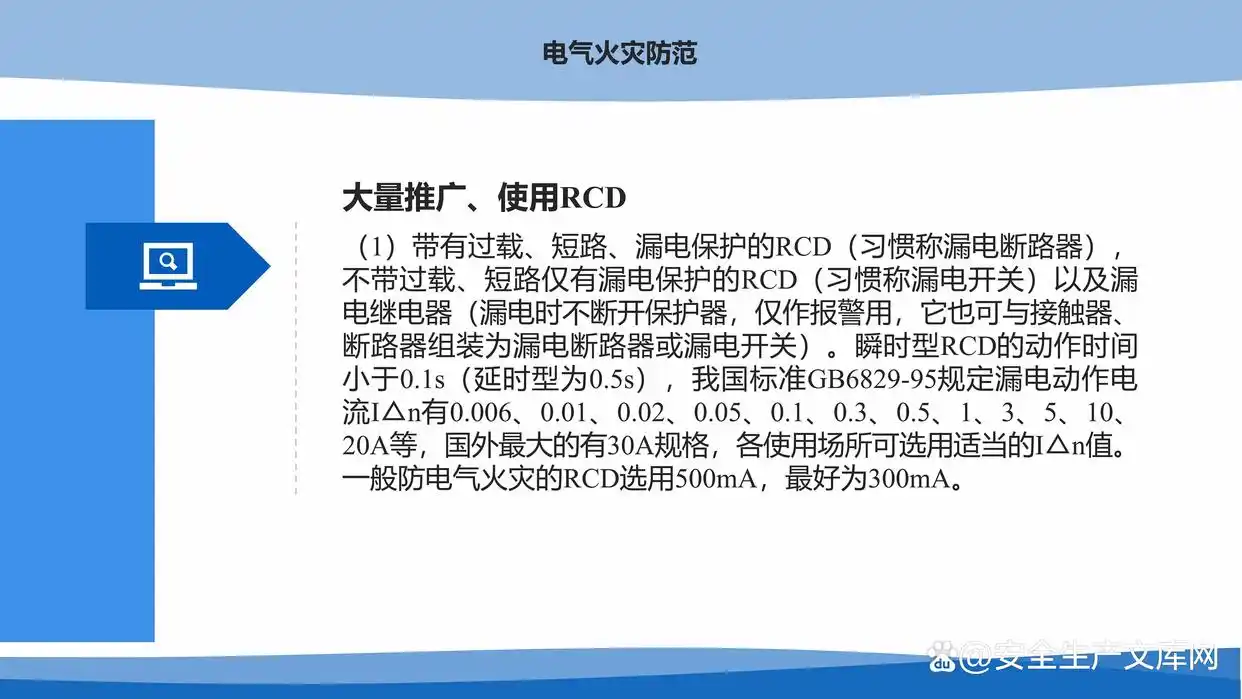
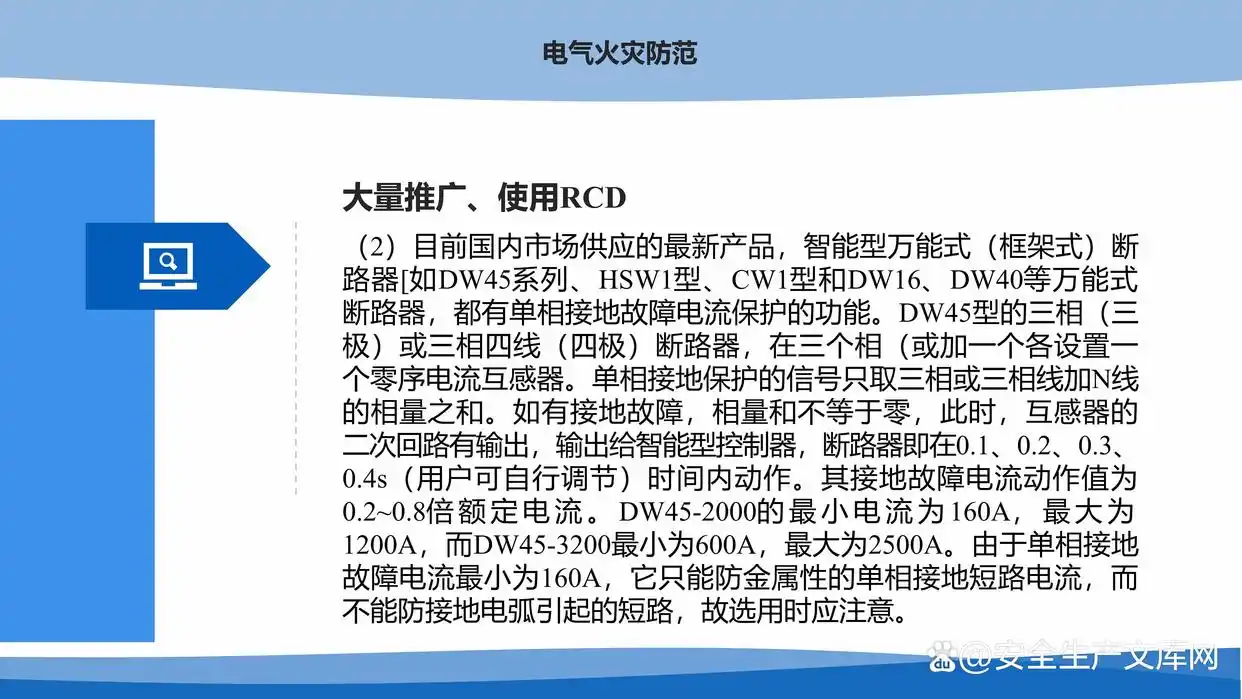
(1) rcd type: leak breakers with overload / short circuits / leak protection, leak switches with only leak protection, leak relays, action time 0. 1s (time extension 0. 5s), fire protection options 300-500 ma action currents。
(2) smart breakers: e. G., dw45 series, with single-place failure protection, 0. 1-0. 4s can be moved for time。
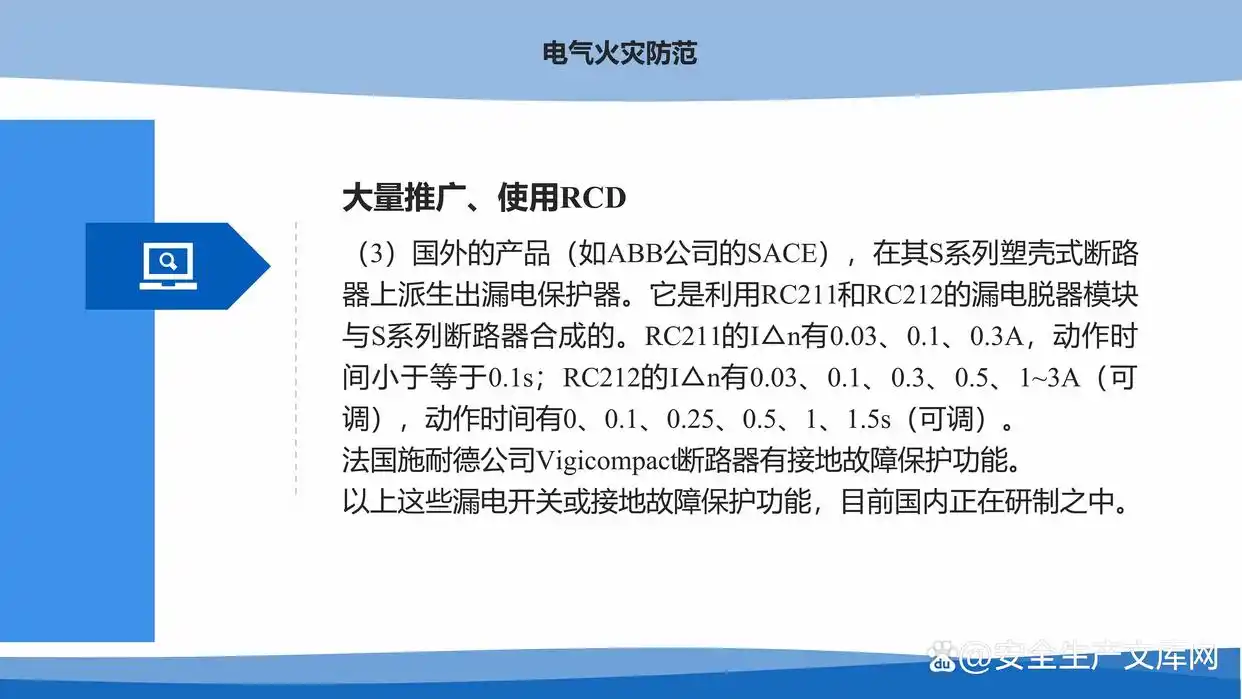
(3) foreign product reference: abb's s series (rc211/rc212 module) and schneider vigicompact breaker, all have site failure protection。
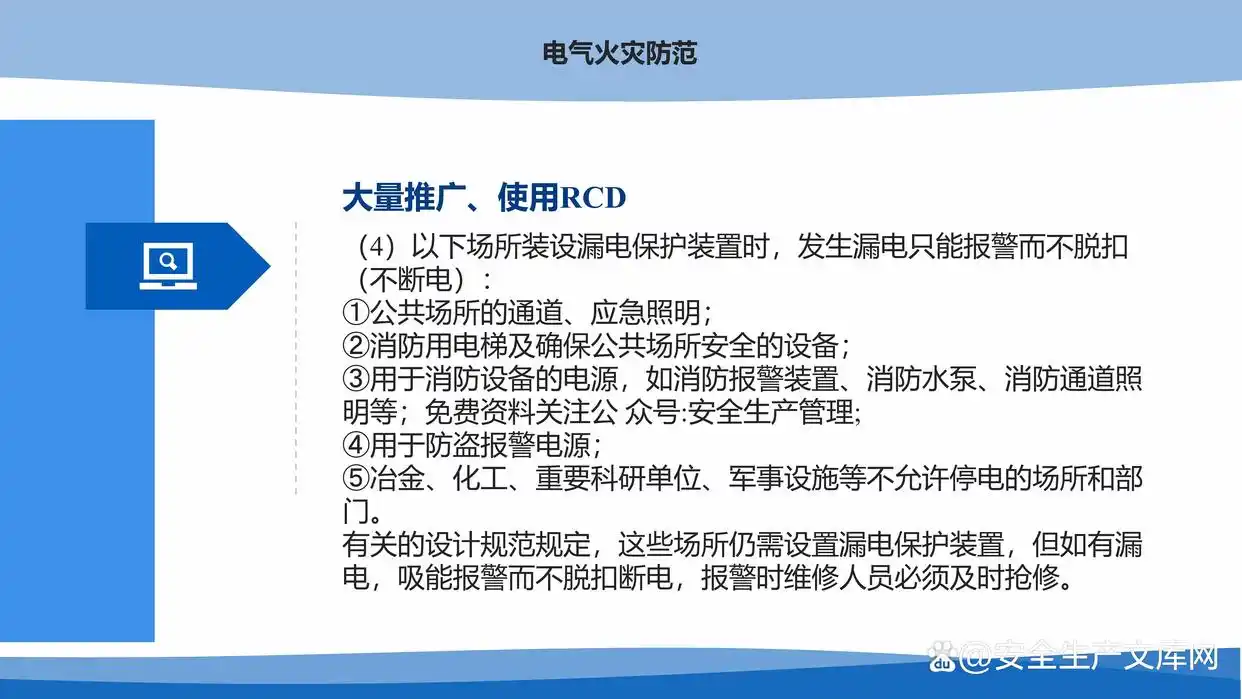
(4) special places require emergency lighting in public places, power supply for fire protection equipment, etc., and rcds are only alerts and are required to be repaired in a timely manner。
(iv) electrical blast protection technology (part 4)
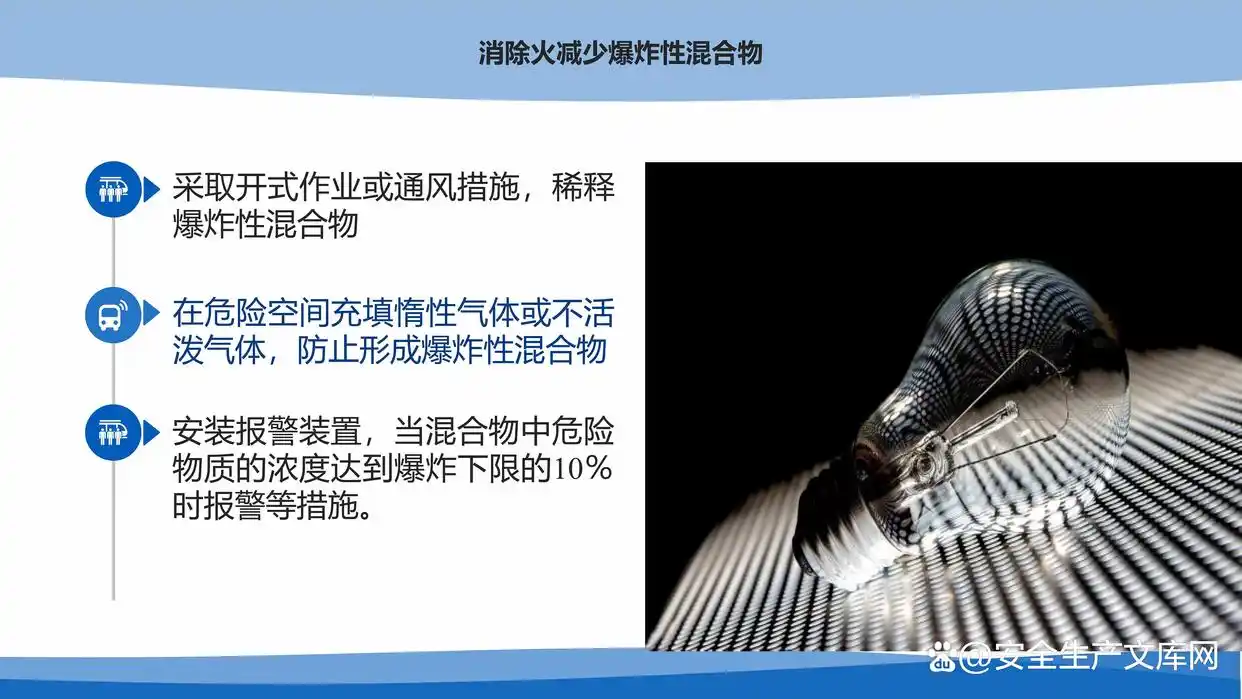
Elimination or reduction of explosive mixtures
(i) sequestered operations to protect against leakage, clean up the accumulation of dust and design a positive pressure chamber against intrusion
(2) alert when open or ventilated diluted, inert gas resistant formation at a concentration of up to 10% below explosion。
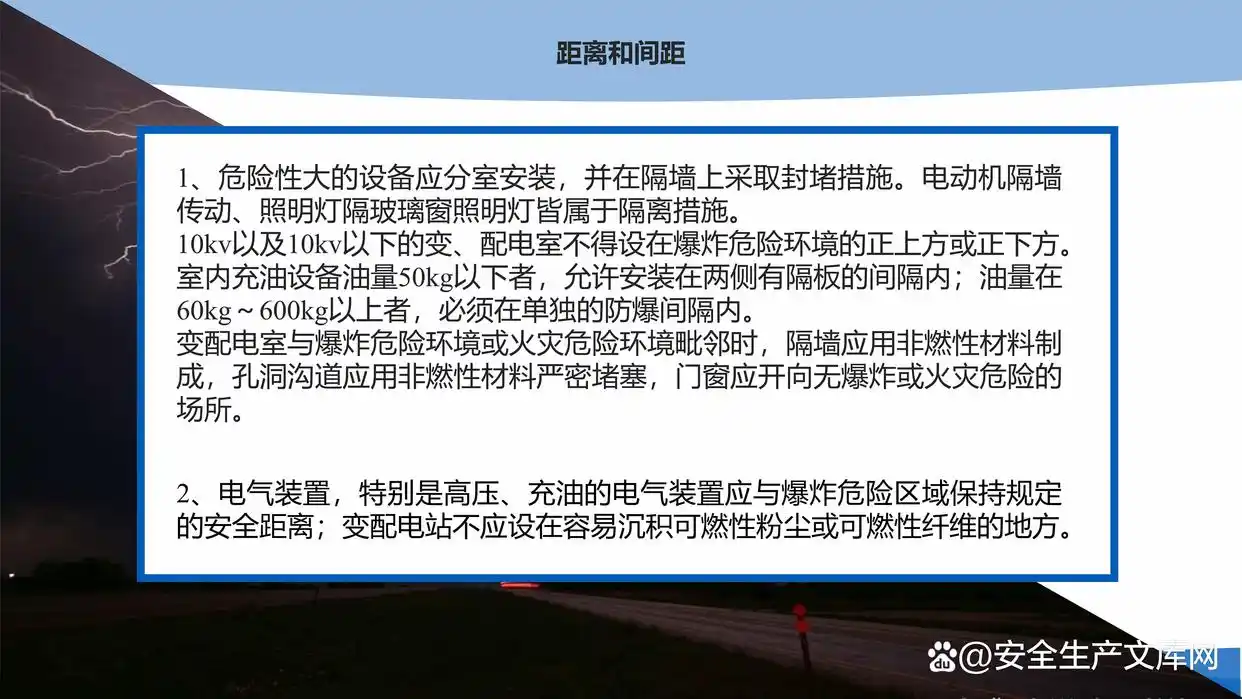
Control distance and spacing
(1) dangerous equipment sub-rooms are installed, walled; 10 kv and below are not located on or below the blast environment; fuel recharge equipment is installed on a sub-regional basis。
(2) electrical installations remain at a safe distance from the explosive hazard area and transformer stations avoid flammable dust/fibre deposition。
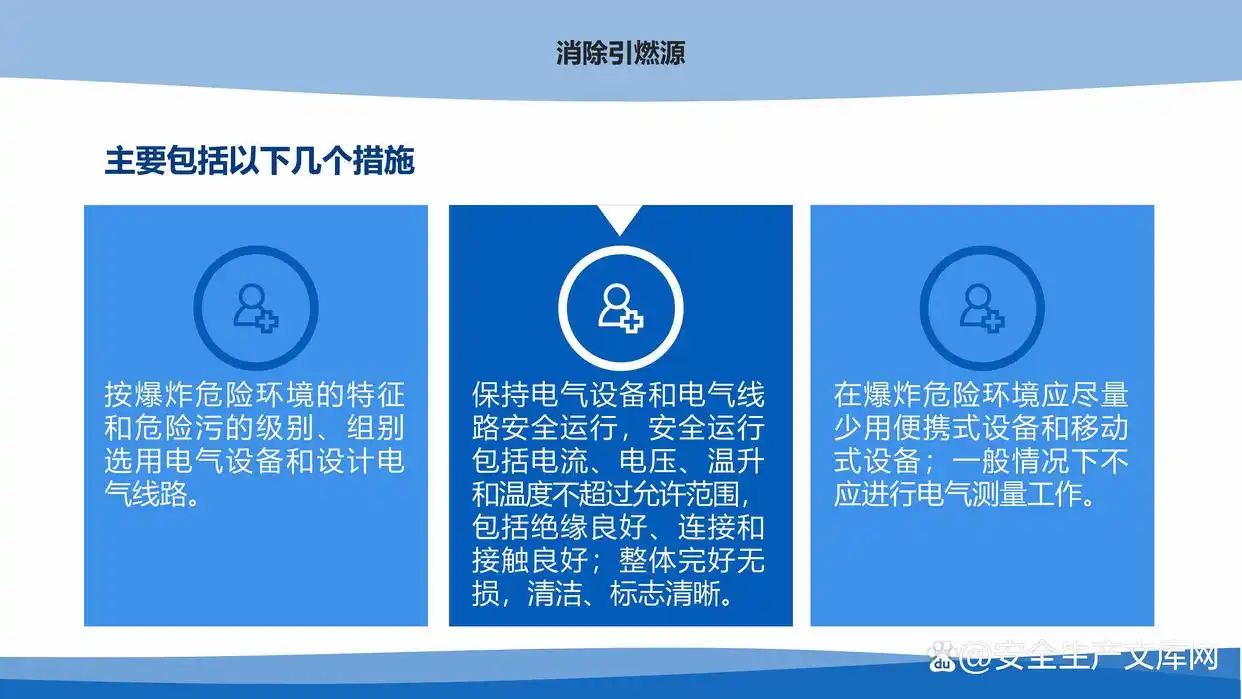
Elimination of combustion sources
(1) selection of electrical equipment and circuits according to the characteristics of the explosive environment
(2) ensuring the safe operation of the equipment (electricity, voltage, temperature increase normal, insulation, good connection)
(3) the explosive environment is less portable / mobile and does not undergo electrical measurements。
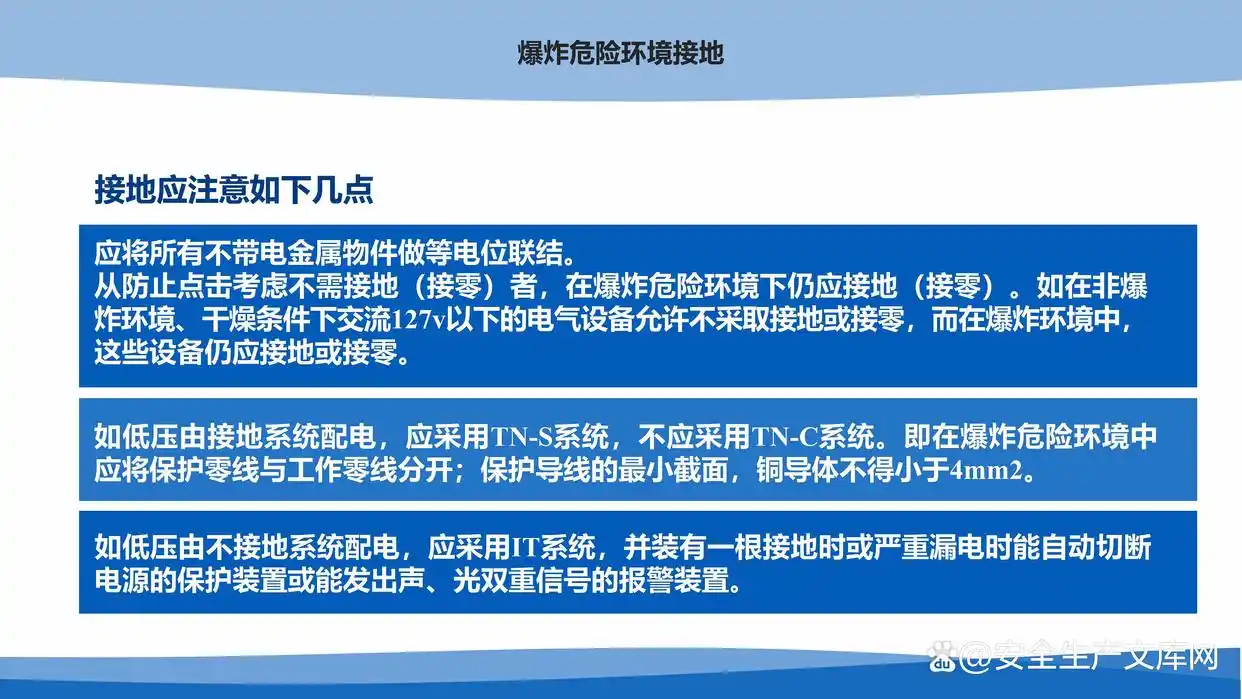
Explosive hazardous environment site
(1) all electrical couplings, such as non-electrical metal articles, in an explosive environment 127v the following equipment is still to be grounded / zero。
(2) the low-pressure grounding system uses the tn-s system (protecting zero lines from working zero lines) to protect the lead line copper conductor 4mm2。
(3) a low-pressure unearthed system with an it system equipped with electrocution protection or acoustic alarm devices。
(v) electrical firefighting (part 5)
Cut the power
(1) selection of the location to be severed without prejudice to the evacuation fire extinguishment
(2) unloading of lines before power is cut
(3) insulation to cut power (insulation to reduce electrocution)
(4) disconnected wires near the point of support for the wires, and the wires are cut off
(5) the staggered position breaks down the different wires and is short-circuited。
Fire suppression requirements against electrocution
(1) no foam fire extinguishers are used with electricity and priority is given to dry powder and carbon dioxide fire extinguishers
(2) the distance between a person and an electric body (dry powder / carbon dioxide nozzle to 10 kv with an electric body thorium 0. 4 m, spray water gun to land)
(3) aerial equipment for fire suppression, with an angle of 45° above the man and the body carrying the electric object
(iv) bringing a conductor line to the ground and setting up a guard circle against cross-step voltage。
Fuel-filling equipment for fire suppression
(1) external fire: the use of dry powder to extinguish the fire and the loss of electricity and water during the fire
(2) internal fire: following power outages, storage pits are oiled, sprayed, foams are used to extinguish the fires, oil currents are prevented, and oil fires in cables are covered with foam。
Expected learning results
(i) knowledge level: mastery of the core content of electricity security
The definition of the type of electrical current injury, the point of risk of exposure to electrocution and the protective measures make it possible to distinguish between the hazards of electroshocks, electric injuries and the damage to the electromagnetic field and the response methods。
Common causes of electrical fires, such as overloading of lines, fractures of neutral lines, single-stage failures, etc., are well known to identify fire hazards in the actual scene。
(b) the acquisition of critical electrical blast-proof technologies (e. G., the elimination of explosive mixtures, the control of incendiary sources) and the physical steps of electrical fire suppression (e. G., power outage methods, fire extinguisher choices), and the understanding of special requirements in different scenarios (e. G., location of the explosive environment, use of fuel for fire suppression)。
(ii) skills level: upgrading security operations and emergency response capacity
Electrical operators: can regulate the implementation of technical measures such as insulation, screening, grounding, correct selection of rcds and determination of their state of operation, strict adherence to high-pressure overhaul work tickets, guardianship systems and reduced risk of irregular operation。
Security managers: an enterprise's electrical safety management system can be developed on the basis of the content of the course, risk screening (e. G., inspection of triple load balance, n line transects) can be organized, electrical fire contingency plans developed and drilled。
Ordinary learners: the correct use of household appliances (e. G., power cuts in mobile devices, leaks in hand-held tools), the avoidance of high-pressure facilities by thunderstorms, preliminary judgement and correct response in case of electrical fire (e. G., selection of suitable fire extinguishers, distance from offline areas)。
(iii) consciousness level: strengthening the concept of security responsibility and prevention
Establish a “preventive” awareness of electricity safety, recognizing that electrical fires are often triggered by negligent or irregular operations, and proactively inspect electrical equipment on a regular basis (e. G., insulation of non-relay devices, circuits) to reduce the risk from the source。
Clarify the security responsibilities of the different players: electric operators are required to carry out their duties and duties with certification, enterprises are required to implement precautions such as equipment selection and wiring, and the general public is required to observe the common sense of the use of electricity in order to create an atmosphere of “safety for all and security for all”。
To enhance the calm and scientific nature of emergency disposal, to avoid increased loss of life and property due to panic or mishandling (e. G. The use of foam fire extinguishers with electric fire, close contact line)。