


In their writings, the classic writer, max engles, said that if there is only one science in the world, it is history; if there are two in the world, it is history and natural science. This is exactly what mr. Zhang woo yan, world institute of political and economic studies, chinese academy of social sciences, said: history science is the foundation of all social sciences; and in economics, as the distinguished economist, mr. Wu seon ming, a professor at the institute of economics of the chinese academy of social sciences, said: economic history is the source of economics, and economics is the flow of economic history。
The message is also that history, like mathematics in natural science, is the foundation of other disciplines in recent times, and that the students who enter history, although it seems that they have made a professional choice, are in fact an extremely inclusive choice in which we can also make more specific and nuanced choices in the course of history. The strategy used by mr. Guo jing to propose genghis khan to deal with the kim regime was “neither attack nor non-attack; attack rather than attack”. In this sense, it is fortunate that the students who have entered the history profession have put aside the dilemma of the choice of personal childhood for the time being, thus allowing them to make more acceptable and rational choices after entering the academic world. Chinese history, world history; political history, legal history, economic history, social history, cultural history; environmental history, ecological history, medical history, etc。
Basic access conditions for the past
It is true that entering a discipline requires a certain amount of knowledge to enter the deep space-time tunnel of middle and foreign history. Former teachers have already told us about the basic conditions of access to history, which are generally summarized as: the ability to read literature, the ability to master foreign languages, the ability to think logically and the ability to enter history。
The ability to read literature is a fundamental function of history and a yardstick for determining the high level of academic achievement. China's history is governed by words, rhymes and discipline; catalogues, versions, calibrations, identification of hypocrisy, historical origins, etc. The ancient cloud: “a year's vision and resolution” is the ability to quickly and accurately read and articulate the correct meaning of a page of words without modern markers. Those aspects are deadly and, in fact, of indispensable interest. With the basic ability to read the literature, once we have access to the original literature, we can discover the wisdom and vulgarity of those who have read, and we can read a piece of history in a text that is considered a book by ordinary people。
The mastery of foreign languages determines the breadth of the vision of the man who controls history. We need a foreign language to understand the status of research on this academic issue in other countries; we need a foreign language to disseminate our own academic work; we need a foreign language to work with scholars in other countries, as well as a foreign language. In this sense, we should be particularly envious of those with linguistic talents, who are often the birthright of intercultural research。
The ability to think logically is, indeed, the ability to communicate one's thoughts clearly to others. Writing can be done in as few words as possible to inform people of their deep academic thinking, to be able to move forward at the level of the speech, to express their own unique views in a smooth manner, and to allow listeners to listen to each other with a sense of contemplation, appreciation and resonance. This is particularly commendable in an era of resource constraints such as paperless electronic reading. For we are often unwittingly insinuated in long and long speeches, and most intolerable is the fact that after a long period of hard-headed reading, we have repeatedly wondered about the state of affairs that we cannot afford。
The ability to enter history is popularly known as the sense of history, where the life experience of each person can in itself constitute a readily available resource for reading history and understanding society, the research of the sociologist general jiang sou gang opening a string bow village, the study of the village of fengteng, the town of huangtai, the county of okuda, where the anthropologist lin yoohua used fukuda, and the study of the village of yamatung yugyu, yang xuan province, reveal that their homeland is often a better place to carry out successful academic research. The “fieldwork” advocated by the institute of anthropology, with its special focus on long-term “participatory observation” (at least six months), is not the minimum time to find a sense of history. Perhaps we should encourage young students to go deeper into history. The social surveys promoted by sociological studies, which are more focused on current social issues, may be shorter。
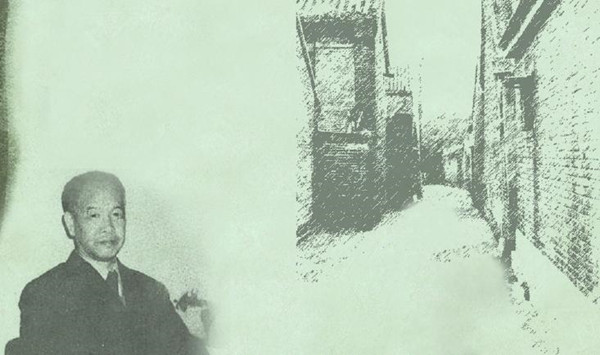
Mr. Fleming
Ii. The structure and learning of knowledge maintenance
The former director of the institute of history of the chinese academy of social sciences, lim ganquan, said: “fou’s garment school is one of the few schools formed after liberation. It has a unique academic style, has a productive and progeny, and its students follow mr.’s footsteps.” the royal book of shandong university, in summing up the academic logic of the fulbright school, said that it was a “systemic and distinctive school” of socio-economic history research, a `model' of research methods that integrated economic and social history studies, studied the economy from the perspective of social history, analysed society from the perspective of economic history, studied the interaction between the two in complex historical networks, and integrated case recovery with the grasp of macro-social structures and historical change. It is both good at showing the convergence of history through partial history, and it is clear from historical trends what it means.” mr. Fu “special attention is paid to the discovery of historical material that has been abandoned by traditional historians, as evidenced by the folk literature, including contractual texts, ultimatums, books of thought, books of accounts, tablets, etc., as well as by the survey of the field, and by the emphasis on the use of theories and concepts of social sciences outside history, particularly sociology, with special attention to detailed studies of a geographical nature, studies of particular rural economic communities, etc.”. Mr. Foreman and his sons have literally broken several iron shoes, reaching the far side of the country, and the information they search for is often an indescribable piece of shit from which the real history is read。
The french school of human rights believes that history can be broadly defined, and the structure of knowledge and academic knowledge that can be demonstrated can be summarized as follows:
(i) emphasis on integration and application of multidisciplinary knowledge。
The knowledge of various disciplines, such as sociology, anthropology, economics, statistics, computer science, psychology, ethnography, linguistics, psychoanalyticals, ecology, geography, etc., can be used in historical science. Philosophy, systemic theory, control theory, informatics, mathematical statistics, fuzzy mathematics, etc., can be used as a method of research and research, even though scholars have concluded that “the economic perspective of society and the social perspective of the economy” are a feature of the fascist sect, and that mr. Togae's admission to university was in the economic department, then in the history department, in study abroad and in sociology, and in general in folklore。
Using multidisciplinary knowledge and methodology, mr. Foreman developed several of his theoretical views, saying: “it has long been a firm belief that, without foreign capitalism invasion, china, like western europe, would have entered the capitalist society spontaneously and by its own means, but this argument was inspired by the marx historical overview of the origins of western european capitalism, but not necessarily fully in line with marx himself. In his letter to friends, max made it clear that my historical overview of the origins of western european capitalism must be completely transformed into a historical philosophical theory of the general path of development, which all peoples, regardless of their historical circumstances, are destined to follow, and i ask him to forgive. He would give me too much honor and too much insult. ... Very similar things happen, but in different historical contexts they give rise to completely different results.” mr. Fu realized that the bureaucratic authoritarian state regime that emerged within traditional chinese society showed its own value in reconciling irreconcilable contradictions. Mr. Fu objected to the analogy between china and regions such as india and egypt to the conclusion that the requirements of management channels and irrigation facilities, public works, water conservation and shared water were the reasons for the creation of a centralized government, the functions that a centralized state had since its emergence because of its status, and one of its many functions. In fact, in traditional chinese societies, much of the construction and management of water works was carried out in communal societies without the need for state intervention. “the state's control over society is, in fact, an interactive process in which the `public' and `private' systems clash and exploit each other.” localization and peasant wars are the basic manifestations of conflict, but they are often temporary and temporary in nature, where the forces can be either the starters of the boom or the use of peasant uprisings to achieve their own ends, or can come out to suppress peasant uprisings and safeguard their self-interest. These local forces are often used by the dominant state regime to overcome the instability and thus integrate them and subject them to the general authority。
Since the end of the year, the concept of ownership of property and property law has become evident in the long-standing coexistence of the state-owned economy, the communal economy and the private economy, which has been difficult to dissect, and the plurality of judicial power that has been derived from it. The diversity of thought and culture also exists. Thus, while there are many phenomena in society similar to the recent european era, they often do not bode well for a new social pattern. Rather, it is the peaceful coexistence of old and new factors, peace and security, the extensive adaptability of social structures and the ability to absorb shocks, and the fact that businessmen, despite their emergence as states, have become a prominent class, have returned to seek the protection and privileges of the government with a sense of resistance under the blackmail of the regime and are less aggressive。
(ii) emphasis on “overall history”。
The french yearbookian mark bloch also advocated “overall history”, and le golf advocated “new history”, and brodelle proposed a long-term analysis, which was long overdue in mr. Fortress's hands, so it can be said that in an era when international exchanges were still rare, mr. Fu had already moved out of china to a number of paths similar to the french yearbook school, although no such designation had been established. Mr. Fu was able to analyse traditional chinese society from the state apparatus, the socio-economic system, and the ideology. In qinhan's hao, he concluded that the hao were from the ancestral family of the six nations, many of whom had lost power, and that they “resisted from zimin’s teeth”, and that the qin emperor’s repeated luxuries were not complete, and that, as generations grew, the hao could grow up, using the terms “preservations” and “receivings” as a way to perpetuate their cultural spirit. They use their adopters as auxiliaries to their own, slaves as a prerequisite for maintaining their dignity, with their luxuries and excesses that often constitute a direct threat to the exploiters and regimes of the poor, and when the rulers try to subjugate them, some of their might may fall and become valves for the rest of our lives。
Because china’s traditional society is based on the economic basis of tyrannical farming, which has its roots in the triad of loan capital, merchant capital and land capital, china’s authoritarian regime, with its bureaucratic and military domination of landowners, merchants, peasants and slaves, has strong hierarchical lines. Despite the existence of a system of discipline as an incentive for bureaucratic renewal, the conservativeness of society is evident. Slaves come from a variety of sources, including prisoners, sinners, gifts, trades, contributions and contributions, crime, war, birth, etc. Their legal status and social status are extremely low, and their masters tend to take possession of the land and do their best. This is the class rivalry and class conflict that traditional chinese society often displays。
Three labour-force patterns have emerged in rural areas, namely, domestic workers, tenants and slaves, as a result of the development of tenancy farming and the relative isolation of farmers. The coexistence of the commodity economy with the natural economy has led to a further two-step retreat in chinese society. Farmers, who are already relatively free to leave their land, can become domestic servants and invest in industrial development by crowding out surplus labour from rural areas. The truth is, however, that the land owners and the rich farmers who may be heading to the new frontier have chosen the way out of the countryside and out of production and have made their living by giving usurious loans, leading to luxurious life, with the parasiticization of the landowners becoming more pronounced. They continue to increase the exploitation of tenants, build up hard-earned land leases and re-enact the exploitation of tenants, leading to the impoverishment of farmers, the failure to achieve an effective interface with urban businesses and increased dependence on landowners。
Mr. Fu analysed the following: “the free movement of this vast agricultural population to all parts of the country has played a number of roles, although it has eased population pressure and social tensions in a given area and has facilitated economic development in the diaspora. However, this large agricultural population, if concentrated too heavily in a given region, would inevitably have the effect of lowering the standard of living and the level of skills of the labour force, with competing employers. Employment in the urban handicrafts is not well developed, and the main tenancy relationships are often of a savage nature and sometimes derive from slave-like deformities.” in the gangnam region, the use of slavery by landowners is widespread. At the political level, ordinary homes, which are weak in their power, often take the initiative of seeking asylum from politically privileged, identity-based landowners, who find themselves under their doors as servants and tenants. Mr. Julloray calls this phenomenon “second serfdom”, which, in mr. Fu's view, is a deformity of social relations resulting from the combination of old and new factors, with landlords renting expensive land for the purpose of marrying wives and giving birth to a large number of children, often resulting in the fragmentation and waste of property, and still unable to lead to production. In the context of the control of independence and freedom by landowners, it is difficult to find room for development, and even wives and daughters can be subjected to arbitrary bullying by their masters, sometimes raising the flag of resistance。
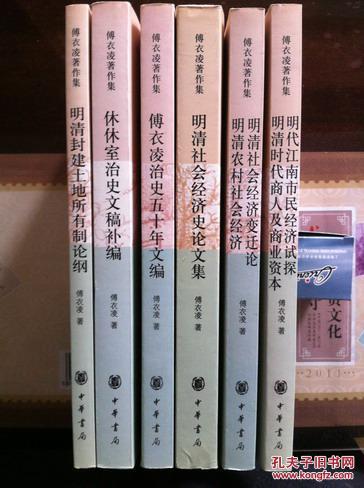
Books of fortress
(iii) emphasis on the historical path of “bottom-up”, “top-down” vision。
Mr. Fulgaring has a deep interest in folklore such as the golden bough, as well as in new historians such as leung kai, which translates the historical methods of using folk literature, such as family records, contracts, and so forth, into practical action, and which constitutes a prominent feature of the clothing school. Mr. Fu stressed that folklore, road stories and child stories can be a source of historical research, and that mr. Fu has developed a culture of care and discipline, and that he is active in visiting and reading, visiting and negotiating。
Mr. Fu recognizes that the collection of historical material must be accompanied by a broader perspective and the extensive use of relevant supporting scientific knowledge, as well as the history of folklore, as illustrated by the physical monograph and the history of folk literature (coercive texts). He sought out the subject of the xin an and shan right merchants from shei zhui, and resonated with the japanese scholar fujii haku. He then interacted to advance the study. From his reading of von monlong's "awakening mansion " , he found that the sioux tojo and west mountain merchants were particularly interesting topics, and that the conversation with lu, the university of nanjing, further stimulated the search for inquisitors active in various parts of hunan. Mr. Fu's concern with folklore is a natural interest, and he says in the mau fou: in the ancient mind, to see peaches as an emancipation of the devil, and to remove the ominous mystery, like the british view the mountains as something of mystical power, to whip a bull and a horse, and to whip a cow and a horse, but to whip a child with a canary or a willow will not be easy for the child to grow up, because the sparrows will not grow into trees, and the willows will collapse. Mr. Fu was heavily influenced by the folklore scientist fraser, the golden earnings, and the knowledge of folklore is particularly professional and exclusive. He pointed out that, in the form of a peach-exorcising man, which had passed through the phase of a peach-exorcising man, the diocese had been defined as a ghost-exorcising man, working with a peach to perform the function of exorcism. The recent spring union, though associated with ancient peaches, lost its original meaning. Mr. Fu, in the name of fujian chan, huang, li, wu, shi, liu, zhu, lui and others, such as xue, zhang, yu, yuan, nie, bae, zhang and ho, are all zhao clans. For “the chinese and the chinese are in constant contact and are exposed to the fragrance of the chinese. The historical picture of the composition of fujian population is actually pointed out here。
(iv) emphasizing regional research and its cross-cutting approach to global research, interregional comparisons and even inter-country comparisons。
Mr. Fu has come to the forefront of international academic circles by caring for and comparing each other and by engaging in more international peer dialogue. The fact that the chinese chamber of crafts does not exist only in urban areas, but extends from rural to urban areas, mr. Fu has recovered the fact that there is no contradiction between the chinese business class and feudal landlords, but rather a commonality and even a double role. The fact that chambers of commerce and industry exist in both urban and rural areas has led mr. Fu to realize that there is no contradiction between rural and urban areas in china, which are the original bases of urban chambers of commerce and industry and maintain close ties with rural areas, such as the existence of smaller forms of organization in the chambers of merchants, which are called “plaguings” and which are designed to elaborate “plaguings”, which are organizations of traders specializing in certain types of goods, and which are earlier referred to as official transport organizations, but which have since been generalized. On this point alone, there is a significant difference from the european experience。
In the process of gathering information, mr. Fu found that china's overseas trading operators were born not only in coastal areas but also in the general interior. Jiang suhuatin, jiang xian and yao were the basis for the concentration of sea merchants, as well as in mingzhou and hangzhou in zhejiang. According to mr. Fu: “there was a great deal of wind in the zhe china sea, many of the zhejiang people came from ningbo and the zhui sea, many of the zhuang rivers had a long history of zhui zhai tsai mei, and the hangzhou house of restoring was the home of zhuang, with many foreign businesses.” fuzhou is a place of transit between china and the world, “after the city of quancheng moved to fukuo, there was a great deal of china, and the estuaries of the province, along with the people of the islands on the coast of the sea, gardin, were all plowed and sailed far away, while the tomyotra of fukuqing, who was in the middle of the sea, passed through the sea. As for xinjiang and xinjiang, especially the concentration of chinese traders abroad, “all 3,000 families, i. E. All of them, were robbed by businesses.” there are also a lot of merchants in guangdong who go to san fuz, manga and siam. Businessmen from the mainland, such as the badge dealer, were also an important part of overseas trade, and during the year of ming jia, they worked with fujian and guangdong traders to manage all foreign affairs. Later, the badge dealer had a track of activity at the 13th bank of guangzhou and the ningbo games. Others, like japan, where jiangxi traders, such as liu, have become well-known, yuzhouman juzu has been serving in ryukyo for many years, and the firefighter of francing is an activist in overseas trade. There are also many traders from dragon rock and tingzhou. In mr. Fu's view, so many people are attracted by a convergence of profits and “single-to-single” is detrimental to the concentration of maritime capital and hampers the accumulation of original capital. At the time, large commodity silks and sugars were run by zennixers, insignists, brokers and dealers, who competed not only in international markets but also in domestic markets. Mr. Fu found out from seo guangji's sea protection word: “if luzon's metropolis, and i'm concerned with zhexiang businessmen, all the countries of luzon, and all those who want me, will be the countries of luzon.” the result is a self-involved competition among businessmen, which is not conducive to the formation of large traders. It is important to promote the exchange of goods between china and the north, but it has been devastated by the jealousy of the feudal forces, who were the victims of the social conflict and conflict. The formation of these new interpretations is by no means within the reach of those who are confined to reading a narrow range of information. Mr. Fu deplores the fact that the hard work of finding historical material, while testing the will of the healers, has led to new knowledge, new understandings that have never existed before, and that joy is difficult for ordinary people to experience。
Iii. Inheritance and innovation in the french language
At the end of the 1980s, mr. Yang turned to his new field, an academic institution of marine history, to begin with work on a normative conceptual system, followed by the publication of the oceans and china (8 volumes), china and the world (12 volumes), china's ocean civilization study series (10 volumes) and china's history of marine civilization, which provided a clearer picture of the coexistence between land-based and ocean-based civilizations in china's traditional civilization, which was marked by a “underground of the sun” that was not the same as the modern colonial, predatory and unsustainable ocean civilization of the west, and maintained a long-term and peaceful trade in the sea around the china sea, until the indian ocean reached the eastern coast of africa. Yang focused on abandoning the “land thinking” and standing in the sea looking at china, presenting a “blue thinking” that is different from the traditional view of history。
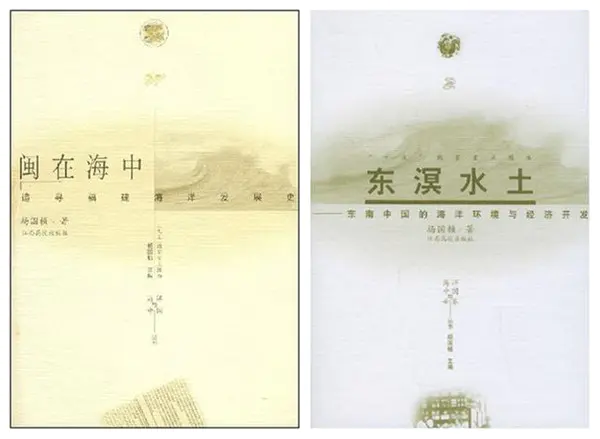
Yang kuo-chung works on two subjects: "since the sea" and "since the earth"
Professor li bao-chul's early industrialization: 1550-1850 (social science documents press 2000); development and constraints: the minqing gangnam productivity study (taiwan united publishing corporation 2002); and its latest work, guns and book books: china and the east asian world in the early age of economic globalization (2017), have had a significant impact in the academic world. Relying on the methodological approach embodied in the study of the economic history of productivity, li bo opened a path to the study of the economic history of china. He has long been in europe and the united states, engaged in a timely dialogue with his international counterparts and was able to introduce the latest theoretical methods, concepts and results of social sciences in western science into the field of socio-economic history research. He presented the theoretical model of china's historical development of the “kiannan road”, “sometimes beginning in the late middle of myung ga-yang and finally ending in the end of the qinghuang sun”, which revealed the “super-light structure” character of heavy industrial deformities and light industrial deformities, as well as the “development theory” contrary to huang's stagnating ideology, which was an important extension of the garment school。
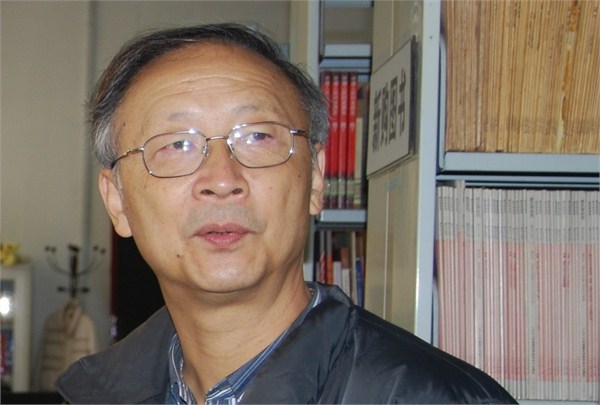
Li's heavy
The study by professor chen quiping on the history of the qing dynasty system, the study on family culture in fujian and the study in south-east china have all borne fruit. In his study of the clean-up system, he focused more on its relationship with civil society and on analysing the distance between the expression of the system and the practice of the system, since the dialogue between the two had been effectively achieved through the use of records, archives and philosophies and the family spectra (the new path to the clean-up system, university press 1988). In 2004, the study of the history of civil documents and the mingqing regime, published by the huangshan book society, carried out further studies on civil status, ease of knowledge, self-declared cabinets and civic burdens. Authors of the book " forging family society and culture in the near 500 years " (shanghai trinity bookshop 1991), and " forgingan biography " (fukuan people's press 1996). Chen qingping adheres to a “bottom-up” academic approach, advancing in the collection, collation and use of taiwan's history and taiwan's literature, and the study of civil documents and southeast chinese business (sino-china book office 2009) shows further refinement of the study。
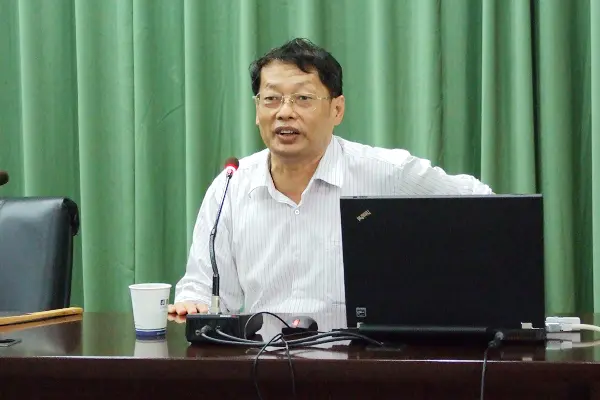
Chen qianping
Professor zheng jin-man's focus on family history research, “private” system research, and the consolidation and use of religious inscriptions has deepened mr. Foremou's “clanism”. The “traditional society of communes and the state — in the perspective of pluralism” (triad bookshop 2009), which has a much deeper vision of communal organizations and community-based economies, family structures and clan-based organizations, civic beliefs and ritual traditions, local administration and social transformation, is one of the more specific aspects of mr. Fore leung's traditional “plural structure” of chinese society. Its international impact was further expanded with the publication of the family organization and social change by hunan educational publishing house in 1992 and in english in 2001. In recent years, zheng jin-man has become more focused on field research and has sought to inculcate in the literature of folk history, with a strong orientation from social history to cultural history, which shows an important expansion of the garment school。
Thesis by professor chen chun-soon, market mechanisms and social change - an analysis of guangdong rice prices in the 18th century, was published by the university of nakayama press in 1992 and reflects the integration of the fung-jung and toming-yung schools and the university of nakayama. Professor chen chun-soon has focused on a “bottom-up” perspective, focusing on the use and collection of field surveys and civic materials, including oral and written information, and has made a number of deep theoretical and instructive reflections on civic beliefs, the customs of marine societies and their origins, piracy, the use of field survey methods and their effects, emphasizing the importance of geographical links in reproducing the world view expressed in historical beliefs and ceremonies。
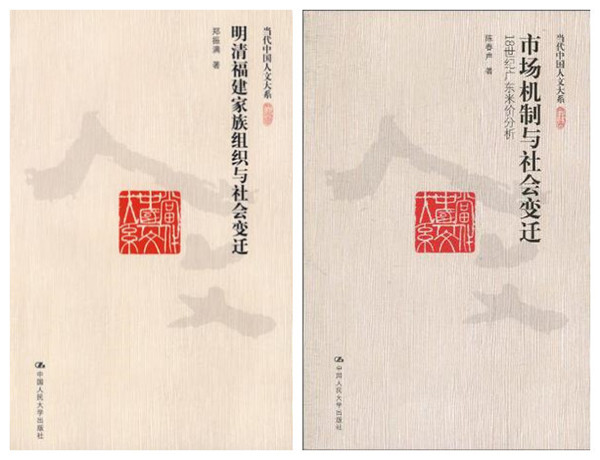
Zheng jin-man and chen chun-soon representatives
Professor wang zhigen is more concerned with the role of civil society in grass-roots management and control, namely the establishment of a “civil society order”. Although many of china's traditional social management institutions are officially established, they include civil society self-management organizations, such as families, rural communities, clubs, clubs, etc., which are not only formal but also ideologically effective in social management, not only for regular residents, but also for mobile populations. In the course of history, official and civic efforts often help each other to find a better place. Some official policies or institutions are a form of transformation of successful civil practice. Civil society sometimes functions normally when the official order is compromised. There is a tradition of “civilization” in the heritage of china's political civilization that deserves us to inherit, which could be a small extension of mr. Fort leung's “private” system. In recent years, prof. Wang zhigen has followed dr. Yang's turn to the history of the sea, studying and summing up the policies of the sea frontier and their implications. In 2006, the people's press of fujian published the policy of the sea border and the development of chinese society. In 2015, hai yunhuaha: the cultural dynamics of china's economic development, in 2016, a study on the generation and governance of pirates in the mingqing river, and in 2017, a study on the cultivation of the sea and the development of the chinese people to the sea。
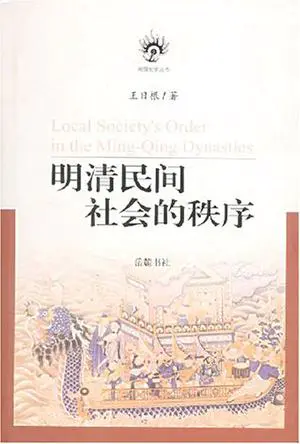
Wang zhigen, the order of civil society
Others, such as prof. Lin incheon, prof. Liu susheng, prof. Chen, prof. Tong wenkyi, prof. Chiang myung-sung and prof. Guo yun-tao, are outside forces of the fou ling school. Today, the fulgist church has generated more legends, such as prof. Xiaohong, liu yonghua, zhang xuan and lim mae, who have shown a strong momentum. Therefore, we have reason to believe that the teachings of the fulbright are bound to be passed on from generation to generation。









