


Commercial telecommunications means correspondence, telecommunication documents used to transmit information, to process business matters, and to communicate and communicate in daily business transactions。
For every employee engaged in foreign trade, the communication can be said to be a skill that has to be acquired, so let's find out below, along with xiaowo, what aspects of the communication require attention。
Vocabulary characteristics of business english correspondence
Business english correspondence is a social function variant of english, which is used in business settings, and seeks to communicate and communicate most effectively in the most accurate and clearest commercial language。
Many leading scholars have studied the use of terms in business english letters from different angles, and the use of terms in business english letters is mainly characterized by the use of specialized terminology, the use of pronouns, the formal weight of terms and the avoidance of duplication。
No. 1 wide use of specialized terminology

The terminology refers to terms specific to and specific to a scientific field and to a range of specialized terms of particular significance used in a particular field, which are highly specialized. The tone is formal and accurate and does not give rise to ambiguity。
The english-language correspondence on foreign trade generally avoids the use of overly formal or specialized terms, some of which are clichés or become obscure. One of the most important features of business english correspondence is the extensive use of specialized terminology. There is a wide range of terminological phenomena in english, and many generic terms in english are given a new meaning in business correspondence, and some are used as professional terms。
It often leads to ambiguity if it is still understood as a generic term. So we cannot really solve the problem by simply looking at the dictionary, and it is necessary to find out, by way of summary, what the term represents。
No. 2 simplicity, avoidance of duplication
The thinking of the english-speaking people is individual, unique, systematic, organized and formal, while the thinking of the chinese-speaking people is holistic and general. The table now has a different definition of things in english, and there is a different tendency to use words. The english-preception term is generic and vague。
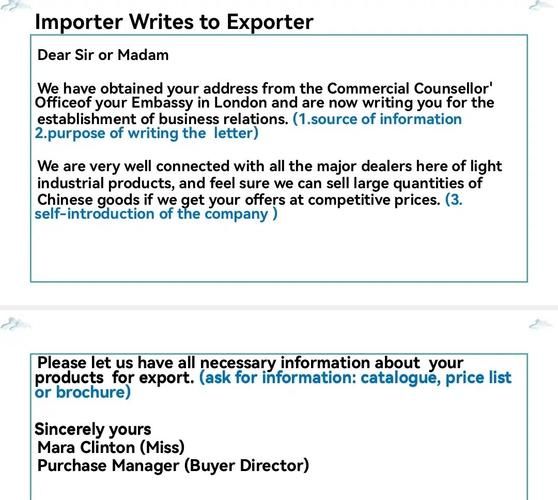
Written correspondence is a very practical writing and, when compared with other writings, exchanges information in a simpler and faster written form. The content should be concise, clear and clear, and avoid inexplicable。
The author should try to make his or her meaning as clear as possible so that he or she can fully understand your will without misunderstanding, so as to avoid unnecessary duplication and cumbersome expressions. In particular, commercial letters requiring a clear response from the other party or communications responding to requests or questions from the other party are specific and avoid ambiguity and general abstraction。
No. 3 flexible use of pronouns
There are three different forms of pronouns in english: the first term refers to the person speaking himself, the second to the person speaking and the third to the person talking. In business english correspondence, one characteristic of the terminology that we want to note is the correct and flexible application of the pronoun。
This relates mainly to the use of first and second-person pronouns. The purpose of foreign trade correspondence is to communicate between the parties. It is important to express its will properly and therefore to note the tone of the letter. When expressing a request, will or, in unavoidable circumstances, conveying bad news or negative messages, the other party should be given as little loss as possible and its will should be expressed in a more relaxed manner。

The use of second-person pronouns can give the addressee a sense of respect and recognition, while the use of first-person pronouns may sometimes lead to discomfort on the other side, so more use of second-person pronouns and less use of first-person pronouns in the text。
No. 4 formally dignified and polite language
Western nations have adopted a targeted approach to thinking, aiming for objectivity, impartiality and rigour. Their thinking takes the form of “personalism”, emphasizing “the separation of things” and the expression of individual opinions。
Business english correspondence, which is intended to convey business information, is about the economic interests of both the importing and exporting parties, and therefore seeks to be polite in the expression and choice of language. They are not meant to be with each other, they are not above each other, and they have no eyes. An elegant, polite and qualitative message will ease the mood of those who read the letters while making a good impression。
Foreign communications related to commercial trade must respect international trade practices while safeguarding their own interests, so that they are not cheap, demeaning and futile. Therefore, the content of the business english message shall be justified, favourable and dispassionate, and shall not be offensive, order or rude。









