


On 15 february, the ministry of education published the guidelines for the assessment of the quality of kindergarten care education (hereinafter referred to as the " guidelines for the assessment " ), which provide 15 48 points for the evaluation of the quality of kindergarten care education. This important initiative will help to reverse today's general errors in kindergarten assessments — greater attention to the quality of structures such as scale, buildings, toys, etc., and insufficient attention to the quality of processes such as teacher-child interaction, parental participation, etc。
Musical education is an important component of early childhood education. From 4 to 6 years of age, which is a critical period in the development of young children's hearing, music education must begin in early childhood in order to achieve a multiplier effect. How to seize the sensitive period of the child's hearing, so that the child, from a young age, loves music and the arts, evolves into a higher aesthetic ability in the arts is an issue that needs constant reflection in music education。
As music educators, how can early childhood music education be better achieved through home-based co-production, taking into account the requirements of the assessment guide and the joint role of teachers and parents
In terms of the role of teachers, three recommendations were shared。
Enhancing the interactive nature of teaching
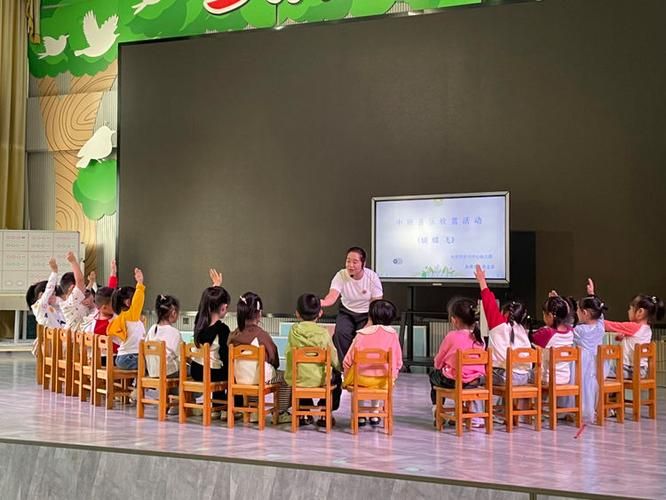
The interactive nature of teaching increases the focus of young children and makes the teaching process more interesting. This is a very important part of teaching and is one of the criteria for measuring the level of teaching for young teachers. If a teacher does not have a good ability to interact, it is not possible to keep the child focused, even if it is still alive. Questions and answers are a form of linguistic interaction, such as listening to a happy song today, and teachers can ask the children about the weather today or about what they feel happy about. Guidance is another form of pedagogical interaction, such as teachers who allow children to recognize the sound of nature, children who are unable to answer, teachers who are not in a hurry to give answers, but who should instead give them an imitation to guide them in their thinking and help them to be more active。
Interaction also needs to meet the mental age of young children. For example, teachers draw four apples on blackboards, representing four beats of music, and in the case of young children in small classes, teachers need to use their fingers to count apples together, whether “finger” or “number” in order to focus their attention. This is not necessarily the case for large classes, and children's understanding has increased and the way teachers are taught has changed. As can be seen, the teaching chain appears to be very simple and there are differences in practice。
Rationalise game
The assessment guide refers to “a child-centred approach that respects the age characteristics and growth patterns of young children, focuses on the holistic and continuous nature of early childhood development, adheres to a combination of teaching, play as a fundamental activity, and effectively promotes the physical and mental health of young children”. Play is a child's nature, and if you can bring play into school and let young children play, you can do more. The best form to play is the game. Play can inspire children to wonder, win, learn psychologically, develop self-confidence and a sense of value, free them from excess energy, relax, and improve social skills such as sharing, cooperation, etc。
Play activities that fit the physical and mental characteristics of the child at this stage can make music education work better. In early childhood music education, the whole learning process can be strengthened and consolidated through games. For example, in order to learn a song today, teachers should not stand by the podium and teach one word in a boring traditional form, but can take a bag of balls and sing at random in front of a little friend, who can successfully imitate one. This test is the ability of teachers to play. Teachers need to accumulate various forms of play and use different content according to age, a process that requires continuous learning。
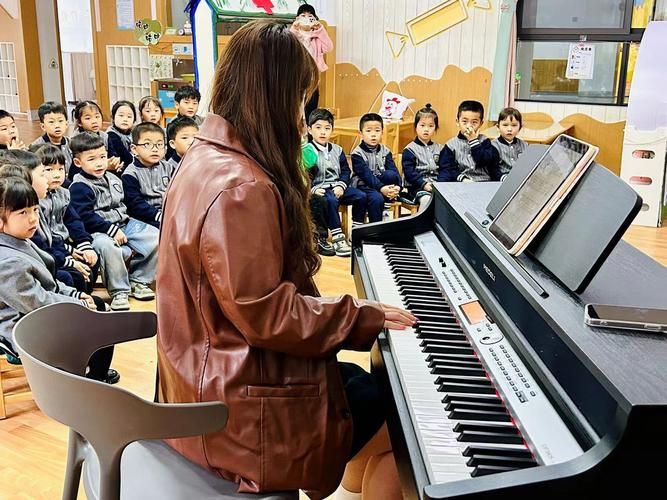
Enhancing the language organization capacity of teachers
In early childhood music education, the design of teaching programmes, time management, etc., depend on the language organization of teachers. This is the ability that every teacher must possess, which is relevant to the classroom order and the quality of teaching. In addition to being easy to understand, graphic and difficult, there is also a need for accuracy in the expression, i. E. What teachers need from their children, when they do it, must be expressed very accurately, cannot be ambiguous or are always in the process of change. Singing a child's song, for example, teachers need the children to sing together, so it's possible to suggest “ready to start singing” in the form of rhythms. The same requirement can be expressed in a fixed language for each lesson, so that each time they sing, the children know when to enter, making the classroom more compact and orderly。
Early childhood music education requires love and patience on the part of teachers, and parents cannot be left out. Home music education is not a substitute for kindergarten or training institutions. The development of children's music interests requires parents'support and scientific guidance. There are three suggestions:
Listen to music
Creating a sound environment for music is one of the keys to nurturing children's musical interest. Music is the art of hearing, and only by giving children more access to high-quality music can they evolve into higher musical aesthetic powers that inspire children to imagine and aspire to good things。
More outdoor music activities
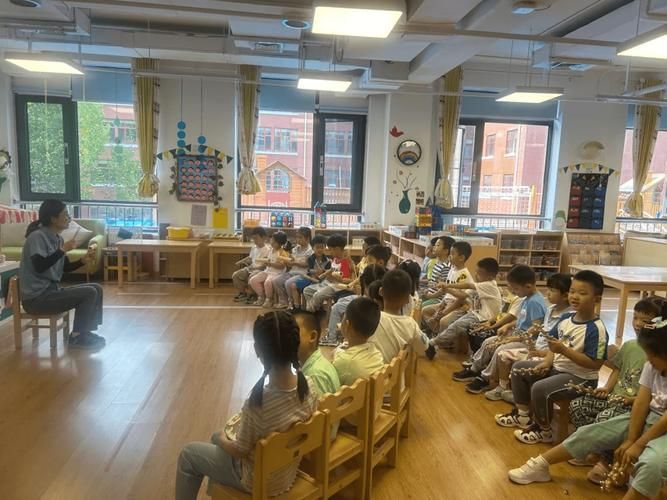
Parents can organize outdoor activities with friends, with musical instruments that children play. The event was family-oriented and took a short time to teach you to sing a child's song or to play a simple song so that children could feel the joy of music。
I'm encouraging the kids
The main purpose of music education is to foster a child's love of music, so that children grow good seeds from an early age. This requires a long process, tested by the patience of parents. Therefore, it is important to learn to encourage, praise and magnify the merits of the child, so as to avoid always picking up problems and stabbing the child's young mind. It is a long process for a child to grow a good seed from a young age, testing the patience of the teacher's parents。
In early childhood music education, both teachers and parents are constantly learning to promote themselves. Through beauty, the taste of aesthetics and the training of socialist builders and successors for the full development of the moral and intellectual capacities。









