Management studies typical phenomena, basic patterns and general methods of human social management activities. The management activities of human society, on the other hand, require research and refinement of the phenomena, patterns and methods of the process, through the rational organization and allocation of resources and factors, such as human, financial and material resources, to achieve management objectives. Management objectives vary at different macro-micro levels:
(a) to raise the level of productivity in society as a whole, to make productive relations more productive and to promote social equity and justice
In one sector, it is a national strategy for improving efficiency and promoting development and services
In a particular enterprise, it is to increase efficiency, gain and create more value for all (shareholders)
The central purpose of management is to produce “value”, which has different meanings depending on the subject. The central issue of modern management, therefore, is “the creation (more) value of the organization's allocated resources”, a degree similar to, but different from, control. There is a wealth of management scenes in economic society from which many typical phenomena are observed, drawing from them many common patterns that then inspire researchers to develop more abstract approaches, thus achieving broader “generalization” applications。
Drawing up patterns from typical patterns of management activity can have different perspectives, but the most typical is the prevailing “plan, organization, leadership and control”, where existing management methods and systems are mostly concentrated and where many important approaches, models and theories, such as five-power models, expectations theory, swot analysis, balanced scorecards, etc., have been applied in many management scenarios。
I. Limitations, essence and solutions to existing management practices
When we return to the core issue of management science — “organizational allocation of resources to produce (more) value”, it can be seen that management involves both productivity issues similar to economics, the rational allocation and full functioning of the human and financial elements of the organization (hereinafter referred to as the productivity perspective) through mechanisms, and productive relations, both through organizational mechanisms to manage people-to-people relationships so that productive relationships can adapt to productivity and adapt to the external environment to produce (more) value (hereinafter referred to as the productive relationship perspective). In this process, existing management methods and systems do not fully integrate the two in an organic manner, as evidenced by the following fundamental deficiencies:
First, the two perspectives are asymmetrical. This refers to the macro approach of the productivity perspective, while the productive relationship perspective is micro-based; or vice versa. If we focus on hospital management, where resources at the micro level (experts, consumables, etc.) are sufficient, but where macro-effects (e. G., national examinations or other management-designated reverses) are lacking, the essence is that there are different perspectives, management methods and mechanisms are used in a single perspective (usually the latter), but not well aligned with the characteristics of another perspective, as is the comfort of a car running across the border, and the key to solving the problem is the need to address the “issue” of a productivity perspective, that is to say, access to micro-data at the resource level, the characteristics of different scales at the resource level, and the characteristics of “predict” at different times at the resource level. Just as we fit in with a comprehensive capability, then we can make the methods and models of the productive relationship perspective work better — knowing that we are the best。
It is added that the hospital information system (hospital information system, his) can provide some of the solutions, such as microlevel data (which are also inadequate due to differences in business systems and require resource data centres (rdrs) or, more generally, operational data centres (odrs)) and some features. But higher-level features require data and intelligence tools, especially when we consider the second and third performance, the resilience of the his system is far from adequate。
Secondly, the two perspectives are quantified at different levels. Often, there are resource statistics that can be better quantified from a productivity perspective, while the better his system completes its documentation. However, special attention is drawn to the fact that “adaptation to the external environment” in the context of productive relationships usually also reaches a relatively good quantitative level (e. G. Pharmaceutical plants, health insurance, etc.) but other quantitative aspects of the productive relationship perspective are relatively weak, many methods and models do not support clear quantification, and require the introduction of experts, research interviews and empirical judgements, where differences in the level of quantification accentuate “false” and poorly mobile business value chains, while relationships are affected, and routine inspections (flight inspections) are often problematic。
The key to solving this problem is to be able to construct an objective system to complete the quantification of the entire process, the basic premise of “precision management”. In this process, traditional management models and methods need to be upgraded with data and intelligence, i. E., a quantitative process of management modelling methods. There has been much progress and better results in this area, and hospital management is relatively lagging behind。
Thirdly, the two perspectives are difficult to address and connect. The operational systems, operating mechanisms and experience gained from different perspectives make “management” related measures within that perspective “stable”; but management requires two perspectives to work together in order to truly create value through management, to address what “resources” are, and to be able to find optimal mechanisms through “human-to-human” relationship adjustments in productive relationships, and to find optimal solutions through “adaptation to the external environment”, a process that is not static, but dynamic, a process of continuous feedback that requires identifying three levels of “production relationship perspectives”:
The characteristic of relationship adjustment (adapted to the external environment, such as changes to the health insurance reimbursement mechanism, drg, dip, replaced by relationship adjustment) is “what”
Relationship adjustment “why” (e. G. Why flight inspections are fined)
Relationship-adjusted “how”? (e. G., what programmes are adopted)
With these three dimensions of problem solving, the most rational operational strategy can be gradually fed back, namely: (production relations) what is/what is — (production relations) — why — how can it become better — (productivity and production relations) — what — after adjustment — how — and what — (productivity relations) — is — and what — is — in turn circular。
This dynamic process not only ensures optimal management decision-making and operational programmes, but also dynamically adapted and adapted to constantly update the trajectories based on productivity and the external environment - - it needs to be noted that the macro-micro-consistency referred to in the first paragraph and the quantification referred to in the second (defining)。
An analysis of the nearly 1,000 hospital management cases accumulated in tutuyuntu (tutuuntuntu, 2023) shows that these cases are responding to the first and, second, to the third most inadequate:
1. Lack of management and quality awareness, essentially to the first and third
2. Lack of professional managerial competence, essentially to the first and third
3. Quality control systems have yet to be developed, to the second and third levels
4. Poor management practices, essentially the first and third
Wait, not a single list。
Ii. Utilisation (big data) of the new smart management framework
Based on the above analysis, we can form the following basic regulatory framework, which applies to all management scenarios:
First, the productivity perspective is a resource that is fundamental, conditional and the ultimate subject of adjustment; it needs to address the question of quantification and what is at the macro-micro level at different levels of time and space
Second, the external environment of the productive relationship perspective is the foundation, a condition, but not an adjustable object; it also needs to address the question of quantification and the “what” at different levels of time and space
Thirdly, people-to-people relationships from a productive relationship perspective are a top-level architecture, a point of feedback, a point of purpose, an adjustable object, an object of value, a need to address macro-micro quantification, and “what, why, what to do”。
In order to achieve such a basic framework, we find that there is almost one possible route: data + intelligence, i. E. Digital intellectualization, but it needs to be noted that the data here are not data at the technical level, but economic definitions of big data, using the definition i proposed in 2018 (zhang ning, 2018):
Big data are the sum of a series of technical, resource and intellectual changes in the process of data accumulation at a certain stage and in the knowledge-based economy。
The key here is the resource and intellectual dimensions. Reflecting here refers to the resource and link value of data. That is to say, using the resource and link value of big data as the basis for addressing the three shortcomings of the traditional management methods described above, but it is not enough — the resource and link value of big data is a better mechanism for addressing feedback, i. E. The second deficiency (quantification), the third deficiency (relationship and interface), especially given what the answer is, why and what to do, the artificial intelligence must be introduced — – it is well known that in answering these three levels of questions, artificial intelligence has made great strides over the past few years, from in-depth learning, graphic data analysis, and accommodatives, knowledge mapping, mega-linguistic models, etc., all providing an adequate technical basis to address these deficiencies perfectly。
In this way, better data intelligence can be used to compensate for the inadequacy of traditional management methods, to widen the boundaries of scientific management, to form a whole new modern system of digital intelligence management or a modern system of intelligence management, and to apply it to different management scenarios. Here, i would like to highlight its application in hospital management — because hospital management is characterized by a relatively special “compatible” complexity — i. E., health insurance and (public hospitals) public-interest positioning, for example, in the “guidance on the strengthening of the operating management of public hospitals by national guard finance 2020”, which explicitly states that “there is an urgent need to maintain a pro bono direction, accelerate the completion of internal operating management panels and weaknesses, and to be effective in fine management. To promote the quality development of public hospitals, to accelerate the transformation of management models and modes of operation, and to further improve the scientific, normative, precise and informational level of hospital operations。
Application and practice of intellectual management/intellectual management in hospital management
Based on the above analysis, complex traditional systems have been transformed into simple forms based on intellectual or intellectual management (figure 1)。
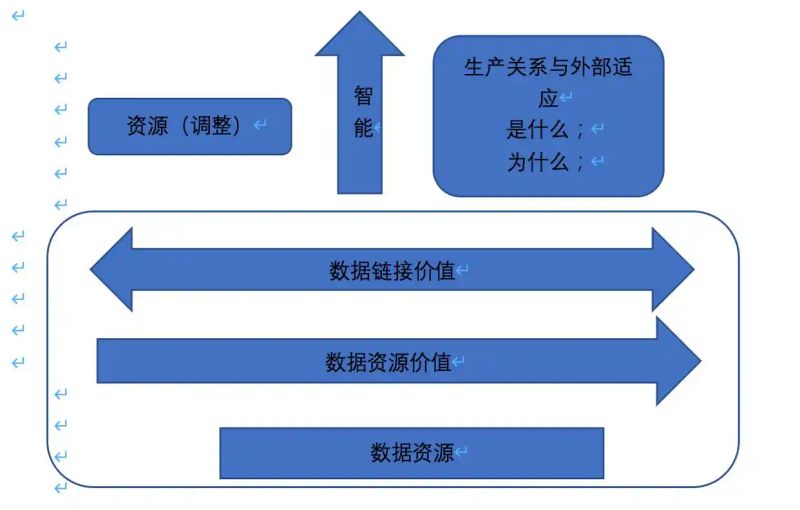
From here it can be seen that intellectual or intellectual management essentially has three things to do, three things that change the paradigm of traditional management and its shortcomings, bringing the management itself back to its ultimate “organizational resource creation” (more) value” in hospital management:
The first is the data on resources, which means that the term is important in artificial intelligence, which indicates, on the one hand, that to complete the data compilation tracking, rdrs or odrs are required, and, on the other hand, that it is required to learn by machine what artificial intelligence is to answer. From a practical perspective, the odr+ model library, or the data lake model, can be used. The key is to adapt to the different operating systems of established hospitals, while ensuring their functioning; from scratch, it is only suitable for newly established hospitals。
The second is the quantification of the relationship (mechanism), the matching of resources and the finding that it actually addresses the first (by correspondence), second (by quantification) and third (by problem finding) deficiencies of traditional governance simultaneously, but the core is to break the nexus between the traditional two perspectives and the treatment of the relationship, namely, the elimination of the “thuhan river” — why must there be a gap? Previously, the gap had been a constraint of traditional management methods and was not needed now, since the resource value of the data created an entirely new foundation that could be addressed in resource flows。
The difference between mind management or management of intelligence and hospital information systems starts here, in fact, by adding a brain to the data expression of resources, and the brain has a certain general operational capability that enables it to work with professional management (e. G. Practitioners, expert consultants, intelligent decision-making systems)。
The third is the relationship organization, the three-tiered mechanism for adapting to the external environment — what is the state, what is the cause and why, and what is the decision to do. This is a necessary and central process in which data resources are ultimately embodied in the values achieved for management purposes, relying on data resources, data links and important artificial intelligence techniques, where traditional human management experts also play a role, and where artificial intelligence provides many ways of distilling experience and methods (even in many cases we do not know what method it can work, where some technical and intellectual presentations of artificial intelligence are involved, to be added). This is the value of intellectual management, intellectual management and the moat of pre-emptive enterprises. The evolution of artificial intelligence technologies and their simultaneous introduction into management expands the boundaries of scientific management in terms of quantification, extension, replication and precision, and eventually becomes the brain of decision-making and intellectual management in the operation of hospitals, where the boundaries of management from different perspectives of traditional hospitals disappear, the effects of which can be seen at many micro levels (e. G. Cost control, bed occupancy rates, etc.) and macro-level effects, which can be summarized in three levels:
First, the lack of professional managers is addressed through smart decision-making by professional management, which is somewhat more dynamic, immediate and general, while its quantitative features can further promote cost control and precision management in the national hospital management reform plan。
Second, to free hospital directors and “twisted” managers from heavy management tasks, to enable them to exercise their professional competence and to focus on management objectives at the managerial level, and to form, through systematic synergy, centres for informed decision-making in hospital management。
Thirdly, by transforming hospital operating management from a “sport-style” (adapted to different policies, new rules, etc.) to a system-based and science-based activity, the optimal decision-making of the hospital is entrusted to the intelligent brain, thus achieving the different levels of hospital management, avoiding more “risk” management, etc., with high-cost inputs and increasing efficiency from quantitative to qualitative。
(professional professor, faculty of finance, central university of finance and economics, doctoral mentor, director, china centre for financial science and technology research, central university of finance and economics, principal expert, health finance group, chairman, life quality research council, chairman and chief economist, council of the organization for cooperation and development, family office)