


Family education contributes to the development of good character characteristics of young children
Family education includes factors such as the personality, mental qualities, mindset, emotions, beliefs, customs, etc. Of family members. The personality, interest, talents and emotional state of the parents of young children are manifested in family life and play a transient role for every family member, especially young children. In a sense, what kind of family is possible to shape a personality. If the parents have a good and healthy personality and are happy, optimistic and lively, the family will have more laughter; if parents are passionate about life, have a wide interest in learning and studying, then the family will have more learning atmosphere; there is no doubt that these are important in shaping the personality of children. Family education fosters the development of good behaviour and high moral and moral behaviour in early childhood, when children are unaware of the norms and social norms of life and other knowledge, as is a blank paper, but when young children are highly plasticized and imitated, not by reason, but by almost being imitated in a sensory, intuitive manner, as in paintings。
The children are first imitated by the parents who have the most contact with them and the closest psychologically. The words and actions of parents, their strengths and weaknesses, are imitated by children. Parents are therefore required to be educated, to be strict, to demonstrate themselves, to be exemplary, to be expected to do what the child is required to do, first and foremost, and not to fail to promise the child. In order to do more shaping work, the children must be put back to their original place after playing with toys; stripping off their clothes requires children to fold up in fixed places and so on, and after daily training, children naturally become well organized habits。
Ii. Out of the six areas of early family education
1. Too much love and learn to love properly
The majority of children are now single-born children, and their parents are just as good as they want, so they can do whatever they want to meet their needs, open their mouths and wear their clothes to keep them from suffering. Even parents, motivated by selfish and narrow prejudices, treat their children with misperceptions that are not supported and protected in principle, often with regret. Such an over-love educational approach can easily lead to low self-care capacity, low social resilience and psychological problems such as isolation and isolation. The love of parents is admirable, but the consequences must also be considered. Parents must be conscious of the fact that this not only harms the child's heart but also interferes with his or her healthy development! It is hoped that parents will treat their children appropriately and in a reasonable manner so that they can grow up healthy。
2. Focusing solely on intellectual development and the need for comprehensive development
In recent years, however, a growing number of parents have focused their family education on intellectual development and children's academic achievement, with little attention given to other factors that constrain their growth. Considering that a child can only make a difference if he/she attends college, children aged 3 or 4 years are given the same verse, the same word, the same word, the same word, the same amount of reduction, which stifles the child's nature and hinders his/her full development. It is possible to develop a child's self-confidence, motivation, commitment, self-restraint and courage, such as by allowing the child to do his or her own business in daily life, by giving the child confidence in his or her abilities, and by commending and encouraging him or her, so that their normal intelligence can be fully realized。
3. Poor atmosphere and the need for a sound environment
While parents want their children to be talented, for some families the family atmosphere is not conducive to their development. Some parents often fight at home, fight and even divorce, which can traumatize young children. How can such an environment not affect the child's growth when parents are busy working all the time and do nothing about their children or even in front of them? In fact, the image of parents has a tremendous impact on children, and many young children's personality, behaviour and behaviour are very similar to those of parents, and genetics are not decisive, but are largely shaped by their parents ' behaviour and behaviour in the face of others. If parents perform well in all respects, the child is well educated at home and will grow up healthy。
4. Material rewards are too large and require moral encouragement
Incentives can be divided into material and moral rewards. Parents occasionally give incentives to children, which are not bad in nature, but they must choose the right time and the right prize for the child. Indeed, physical incentives can have a significant impact on young children's behaviour, giving children a high degree of motivation, but with short-lived effects. In the long term, such an instrument is bound to have negative effects. When children experience multiple physical irritation, they become increasingly dependent on physical irritation. In addition, material stimulation actually implies doubts about the ability of young children, so that young children who are often subject to material stimulation, while relying on physical stimulation, also have a sense of inferiority. Parents should therefore be careful and encouraged to provide young children with spiritual incentives for their healthy development。
5. Overzealous and orderly
Both parents now have high expectations for their children and expect them to be better educated, better treated and more prestigious. Thus, from an early age, children are taught that lesson, which increases their learning and psychological burden at random, regardless of their actual level of mental development and physical abilities. The premature intellectual development of the child, the teaching of english and the reiteration of tang poetry have deprived the child of a happy childhood. The age characteristics of young children determine their nature of play, love and self-absorption, and parents cannot ignore these factors and blindly allow children to do what they wish. Instead of fulfilling the good wishes of the parents, the sons of hope and dragons, children are unable to exercise their talents and do nothing. In fact, it would be better to direct children's interests appropriately and to make them a positive factor in their future development。
6. Persistence of corporal punishment and the need for education
Corporal punishment is by far the most familiar for children in china, especially in rural children and in some schools in less developed educational areas. Some parents feel that this is the only way to do it because they are educated when they are hours old, and others have a lack of common knowledge about child-rearing and are unable to do so. There are also people who are impulsive and uncontrollable, and who feel natural. Strong authoritarian methods were used to abuse parental authority. Such harsh discipline, which tends to be counterproductive, contributes to the alienation of parents and children from each other and to the emotional isolation of young children from each other. It leads to the deceptiveness, deformity and even the pessimism of young children, leaving them in danger of embarking on the path of delinquency. Young children were the future and hope of the motherland, and they would inevitably have to make some extraordinary gestures, but corporal punishment should not be used too often, and parents should, as far as possible, be persuaded to focus on education。
Iii. The early childhood programme
The period between 0 and 3 years of age is the best time for the development of the child's brain, and the period between 0 and 1 year of age is the awakening of the child's consciousness. In this critical year, parents can rapidly develop their babies ' brains and improve their intelligence if they are able to teach early。
0 to 6 months: providing a secure environment, building attachments
Provide the best possible care environment for the baby and give them a sense of security. Building a child's attachment to his parents helps him develop good habits. Fathers need to be more involved in the care and education of the baby and develop its brave qualities。
7-9 months: meeting curiosity and developing potential
At this stage, the baby is very curious about the outside world, and parents need to use it to develop the ability to climb and interact with the baby。
10-12 months: promoting language skills
As the babies grow up, their language skills are also developed, and at this time they are more able to communicate with them and develop their linguistic talents more quickly. In addition to this, parents can use toys to pass on concepts such as the size, length, etc. Of the baby to promote their cognitive development。
Early education programme for 0-4 months of babies
Cognitive competency training
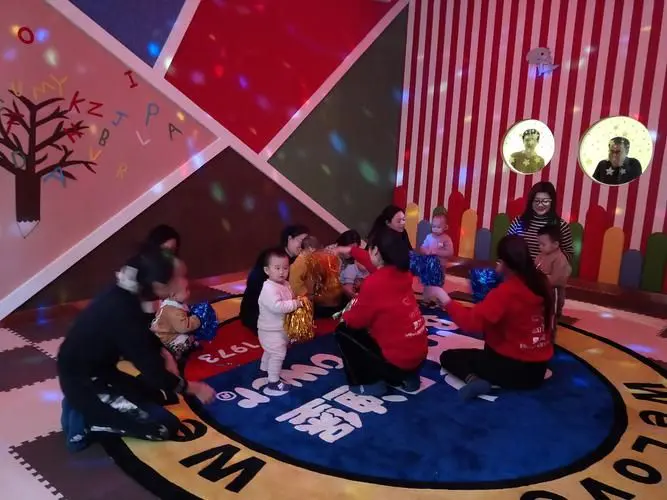
1. Visual training: when the baby is lying down, he attracts his attention with colourful toys and drives his eyeballs in all directions。
2. Hearing training: around the baby, using toys or musical instruments to make different voices and to train the baby in its ability to discern sound。
3. Touch training: touching the baby's body with a finger or with a different object, including the cheeks of the hand and foot, etc., to train the baby in sensory discernment。
4. Sensitivity training: the temperature of the baby to smell fruit, eat fruit, touch hot fruit and train the baby to smell, taste and feel the temperature。
Operation capability training
Head training: let the baby put his arms on the chest, get down, parents attract the baby to the head and train his head。
2. Physical training: toys attract the baby from both the right and the left, allowing him to complete the right and the left side of the body。
Hand training: put the soundable toy in the baby's hand and practice his ability to grab and hold it。
Language skills training
1. Jokes: face-to-face with the baby, laugh with exaggerating mouths, make the baby sound together。
2. Toys: toys like the baby to make him sound。
3. Exterior concussion: take the baby outside, show him around, make a sound when he is happy, when parents smile and communicate with him in monosonics。
Social and life skills training
1. Cultivation of hygiene habits: cleaning of babies at appropriate times helps them develop healthy habits。
2. Identification of all kinds of crying: parents need to learn to recognize all kinds of crying of the baby and to know the true state of life of the baby behind each。
Early education programme for 5-8 months
Cognitive competency training
1. Place hearing training: sounding with toys at different locations and distances around the baby, training the baby in its judgement of the sound source。
2. Colour awareness training: prepare toys or cards of different colours for the baby, tell them what color each is, and train them in their perception of colour。
Operation capability training
1. Sit-in training: parents train their babies to sit and wait for all kinds of sit-ins。
Hand training: put a toy in front of the baby, above, and so on, so that he can reach out enough. It is also possible to train the baby in various hand moves, such as beating, hand delivery, etc。
Language skills training
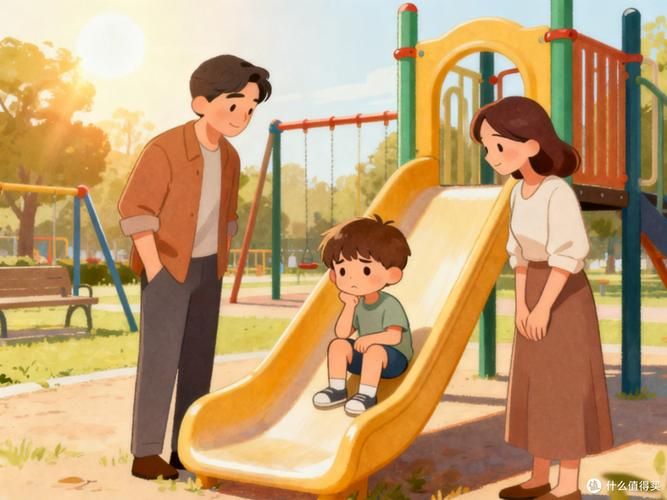
1. Reaction training: tell the baby the names of the things that are around her and allow her to judge the words of her parents according to their face and mouth and to train them in their ability to react。
2. Pronunciation training: slow down so that the baby can see the accent of each of your pronunciations。
Social and life skills training
1. Sleep training: slowly reducing the child's sleep time during the day and adjusting the child's sleep position。
Dietary training: slowly reducing the number of feeding times, with regularity in feeding times。
3. Awareness self-training: put a mirror in front of the baby and help him to recognize himself by speaking and moving to see changes in the mirror。
Early education programme for 9-12 months of age
Cognitive competency training
1. Visual training: to foster the baby's interest in outside things and in book drawings. Tell them the name of the toy, the name of the map, and let them learn to read and speak。
2. Hearing training: creating a rich language environment for the baby, allowing him to listen to different people, to listen to radio, to listen to songs and to foster his interest in language and sound。
Operation capability training
1. Crawling training: put a toy in front of the baby and let him crawl and touch。
2. Standing training: one hand to hold the baby and let him learn to stand firm。
3. Walking training: holding the baby's hand, training him to walk, or inspiring him to walk with toys, and commending him in the course of training。
Hand training: he was trained in hand skills in drawings, throwing toys, reading books and throwing things into containers。
Language skills training
Lead the baby to talk, show him the animals, make him copy the animal's voice。
Social and life skills training
Internship training: take him to different people and teach him the gestures “hello” and “goodbye”。
2. Clothes training: while dressing the baby, he learns to cooperate。
Sleep training: slowly reducing the daytime sleep of the baby。
Dietary training: slowly reducing the number of times babies are fed。
Four, tell him when the child is little
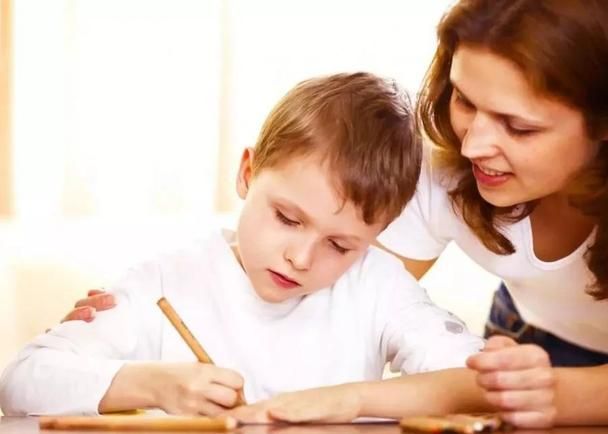
The hardest thing for you to have a child is not to bear the pain of the birth of the child in october, nor to bear the great pain of the birth, but after he has been born, not only do you take charge of his food and drink, but also take on the burden of educating him. (concerning * subscription: mother and child time, talking about parenting)
In order to make it easier to raise a good child, it is also necessary to take out the everyday box, to think in a longer-term perspective, and to make the eight things known to the child as soon as possible:
Parents will always love you unconditionally
A lot of mothers, in the process of educating their children, say the following: “beautiful baby, mother likes you; if she doesn't listen, she won't play with you”. This kind of love is conditional, and the children will realize that they only love me if they behave well. But how much of an innocent child has a lively and naughty side, and how much fear does it cause a child's young mind to be threatened with “love” if we are to be more careful in order to teach him?
You know, a child growing up in a bath of love has a full sense of security, confident everywhere. If the child knows that the love given to him by his parents is unconditional, then when we criticize him, he will still know what we are doing to him, not to himself. Such children can objectively accept their weaknesses and mistakes, while their imperfection is the foundation of mental health。
Two, the academy says thank you
Maybe you've been in this situation, you've been trying so hard to help someone, and the last word "thank you" hasn't helped you, which makes you very unhappy and secretly determined: next time you'll never help him again; but if this man sincerely expresses his gratitude to you, you feel that it is true. As children grow up, it is important to teach them “thank you”, not only to get more help for them, but also to give them more resources and to give them basic upbringing。
Three, independent children. Stronger
Even if we were the parents of a child, we would not be able to be around him all the time to teach the child the ability to live on its own。
Parents in japan are doing well in this regard, and their children are involved from an early age in the household and make their own decisions, such as going to shops alone to buy their favorite toys; they also ask for their views when travelling. Children who grow up in this environment are more likely to adapt to the outside world than other children and to know what they want earlier in their life plans。
Four, one who can afford to win
Winning is the nature of every child, but even if there is another gift, it cannot be won every time. Children who are afraid of losing prefer not to participate, not to try, and not to wear the hat of the loser. And at the end of the day, it's usually those kids who can afford to lose. Children who “can afford to lose” have a better mind than others, who can afford to “lost” and who can stand up to “win”. Tell the kids that losing is actually an accumulation of experience。
Five, sport is a life-long interest
A friend who lived in the united states told me that the greatest hobby around her is sports or watching sports games. Sport is their way of life, and if a person doesn't have a sports hobby, it's too much to talk to. No wonder every olympic games, the number of medals in the united states runs many streets across other countries。
Back to the child's education, the sporting interest in raising the child from an early age is no less important than the development of the child's talents. A sport-friendly child is not in poor physical and psychological condition. The body is the money, it's not the foundation. What are we talking about?
Six. It's important to keep a proper watch
Very few of our parents are around to focus on the child's appearance and even think that too much attention to the child's appearance is wrong, which makes the child even more vain. But if you read more books and more international news, you'll know that the elites are all glamorous。
It is enough not to say that there is one person who is inside, who wears dirty clothes, but who is equally talented, and who is a very individualist. When children enter society in the future, they will be able to win more opportunities, and more than knowledge, they will need a decent instrument. The same chance to compete, the mere mark, will wipe out the big one!
Seven, you can be afraid, you can cry, but then you have to be brave
When parents have had such a situation, and children are given injections, and children cry out of fear, adults often say, “don't cry, don't hurt, it'll soon be better”. This way we not only ignore the fear of the child, but also deny the child the right to cry。
Our well-known ping-pong girl, fukuhara love, is a crybaby, watching her video as a child, often practiced with a bunch of tears, but she kept up and became a popular athlete. Fear and weeping are instinctive responses of children, not the same as cowardice. Tell the kids you can be scared or cry, but be brave after that. (concerning * subscription: mother and child time, talking about parenting)
Eight: hard work is the most important thing a man can do
When we admire a person's achievements, we often think that he is a genius, but what the genius has experienced, and we do not know. Luxur once said that there is no genius in the world, and i just spend time drinking coffee on work. If a child learns this from childhood and acts on it, that precious quality is the child's most important ace over himself。









