


What do you know about early childhood education? This is the early education of young children in the network, so that you can learn from it! Hearing: do not turn away from the human voice, and have music. Sniff: let the baby smell a lot. Taste: let the baby taste sour and bitter. Touch: always hugging the baby and consciously touching the baby with soft, hard stuff, so he can feel it. 2. Development of communication capacity: this is an important sign of the mental health of the baby and the beginning of its entry into society. Mom and dad need to be conscious, purposeful and systematic in getting babies and adults of their own age, encouraging them to be generous and polite in public, and creating opportunities like encouraging treasures
2. Quite correctly, call the guest, make tea for the guest, bring the baby, etc. This not only fosters the language skills of the baby, enhances self-confidence, but also lays the foundation for its intellectual interpersonal interaction. 3. Building capacity to observe questions: teach the baby to see the world. In day-to-day appearances, such as food and clothing, flowers and trees, bricks and mudslides, the baby's ability to observe and respond immediately to the baby's questions, for example, when the baby points to the stars in the sky, and mom and dad immediately tell him about the concept of the "star", which corresponds to the concept. When the baby gets bigger and sees more things, it leads him to think and ask questions and stimulates him to know the world's aspirations. Physical training: in the normal course of sports with babies, families in a position to do so start paying attention to such training from the moment the baby is born, such as swimming during the neonatal period and skating at about a year and a half. According to a study of children in china and the united states, in the physical exercise
3. There is a marked shortage of children in china in terms of physical mobility. Mom and dad are going to improve the baby's physical training so that while the baby has a healthy body, it can develop character like courage. 5. Training for work: the symbol from ape to man is to start using and making tools with hands. Individual human development also requires labour and production. But now the only child has a poor ability to do it, because parents' love deprives the baby of the right to do it. So mom and dad are going to encourage the baby to develop the ability to serve itself and give the baby the power to do what it can, so that he can experience the pleasure of being a paper worker and playing with toys. Language is a tool for thinking, and pavlov refers to it as the “second signal system unique to humanity”. In early education, the amount of information in the language is increased, sufficient language information is entered into the child's brain; it is used in standardized languages, such as 20 minutes per day to recite the american language to the child
4. In addition, learning foreign languages allows early contact. It's the field of beauty education. Mom and dad watch beautiful music with the baby, sing the baby songs, play the beats, make the baby feel beautiful in the music, improve the aesthetic skills, and they find that the concert gives the baby an elegant look, movement, appearance, etc. And then we're going to go in from beauty to real and good. 8 - learning to paint: this is also the realm of beauty, which has a great impact on stimulating the child's right brain development, enhancing imagination, image thinking and appreciation. Parents can take the baby to photo fairs, sculpture fairs and comment on various crafts, drawings, art photographs, etc.; there is also a beautiful set-up at home. The spiritual life of a mortal cannot be forced, so all mom and dad have to do is infect the baby, and let him learn and pursue. 9 - give the baby a good toy view:
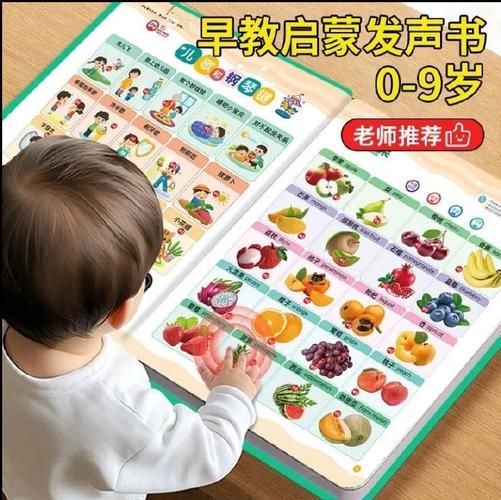
5 if they buy, they don't buy them, they don't throw them to the baby, they don't think they're time-consuming, they play with the baby; if they don't, they find toys that are not toys, like stone-sucking, alarm clocks, rollers, etc.; and the best toys are toys made by parents and babies, like kites, windmills, lanterns, etc., and the baby's more interested. Mom and dad need to take the baby's age into account when buying toys: 01: perceptive touch-type toys. It's colorful, it's beautiful, it's easy to hold the throw, but not too small to swallow. 12 years: toys that can drag and toys that can train hands to move. 23: toys that inspire imagination. Such as small utensils, blocks and toys. 34: intellectual toys. It's like a tablet, a small approximation. 10. Participation in parent-child education: participation in community-based parent-child activities, collective life with a sense of fraternity, collaboration, competition, etc
6. Develop good social interaction. Early literacy early reading: mom and dad can teach literacy together with things that are relevant to the life of the baby; literacy in the game; production of various specialized literacy cards, etc., and accompanying the baby to read and tell stories. There are a variety of other kinds of activities: parents, depending on their circumstances, can engage in a wide variety of diverse, positive and healthy activities, such as philatelic collection, photography, fishing, flowers, shrimp farming, etc. These activities are both learning and an important means of bringing close family and child relationships. 1. Exchange of eyes. When a lovely baby opens its eyes, you must seize this brief first moment and look at her with tenderness. You know, the baby can see someone's face at an early stage, and every time he looks at you, he deepens his memory of you. Two, yeah, yeah, yeah. You might just see a face that's innocent and insensitive, but give him a chance
Seven, he can talk to you. Soon, he will capture the rhythm of communication with you and insert a few words of his own from time to time. 3. Breastfeeding. Feeding the baby as much as possible. While breastfeeding, my mother sang to the baby, whispered to him, touched his hair softly, which would enhance your filiation. Four, tongue out. Experiments have shown that a newborn child born two days ago can imitate a simple adult face. 5. Look in the mirror. Let the baby look at himself in the mirror. At first, he would feel like he saw another cute little friend and would be very happy to swing at him and smile. Six, it tickles. It's the first step in developing a sense of humor. You can play a little game with the baby, like "itchy" and so on, which helps to motivate children to participate. 7. Feel different. Put two more similar paintings away from the baby, for example, one of them contains a tree
And the other one is not, the baby has to turn his eyes and look for the difference. This will greatly help the future literacy and reading skills of the baby. 8. Sharing. And when you take the baby out for a walk, you tell him from time to time what you see: "look, that's a puppy!" "oh, that's a big tree!" "have you heard the bell?" nine, one stupid. The little guy likes to make stupid noises with you, like, "oh, uh, " and, occasionally, eight-degree noises. We sing together. Learn as many songs as possible, and make their own lyrics. They can sing to the baby in any case. They can also listen to some beautiful songs. Studies show that, with music, children learn mathematics. 11. Time to change diapers. Use this time to get the baby to know all parts of the body. Say it
Nine, do it while keeping the baby's little head in line with your words and actions. 12. Climb the circle. Mom was lying on the floor, letting the baby crawl around you. This is the least expensive “sport” and it is interesting to help the baby improve its coordination and problem-solving capacity. 13, shopping time. Save some time and go to the supermarket. Different faces, different voices, different objects, different colours inspire the baby. 14. Advance notice. Before you turn off the lights, you say, "go to sleep! Mommy's going to turn off the lights." let the baby slowly understand the cause and effect. 15, nothing funny. Blows softly at the baby's face, arm or belly and makes the baby laugh. 16, paper towels. If the baby likes to get a tissue out of the box, let him do it. Watch him rub it in a pile, and watch him spread it
Ten, no? You can hide the little toys under a paper towel and let him look for them, but when the baby is found, it must be appreciated! Read the story to an eight-month-old baby, and after two or three times, he will be able to understand the order of the words. Reading to the baby really helps him learn the language! Play hide and seek makes the baby laugh. He'll realize the missing thing will come back. 19. Touch experience. The light touch of the baby's cheeks, feet or belly with different fabrics (silve, velvet, wool, linen, etc.) makes him feel different. Feel calm. It takes a few minutes each day to sit quietly with the baby on the floor without music, without light and without games. In peace, i feel the world around me. 21 family film. I'll make a collection of photos of my family and friends. I'll turn them over
11, treasures for memory. When grandma calls, let the baby listen to the phone while looking at her sweet face in the picture. 22. Intimate exposure to food. Prepare some small snack beans, bread chips or apple chips for the baby, train him in gripping and explore hand-eye coordination. 23, drop it and pick it up. Watching the little guy throw things from the table to the ground the same way, even though your head's going to explode, you're going to have to keep picking 'em up because your baby's exploring the mystery of earth's gravity. If it's easy, you can give him some ping-pong balls and give him a basket at his desk to aim, fire! Picking out empty boxes, putting a little toy in one of them, changing the location of the box so that the baby can guess where the toy is? Put the couch pads, pillows or pillows on the floor, crawl with the baby, go around
12, look who's faster. Remember to let the baby win a few more times so he can be more motivated. 26, "go and look." toys are set up in the room to allow the baby to climb at different speeds and to stop and watch in an interesting place from time to time. 27. Accept the challenge. When the baby grows up, he will challenge you with his greatest imagination, depending on whether you're as good as he is. Like making strange noises, climbing backwards or eating toys. 28, make a ghost face. And when the baby touches your cheeks, you exhale; and when he pulls your ears, you spit; and when he touches your nose, you turn your frown around and make the baby feel fresh. 29 touching objects. The baby wandered around the room with his little hands touching windows, telephones, refrigerators and televisions, and told the baby their names. 30, storymaking
13, 13. He'd find it more interesting to choose some of the baby's favorite stories and to replace them with his name. 31. Homemade animal books. When you go to the zoo, take pictures of the animals and form an album. He used to take it out with the baby and let him look for elephants, sea lions and tigers, and you could sing for animals. 32. Make the baby own. In due course, the baby is free to choose between the two, for example by choosing his own bowl for dinner. He would then be very proud that his decision has been taken very seriously. Remembering the “past”. Watching the family video with the baby, recalling his first bath, his first turn over, his first call on his mother, and his first talk, not only enhances the child's memory but also enhances his language skills. 34. Points. Count the steps, count the fingers of the baby, count the families. Be a big one
It's the habit of a 14-sound count, and very soon, the baby will join you. The figure answers the question. Find a picture book familiar to the baby, indicating the details, from abstract to specific questions to the baby, such as “do the rabbit likes radish?” (abstract) or “what is the rabbit eating?” (specify), 36, turn off the tv. The baby needs to communicate closely with you. It's not on tv. The search for the dog. Put the books together from time to time, test the little guy's memory, see if he remembers where the little one is. Turn it around, baby. Hold the baby around like a ballet dancer. 39, match game. A special photo of all the important people in baby life. Two copies. Put the picture up on the floor and help the baby find the same two. 40 in the rain. Step in the little pit and sit on the wet grass。
15. Though a little dirty, it's interesting that the baby feels the difference between dry and wet in happiness. Insect capture. Along with the baby, they know insects in books or magazines (shells, crickets and butterflies) and then go to nature to catch them. 42. Fostering a sense of humor. Pointing at dad's picture, "mom," and telling the baby that it's wrong, and that we're all laughing about the mistake, and we're building the baby's sense of humor. 43. Clothes game. Let the baby wear daddy's old shirt, see how he reacts, and believe his creativity will surprise you. Perceptive capacity. Prepare two cups of different sizes for the baby to pour water from one cup to the other in the shower. Sometimes it spills out, sometimes it's not right, so let's explore which cup is big and which one is small. Cognitive colour. Select a colour to take the baby and look for all the same colours in the home. 46. Domestic work. And when the little one steps, he throws out the garbage for you! Library tour. Don't miss the stories and the books









